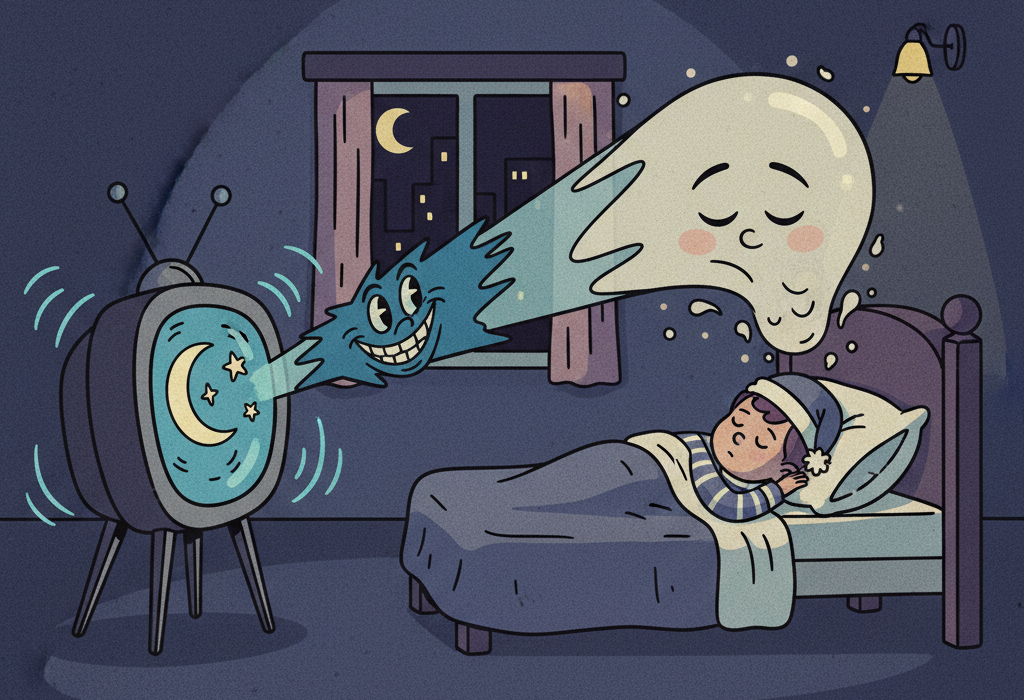
Most of us have a familiar nighttime routine. We lie in bed, turn off the bedside lamp, and spend just a few more minutes scrolling through a smartphone or watching a show on a tablet. But when we finally put the device away, sleep feels miles away. Our eyes are tired, but our brains feel completely awake.
For years, experts have warned that looking at screens before bed ruins our sleep. The main culprit is blue light. But what is blue light, and how does it actually trick the human body?
At its core, blue light suppresses the production of a sleep-inducing hormone. The human brain acts like a factory manager tracking the time of day. Light is the primary memo telling the manager to keep the factory open and running. When we stare at a bright, blue-tinted screen at 11:00 PM, we are sending a fake daytime memo to the brain.
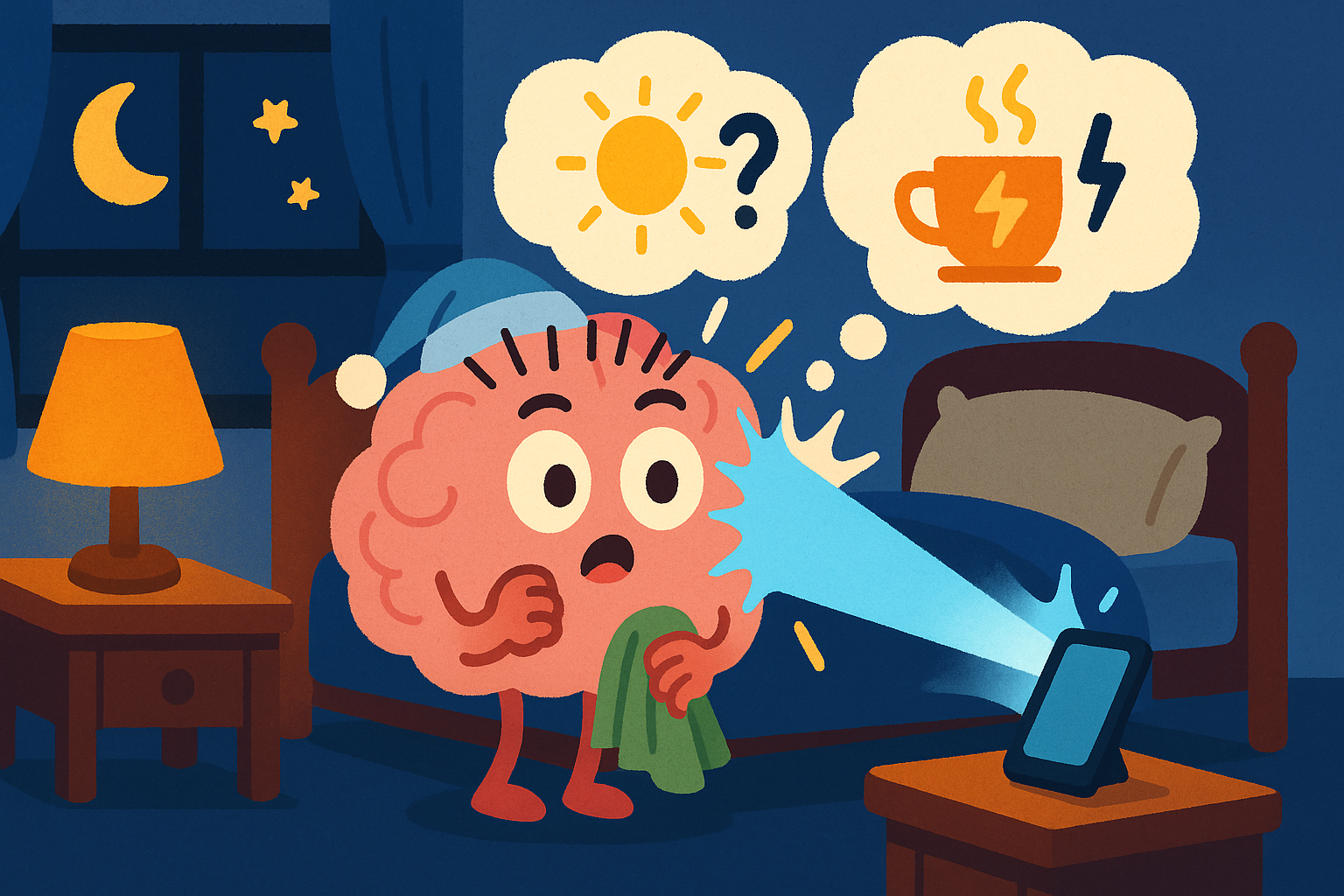
This article breaks down the latest scientific research on how artificial light affects our bodies, who is most vulnerable, and which solutions actually work.
How This Might Work: The Science of Your Inner Clock
To understand why a smartphone screen keeps you awake, we have to look at how the body tracks time.
Humans operate on a Circadian rhythm (sur-KAY-dee-un RITH-um) – the internal 24-hour biological clock that regulates your sleep and wake cycles. This clock is controlled by a tiny region in the brain called the suprachiasmatic nucleus. Think of it as the master timekeeper for your entire body.
This timekeeper relies heavily on a hormone called Melatonin (mel-uh-TOE-nin) – a chemical messenger that signals to your body that it is time to wind down and sleep. Melatonin levels naturally rise in the evening as the sun sets, peak in the middle of the night, and drop in the morning.
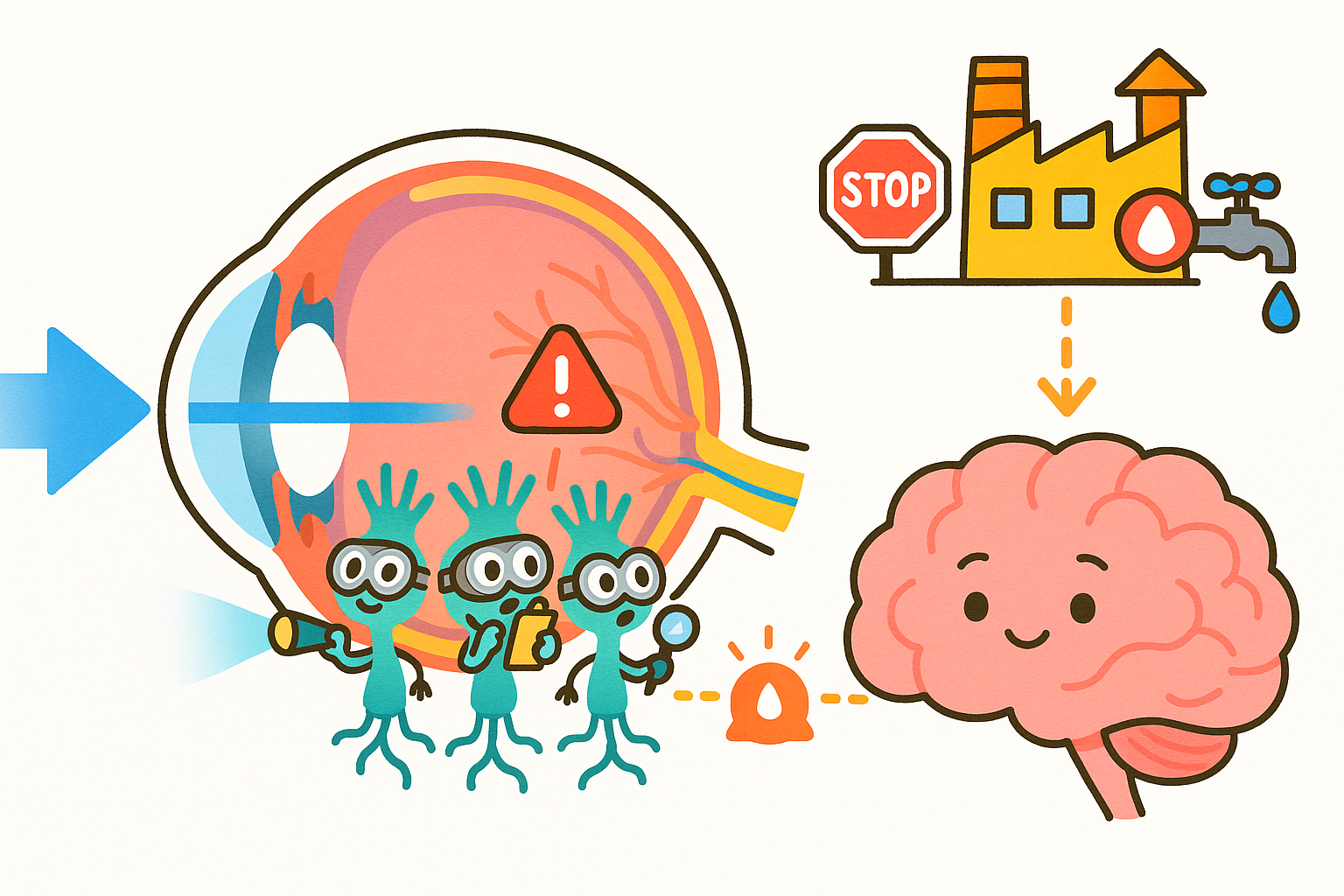
But how does the brain know when the sun has set? The eyes have special cells called intrinsically photosensitive retinal ganglion cells (ipRGCs). Unlike the rods and cones that help us see shapes and colors, these specific cells exist solely to measure the brightness of our environment.
According to a 2019 review in the Journal of Biophotonics, these light-detecting cells are highly sensitive to short-wavelength light. In the visible light spectrum, short wavelengths look blue. When these cells detect blue light, they send a direct signal to the brain to halt melatonin production. During the day, this is incredibly helpful. Blue light from the sun keeps us alert, improves our mood, and boosts our reaction times. But at night, artificial blue light creates biological confusion.
Related: How Your Circadian Rhythm Controls Sleep (And What Science Says About Fixing It)
What the Research Shows: Screens, Bulbs, and Sleep
Modern technology has fundamentally changed our light environment. We are no longer just exposed to warm firelight or dim incandescent bulbs after sunset.
The Impact of Computer and Phone Screens
Most modern digital screens use light-emitting diodes (LEDs). These displays are highly energy-efficient and bright, but they emit a massive amount of blue light.
In a 2011 study published in the Journal of Applied Physiology, researchers tested healthy young men by having them sit in front of two different types of computer screens for five hours in the evening. One was an LED-backlit screen, and the other was an older, non-LED screen. The LED screen emitted more than twice as much blue light.
The results were clear. The LED screen significantly suppressed the normal evening rise in melatonin. The participants using the LED screen also felt less sleepy and performed better on memory and attention tests. While performing well on a test sounds like a good thing, having a highly alert brain right before bed is exactly what causes insomnia.
Interestingly, newer screen technologies might offer a slight improvement. A 2020 study in the Journal of Clinical Neurology compared traditional LED screens with Organic LED (OLED) screens. The researchers found that standard LED exposure significantly delayed the onset of melatonin. In contrast, the OLED screen did not cause a significant delay compared to a dim-light control group.
Home Lighting: Cool vs. Warm Bulbs
It is not just our phones that emit blue light. The bulbs we use to light our living rooms and bedrooms play a massive role in our evening biology.
A 2026 study in Scientific Reports analyzed 52 different lightbulbs used in homes. The researchers found that “cool white” LED and compact fluorescent (CFL) bulbs suppressed melatonin significantly more than “warm white” bulbs or old-fashioned incandescent bulbs.
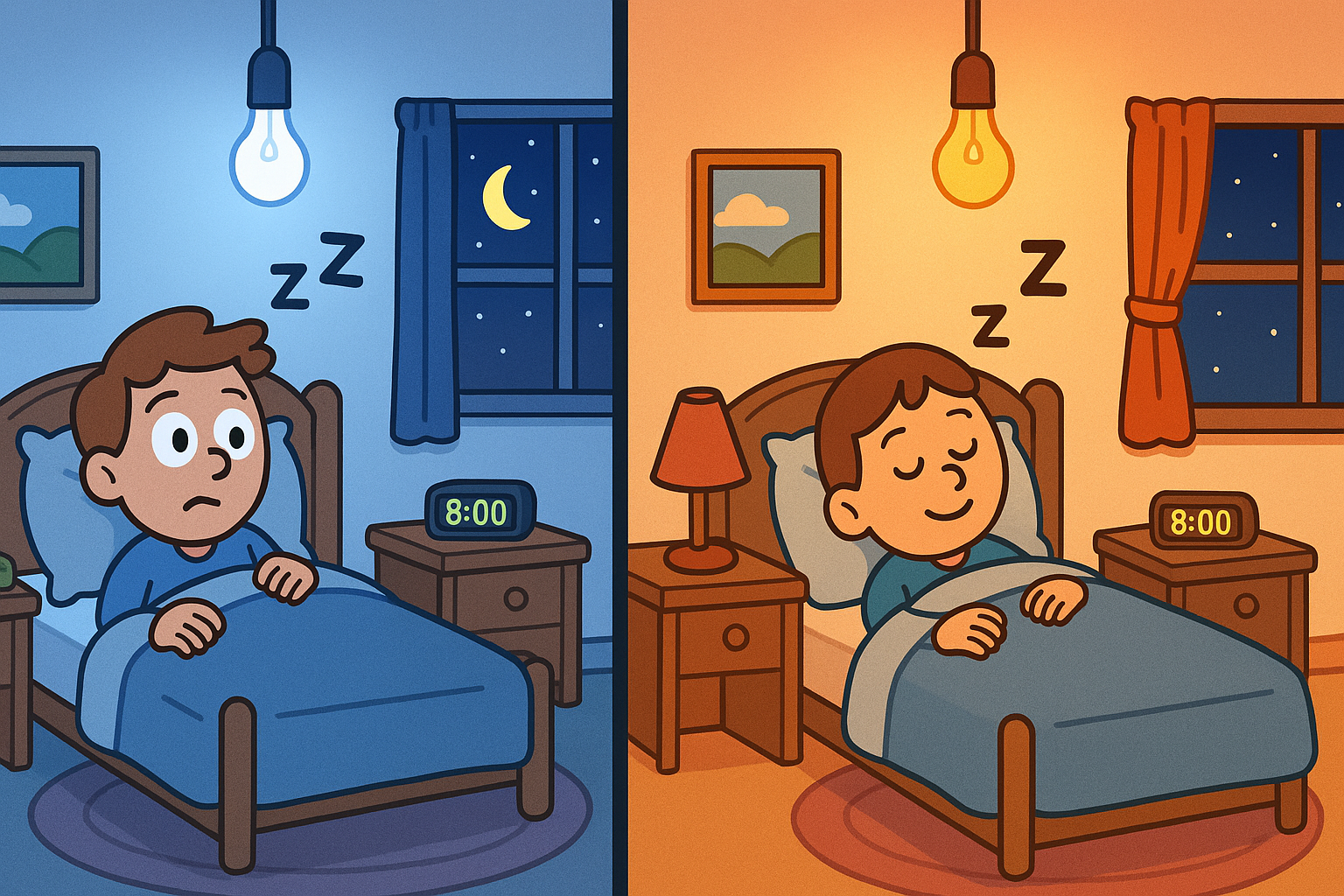
This was echoed by a 2019 clinical trial in Physiology & Behavior. Researchers exposed participants to either standard white light or a special blue-enriched light for 6.5 hours at night. The blue-enriched light suppressed melatonin by nearly 71 percent, while the standard light only suppressed it by 43 percent. The blue-enriched group also reported feeling significantly more alert.
The Invisible Problem of Light Flicker
Some artificial lights have a hidden feature. They flicker on and off at speeds too fast for the human eye to see. While we might perceive a steady glow, our biological clock still registers the rapid changes in brightness.
Researchers in Japan tested how this invisible flicker affects our hormones. A 2018 study in the Journal of Physiological Anthropology found that both steady blue light and 100-Hz flickering blue light suppressed melatonin similarly after 30 minutes of exposure. A follow-up 2020 study in Neuroscience Letters suggested that under certain conditions, flickering light might actually suppress melatonin even more than steady light. This means the quality of the electronics driving our lightbulbs is just as important as their color.
Who Needs Caution: Children and Older Adults
The way our bodies react to light changes as we age. Research shows that children are particularly vulnerable to the effects of artificial light.
A 2018 study in Physiological Reports compared how children and adults respond to nighttime LED lighting. The researchers found that children experienced significantly greater melatonin suppression than adults under the exact same lighting conditions. Because children have larger pupils and clearer lenses in their eyes, more light reaches their retinas.
On the other end of the spectrum, older adults experience a natural yellowing of the eye’s lens. This yellowing acts like a built-in filter that blocks some blue light. While this means older adults experience slightly less melatonin suppression from screens, a 2019 systematic review in Chronobiology International noted that their overall circadian rhythms are still highly sensitive to disruption.
Beyond Sleep: Metabolic and Whole-Body Health
Chronodisruption (the breaking of our natural biological rhythms) does more than just make us tired the next day. Every organ in the body has its own internal clock, and when the brain’s master clock gets confused by nighttime light, the rest of the body suffers.
A 2025 review in the International Journal of Environmental Research and Public Health explored how artificial light at night impacts liver health. The researchers found that disrupted sleep and suppressed melatonin alter how the body processes glucose and fats. This can lead to Insulin resistance (IN-suh-lin ree-ZIS-tuhns) – when your body stops responding well to the hormone that controls blood sugar. Over time, this biological confusion promotes fat buildup in the liver and increases the risk of metabolic diseases.
Related: What Science Actually Says About Weight Loss and Obesity
The brain also takes a physical toll. A 2024 study in Frontiers in Pharmacology exposed mice to dim blue light at night. The researchers observed that the light exposure caused neuroinflammation (swelling and stress in the brain cells) and impaired memory. Remarkably, when the mice were given a melatonin supplement, the brain inflammation decreased, and neuron damage was reversed.
Practical Guidance: Do Blue Light Glasses and Apps Work?
Since we cannot easily abandon our phones and modern lighting, many people turn to products designed to block blue light. But do they actually work?
Amber Glasses Show Strong Results
Physical glasses that feature amber or orange-tinted lenses are highly effective at blocking short-wavelength light.
A 2018 randomized controlled trial in the Journal of Psychiatric Research tested these glasses on adults suffering from insomnia. The participants wore either amber-tinted glasses or clear placebo glasses for two hours before bed every night for a week. The group wearing the amber glasses reported significantly better sleep quality, improved soundness of sleep, and longer total sleep times.
Even in very bright environments, these glasses hold up. A 2026 study in The Tohoku Journal of Experimental Medicine placed healthy adults in a brightly lit room (about 2,000 lux). Without glasses, their melatonin plummeted. But when wearing blue light-blocking glasses, their melatonin levels remained just as high as if they were sitting in a dimly lit room.
Smartphone Apps Are Less Reliable
Many smartphones now feature built-in “night shift” modes that turn the screen a warmer, orange color. While this reduces some blue light, it may not be enough to fully protect your sleep.
A 2024 observational study in Electromagnetic Biology and Medicine surveyed smartphone users about their sleep habits and use of blue light filter apps. The researchers did not find sustained, long-term improvements across all sleep quality parameters for those using the apps. Unlike physical glasses that block light from all sources in a room, a phone app only changes the phone screen, leaving you exposed to overhead lights and televisions.
Daytime Sunlight is a Natural Buffer
One of the best ways to protect yourself from nighttime light is to get more light during the day. Research shows that robust exposure to bright daylight helps anchor your circadian rhythm. A 2020 study noted that participants who received sufficient daylight exposure were able to advance their melatonin onset, buffering some of the negative effects of evening screen time.
Where The Science Is Still Uncertain
While the link between evening blue light and delayed sleep is well-established, there is still debate about whether screens can cause permanent physical damage to our eyes.
Some laboratory studies on isolated animal cells have shown that high-intensity blue light can cause oxidative stress and damage to the retina. However, as noted in a 2019 review, there is currently no consistent evidence that long-term exposure to the low-intensity blue light emitted by consumer electronics causes permanent retinal damage or blindness in humans. The primary hazard of our screens remains their impact on our biological clocks, not our physical eye tissue.
Common Questions About Blue Light and Sleep
Is all blue light bad for my health?
No. Blue light is completely natural and highly beneficial during the day. It comes from the sun and helps regulate your mood, alertness, and cognitive function. It only becomes a problem when viewed after sunset.
Can I just turn down the brightness on my phone?
Dimming your screen helps reduce the overall intensity of the light, which is a good step. However, even dim blue light can trigger the sensitive receptors in your eyes to delay melatonin production.
Do clear blue-light glasses work as well as orange ones?
Clear lenses with a slight blue-blocking coating typically only block about 10 to 20 percent of blue light. For noticeable sleep benefits, researchers generally use dark amber or orange lenses, which block over 60 percent of the specific wavelengths that disrupt sleep.
The Bottom Line
The science is clear that artificial light at night, particularly blue light from screens and cool-white LED bulbs, disrupts our biological clocks. By suppressing melatonin, this light delays sleep onset, reduces sleep quality, and can have ripple effects on our metabolic and brain health.
While we cannot avoid screens entirely, we can manage our exposure. The evidence strongly supports using warm-toned lighting in the evening, wearing amber-tinted glasses if using screens before bed, and prioritizing bright outdoor sunlight during the day to keep our internal clocks running smoothly.
Quick Reference: Key Studies
| Study Focus | Key Finding | Source |
|---|---|---|
| Insomnia and Amber Glasses | Wearing amber-tinted glasses for 2 hours before bed significantly improved sleep quality and duration. | PMID 29101797 |
| LED Screens vs. Sleep | 5 hours of evening exposure to an LED screen suppressed melatonin and increased nighttime alertness compared to a non-LED screen. | PMID 21415172 |
| Children’s Sensitivity | Children experienced significantly greater melatonin suppression from LED lighting than adults. | PMID 30556352 |
| Home Lighting Types | Cool white LEDs and CFLs suppressed melatonin far more than warm white or incandescent bulbs. | PMID 41565717 |
| Light and Liver Health | Disrupted circadian rhythms from nighttime light exposure are linked to metabolic dysfunction and liver health issues. | PMID 41302675 |
| Bright Light and Glasses | Blue light-blocking glasses successfully prevented melatonin suppression even in a brightly lit room. | PMID 40603104 |
Last updated: October 2026
This article synthesizes findings from peer-reviewed research. It is for educational purposes only and does not constitute medical advice. Consult a healthcare provider before starting any new regimen.

Leave a Reply