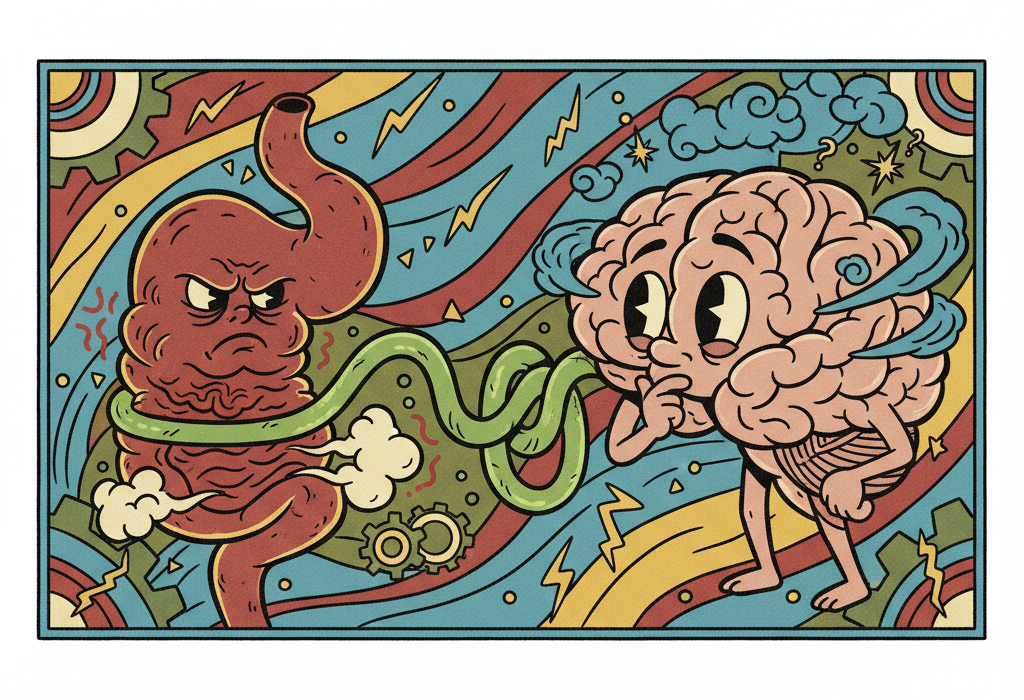
Have you ever felt “butterflies” in your stomach when you were nervous? That familiar flutter is a real-time demonstration of the gut-brain connection. The brain and the digestive system are in constant communication. But this connection goes far beyond temporary nervousness.
Recent scientific research reveals that chronic inflammation in the gut can physically alter how the brain works. When the balance of bacteria in your digestive tract is disrupted, it can send inflammatory signals all the way to your brain. This process is now believed to play a significant role in memory loss, mood changes, and even age-related cognitive decline.
In this article, we will explore exactly how gut inflammation reaches the brain, what the latest research shows about this connection, and what steps you can take to protect your cognitive health.
How Does Gut Inflammation Reach the Brain?
The human digestive tract is home to trillions of microorganisms. This community of bacteria, viruses, and fungi is known as the gut microbiome (my-kroh-BY-ohm). When these microbes are balanced, they help digest food, produce vitamins, and keep the immune system calm.
However, poor diet, stress, or illness can cause an imbalance of these microbes, a state called dysbiosis (dis-bye-OH-sis). Dysbiosis leads to low-grade, chronic inflammation. But how does a problem in the intestines cause trouble in the brain? Science points to three main pathways.
1. The Vagus Nerve: The Direct Phone Line
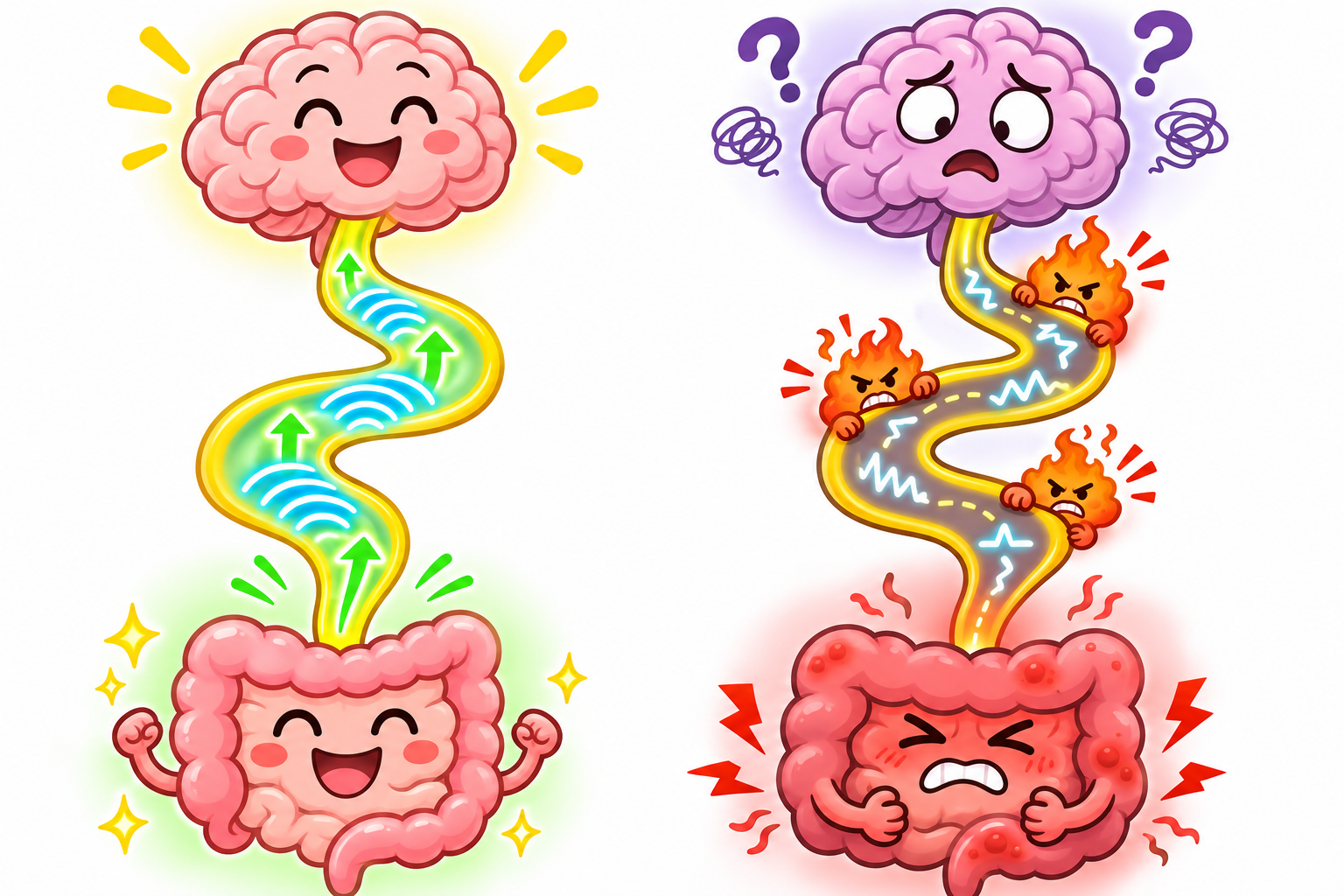
The vagus nerve (VAY-gus nerve) is a long, thick nerve that acts as a direct communication cable between the gut and the brain. It monitors what is happening in the digestive tract and sends updates to the brain.
A 2026 study in Nature discovered that as we age, certain gut bacteria begin to produce specific fatty acids. These fatty acids trigger immune cells in the gut to become inflamed. This local inflammation essentially “jams” the signals traveling up the vagus nerve. When the brain receives these weakened or distorted signals, the hippocampus (the brain’s memory center) stops functioning optimally, leading to memory loss.
2. The Blood-Brain Barrier: A Leaky Fortress
The brain is protected by a highly selective filter called the blood-brain barrier (blood-brain BARE-ee-er). This barrier allows nutrients in but keeps toxins and immune cells out.
When the gut is inflamed, the physical lining of the intestines can weaken. This allows harmful bacterial fragments, such as lipopolysaccharide (lip-oh-poly-SACK-uh-ride) or LPS, to leak into the bloodstream. Related: What Science Actually Says About Leaky Gut and Your Health.

Once in the blood, these inflammatory molecules circulate throughout the body. A 2021 review in Cellular & Molecular Immunology explains that chronic systemic inflammation can physically damage the blood-brain barrier. When the barrier becomes “leaky,” peripheral immune cells and inflammatory molecules can cross into the brain, causing damage. Related: How the Blood-Brain Barrier Protects Your Brain (And What Happens When It Leaks).
3. Microglia: The Brain’s Security Guards
The brain has its own dedicated immune cells called microglia (my-kroh-GLEE-uh). Their job is to patrol the brain, clear away cellular waste, and fight off infections.
Normally, microglia are helpful. But a 2024 review in Ageing Research Reviews highlights that signals from an inflamed gut can cause microglia to become stuck in an overactive, aggressive state. Instead of just cleaning up waste, these overactive microglia begin attacking healthy brain cells. This process, known as neuroinflammation, is a core feature of many cognitive disorders.

What the Research Shows: Gut Bacteria and Brain Diseases
Scientists are actively investigating how this gut-brain communication influences specific neurological conditions. The findings show that the microbiome plays a surprisingly central role in brain health.
Alzheimer’s Disease and Cognitive Decline
Alzheimer’s disease is characterized by the buildup of sticky proteins (amyloid plaques) in the brain. For years, researchers viewed this strictly as a brain disease. Now, evidence suggests the gut is heavily involved.
A 2022 study in Gut tested this by taking fecal samples from human Alzheimer’s patients and transferring them into mice that were bred to have no gut bacteria of their own. The mice that received the Alzheimer’s microbiome quickly developed severe brain inflammation, increased plaque buildup, and memory problems. Mice that received a microbiome from healthy humans did not experience these severe changes.
Similarly, a 2022 study in Microbiome found that transferring the gut bacteria from old mice into young mice caused the young mice to develop brain inflammation. Remarkably, transferring the gut bacteria from young mice into old mice actually reversed signs of brain aging and reduced inflammation.
Parkinson’s Disease and Motor Function
Parkinson’s disease affects movement and is caused by the death of specific neurons in the brain. Interestingly, many people with Parkinson’s experience severe digestive issues, such as constipation, years before their motor symptoms appear.
A landmark 2016 study in Cell used mice genetically prone to developing Parkinson’s-like symptoms. The researchers found that if these mice were raised in a sterile environment without any gut bacteria, they developed almost no motor deficits or brain inflammation. However, when the mice were given gut bacteria, their motor symptoms rapidly appeared. This suggests that, at least in mice, gut microbes are actually required to trigger the disease’s physical symptoms.
Mood, Depression, and Pain
Gut inflammation does not just affect memory and movement; it also influences mood and pain perception.
A 2023 review in the Journal of Integrative Neuroscience outlines how gut dysbiosis contributes to Major Depressive Disorder. Inflammatory signals from the gut can alter the production of neurotransmitters like serotonin, much of which is actually produced in the digestive tract. Furthermore, a 2019 review in the British Journal of Anaesthesia notes that gut bacteria can increase sensitivity to chronic pain by keeping the nervous system in a state of high alert.
| Feature | Healthy Gut-Brain Axis | Inflamed Gut-Brain Axis |
|---|---|---|
| Gut Lining | Strong and intact | Weakened (Leaky Gut) |
| Systemic Signals | Calming short-chain fatty acids | Inflammatory molecules (LPS) |
| Vagus Nerve | Sends clear, healthy signals | Signals are jammed or distorted |
| Blood-Brain Barrier | Blocks toxins and immune cells | Becomes permeable (leaky) |
| Brain Immune Cells | Clean up waste normally | Become overactive and damage neurons |
Practical Guidance: How to Protect Your Gut-Brain Axis
The science clearly shows that an inflamed gut is bad news for the brain. Fortunately, the gut microbiome is highly responsive to lifestyle changes. Research supports a few specific strategies to lower gut inflammation.
Adopt an Anti-Inflammatory Diet
Diet is the most powerful tool for shaping the gut microbiome. A 2019 review in Current Nutrition Reports analyzed how dietary patterns impact cognitive aging. The researchers found that diets rich in fiber, antioxidants, and healthy fats consistently protect the brain.
The Mediterranean diet and the DASH diet (Dietary Approaches to Stop Hypertension) are two of the most heavily researched frameworks. These diets emphasize vegetables, fruits, whole grains, nuts, and olive oil, while minimizing processed meats and refined sugars. These foods provide the fiber that healthy gut bacteria need to produce calming, anti-inflammatory molecules.
Consider Intermittent Fasting
Giving the digestive system a break may also help. A 2025 study in Gut looked at adults with obesity who followed an alternate-day fasting routine. The researchers found that the fasting routine changed the composition of the participants’ gut microbiota. These microbial changes helped calm overactive immune cells (microglia) in the brain, which in turn improved the participants’ cognitive test scores.
Probiotics and Prebiotics
Probiotics are live beneficial bacteria, while prebiotics are the fibers that feed them. A 2021 review in Biomolecules analyzed clinical trials using specific strains of probiotics (often called “psychobiotics”) to treat depression. While results vary from person to person, several studies showed that taking specific combinations of Lactobacillus and Bifidobacterium helped lower stress hormones and improve mood by calming the gut-brain axis.
Where The Science Is Still Uncertain
While the connection between the gut and the brain is fascinating, it is important to view the research objectively.
Most of the dramatic findings linking gut bacteria directly to Alzheimer’s and Parkinson’s diseases come from animal studies. Mice have different immune systems and microbiomes than humans. While we can confidently say that gut inflammation influences brain health in humans, scientists do not yet know if fixing the gut can actually cure or reverse complex neurodegenerative diseases in people.
Additionally, there is no “one-size-fits-all” perfect microbiome. What looks like a healthy balance of bacteria for one person might be different for another. Because of this, taking a generic probiotic supplement is not a guaranteed way to improve brain health.
Common Questions About Gut Inflammation and Brain Health
Can stomach problems cause brain fog?
Yes. When the gut is inflamed, it releases inflammatory molecules into the bloodstream. If these molecules reach the brain, they can slow down processing speed and cause the temporary cognitive sluggishness commonly known as brain fog.
Does sugar cause gut inflammation?
High amounts of refined sugar can feed harmful bacteria in the gut and promote dysbiosis. Over time, this imbalance can damage the intestinal lining and increase systemic inflammation, which negatively impacts brain health.
How long does it take to change the gut microbiome?
The gut microbiome is highly adaptable. Research shows that changing your diet can alter the balance of bacteria in your digestive tract in as little as a few days. However, maintaining those changes requires long-term dietary habits.
The Bottom Line
The digestive system and the brain are deeply intertwined. Research shows that when the gut becomes chronically inflamed, it can send distress signals through the vagus nerve, compromise the blood-brain barrier, and trigger immune cells in the brain to become overactive. This chain reaction contributes to cognitive decline, mood disorders, and neurodegenerative conditions.
While much of the specific disease research is still limited to animal models, the general principle is clear: protecting your gut protects your brain. Eating an anti-inflammatory diet rich in fiber, managing stress, and maintaining a healthy lifestyle are evidence-based ways to support a healthy gut-brain axis.
Quick Reference: Key Studies
| Study Focus | Key Finding | Source |
|---|---|---|
| Memory & Vagus Nerve | Gut bacteria producing medium-chain fatty acids triggered immune cells to block vagus nerve signals, causing memory loss in mice. | Nature (2026) |
| Alzheimer’s Disease | Transferring human Alzheimer’s gut bacteria into mice worsened brain plaques and cognitive deficits. | Gut (2022) |
| Brain Aging | Fecal transplants from young mice to old mice reversed age-related brain inflammation and functional decline. | Microbiome (2022) |
| Parkinson’s Disease | Gut microbes were required for mice to develop the motor deficits and brain inflammation associated with Parkinson’s. | Cell (2016) |
| Fasting & Cognition | Fasting-induced changes in the gut microbiome reduced microglia activation and improved cognitive function in humans. | Gut (2025) |
| Diet & Brain Health | Anti-inflammatory diets (like Mediterranean and DASH) inhibit neuroinflammation and protect against cognitive decline. | Current Nutrition Reports (2019) |
Last updated: November 2026
This article synthesizes findings from peer-reviewed research. It is for educational purposes only and does not constitute medical advice. Consult a healthcare provider before starting any new regimen.
Leave a Reply