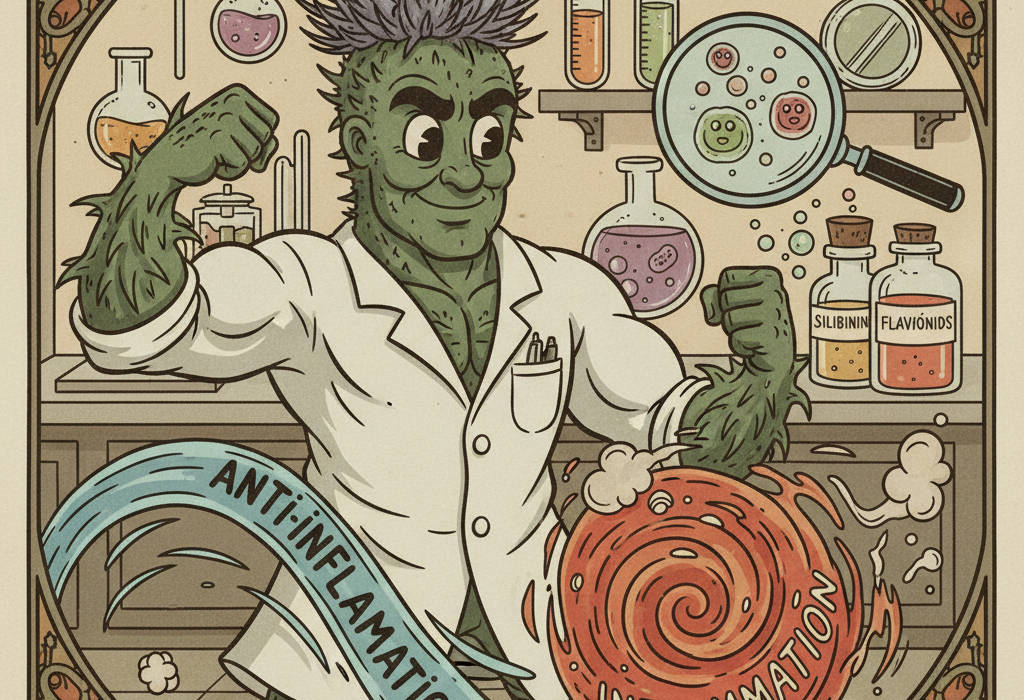
Milk thistle is best known as a traditional remedy for liver health. Walk into any health food store, and you will see it marketed as a way to “detox” or protect the liver from damage. However, modern scientists are increasingly interested in milk thistle for a completely different reason: its potential to fight inflammation throughout the entire body.
Does milk thistle actually reduce inflammation? Laboratory and animal studies show that the active compounds in milk thistle strongly block major inflammatory pathways, specifically targeting a cellular “master switch” called NF-κB. However, while the biological mechanisms are clear, human clinical trials are still emerging, meaning we cannot yet call it a proven treatment for systemic inflammatory conditions like arthritis.
This article breaks down what peer-reviewed research actually says about milk thistle, how it interacts with your body’s immune response, and where the science is still uncertain.
How This Might Work: The Biology of Milk Thistle
To understand how milk thistle affects inflammation, we have to look at its chemical makeup. The plant itself is not the medicine. Instead, the benefits come from a cluster of compounds extracted from its seeds.
- Silymarin (sill-ih-MARE-in) – the broad name for the active extract taken from milk thistle seeds.
- Silibinin (sill-ih-BYE-nin) – the most abundant and biologically active individual compound found within silymarin.
When your body encounters stress, toxins, or infections, it triggers an immune response. A key player in this response is NF-κB (en-eff-kap-uh-bee), a protein complex that acts like a fire alarm inside your cells. When NF-κB is activated, it tells the cell to release cytokines (SIGH-toe-kines), which are chemical messengers that cause inflammation. Two of the most heavily studied inflammatory cytokines are Interleukin-6 (IL-6) and Tumor Necrosis Factor-alpha (TNF-alpha).
Think of NF-κB as the fire alarm and cytokines as the sprinkler system. In a real emergency, you want the sprinklers on. But in chronic conditions, the alarm gets stuck in the “on” position, causing constant, low-level inflammation that damages healthy tissue.

According to a 2026 review in Pathology, Research and Practice, silibinin acts by cutting the wire to the fire alarm. It physically prevents the activation of NF-κB, which in turn stops the cell from releasing inflammatory cytokines. By halting this process at the source, silymarin prevents the cascade of inflammation that can lead to tissue damage.
What the Research Shows
Scientists have tested silymarin and silibinin across a variety of conditions to see how well these anti-inflammatory properties hold up. The results show a distinct pattern: highly effective in laboratory cells and animals, but requiring more rigorous testing in humans.
Liver Inflammation and Metabolic Health
Because milk thistle is processed by the liver, this organ receives the highest concentration of its active compounds. Consequently, liver inflammation is the most heavily researched area for this plant.
When the liver is constantly inflamed, it begins to develop scar tissue, a condition known as fibrosis. A 2016 study in the Journal of Medicinal Food tested whether silymarin could reverse liver fibrosis in rats exposed to a toxic chemical. The researchers found that administering silymarin significantly decreased levels of IL-6 and deactivated the NF-κB pathway. Most notably, higher doses of silymarin actively reduced the amount of scar tissue by suppressing the cells responsible for creating it.
In human studies, the results are promising but nuanced. A 2025 clinical trial in Chemistry & Biodiversity tested a combination of silymarin and curcumin (from turmeric) on patients with nonalcoholic fatty liver disease. Over four weeks, the participants saw significant improvements in liver enzyme indicators and serum lipid levels, suggesting a reduction in localized liver stress.
However, a 2025 study in the World Journal of Hepatology looked at silymarin combined with alpha-lipoic acid and a Mediterranean diet for steatotic liver disease. While the intervention successfully reduced visceral fat, it did not significantly change key metabolic markers like transaminases or overall lipid profiles. The researchers noted that while the anti-inflammatory mechanisms are sound, more advanced imaging and longer human trials are needed to prove long-term metabolic benefits.
Immune System and Viral Inflammation
Viruses often hijack the body’s inflammatory response, causing excessive cytokine release that damages healthy cells. Hepatitis C is a prime example of a virus that causes chronic, damaging inflammation in the liver.
A 2007 study in Gastroenterology examined how a highly standardized silymarin extract (MK-001) affected human immune cells and liver cells infected with Hepatitis C. The researchers found that silymarin potently inhibited the secretion of TNF-alpha from human T-cells. Furthermore, it directly inhibited the virus’s ability to infect liver cells. The researchers concluded that silymarin exerts strong anti-inflammatory and antiviral effects, largely by suppressing the NF-κB pathway.
Brain and Tissue Inflammation
Inflammation is a primary driver of neurodegenerative diseases and poor wound healing. While research here is strictly in the early phases, the anti-inflammatory mechanisms of silymarin appear to cross over into these areas.
- Brain Health: A 2014 review in Planta Medica highlighted that silibinin protects against oxidative stress in models of Alzheimer’s disease. In animal studies, silibinin reduced inflammatory markers like TNF-alpha in the hippocampus and prevented the accumulation of harmful amyloid proteins.
- Wound Healing: A 2026 review in Medicine explored silymarin’s potential for diabetic wound healing. Diabetic wounds struggle to heal due to a constant state of chronic inflammation and poor blood flow. The review found that silymarin promotes wound closure by scavenging free radicals and downregulating inflammatory pathways, though human clinical trials are still needed to confirm these effects.
The Core Tension: Lab Results vs. Clinical Reality
If milk thistle is such a potent anti-inflammatory agent in the lab, why is it not prescribed for every inflammatory condition?
The answer lies in the gap between in vitro (test tube) studies and human clinical trials. It is relatively easy to drop silymarin onto a petri dish of inflamed cells and watch the inflammation subside. It is much harder to get a human being to swallow a capsule and have enough of that compound reach their inflamed knee joints to make a difference.

This tension is perfectly illustrated in a 2026 report in Zeitschrift fur Rheumatologie. The German Society for Rheumatology evaluated several herbal preparations, including milk thistle, for their potential to treat inflammatory joint diseases like rheumatoid arthritis. The committee acknowledged that silymarin shows clear anti-inflammatory and immunological effects in laboratory and animal models. However, they concluded that the evidence for clinical benefit in humans is currently too sparse. Therefore, they do not actively recommend milk thistle for joint diseases, though they note there is no reason to discourage patients from trying it safely alongside standard care.
Practical Guidance: The Bioavailability Problem
One of the main reasons human trials sometimes fail to replicate laboratory success is poor bioavailability. Bioavailability refers to how much of a substance actually enters your bloodstream and reaches its target tissue after you consume it.
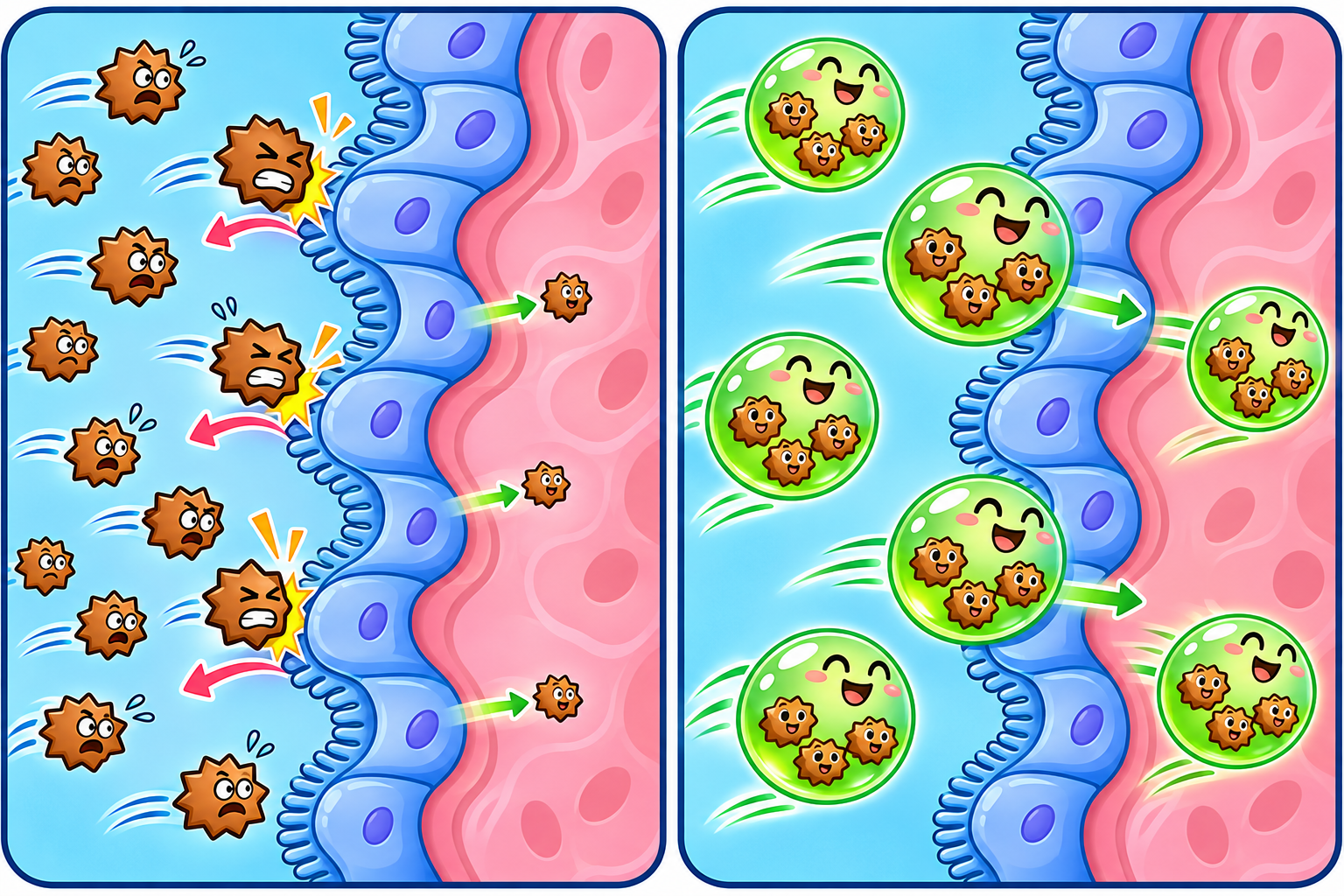
Silymarin is highly lipophilic, meaning it dissolves well in fats but poorly in water. Because the human digestive tract is a watery environment, raw milk thistle powder or standard extracts are poorly absorbed. You could take a large dose, but your body might only absorb a tiny fraction of it.
To solve this, scientists and supplement manufacturers have developed delivery systems to improve absorption. According to a 2009 review in Alternative Medicine Review, binding silymarin to phospholipids (fats) creates a “phytosome” complex. This process wraps the silymarin in a fat-soluble layer that easily passes through the intestinal wall. Studies show that these phytosome complexes significantly improve the clinical applicability and absorption of milk thistle compared to standard extracts.
Related: What Blood Tests for Inflammation Actually Tell Us About Your Health
Who Benefits Or Needs Caution
Milk thistle is generally considered very safe for most people, but certain populations should exercise caution.
Who might benefit:
- Individuals looking for complementary support for liver health, particularly those dealing with metabolic liver stress or recovering from toxin exposure.
- People seeking general antioxidant support, as silymarin increases the body’s natural production of glutathione, a powerful internal antioxidant.
Who needs caution:
- Allergy sufferers: Milk thistle belongs to the Asteraceae/Compositae plant family. According to a 2015 review in Anti-Cancer Drugs, people who are allergic to ragweed, chrysanthemums, marigolds, or daisies may also have allergic reactions to milk thistle.
- People on specific medications: A 2013 review in Integrative Cancer Therapies noted that while milk thistle is safe in normal doses (up to 13 grams per day in some trials), very high doses might inhibit certain liver enzymes (like UGT1A1) that process medications. Always consult a doctor before mixing supplements with prescription drugs.
Related: What Science Actually Says About Milk Thistle Benefits
Common Questions About Milk Thistle and Inflammation
Does milk thistle help with joint pain and arthritis?
While laboratory studies show that milk thistle blocks the inflammatory pathways responsible for arthritis, there are currently no large-scale human clinical trials proving it relieves joint pain. Medical guidelines do not currently recommend it as a primary treatment for arthritis.
How long does it take for milk thistle to reduce inflammation?
In clinical trials focusing on liver health, patients typically take milk thistle for four to twelve weeks before researchers measure significant changes in liver enzymes or inflammatory markers. It is not a fast-acting pain reliever like ibuprofen.
Can I get enough silymarin from drinking milk thistle tea?
Because silymarin does not dissolve well in water, traditional teas made from crushed milk thistle seeds provide very low amounts of the active anti-inflammatory compounds. Standardized extracts or phytosome capsules are generally required to achieve clinical doses.
The Bottom Line
The science is clear that silymarin, the active compound in milk thistle, is a potent anti-inflammatory agent at the cellular level. It successfully blocks NF-κB, preventing cells from releasing the cytokines that cause tissue damage and chronic inflammation.
However, there is a distinct gap between laboratory success and human application. While there is solid evidence supporting its use for localized liver inflammation, the evidence for systemic conditions like arthritis or neurodegeneration remains limited to animal and test-tube studies. If you choose to use milk thistle for its anti-inflammatory properties, look for highly bioavailable formulations (like phytosomes) and view it as a complementary approach rather than a replacement for standard medical care.
Quick Reference: Key Studies
| Study Focus | Key Finding | Source |
|---|---|---|
| Liver Fibrosis | Silymarin decreased IL-6, NF-κB, and reversed early liver fibrosis in toxic animal models. | PMID 27441792 |
| Viral Inflammation | Standardized silymarin inhibited T-cell TNF-alpha secretion and reduced Hepatitis C infection in human cells. | PMID 17484885 |
| Metabolic Liver Health | Silymarin combined with curcumin improved liver enzymes and serum lipids in patients with NAFLD. | PMID 40513108 |
| Rheumatology Guidelines | German guidelines note in vitro anti-inflammatory effects but state human evidence is insufficient to recommend for arthritis. | PMID 42448806 |
| Bioavailability | Binding silymarin to phospholipids (phytosomes) significantly improves its absorption and clinical efficacy. | PMID 19803548 |
| Wound Healing | Silymarin shows potential to accelerate diabetic wound healing by reducing localized inflammation and oxidative stress. | PMID 41731804 |
Last updated: November 2026
This article synthesizes findings from peer-reviewed research. It is for educational purposes only and does not constitute medical advice. Consult a healthcare provider before starting any new regimen.


Leave a Reply