
Introduction
Ten years ago, the peak of wearable technology was a plastic clip-on device that counted how many steps you took in a day. If you hit 10,000, it buzzed, and you felt accomplished. Today, the device on your wrist is vastly more powerful. It can likely measure your blood oxygen levels, detect irregular heart rhythms, estimate your stress levels, and track your sleep stages.
But we are currently standing on the edge of an even bigger shift. Science is moving beyond measuring just movement (physics) to measuring molecules (chemistry). New research suggests that the next generation of wearables won’t just tell you if you ran fast enough; they might tell you if your blood sugar is spiking, if your cortisol levels indicate burnout, or if you are dehydrated before you even feel thirsty.
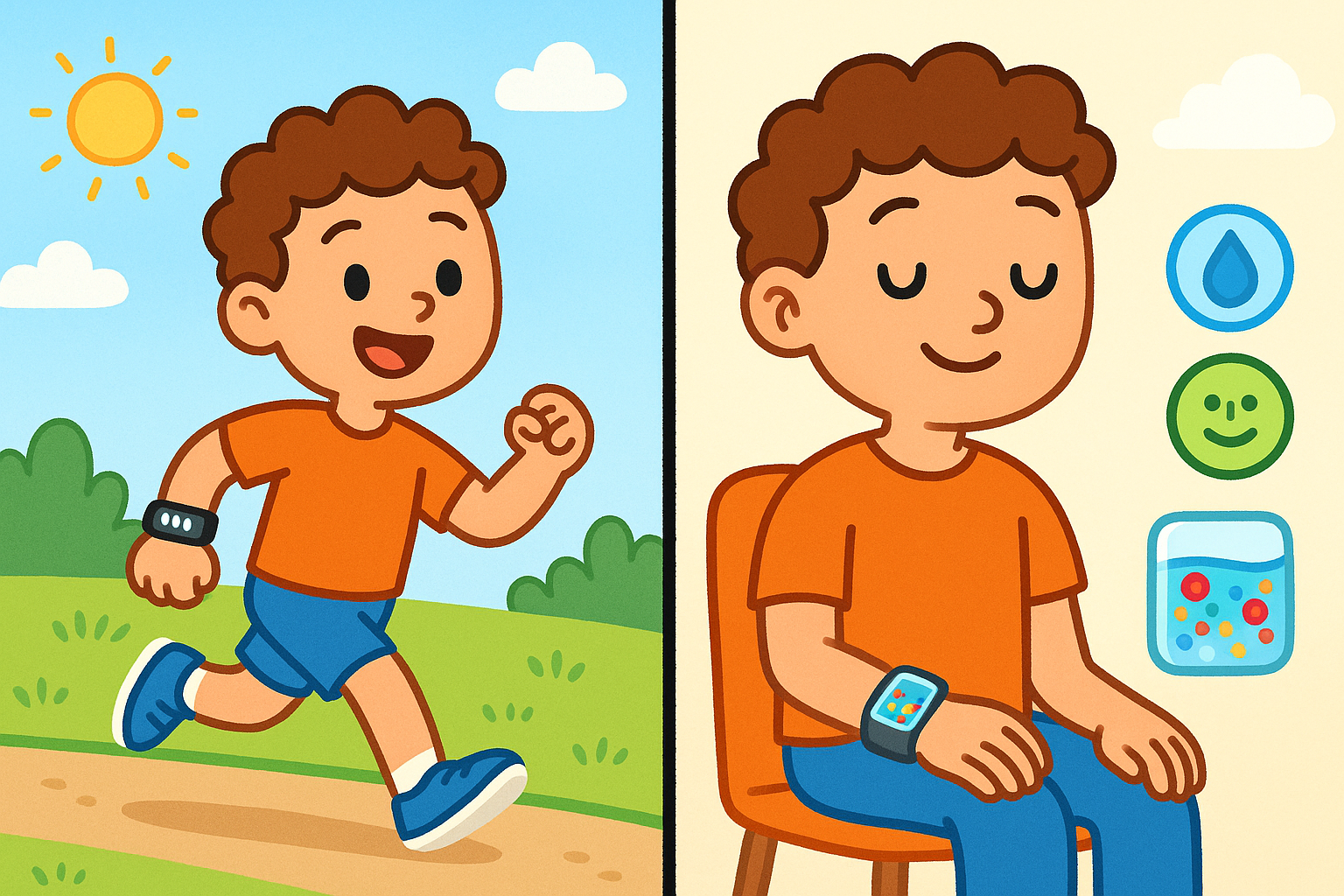
However, this flood of data comes with a catch. Does knowing every beat of your heart make you healthier, or just more anxious? Are these devices accurate for everyone, or do they leave certain people behind? This article explores the latest research on wearable health monitors, from sweat sensors to stress trackers, to separate the medical breakthroughs from the marketing hype.
From Motion to Molecules: The New Wave of Sensors
Most commercial wearables today (like Fitbits or Apple Watches) rely on optical sensors and accelerometers. They shine lights into your skin to see blood flow or measure how fast you are moving. While useful, this is an external view of your health. A 2024 perspective in Nature highlights that the field is rapidly moving toward “applied body-fluid analysis.”
Instead of just looking at the skin, new devices are analyzing fluids on or under the skin, specifically sweat and interstitial fluid (the fluid between your cells).
The “Lab on Skin” Concept
Researchers are developing epidermal microfluidics (ep-uh-DER-mul my-kro-floo-ID-iks): essentially soft, flexible patches that channel sweat into tiny sensors. According to a 2023 review in ACS Sensors, these devices can measure:
- Electrolytes: Sodium and potassium levels to guide hydration strategies for athletes.
- Metabolites: Glucose and lactate levels to monitor energy and muscle fatigue.
- Hormones: Cortisol levels to objectively measure stress.
Because sweat glands are densely packed on the skin, these sensors can provide a non-invasive window into what is happening inside the blood. For example, a 2021 study in Molecules notes that wearable biosensors are evolving to detect everything from bacteria to alcohol levels, potentially replacing invasive blood draws for routine monitoring.

Heart Health: The Double-Edged Sword
Cardiovascular monitoring is the most established feature of modern wearables. Devices can now track Heart Rate Variability (HRV) and detect Atrial Fibrillation (AFib), an irregular heart rhythm that increases stroke risk.
What the Research Shows
A 2022 review in Biosensors found that commercial wearables are increasingly effective at monitoring heart rate and blood oxygen saturation ($SpO_2$). For patients with known cardiovascular issues, this continuous monitoring is a safety net. It allows for “remote patient monitoring,” where doctors can see trends without the patient needing to visit a clinic.
However, there is a psychological cost. A 2024 study in the Journal of the American Heart Association investigated patients with AFib who used wearables. The researchers found that while wearables increased the detection of heart issues, they also increased health care usage and anxiety.
- The Findings: Wearable users were more likely to be preoccupied with their symptoms and contact their doctors frequently.
- The Anxiety Factor: 20% of users reported experiencing intense fear or anxiety in response to irregular rhythm notifications.
This creates a tension in the medical community: wearables are excellent for catching problems early, but they can also turn patients into hyper-vigilant watchers of their own data, potentially decreasing their quality of life through worry.
Can a Watch Detect Mental Health Issues?
One of the most active areas of research is the use of wearables to detect stress, anxiety, and depression. This is often done by measuring the Autonomic Nervous System (ANS), the system that controls your “fight or flight” response.
Measuring the Invisible
How does a watch know you are stressed? It typically combines two metrics:
1. Heart Rate Variability (HRV): A healthy heart does not beat like a metronome; the time between beats varies. High variability usually means you are relaxed and resilient. Low variability often indicates stress.
2. Electrodermal Activity (EDA): This measures how well your skin conducts electricity, which changes based on microscopic amounts of sweat produced when you are emotionally aroused.
A 2021 systematic review in Sensors found that HRV is the most reliable metric for detecting anxiety and stress. The review noted that average heart rate alone is often not accurate enough to distinguish stress from simple physical activity.
Furthermore, a 2022 scoping review highlighted that while identifying acute stress is becoming reliable, diagnosing complex conditions like depression using only wearables is much harder. Depression detection often requires analyzing long-term behavioral patterns, such as sleep disruption, reduced physical movement, and location variance (staying home more), rather than a single physiological signal.
Related: Ashwagandha: The Ancient Stress-Reliever That Science Is Finally Catching Up With
Specialized Applications: From Pregnancy to Sports
Maternal and Fetal Health
Wearables are making significant strides in prenatal care. A 2023 systematic review detailed how sensors can now monitor fetal heart rates and fetal movement (kicks) alongside the mother’s health. These devices, often worn as abdominal patches or belts, allow for high-risk pregnancies to be monitored at home, reducing the need for constant hospital visits. However, the study noted that most of these are still used in controlled environments and need more testing in “free-living” conditions.
Sports Performance
In the athletic world, wearables have moved beyond simple timing. A 2016 review in Sports Health describes how GPS units and accelerometers are used to quantify “workload”: the total physical stress placed on an athlete. By monitoring these metrics, coaches can prevent injury by ensuring an athlete doesn’t train too hard too quickly. New hydration sensors (mentioned in the 2023 ACS Sensors paper) are also entering the market, telling athletes exactly how much salt and water they have lost and need to replace.
The Limitations: Where the Tech Falls Short
Despite the excitement, significant barriers remain. It is important to treat wearable data as an estimate, not a medical diagnosis.
Skin Tone Bias
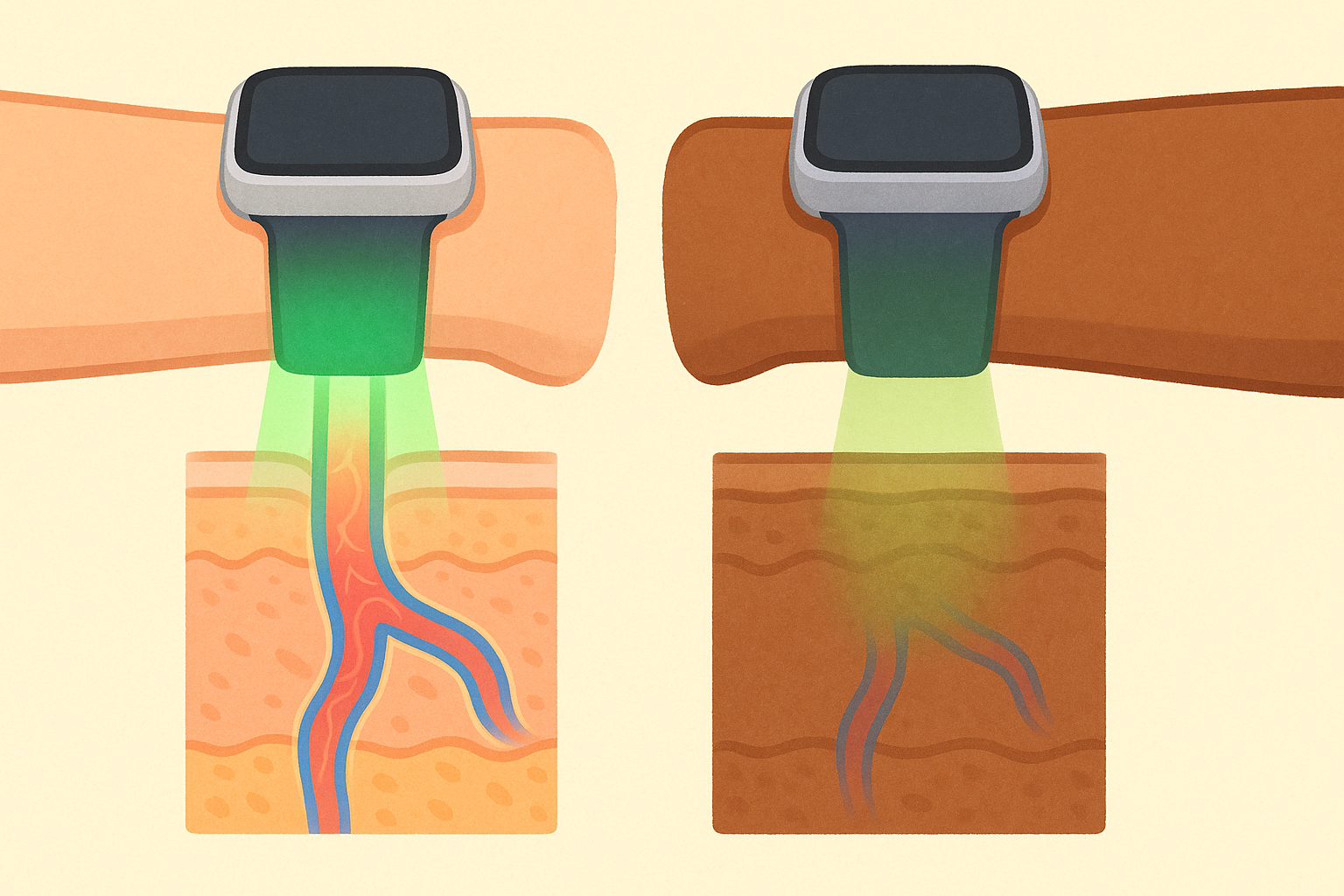
Most wearables use green light (PPG sensors) to measure heart rate. A 2023 paper in Brain, Behavior, and Immunity points out a critical flaw: green light is easily absorbed by melanin. This means optical heart rate sensors can be less accurate in people with darker skin tones, as well as those with tattoos or freckles. While some newer devices use infrared or red light to mitigate this, the bias in accuracy remains a significant hurdle for health equity.
“Unbearable Wearables”
For a device to work, it often needs to be stuck to you or strapped on tight. A 2019 case report highlighted the rise of allergic contact dermatitis: skin rashes caused by the adhesives in continuous glucose monitors and other patches. As we move toward “epidermal electronics” that stick directly to the skin, managing skin irritation will be a major challenge.
Data Overload and Privacy
Collecting data is easy; interpreting it is hard. A 2022 study on health systems in low-resource settings noted that without a proper system to interpret the data, wearables can just create noise. Furthermore, privacy concerns regarding who owns your biological data, you, the device manufacturer, or your insurance company, are an ongoing ethical debate.
Who Benefits or Needs Caution?
Based on the current body of research, here is who stands to gain the most from current wearable tech, and who should approach it with skepticism.
| Group | Verdict | Why? |
|---|---|---|
| Athletes | High Benefit | Precise load monitoring, hydration tracking, and recovery analysis (HRV) can optimize performance. |
| Chronic Heart Patients | High Benefit | Continuous monitoring for AFib or arrhythmias can catch events that sporadic doctor visits miss. |
| High-Risk Pregnancies | Moderate Benefit | Remote monitoring of fetal health can provide peace of mind and early warning, though technology is still maturing. |
| People with Health Anxiety | Caution Needed | Constant notifications can create a feedback loop of anxiety, actually increasing heart rate and stress. |
| General Population | Mixed | Great for motivation and general trends (sleep, steps), but biochemical data (glucose, cortisol) is not yet necessary for healthy individuals. |
Common Questions About Wearable Health Monitors
Can a smartwatch predict a heart attack?
No. While they can detect irregular rhythms like Atrial Fibrillation, they cannot detect a heart attack (myocardial infarction) which is caused by a blockage. If you have chest pain, do not rely on your watch; call emergency services.
Do wearables accurately measure calories burned?
Generally, no. Research shows that while heart rate tracking is decent, calorie estimation is often inaccurate, sometimes by a margin of 20-30%. Use it as a rough baseline, not a strict dietary guide.
Can wearables detect dehydration?
Newer generations of sweat-sensing patches can detect electrolyte loss and dehydration, but standard smartwatches currently rely on estimations based on activity and weather, which are less accurate than biochemical sensors.
Related: How Much Water Should You Actually Drink? Science vs. The 8-Glass Myth
The Bottom Line
Wearable health monitors have evolved from simple pedometers into sophisticated tools that can offer genuine medical insights. The evidence is strong for their use in tracking heart rhythm irregularities, sleep patterns, and athletic recovery. The next frontier, measuring body chemistry like cortisol and glucose non-invasively, is promising but still in the early stages of reaching consumers.
However, these devices are not neutral observers. For some, the constant stream of data empowers them to make better lifestyle choices. For others, it fuels anxiety and medicalization of normal daily fluctuations. The most effective way to use a wearable is as a tool for observing long-term trends, rather than obsessing over minute-by-minute data points.
Quick Reference: Key Studies
| Study Focus | Key Finding | Source |
|---|---|---|
| Body Fluid Analysis | Wearables are moving toward analyzing sweat and interstitial fluid for glucose, cortisol, and electrolytes. | PMID 39633192 |
| AFib & Anxiety | Wearables improve detection of AFib but significantly increase health anxiety and doctor visits. | PMID 39011944 |
| Stress Detection | Heart Rate Variability (HRV) is currently the most accurate wearable metric for detecting stress. | PMID 34065620 |
| Sweat Sensors | New sensors can continuously monitor cortisol (stress) and cytokines (inflammation) in sweat. | PMID 37747817 |
| Limitations | Optical heart rate sensors (green light) are less accurate on darker skin tones. | PMID 37557962 |
| Maternal Health | Sensors can effectively monitor fetal heart rate and movement remotely. | PMID 36904615 |
Last updated: March 2026
This article synthesizes findings from peer-reviewed research. It is for educational purposes only and does not constitute medical advice. Consult a healthcare provider before starting any new regimen.


Leave a Reply