
Introduction
If you have ever visited a doctor for lower back pain, you likely walked away with a prescription for physical therapy (PT) or a recommendation to take anti-inflammatory medication. For decades, these have been the standard medical answers to one of the world’s most common causes of disability.
However, a shift is occurring in how medical professionals view back pain. Guidelines from major medical organizations, including the American College of Physicians, now recommend non-drug treatments as the first line of defense. Among these recommendations, yoga has emerged not just as a fitness trend, but as a legitimate medical intervention.
This raises a significant question for patients: Is yoga just a way to stretch, or is it actually comparable to medical treatments like physical therapy? Recent high-quality clinical trials have pitted yoga directly against standard medical care to answer this question. The results suggest that for many people, the yoga mat might be as effective as the doctor’s office.
What the Research Shows
Scientific interest in yoga for back pain has surged, moving from small pilot studies to massive reviews of the evidence. The general consensus is that yoga is effective for chronic low back pain (pain lasting longer than 12 weeks), though researchers are careful to manage expectations regarding the magnitude of relief.
Yoga vs. Doing Nothing
When researchers compare yoga to “passive controls”, such as being on a waitlist or receiving no treatment, yoga consistently comes out ahead. A 2022 meta-analysis in Pain reviewed 27 studies involving over 2,700 participants. The researchers found that yoga provided short-term improvements in pain intensity and physical function compared to passive controls. Interestingly, while the physical benefits were sustained in the long term, the mental health benefits observed in the short term tended to fade over time.
Similarly, a 2020 review in PLoS One analyzed 18 randomized controlled trials. They found that yoga significantly reduced pain at 4 to 8 weeks, 3 months, and 6 months compared to non-exercise groups.
Yoga vs. Physical Therapy
The most compelling research comes from studies comparing yoga directly to physical therapy (PT). This is known as a non-inferiority trial: a study designed to see if a new treatment is at least as good as the standard established treatment.
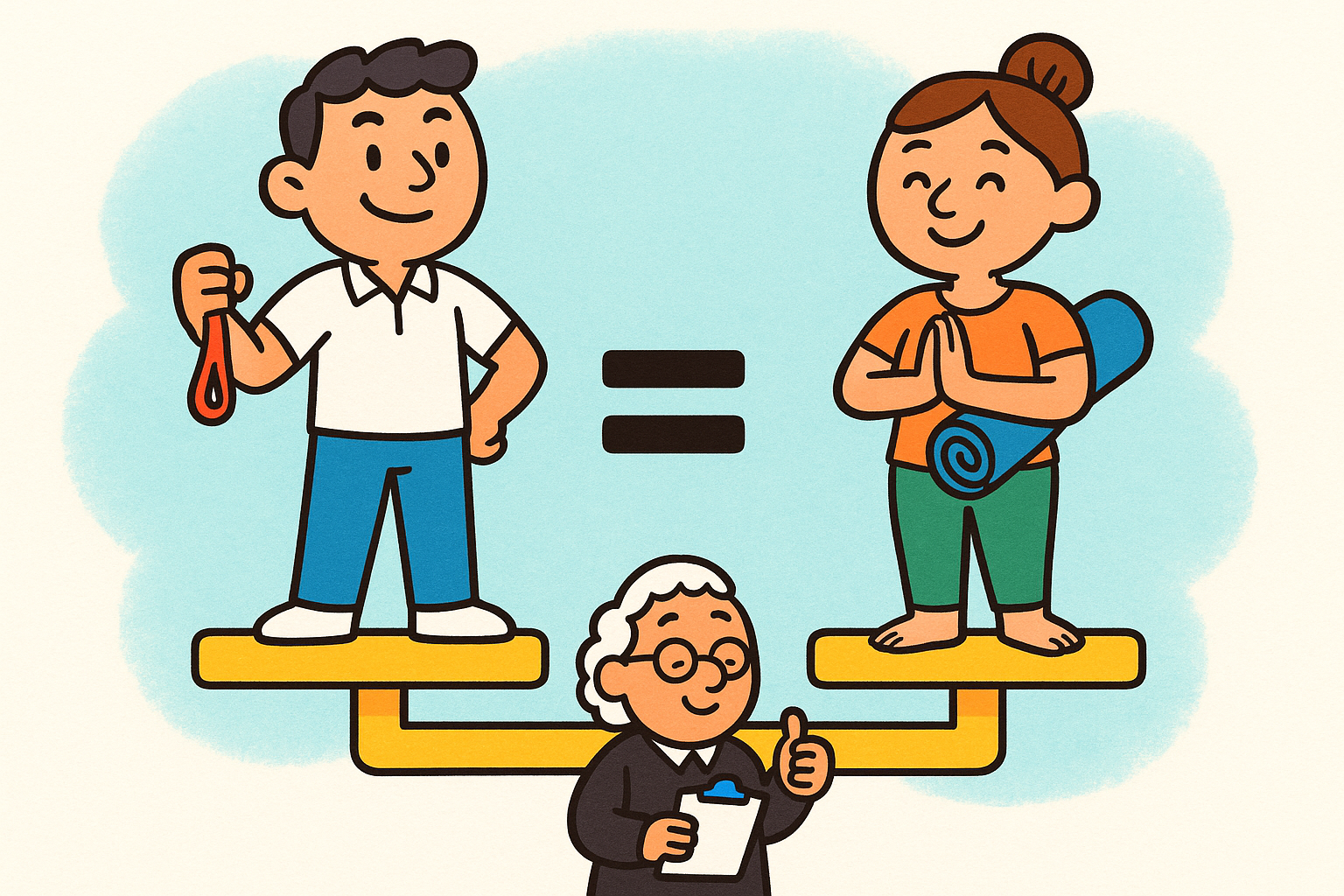
A landmark 2017 study in the Annals of Internal Medicine followed 320 adults with chronic low back pain. Participants were assigned to one of three groups: 12 weekly yoga classes, 15 physical therapy visits, or an education group (a self-care book and newsletters).
The results were striking. The study found that yoga was non-inferior to physical therapy. Both the yoga and PT groups saw significant improvements in physical function and pain intensity compared to the education group. Furthermore, the improvements gained during the 12-week program were largely maintained one year later. Perhaps most importantly, participants in both the yoga and PT groups were roughly 20% less likely to use pain medication compared to the education group.
Virtual Yoga
With the rise of telehealth, researchers have also investigated if yoga needs to be done in a studio to be effective. A 2024 randomized clinical trial in JAMA Network Open examined 140 adults with chronic low back pain. One group attended a 12-week virtual live-streamed yoga program, while the other was placed on a waitlist.
The virtual yoga group experienced significantly greater improvements in back pain intensity and back-related function. They also reported better sleep quality and reduced use of pain medication. This suggests that the barrier of traveling to a studio may not be necessary to reap the benefits of yoga therapy.
How This Might Work
Why does a series of poses help a condition that is often mechanical in nature? Researchers believe yoga targets back pain through several distinct mechanisms.
Physical Mechanisms
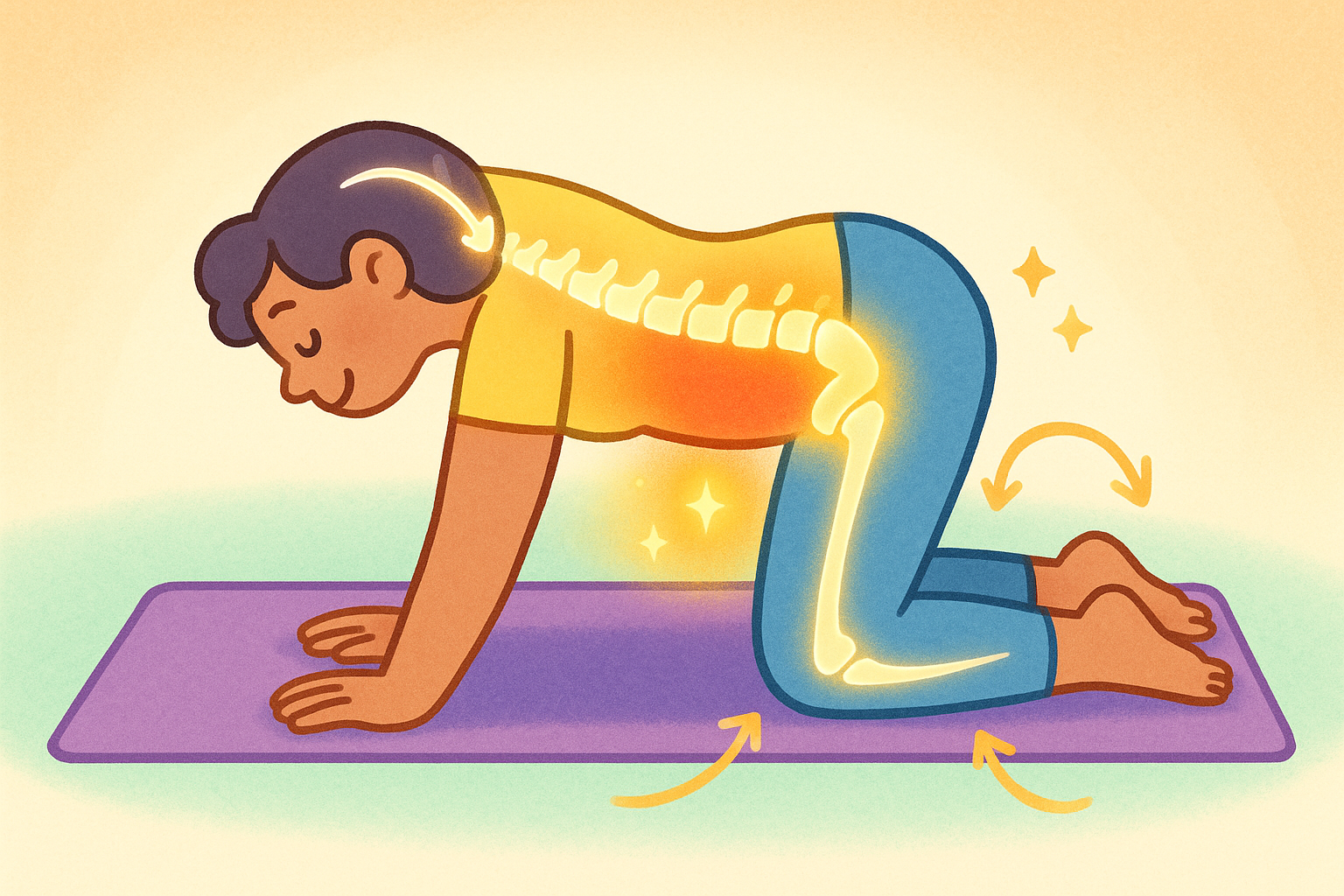
Yoga involves holding postures that build isometric strength in the core and spinal stabilizer muscles. It also emphasizes flexibility in the hamstrings and hips, which can reduce mechanical strain on the lower back. A 2025 umbrella review in the Journal of Sport and Health Science noted that exercises like yoga and Pilates show particular promise for short-term outcomes by improving flexibility, strength, and motor control.
Neurological and Psychological Mechanisms
Chronic pain is not just physical; it affects the brain’s processing of pain signals. A 2022 study in The Journal of Orthopaedic and Sports Physical Therapy analyzed how treatments like yoga and PT actually work. They found that for physical therapy, improvements in disability were partially mediated by a reduction in perceived stress. While this specific analysis did not find the same strong mediation for yoga, other research suggests mind-body connections are vital.
For example, a 2016 study in JAMA compared Mindfulness-Based Stress Reduction (MBSR), which includes yoga elements, against Cognitive Behavioral Therapy (CBT) and usual care. Both MBSR and CBT were effective, suggesting that training the brain to process pain differently is a key component of relief. Yoga combines physical movement with this mindfulness, potentially addressing both the tissue issues and the nervous system’s reaction to them.
Additionally, a 2022 analysis in Pain Medicine found that yoga, PT, and education all helped improve “pain self-efficacy”: the belief in one’s ability to function despite pain. When patients stop fearing their pain, they often move more, which helps break the cycle of stiffness and disability.
Who Benefits or Needs Caution
While the evidence is positive, yoga is not a universal cure-all, and it is not without risks.
Who Benefits Most
- Chronic Pain Sufferers: The strongest evidence supports yoga for chronic low back pain (pain lasting >12 weeks). The 2017 ACP Guidelines specifically recommend yoga as a first-line non-drug option for chronic low back pain.
- Those Seeking Medication Reduction: Multiple studies, including the 2017 trial in Annals of Internal Medicine, show that yoga participants are more likely to stop using painkillers.
- Diverse Populations: Research has specifically shown yoga to be effective in racially diverse and low-income populations, suggesting it is a scalable option for public health.
Who Needs Caution
- Acute Pain: For acute pain (pain lasting <4 weeks), the evidence for yoga is less robust. A 2017 systematic review noted that while acupuncture might help acute pain, the evidence for yoga is primarily focused on chronic conditions. If you have an acute injury, rest and gentle movement may be preferred over a structured yoga class initially.
- Those Prone to Adverse Events: A 2022 Cochrane Review highlighted that yoga is associated with more adverse events than doing no exercise at all. These events are mostly minor, such as increased back pain or muscle soreness, but they are real. The risk of adverse events in yoga is generally similar to that of other forms of exercise.
Yoga vs. Physical Therapy: A Comparison
For patients trying to decide between a medical referral to PT or signing up for a yoga class, the data suggests both are viable options. Here is how they compare based on the 2017 randomized trial and the 2024 randomized trial:
| Feature | Yoga | Physical Therapy (PT) |
|---|---|---|
| Effectiveness | Highly effective for function and pain; non-inferior to PT. | Highly effective; standard of care. |
| Medication Use | Associated with roughly 20% reduction in pain med use. | Associated with roughly 20% reduction in pain med use. |
| Cost | Generally lower (group classes), but may not be covered by insurance. | Generally higher, but often covered by insurance. |
| Structure | Group setting (usually); emphasizes mindfulness and breathing. | One-on-one; emphasizes specific muscle targeting and manual therapy. |
| Maintenance | Skills are easily practiced at home with minimal equipment. | Often requires specific equipment or clinical setting for full benefit. |
The Bottom Line
The scientific verdict is that yoga is a medically valid treatment for chronic low back pain. It is not merely a placebo; it performs as well as physical therapy in improving function and reducing pain intensity.
Major medical guidelines now advise doctors to suggest therapies like yoga, tai chi, and heat before prescribing medication. While yoga does not work for everyone and can cause temporary muscle soreness, it offers a way to treat back pain that addresses both the physical stiffness and the mental stress that often accompanies chronic conditions.
If you are considering yoga for back pain, look for classes specifically labeled as “therapeutic” or designed for back health, as these are closer to the protocols used in clinical trials than a standard high-intensity flow class.
Related: Runner’s Knee: What Science Says About Treatment
Related: Ashwagandha: The Ancient Stress-Reliever That Science Is Finally Catching Up With
Quick Reference: Key Studies
| Study Focus | Key Finding | Source |
|---|---|---|
| Yoga vs. PT | Yoga was found to be statistically non-inferior (equally effective) to physical therapy for chronic back pain. | PMID 28631003 |
| Virtual Yoga | Virtual (online) yoga effectively reduced pain and improved sleep compared to a wait-list control. | PMID 39485352 |
| Clinical Guidelines | The American College of Physicians recommends yoga as a first-line non-drug treatment for chronic low back pain. | PMID 28192789 |
| Exercise Review | Yoga, Pilates, and motor control exercises show promise for short-term pain outcomes. | PMID 40180212 |
| Mindfulness | Mindfulness-Based Stress Reduction (MBSR) improved back pain and function similarly to Cognitive Behavioral Therapy. | PMID 27002445 |
Last updated: March 2026
This article synthesizes findings from peer-reviewed research. It is for educational purposes only and does not constitute medical advice. Consult a healthcare provider before starting any new regimen.



Leave a Reply