Introduction
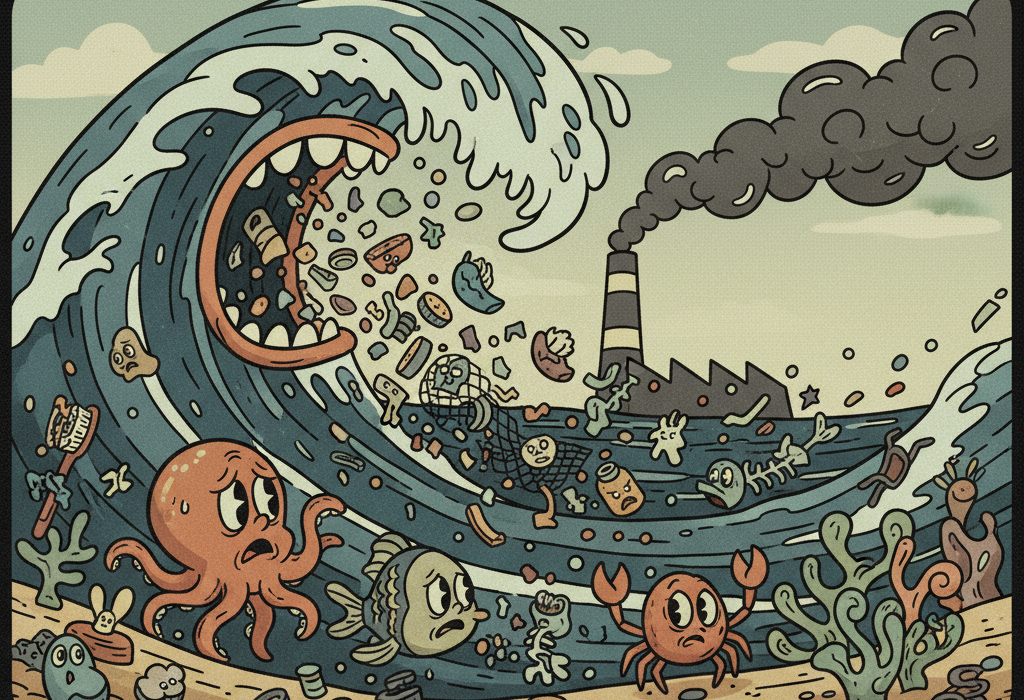
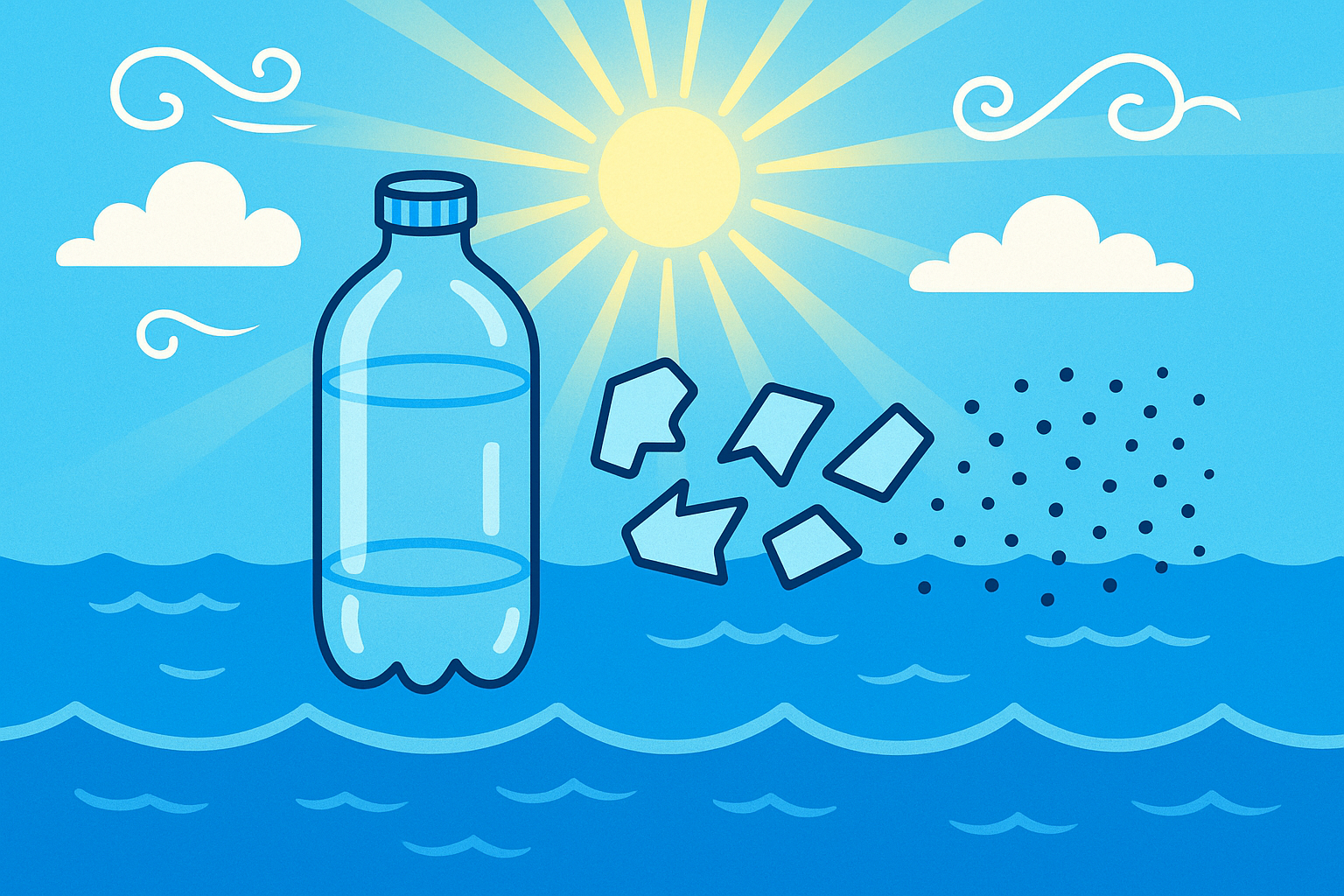
If you drop a plastic bottle in the ocean or a forest, it does not simply disappear. Instead, sunlight, wind, and waves break it down into smaller and smaller pieces. When these pieces become smaller than 5 millimeters (about the size of a sesame seed), they are called microplastics. Some are so small they are invisible to the naked eye.
For years, scientists have known that plastic pollution is unsightly. However, recent research has shifted focus from visible litter to invisible particles. We now know that microplastics are not just in the ocean; they are in the air we breathe, the water we drink, and the food we eat.
But does swallowing a tiny piece of plastic actually hurt you? Is it just passing through, or is it interacting with your body? This article synthesizes the latest research to explain how microplastics move through the environment, where they end up in the human body, and what risks they might pose.
What the Research Shows
They Are Truly Everywhere
Microplastics are categorized in two ways. Primary microplastics are intentionally made small, such as microbeads in face washes or industrial scrubbers. Secondary microplastics result from the breakdown of larger items like bottles, fishing nets, and synthetic clothing. A 2024 review of toxicology highlights that these particles have now been found in cities, suburbs, and even remote locations far from human activity.
Their reach is global. Researchers studying the ASEAN region found significant contamination in marine environments, while a 2024 study on water contamination notes that microplastics have been discovered in fresh snow in the Antarctic. This proves that wind and atmospheric currents can transport these particles thousands of miles before they settle into the water or soil.
The Seafood Paradox: Smaller Animals, Higher Risk
When we think about toxins in seafood, like mercury, we usually worry about big fish (like tuna) eating smaller fish and accumulating the toxin. This is called biomagnification. However, microplastics appear to behave differently.
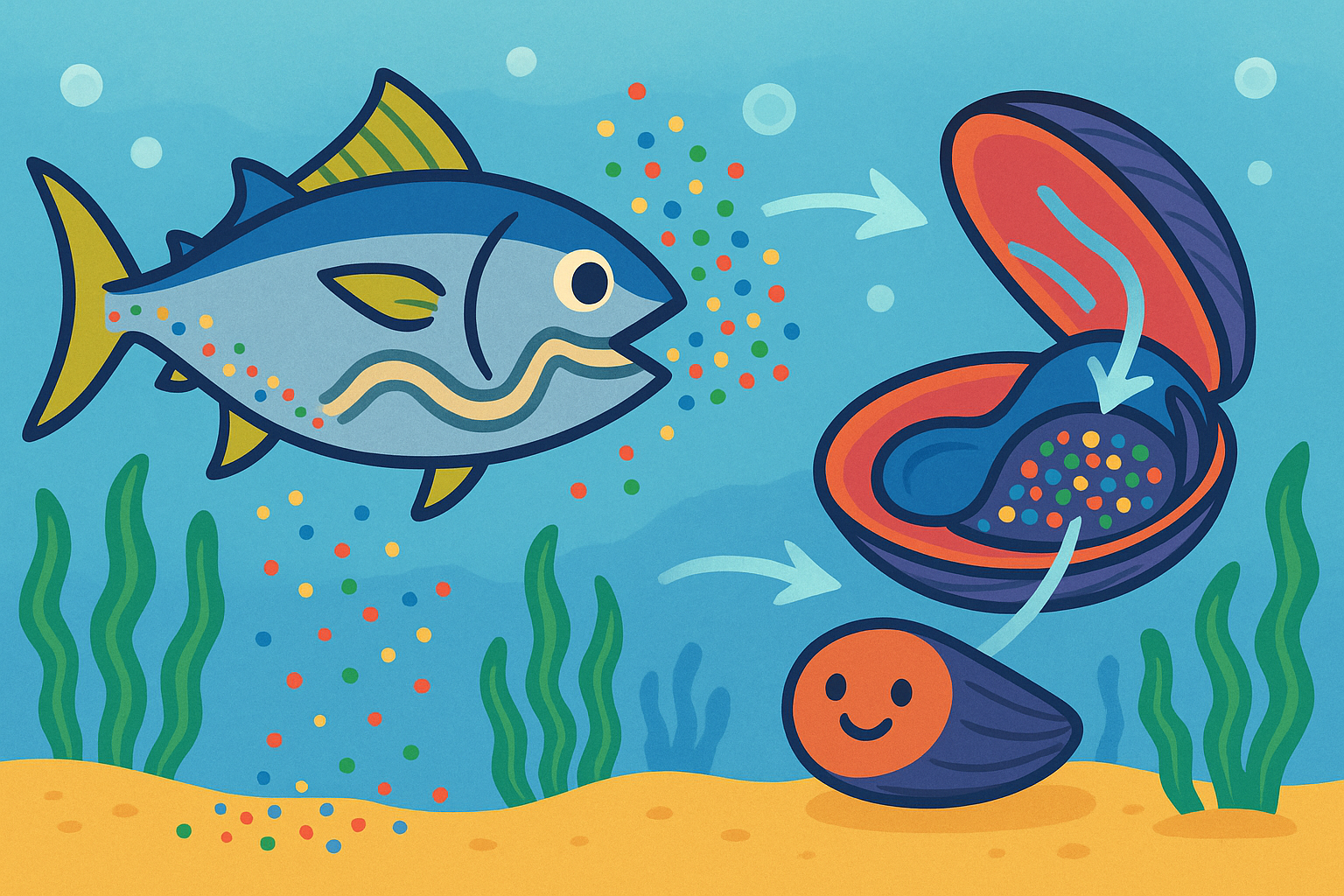
A 2020 review of seafood contamination found that microplastics do not seem to biomagnify up the food chain. In fact, organisms at the bottom of the food chain, like mussels, oysters, and shrimp, often contain more microplastics per gram of tissue than apex predators.
Why? Large fish have complex digestive systems that may expel plastics, and we typically do not eat their stomachs. Shellfish, however, are filter feeders. They pump water through their bodies to catch food, trapping plastic particles in the process. Because we often eat shellfish whole (digestive tract and all), we ingest those trapped particles.
This is supported by research on Australian seafood, which found microplastics in 48% of the crustaceans tested, mostly in the form of fibers from clothing or nets. Similarly, a 2023 overview of oysters confirmed that these animals accumulate contaminants, though placing them in clean water for a period (depuration) can help remove some particles.
The “Plastisphere”: Bacteria Hitching a Ride
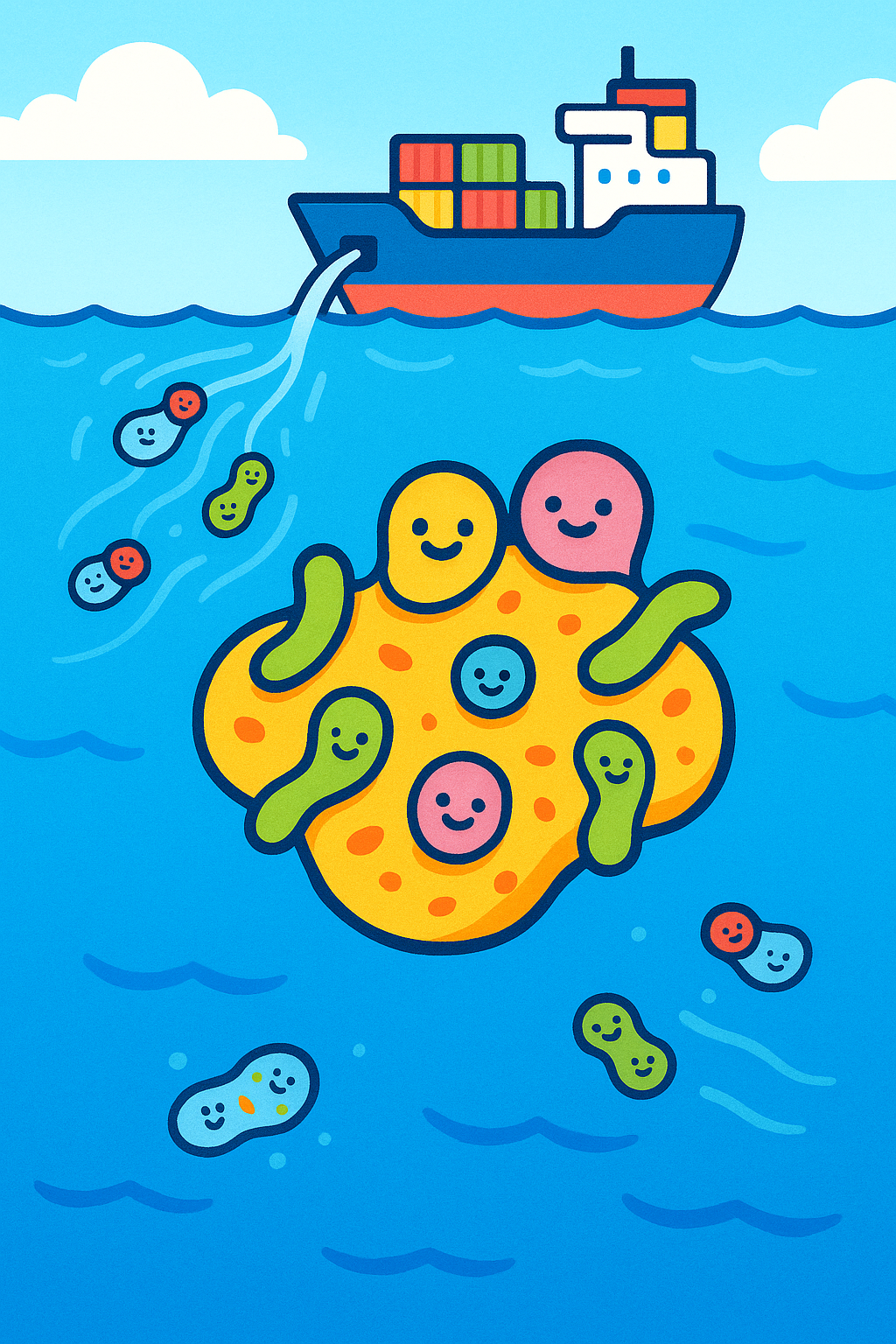
One of the more complex risks of microplastics is not the plastic itself, but what is growing on it. When plastic enters the water, it becomes a raft for microorganisms. Scientists call this the Plastisphere.
A 2020 study in Applied Microbiology and Biotechnology explains that microplastics provide a new “niche” for bacteria. These plastics can travel long distances, carrying bacteria to new environments where they might cause harm.
This is particularly concerning regarding ballast water (water carried by ships for stability). A 2019 review highlights that microplastics in ballast water can act as vectors for harmful chemicals and pathogens, including Vibrio cholerae (the bacteria that causes cholera). The plastic surface allows bacteria to form biofilms: protective layers that make them more resistant to environmental stress and even antibiotics.
How Microplastics Affect the Human Body
For a long time, it was assumed that if humans ingested microplastics, they would simply pass through the digestive tract. Newer evidence suggests this is not always the case.
Gallstones and Cholesterol
In a significant 2024 study published in the Journal of Hazardous Materials, researchers analyzed human gallstones collected from patients after surgery. They detected microplastics in all 16 patients.
More importantly, the study found that microplastics have a high affinity for cholesterol. In mouse models, animals fed a high-cholesterol diet along with microplastics developed more severe gallstones than those fed cholesterol alone. The plastic particles appeared to act as a core, allowing cholesterol to aggregate and form stones. The study also noted that microplastics altered the gut microbiota (the community of healthy bacteria in the digestive system), which plays a role in overall digestion and health.
Infant Exposure
Infants may be among the most exposed populations. A 2023 study on infant milk powder found microplastics in various milk powder brands. Interestingly, boxed milk powder contained more particles than canned versions, likely due to the aluminum-plastic laminated packaging.
However, the packaging was not the biggest source. The researchers found that the act of preparing formula in plastic feeding bottles released significantly more microplastics than were present in the powder itself. Heat and shaking degrade the plastic bottle lining, releasing millions of microscopic particles into the milk.
Environmental Interactions and Chemical Risks
Microplastics are not just physical pollutants; they are chemical sponges. Because plastic is hydrophobic (water-repelling), it attracts other water-repelling chemicals floating in the ocean or soil, such as pesticides and industrial pollutants.
Heavy Metals in Soil
A 2023 meta-analysis looked at how microplastics interact with soil. The researchers found that the presence of microplastics increased the bioavailability of heavy metals like lead, cadmium, and copper.
Bioavailability refers to how easily a substance can be absorbed by plants or animals. The microplastics effectively make these toxic metals easier for plants to absorb, which could eventually move them into our food supply.
Aquatic Ecosystems
In Africa, a 2024 comprehensive review found that aquatic ecosystems are highly contaminated, with more than 40% of water and sediment samples showing high ecological risk. The most common polymers found were polypropylene (used in packaging) and polyester (used in clothing).
Similarly, research on aquaculture (fish farming) notes that fish farms can be hotspots for microplastics due to the use of plastic equipment and contaminated feed. This creates a cycle where the environment contaminates the food source, and the farming equipment contaminates the environment.
Practical Guidance: Reducing Exposure
While you cannot avoid microplastics entirely, research suggests specific ways to lower your intake, especially for vulnerable groups.
For Infants
Based on the findings regarding feeding bottles:
- Glass Bottles: Consider using glass feeding bottles rather than plastic ones.
- Preparation: If using plastic bottles, avoid shaking them vigorously or heating them to very high temperatures, as heat and friction increase plastic shedding. Prepare formula in a glass container and transfer it to the bottle once cool.
For Adults
- Water Filtration: A 2024 review of water treatment discusses various removal strategies. While municipal wastewater plants remove many plastics, they do not catch everything. Home water filters (specifically those rated for cysts or micro-particles) can reduce the load in tap water.
- Seafood Choices: Since microplastics accumulate in the digestive tracts of shellfish (mussels, oysters, clams), consuming these in moderation or choosing cleaned (depurated) varieties may reduce exposure compared to eating fish fillets, where the stomach is removed.
The Bottom Line
Microplastics have permeated every part of our planet, from the atmosphere to the deep ocean, and they are entering our bodies through food, water, and air.
Here is what we know with confidence:
- Exposure is constant: We ingest and inhale these particles daily.
- They interact with the body: Evidence shows they can aggregate with cholesterol to form gallstones and alter gut bacteria.
- They carry cargo: Microplastics act as vehicles for harmful bacteria and toxic chemicals.
However, we still do not know the long-term extent of the damage. While the body can excrete many particles, the “bio-accumulation” in organs is a subject of active study. The best approach is awareness and reduction of single-use plastics where possible, rather than panic.
Related: How Much Water Should You Actually Drink? Science vs. The 8-Glass Myth
Quick Reference: Key Studies
| Study Focus | Key Finding | Source |
|---|---|---|
| Seafood Risk | Shellfish have higher contamination per gram than larger fish; no biomagnification observed. | PMID 31846861 |
| Gallstones | Microplastics were found in human gallstones and may accelerate their formation by binding with cholesterol. | PMID 38335610 |
| Infant Formula | Plastic feeding bottles release significantly more microplastics than the milk powder itself. | PMID 36758924 |
| Bacteria | Microplastics act as rafts (vectors) for pathogens like Vibrio cholerae and may promote antibiotic resistance. | PMID 31470206 |
| Global Spread | Microplastics have been found in fresh Antarctic snow, proving atmospheric transport. | PMID 38729026 |
Last updated: March 2026
This article synthesizes findings from peer-reviewed research. It is for educational purposes only and does not constitute medical advice. Consult a healthcare provider before starting any new regimen.
Leave a Reply