
Imagine driving a car where the speedometer only works if you pull over, stop the vehicle, and manually check the engine. For decades, this is how people managed diabetes. They relied on traditional fingerstick blood tests, which provided a brief snapshot of their blood sugar at a single moment in time.
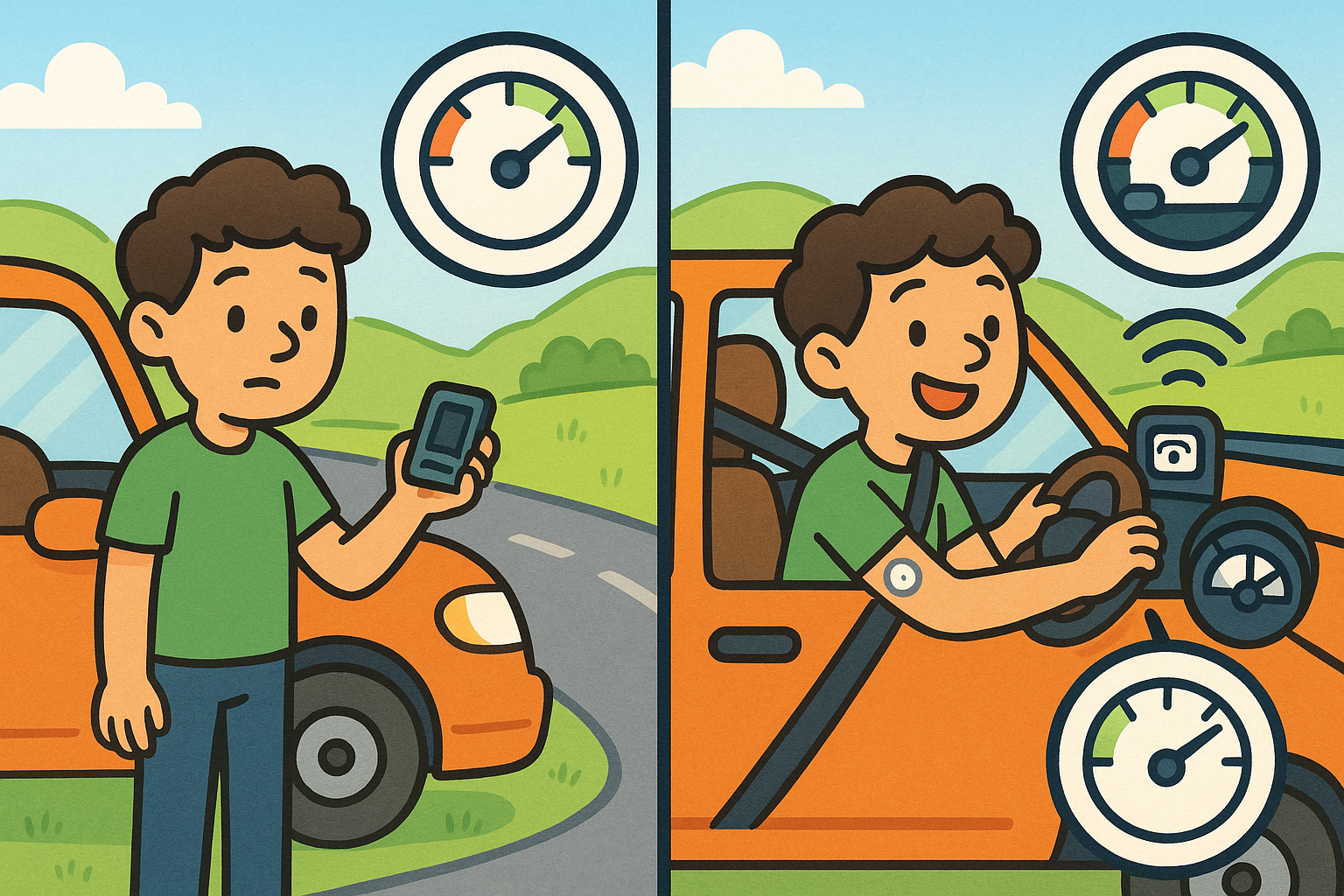
Today, much like the evolution we see in wearable health monitors, technology has shifted the landscape. Continuous Glucose Monitoring (CGM) involves wearing a small sensor on the arm or abdomen that tracks glucose levels 24 hours a day.
While CGMs were originally designed for people with Type 1 diabetes, they are now used by people with Type 2 diabetes, pregnant women, and even healthy adults looking to optimize their diets. But what does the science actually say about their effectiveness? Does having constant data lead to better health, or does it just create more anxiety? Here is what the latest research reveals.
How Continuous Glucose Monitoring Works
To understand the research, it helps to understand how the technology works. Traditional blood tests measure glucose directly in the bloodstream. CGMs work differently. A tiny wire sits just under the skin and measures glucose in the interstitial fluid (in-ter-STISH-ul) – the fluid that surrounds your body’s cells.
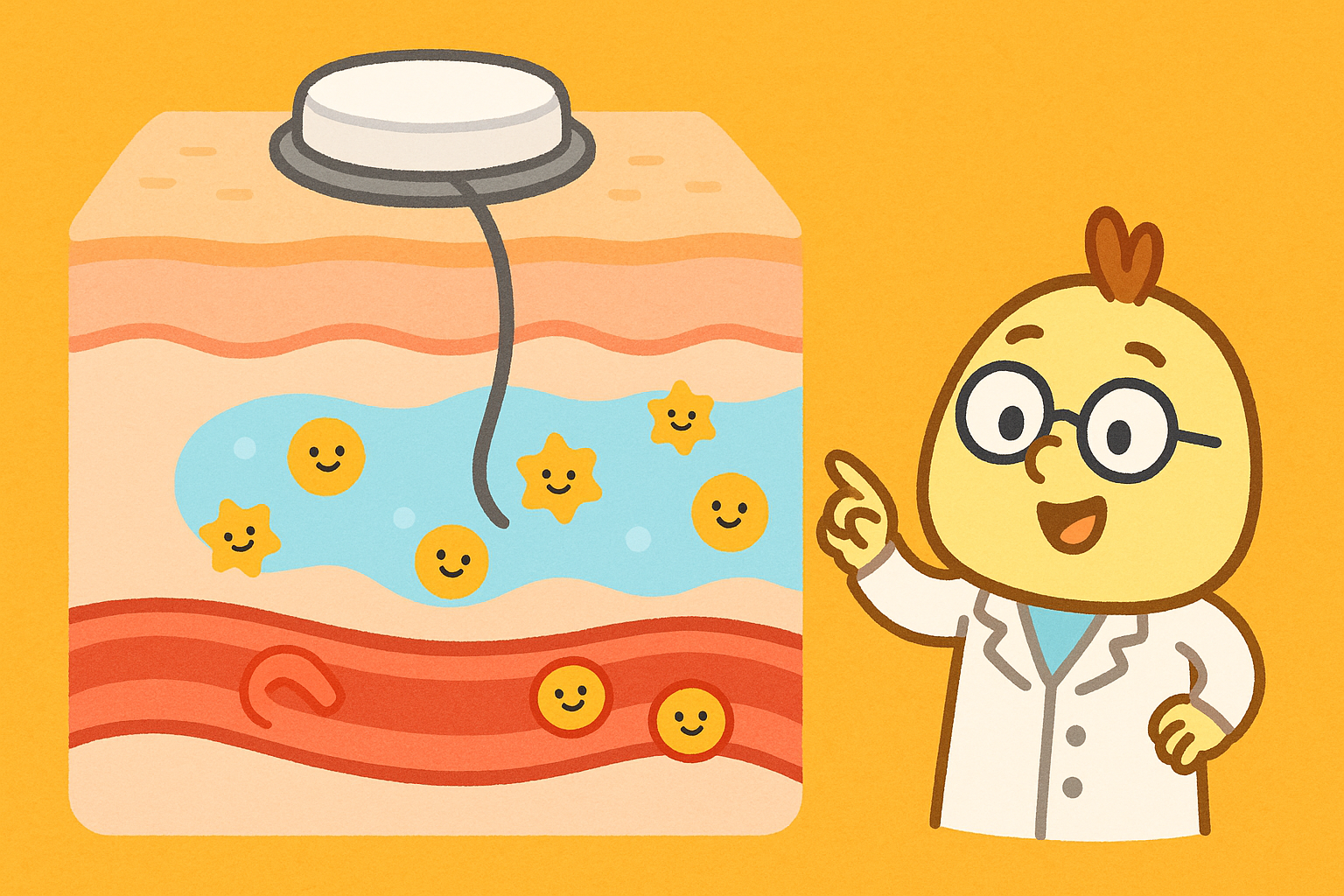
Because it takes time for glucose to move from the blood into this fluid, CGM readings are usually a few minutes behind actual blood sugar levels. However, the true value of a CGM is not just the current number. It is the trend. The device tells the user if their glucose is rising, falling, or remaining stable.
This constant stream of data has shifted how doctors measure success. Historically, doctors relied on Hemoglobin A1c (HEE-muh-glow-bin A-one-C), a blood test that provides a three-month average of blood sugar. However, a 2020 review in Diabetes Research and Clinical Practice explains that an average can be misleading. A person with wild spikes and dangerous crashes could have the same average as someone with perfectly stable blood sugar.
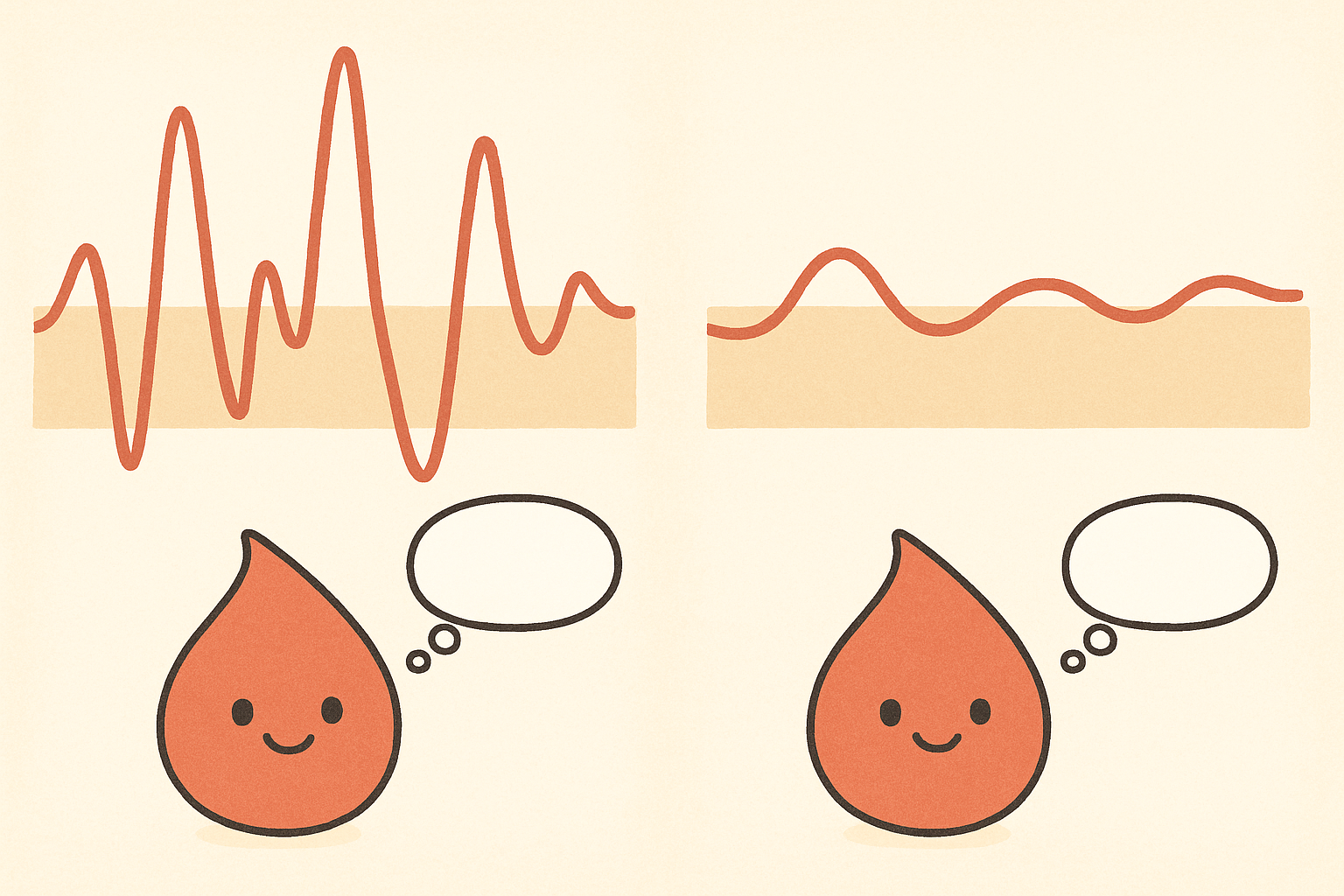
Because of this, scientists now focus heavily on Time in Range (TIR), which measures the exact percentage of the day a person spends within healthy glucose levels.
What the Research Shows About Blood Sugar Control
For people managing diabetes, the primary goal is to keep blood sugar levels stable to prevent long-term damage to the heart, eyes, and kidneys.
Research consistently shows that CGMs improve these outcomes for both Type 1 and Type 2 diabetes. A 2024 network meta-analysis in Diabetes, Obesity & Metabolism analyzed multiple trials involving people with Type 2 diabetes. The researchers found that using a CGM significantly decreased HbA1c and increased Time in Range compared to traditional fingerstick testing.
These daily improvements translate to major health benefits over time. A 2024 study of over 74,000 adults in Diabetes, Obesity & Metabolism looked at real-world data from patients with Type 2 diabetes. The researchers found that switching to a CGM reduced all-cause hospitalizations, acute diabetes-related hospitalizations, and emergency room visits, regardless of whether the patients were using insulin or other treatments like GLP-1 drugs.
Furthermore, researchers are learning that avoiding sharp spikes and drops might be just as important as keeping average blood sugar low. A 2024 rapid review in Healthcare suggests that high glycemic variability (frequent swings in blood sugar) is strongly associated with a higher risk of vascular complications, like heart disease. CGMs allow users to see these swings and adjust their meals or medications to smooth them out.
Preventing Dangerous Lows
While high blood sugar causes long-term damage, hypoglycemia (hy-po-gly-SEE-mee-uh) – dangerously low blood sugar – is an immediate medical emergency. It can cause confusion, fainting, and in severe cases, seizures.
The fear of hypoglycemia is a heavy mental burden for people taking insulin. A 2021 review in Diabetic Medicine notes that CGM use significantly reduces this fear. Because the devices can sound an alarm before blood sugar drops too low, users feel more confident and secure in their daily lives.
This is particularly useful during physical activity. Exercise can cause unpredictable drops in blood sugar. A 2022 review in the International Journal of Environmental Research and Public Health highlights how CGMs help users safely manage exercise by detecting rapid drops in glucose, allowing them to consume carbohydrates before a severe low occurs.
Benefits During Pregnancy
Managing blood sugar during pregnancy is notoriously difficult because hormonal changes constantly alter how the body processes insulin. Poor glucose control during pregnancy increases the risk of complications for both the mother and the baby.
A 2021 review in Diabetes Technology & Therapeutics examined the impact of CGMs during pregnancies complicated by Type 1 diabetes. The research showed that using a CGM led to healthier birth weights, fewer neonatal intensive care (NICU) admissions, and less neonatal hypoglycemia (low blood sugar in the newborn). Because of these strong findings, many medical guidelines now highly recommend CGMs for pregnant women with Type 1 diabetes.
Who Benefits Most and Who Needs Caution
While the technology is highly effective, it is not a perfect fit for everyone. Research helps clarify who benefits the most and what limitations users should expect.
Populations Seeing the Greatest Benefit
- People on intensive insulin therapy: Individuals who take multiple daily injections or use an insulin pump see the most dramatic improvements in their health and daily convenience.
- Older adults: A 2022 review in TouchREVIEWS in Endocrinology explains that older adults are highly vulnerable to severe hypoglycemia and often lose the ability to feel the physical symptoms of a low. CGM alarms can be life-saving for this group.
- People with a history of severe lows: Those who experience frequent or unpredictable drops in blood sugar benefit heavily from predictive alerts.
Limitations and Frustrations
Despite the benefits, the technology has notable drawbacks. A 2020 review in Expert Review of Endocrinology & Metabolism details several common frustrations:
- Alarm fatigue: The constant beeping of alerts, especially at night, can disrupt sleep and cause anxiety.
- Skin irritation: The adhesives used to keep the sensor attached to the skin for 10 to 14 days can cause rashes or allergic reactions.
- Data overload: For some, seeing a constant stream of medical data creates emotional distress and hyper-fixation on numbers.
- Accuracy gaps: While highly accurate overall, sensors can sometimes give false readings if they are compressed (like sleeping on the arm) or during rapid shifts in blood sugar.
What About Healthy Adults?
Recently, CGMs have become popular among athletes and healthy adults looking to optimize their diets. A 2022 review in Sensors notes that while CGMs can help healthy individuals understand how different foods affect their energy levels, the science is still young. Currently, there is not enough long-term evidence to prove that healthy people without metabolic issues gain significant medical benefits from wearing a CGM constantly.
Common Questions About CGM
Do CGMs completely replace fingerstick tests?
Mostly, but not entirely. A 2025 review in the Journal of Diabetes Science and Technology notes that FDA-cleared “integrated” CGMs are highly accurate and approved for dosing insulin without a backup fingerstick. However, doctors still recommend a traditional fingerstick if your physical symptoms do not match the number on the screen.
Are CGMs cost-effective?
The sensors and transmitters can be expensive, which is a barrier for many patients. However, a 2022 systematic review in Endocrinology, Diabetes & Metabolism found that over a patient’s lifetime, CGMs are highly cost-effective. The upfront cost of the device is offset by the prevention of expensive emergency room visits, hospitalizations, and long-term complications.
The Bottom Line
The scientific consensus is clear: Continuous Glucose Monitoring improves blood sugar control, increases the amount of time spent in safe target ranges, and reduces dangerous medical emergencies. For people taking insulin, pregnant women with diabetes, and those prone to severe lows, the technology provides significant physical and psychological benefits.
However, the devices are not without flaws. Skin irritation, the cost of supplies, and the mental fatigue of constant alarms remain real challenges. As the technology continues to evolve, the goal will be to make these devices more affordable, less intrusive, and easier to use for everyone who needs them.
Quick Reference: Key Studies
| Study Focus | Key Finding | Source |
|---|---|---|
| Type 2 Diabetes Control | CGM use significantly decreases HbA1c and increases Time in Range compared to fingersticks. | PMID 37828805 |
| Hospitalizations | Switching to CGM reduced all-cause hospitalizations and ER visits in adults with Type 2 diabetes. | PMID 39263872 |
| Pregnancy Outcomes | CGM use in Type 1 diabetes pregnancies reduced NICU admissions and large-for-gestational-age births. | PMID 33512267 |
| Cost-Effectiveness | Lifetime modeling shows CGMs are cost-effective due to the prevention of severe complications. | PMID 36112608 |
| Older Adults | CGMs reduce severe hypoglycemia in older populations, though tech barriers remain a challenge. | PMID 36694891 |
| FDA Standards | FDA-integrated CGMs (iCGMs) are accurate enough to replace fingersticks for insulin dosing. | PMID 38695387 |
Last updated: March 2026
This article synthesizes findings from peer-reviewed research. It is for educational purposes only and does not constitute medical advice. Consult a healthcare provider before starting any new regimen.



Leave a Reply