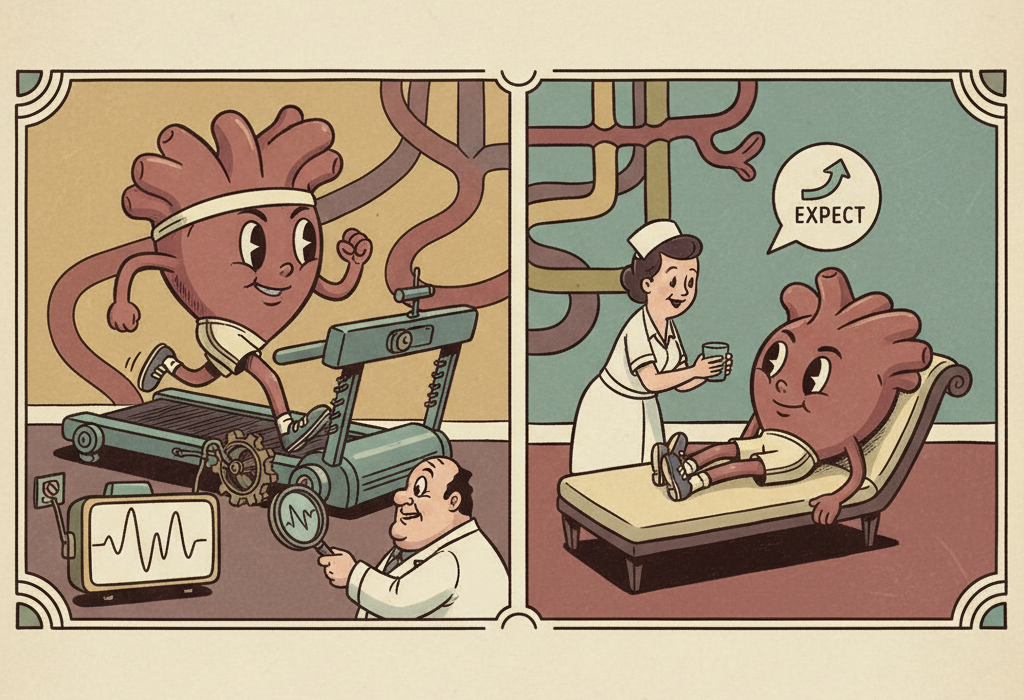
Imagine taking your car to a mechanic because it makes a strange noise when you drive on the highway. If the mechanic only listens to the engine while the car is idling in the driveway, they might not find the problem. To truly understand what is wrong, they need to see how the engine performs under pressure.
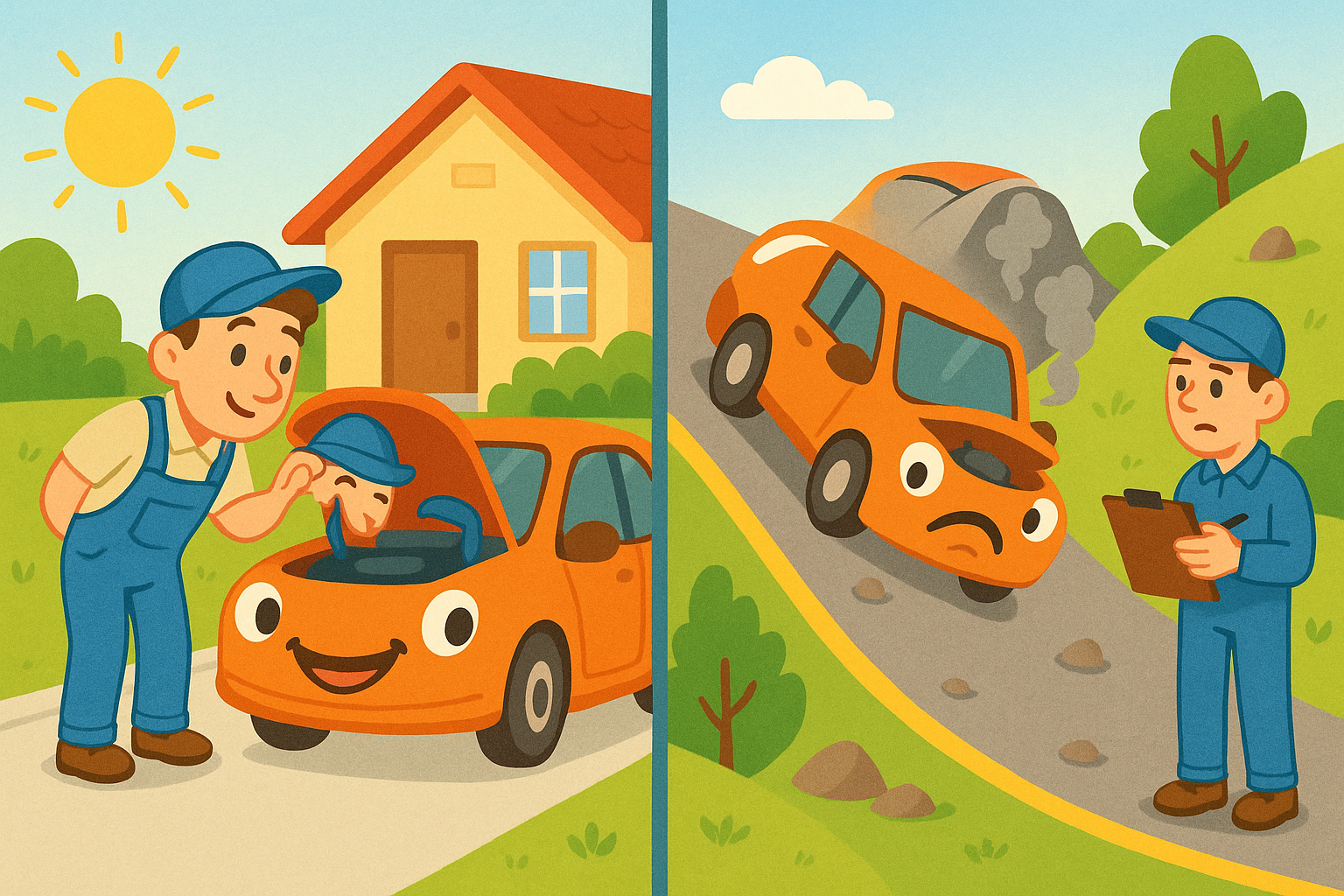
Your heart works in a very similar way. When you are resting, your heart does not have to work very hard to pump blood through your body. Even if you have narrowed arteries or an irregular heartbeat, your resting heart might look completely normal on a standard medical exam.
To find hidden problems, doctors use a cardiac stress test. This test safely increases your heart rate to see how your cardiovascular system handles physical demand. By monitoring your heart’s electrical activity, blood pressure, and breathing while you exercise, doctors can spot signs of disease that only appear when your body is working hard.
Whether you have been scheduled for a standard treadmill test, an imaging stress test, or a chemical stress test, understanding the science behind the procedure can help you know exactly what to expect.
How This Might Work: The Science of Physiological Reserve
To understand why stress tests are so effective, it helps to understand a concept scientists call physiological reserve (FIZ-ee-oh-LODGE-ih-kuhl ree-ZERV). This is your body’s backup capacity. It is the extra energy, blood flow, and oxygen your organs can call upon during emergencies or heavy physical demand.
According to a 2023 study in PloS One, a stress test is specifically designed to measure this reserve. As a task becomes more difficult, your body dips further into its backup supplies. Eventually, everyone reaches a “tipping point” where their performance begins to decline.
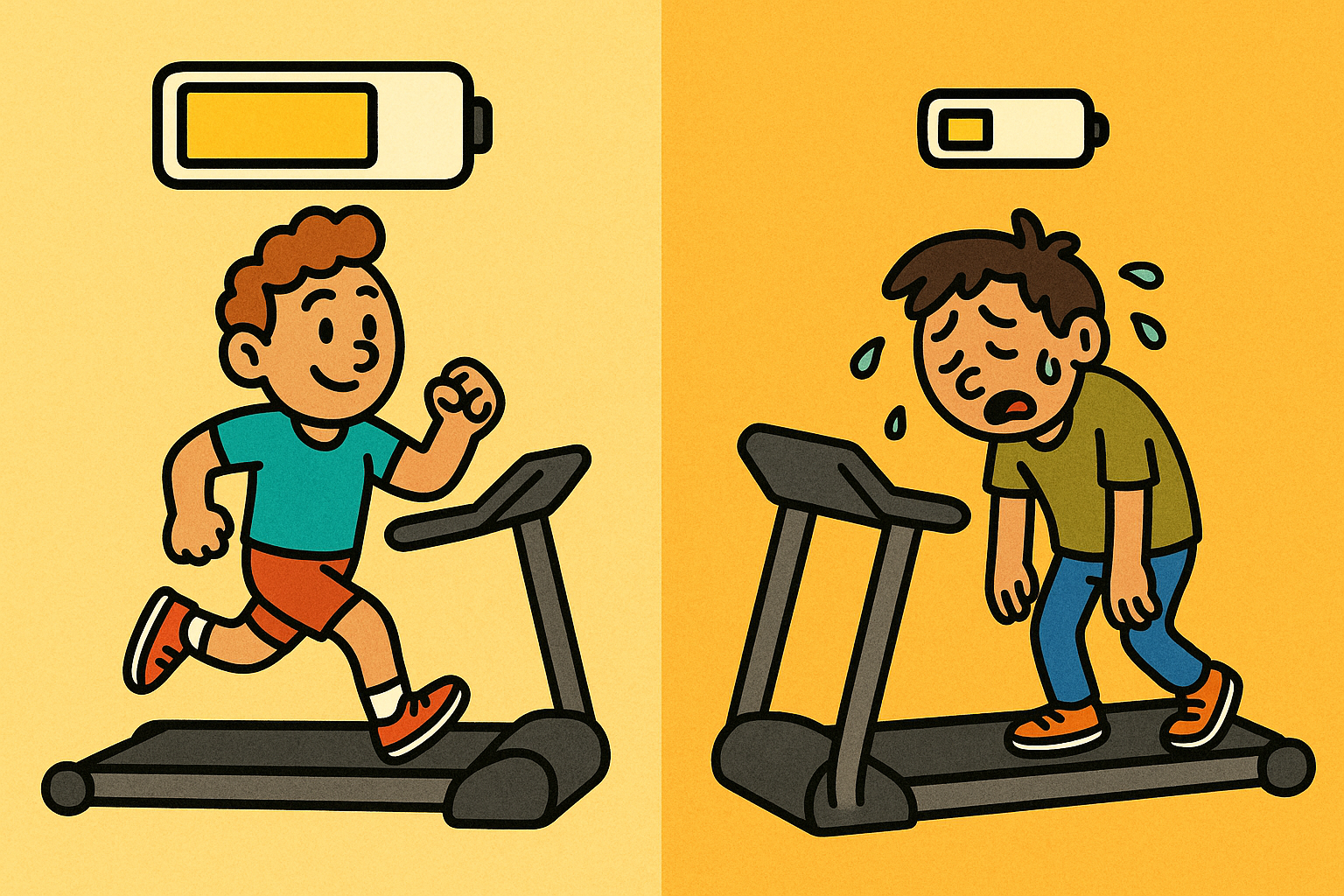
In a healthy person, this tipping point happens at a high level of exertion. However, if someone has a heart condition, their physiological reserve is much lower. Their tipping point happens much earlier. By slowly increasing the difficulty of a task, usually by making a treadmill faster and steeper, doctors can safely find this tipping point and measure the exact health of your physiological reserve.
What the Research Shows: Types of Stress Tests
Not all stress tests are the same. Depending on your age, physical ability, and specific health questions, your doctor might order one of several different variations.
The Standard Exercise Stress Test
The most common version is the standard exercise stress test. You will walk on a treadmill or ride a stationary bike while connected to an electrocardiogram (ECG) machine, which measures your heart’s electrical signals.
The test usually follows a specific schedule, such as the Bruce protocol, where the speed and incline of the treadmill increase every three minutes. Researchers look for specific changes in your ECG readings, such as ST-segment depression, which can indicate ischemia (is-KEE-mee-uh). Ischemia occurs when a tissue, like your heart muscle, does not get enough blood and oxygen.
Cardiopulmonary Exercise Testing (CPET)
Sometimes, doctors need to know exactly how your heart and lungs work together. In these cases, they use cardiopulmonary exercise testing (KAR-dee-oh-PULL-muh-nair-ee EX-er-size TES-ting), or CPET.
During a CPET, you wear a specialized mask that measures the air you breathe in and out. A 2025 scientific statement in the Journal of the American Heart Association highlights that CPET is incredibly valuable for measuring specific markers like your VO2 max (vee-oh-TOO max), which is the maximum amount of oxygen your body can use during intense exercise.
Researchers note that CPET can identify exactly why someone feels short of breath. For example, research in Pneumologie explains that advanced versions of CPET can help doctors differentiate whether unexplained breathlessness is caused by a lung problem, a heart problem, or poor muscle conditioning.
Imaging Stress Tests
If a standard ECG does not provide enough information, doctors may add imaging to the stress test to physically look at the heart muscle.
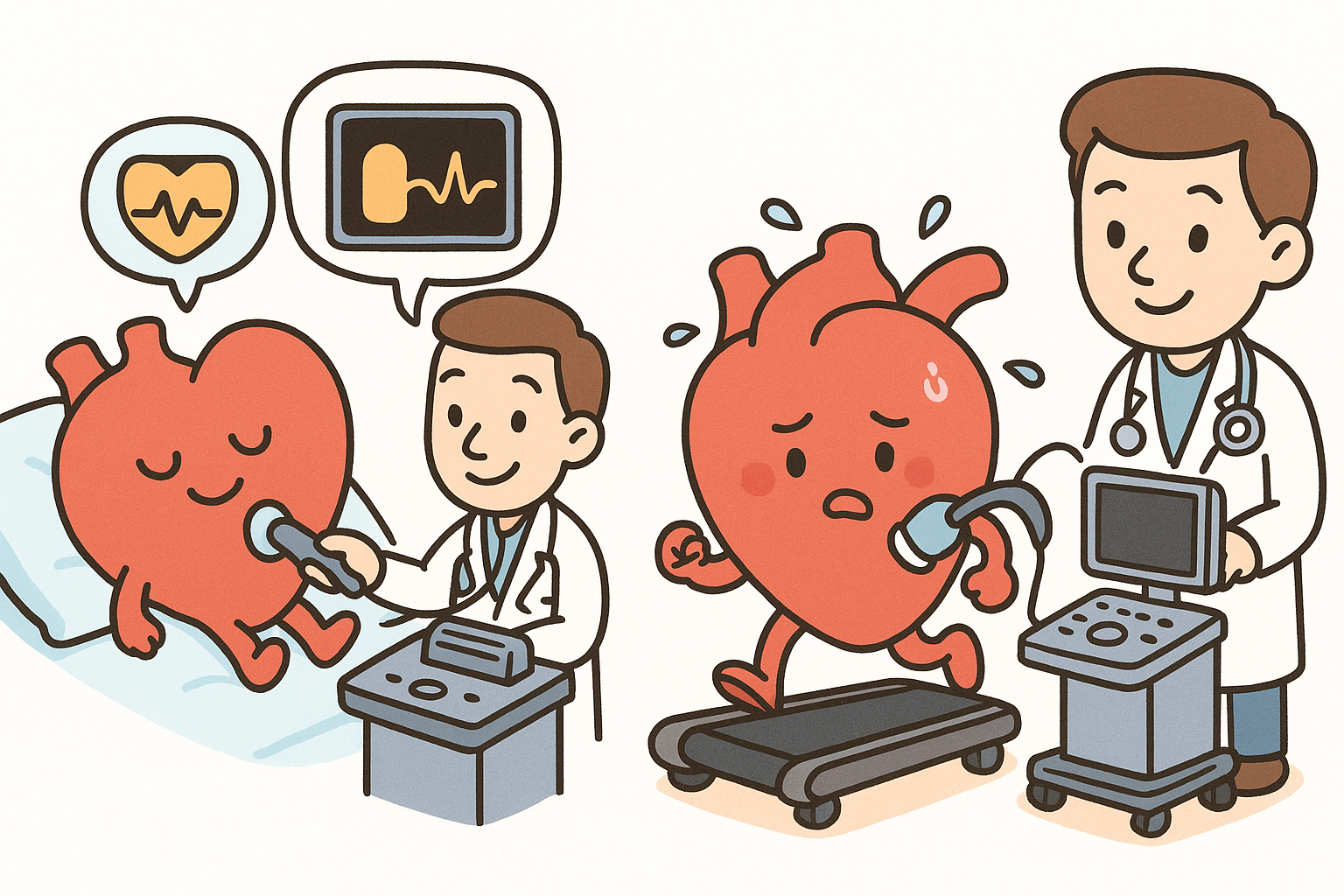
- Stress Echocardiogram: An echocardiogram (ek-oh-KAR-dee-oh-gram) is an ultrasound of the heart. Doctors take ultrasound images before you exercise and immediately after. A 1995 review in the European Heart Journal notes that this method is highly accurate for seeing if certain walls of the heart fail to pump correctly under stress, which suggests a blocked artery.
- Nuclear Stress Test: This involves injecting a small, safe amount of a radioactive tracer (like Thallium-201) into your bloodstream. A special camera takes pictures of your heart at rest and after exercise. A 1991 study in The American Journal of Medicine demonstrated that combining exercise data with Thallium imaging is highly effective at predicting multivessel coronary artery disease.
- MRI Stress Tests: Magnetic Resonance Imaging (MRI) is becoming a more common tool. A 2016 study in Physiological Measurement showed that patients can even perform CPET tests using specialized equipment right next to an MRI machine, allowing doctors to immediately scan the heart after peak exercise to see how blood volume changes.
Pharmacological (Chemical) Stress Tests
Many people cannot walk on a treadmill due to arthritis, joint pain, or severe lung conditions. If you cannot exercise, doctors use a pharmacological stress test.
Instead of making you walk, they give you a medication through an IV that mimics the effects of exercise. A common medication is dobutamine. According to a 2013 study in the Journal of Visualized Experiments, dobutamine is a beta-adrenergic agonist. This means it binds to specific receptors in the heart, causing it to beat faster and harder, just as it would if you were running. A 2006 review in European Radiology confirmed that dobutamine stress tests, especially when combined with MRI, are highly reliable and safe alternatives for detecting coronary artery disease without requiring physical exertion.
Related: Understanding Your Coronary Calcium Score: What the Numbers Actually Mean
Who Benefits Most From Stress Testing
Research shows that specific groups of people gain unique benefits from undergoing cardiac stress testing.
People with suspected coronary artery disease: If you have chest pain or shortness of breath, a stress test is often the first step to see if your heart arteries are narrowed by plaque.
Athletes pushing their limits: Highly trained athletes often develop enlarged hearts, a condition sometimes called “athlete’s heart.” A 2023 review in The Journal of Sports Medicine and Physical Fitness explains that CPET is the most objective way to tell the difference between a healthy, adapted athlete’s heart and early signs of heart disease (cardiomyopathy).
People with congenital heart disease: Adults and children born with heart defects need careful monitoring. The American Heart Association recommends regular CPET testing for these patients because it helps doctors track functional decline over time and decide when surgeries might be necessary.
People recovering from heart procedures: If you have had a stent placed to open a blocked artery (angioplasty), doctors may use a stress test months later to ensure the artery has not narrowed again.
What the Science Says About Heart Rate Dynamics
During a stress test, doctors are not just looking at how fast your heart beats, but how it behaves as it speeds up and slows down.
For example, scientists study the electrical “reset” phase of your heartbeat, known as the QT interval. When your heart rate increases, this reset phase is supposed to shorten. However, there is a slight time delay as the heart adjusts to the new speed. A 2023 study published by the IEEE Engineering in Medicine and Biology Society found that measuring this specific delay (called QT/RR hysteresis) during a stress test can help identify patients who are at a higher risk for sudden cardiac death.
Additionally, research shows that mental stress and physical stress affect the heart differently. A 2010 study in Biological Psychology found that acute psychological stress causes an exaggerated increase in cardiac output, especially in people with elevated resting blood pressure. This highlights why physical exercise tests in a controlled clinic provide a more standardized way to measure true cardiovascular mechanical function.
Related: Beyond Step Counting: What Science Says About the Future of Wearable Health Monitors
Common Questions About Cardiac Stress Tests
Are cardiac stress tests safe?
Yes. While making a potentially sick heart work hard sounds risky, stress tests are performed in highly controlled environments with medical professionals standing by. The 2006 European Radiology review noted that severe complications during chemical stress tests occur in only about 0.1 to 0.3 percent of patients.
How long does the test take?
The actual exercise portion usually lasts between 7 and 15 minutes, depending on your fitness level. However, preparation, imaging, and recovery mean the entire appointment can take one to three hours.
What if I get too tired to finish?
You are in control. If you feel dizzy, experience severe chest pain, or simply cannot keep up with the treadmill, you can ask to stop. The medical team is also monitoring your vital signs and will stop the test themselves if they see dangerous changes in your blood pressure or ECG.
A Note on Exercise as Treatment (Peripheral Arterial Disease)
While a stress test is a diagnostic tool, the exact same treadmill setup is sometimes used as an active treatment for a condition called Peripheral Arterial Disease (PAD). PAD causes intermittent claudication, which is severe cramping pain in the legs during exercise due to poor blood flow.
A 2019 study in BioMed Research International explains that supervised treadmill walking is the gold standard treatment for PAD. However, the rules are different than a diagnostic stress test. During PAD rehabilitation, patients are told to walk until they feel moderate pain, and then stop and rest. Pushing through maximum pain is actually harmful, as it can cause an influx of free radicals when blood flow returns to the starved muscle.
The Bottom Line
Cardiac stress tests are highly reliable, evidence-based tools used to unmask heart conditions that hide during rest. By safely pushing your physiological reserve to its limit, doctors can measure your peak oxygen use, evaluate the electrical safety of your heart, and visually inspect blood flow to the heart muscle.
While standard treadmill tests are excellent starting points, modern medicine offers advanced variations like CPET, echocardiograms, and chemical stress tests to accommodate all physical abilities and diagnostic needs. If your doctor has ordered a stress test, it is a safe and highly monitored way to gather essential clues about your cardiovascular future.
Quick Reference: Key Studies
| Study Focus | Key Finding | Source |
|---|---|---|
| CPET in Congenital Heart Disease | Regular CPET testing helps track functional decline and guides surgical decisions across a patient’s lifespan. | PMID 39782908 |
| Dobutamine Stress MRI | Chemical stress tests using dobutamine are safe and highly accurate (83-96% sensitivity) for detecting coronary artery disease. | PMID 16715237 |
| CPET in Athletes | Cardiopulmonary exercise testing is the most objective way to differentiate healthy athletic heart adaptations from early heart disease. | PMID 36951176 |
| Machine Learning in Stress Tests | Stress tests successfully measure “physiological reserve” by finding the tipping point where performance safely declines. | PMID 37104386 |
| Multivessel Disease Prediction | Combining exercise data with Thallium-201 imaging accurately predicts the presence of blockages in multiple heart arteries. | PMID 2003517 |
Last updated: March 2026
This article synthesizes findings from peer-reviewed research. It is for educational purposes only and does not constitute medical advice. Consult a healthcare provider before starting any new regimen.

Leave a Reply