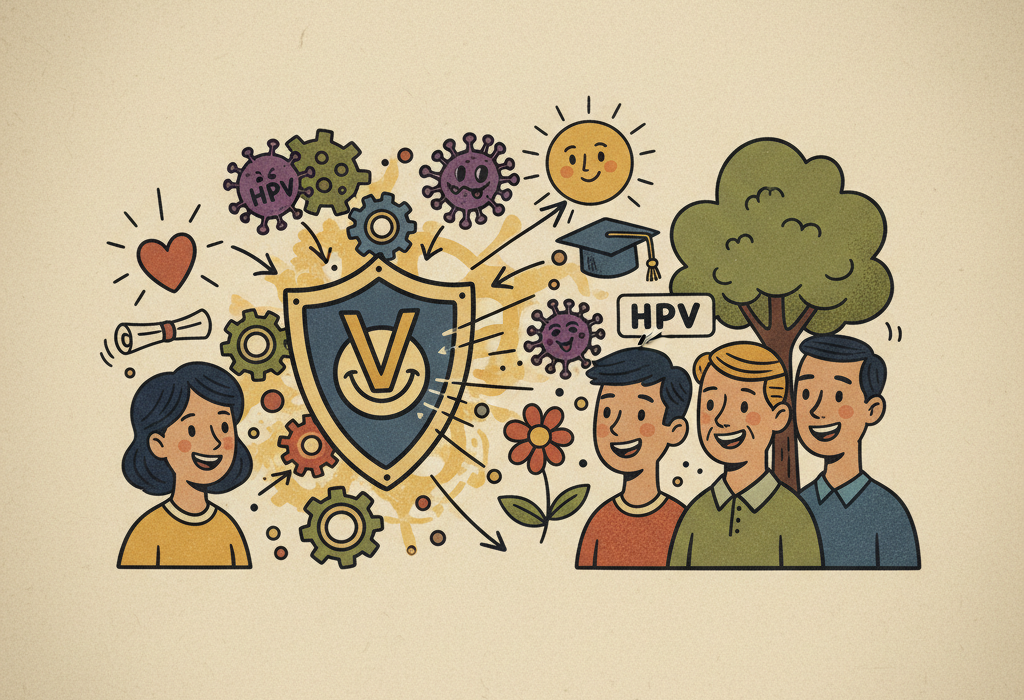
Human papillomavirus (HPV) is the most common sexually transmitted infection in the world. While most infections clear up on their own, certain strains of the virus can linger and eventually cause cancer.
The core question many people have is whether a simple vaccine can actually prevent cancer. The scientific consensus is a clear yes. Research shows that the HPV vaccine is highly effective at stopping the virus before it can cause cellular damage.
This article explains what the latest research reveals about how the vaccine works, its safety record, and who benefits the most from receiving it.
How This Might Work: Stopping the Virus Early
To understand the vaccine, it helps to understand the virus. HPV infects the basal cells, which are the bottom layer of your skin or mucous membranes.
If the immune system does not clear the virus, HPV can insert its own genetic material into your cells. Over many years, this can cause the cells to grow out of control. Scientists refer to these specific high-risk strains of the virus as oncogenic (on-co-JEN-ik), meaning they have the potential to cause cancer.
The HPV vaccine is prophylactic (pro-fuh-LAK-tik), which means it is designed to prevent a disease before it happens. The vaccine contains virus-like particles. These particles look exactly like the outside of the HPV virus, but they do not contain any viral DNA, so they cannot cause an infection.
When you receive the vaccine, your body creates antibodies. You can think of these antibodies as security guards holding a wanted poster. If the actual HPV virus ever enters your body, the security guards recognize it immediately and neutralize it before it can infect your cells.
What the Research Shows About Vaccine Benefits
Over the last two decades, scientists have gathered massive amounts of data on the HPV vaccine. The results show significant benefits across several areas of health.
High Success Rates in Cancer Prevention
Studies consistently show that the vaccine works very well. A 2024 review in Pediatric Annals noted that the HPV vaccine can prevent more than 90% of cancers caused by the virus. This includes cervical, anal, penile, vaginal, and oropharyngeal (throat) cancers.
When given before a person is ever exposed to the virus, the vaccine is incredibly effective. A 2020 review in Best Practice & Research found that the vaccine prevents nearly 99% of precancerous cervical lesions associated with the specific HPV types included in the shot.
It Is Not Just for Girls
When the vaccine was first introduced, it was primarily marketed to young girls to prevent cervical cancer. However, scientists now know that men are also at high risk for HPV-related diseases, particularly throat and anal cancers.
A 2023 review in Frontiers in Public Health strongly advocated for gender-neutral vaccination. Vaccinating boys directly protects them from cancers and genital warts. It also creates herd immunity, which helps protect the entire population by reducing the overall spread of the virus. A 2025 study in China confirmed that vaccinating adolescent males against HPV is highly cost-effective because it significantly reduces the future medical burden of throat cancer.
Potential Benefits for Pregnancy
Beyond cancer prevention, the vaccine might also protect future pregnancies. A 2021 study in Human Vaccines & Immunotherapeutics found evidence suggesting that women who received the HPV vaccine had lower rates of adverse pregnancy outcomes, such as preterm births. While more research is needed to confirm the exact mechanism, scientists believe that preventing cervical treatments (which can weaken the cervix) plays a large role in this benefit.
Understanding the Safety Profile
Because the HPV vaccine is often given to children and young teens, safety is a primary concern for many parents.
Extensive global monitoring has confirmed that the vaccine is very safe. A 2023 study in Taiwan tracked adolescent girls and looked for 19 different serious adverse events, including autoimmune and neurological diseases. The researchers found no statistically significant increase in any of these conditions after vaccination.
A 2015 pathology review also confirmed that serious adverse effects are extremely rare and occur at the same rate as a placebo. The most common side effect is simple pain or redness at the injection site, which typically resolves in a few days. Fainting can occasionally happen in teens after any injection, so doctors usually recommend sitting for 15 minutes after the shot.
Related: How to Prevent HPV: What the Latest Science Actually Says
Who Benefits Or Needs Caution
The timing of the vaccine is critical. Because the vaccine prevents infection rather than treating it, it works best when given before a person becomes sexually active.
Age Recommendations
Based on guidelines from the Advisory Committee on Immunization Practices and the American College of Obstetricians and Gynecologists, age dictates the dosing schedule:
| Age Group | Recommendation | Number of Doses |
|---|---|---|
| 9 to 14 years | Highly recommended. This is the target age because the immune response is strongest. | 2 doses (given 6-12 months apart) |
| 15 to 26 years | Recommended as a catch-up for those who missed it earlier. | 3 doses (given over 6 months) |
| 27 to 45 years | Shared decision-making with a doctor. Most adults have already been exposed to HPV, so the benefit is lower, but it may still protect against new strains. | 3 doses |
Special Populations
People with compromised immune systems, such as those with HIV, remain at a higher risk for HPV-related diseases. A 2023 study emphasized that people with HIV still benefit greatly from the vaccine, though they require the full three-dose schedule regardless of their age.
Pregnant individuals should wait. While accidental vaccination during pregnancy has not been shown to harm the fetus, standard medical guidance recommends delaying the vaccine until after the pregnancy is complete.
Common Misunderstandings About the Vaccine
Translating science to the public often leads to a few persistent myths. Here is what the evidence actually says about common concerns.
Myth: The vaccine treats existing HPV infections.
This is incorrect. A 2023 review in Vaccine clarified that the vaccine cannot clear an active HPV infection or treat existing abnormal cells. However, doctors still often recommend it for people who have had abnormal cells removed. This is because the vaccine can protect them from catching a different strain of the virus in the future, or from reinfecting themselves.
Myth: Getting the vaccine encourages early sexual activity.
Multiple long-term studies have tracked behavioral outcomes and found no link between receiving the HPV vaccine and earlier sexual activity or increased rates of other sexually transmitted infections.
Myth: If you get the vaccine, you do not need cervical cancer screening.
Vaccinated individuals still need routine Pap smears or HPV tests. The vaccine protects against the most dangerous strains of HPV, but it does not cover every single strain that exists. Screening remains an important secondary layer of protection.
Practical Guidance for Healthcare Communication
Research shows that how doctors talk about the vaccine matters. A 2024 qualitative study looked at how primary care professionals discuss the vaccine with parents.
The most effective method is often a “presumptive recommendation.” This means the doctor introduces it as a standard, routine part of care, saying something like, “Today your child is due for their meningitis, whooping cough, and HPV vaccines.”
However, researchers noted that if parents are hesitant or have a history of medical mistrust, doctors should shift to an open-ended, educational approach. Taking the time to explain the cancer-prevention benefits in simple terms builds trust and improves vaccination rates.
Related: What Science Actually Says About Smoking and Secondhand Smoke
The Bottom Line
The scientific evidence surrounding the HPV vaccine is robust and clear. It is a safe, highly effective tool for preventing multiple types of cancer in both men and women.
To get the maximum benefit, the vaccine should be given in early adolescence, ideally between ages 9 and 14, when the immune system responds best and before any viral exposure occurs. While older adults may see diminishing returns because they have likely already encountered the virus, the vaccine remains a vital piece of routine preventive healthcare.
Quick Reference: Key Studies
| Study Focus | Key Finding | Source |
|---|---|---|
| Cancer Prevention | The vaccine prevents >90% of HPV-related cancers, including cervical, throat, and anal cancers. | PMID 39377820 |
| Safety Profile | A large cohort study found no association between the vaccine and serious adverse events like autoimmune diseases. | PMID 37949754 |
| Gender-Neutral Benefits | Expanding vaccination to boys is highly cost-effective and prevents throat cancer while building herd immunity. | PMID 40342511 |
| Prior HPV Disease | The vaccine does not treat existing HPV, but it successfully prevents reinfection or infection by new strains. | PMID 37704498 |
| Pregnancy Benefits | Vaccination is associated with a reduction in adverse pregnancy outcomes, such as preterm births. | PMID 34506257 |
Last updated: March 2026
This article synthesizes findings from peer-reviewed research. It is for educational purposes only and does not constitute medical advice. Consult a healthcare provider before starting any new regimen.

Leave a Reply