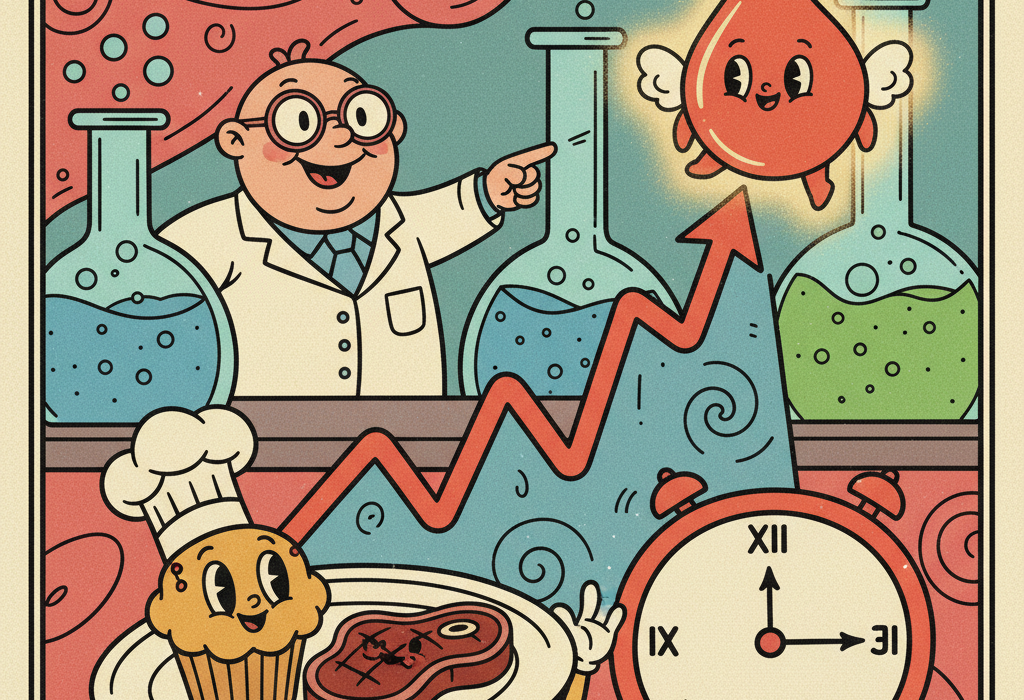
You finish a heavy lunch, and two hours later, you hit a wall. Your eyelids feel heavy, your focus fades, and you suddenly find yourself craving a sugary snack. This familiar cycle is not just a sign of a busy day. It is a direct result of how your body processes food into energy.
For decades, doctors focused mostly on fasting blood sugar, which is your glucose level when you wake up in the morning. However, recent scientific research shows that what happens to your blood sugar after you eat is just as important for your daily energy, your appetite, and your long-term health.
Postprandial (post-PRAN-dee-ul) blood sugar refers to your blood glucose levels immediately after eating. When you consume carbohydrates, your body breaks them down into glucose. This glucose enters your bloodstream, causing a temporary spike. In response, your pancreas releases insulin to help move that glucose into your cells for energy.
This article breaks down what the latest peer-reviewed research says about after-meal blood sugar spikes, why the subsequent “crash” makes you hungry, and how simple habits can keep your levels steady.
How Your Body Handles a Meal
To understand post-meal blood sugar, it helps to look at the liver. A 2021 review in Nutrients explains that the liver acts like a sponge. After a meal, the liver absorbs about 50 percent of the ingested glucose and stores it for later use. This process protects your bloodstream from becoming overwhelmed with too much sugar at once.
At the same time, the presence of insulin tells the liver to stop producing its own glucose. This is known as Endogenous (en-DAH-juh-nus) glucose production, which simply means glucose created from within the body.
A 2018 study in the American Journal of Physiology looked at how the body handles sequential meals, like breakfast followed by lunch. Researchers found that after breakfast, the liver stops producing its own glucose for about three hours. However, after lunch, the liver stays “turned off” for a much longer period. This shows that the body adapts its internal chemistry based on the sequence of meals throughout the day.
The Rollercoaster: Why We Crash and Get Hungry
Many people focus on how high their blood sugar goes after a meal. But research suggests that how far it drops might be the real driver of your afternoon hunger.
A large 2021 study in Nature Metabolism tracked the blood sugar and eating habits of over 1,000 healthy adults. The researchers found that people who experienced significant “glucose dips” two to three hours after a meal felt hungrier and ate their next meal sooner. On average, “big dippers” consumed an extra 312 calories over the course of 24 hours compared to people whose blood sugar remained stable.
Sometimes, this drop goes too low, causing shakiness, sweating, and brain fog. This is known as Reactive hypoglycemia (hy-po-gly-SEE-mee-uh), a condition where the body overreacts to a meal by pumping out too much insulin, causing blood sugar to crash. According to a 2000 review in Diabetes & Metabolism, this is heavily influenced by dietary habits, particularly meals high in simple carbohydrates and low in fat or protein.
Related: What Science Actually Says About Low Blood Sugar Symptoms
The 10-Minute Walking Rule
If you want to manage your blood sugar after a meal, one of the most effective strategies is surprisingly simple. You just need to walk.
When you exercise, your muscles need immediate energy. They can pull glucose directly out of your bloodstream without needing as much insulin. A 2024 review in Nutrients confirmed that moderate-intensity exercise, like walking, initiated shortly after eating significantly reduces the post-meal glucose spike in both healthy individuals and those with Type 2 diabetes.
But timing matters. A 2016 randomized crossover study in Diabetologia compared two different walking routines in people with Type 2 diabetes.
- Group A walked for 30 minutes at a random time during the day.
- Group B walked for exactly 10 minutes immediately after breakfast, lunch, and dinner.
The researchers found that walking for 10 minutes after meals was significantly more effective at lowering post-meal blood sugar than taking a single 30-minute walk. The benefit was especially strong after the evening meal, which is typically when people consume the most carbohydrates and sit on the couch afterward.
Further supporting this, a 2022 study in Nutrients found that a 30-minute brisk walk starting 15 minutes after a meal substantially reduced the glucose peak, regardless of whether the meal was a liquid carbohydrate drink or a solid mixed meal.
Food Timing and Composition
What you eat and when you eat it also dictate how your blood sugar behaves.
The Second-Meal Effect
Eating a protein-rich breakfast does not just stabilize your blood sugar in the morning. It actually improves how your body handles lunch and dinner.
A 2022 study in Nutrients tested the effects of a high-protein breakfast on young adults. The researchers found that a high-protein breakfast suppressed blood sugar spikes after breakfast, lunch, and dinner. However, there was a catch. If the participants skipped lunch, the protective effect disappeared by dinnertime. The researchers concluded that eating a healthy breakfast and a small lunch is vital for keeping blood sugar stable all day.
The Night Shift Trap
Your body’s ability to process sugar follows a circadian rhythm. A 2020 study in Chronobiology International looked at female healthcare workers working night shifts. When the women ate a high-sugar meal at night, their blood sugar rose faster and stayed elevated longer compared to eating the exact same meal during the day. This highlights that late-night snacking puts a much heavier burden on your metabolic system.
The Role of Viscous Fiber
Adding specific types of fiber to your meal can act as a physical barrier in your stomach, slowing down digestion. A 2020 study in Nutrients tested the effects of natto, a fermented soybean dish rich in a sticky substance called gamma-polyglutamic acid. The researchers found that eating the highly viscous natto alongside white rice significantly blunted the blood sugar and insulin spikes in the first 45 minutes after the meal compared to eating rice alone.
Who Benefits Most from Post-Meal Tracking?
While everyone experiences blood sugar fluctuations, certain populations benefit significantly from tracking and managing their after-meal numbers.
- People with Type 2 Diabetes: A 2017 clinic-based study in Diabetes & Metabolic Syndrome found that targeting post-meal blood sugar is a highly effective way to manage diabetes. Patients who adjusted their lifestyle and medications based on their after-meal numbers achieved the same long-term control as those who focused strictly on fasting numbers.
- Pregnant Women: Managing blood sugar is critical during pregnancy. A 2012 study in Nutrients looked at women with gestational diabetes. They found that eating a low-glycemic breakfast delayed the blood sugar peak and kept it significantly lower than a matched high-glycemic breakfast, reducing the amount of excess sugar passed to the fetus.
- People on Steroid Medications: Glucocorticoids are anti-inflammatory drugs that are notorious for causing blood sugar spikes. A 2021 review in Modern Rheumatology noted that these medications specifically cause post-meal hyperglycemia. Patients taking these drugs often need to adjust their diets or take specific medications to handle the afternoon and evening spikes.
Related: How GLP-1 Drugs Actually Treat Type 2 Diabetes: What the Science Shows
Common Questions About Post-Meal Blood Sugar
Do artificial sweeteners spike blood sugar?
Generally, no. A 2017 study in the International Journal of Obesity compared beverages sweetened with sucrose (sugar), aspartame, monk fruit, and stevia. The zero-calorie sweeteners did not cause the large initial blood sugar spike seen with sugar. However, the researchers noted that participants often compensated by eating more food at lunch, meaning their total daily calorie intake remained the same.
Is fasting blood sugar more important than after-meal blood sugar?
Both are important, but they tell different stories. Fasting blood sugar indicates your baseline metabolic health. After-meal blood sugar shows how well your body handles the stress of incoming food. For many people, post-meal spikes are the first sign of metabolic dysfunction, appearing years before fasting blood sugar begins to rise.
The Bottom Line
Postprandial blood sugar is a vital indicator of your metabolic health. The science clearly shows that major spikes and subsequent crashes are linked to increased hunger, fatigue, and higher calorie intake.
Based on current research, we know:
- Movement matters: Taking a 10-minute to 15-minute walk immediately after eating is one of the most effective ways to lower your blood sugar peak.
- Protein sets the tone: A high-protein breakfast helps stabilize your blood sugar for the rest of the day, provided you do not skip your midday meal.
- Timing is key: Your body is worse at processing sugar late at night due to your circadian rhythm.
- The crash drives hunger: If you find yourself starving two hours after eating, you likely experienced a steep drop in blood sugar.
While continuous glucose monitors were once reserved only for diabetics, they are increasingly used by healthy individuals to learn how specific foods affect their unique biology.
Related: Continuous Glucose Monitors: What the Latest Science Actually Says
Quick Reference: Key Studies
| Study Focus | Key Finding | Source |
|---|---|---|
| Post-Meal Walking | Walking 10 minutes after each meal lowered blood sugar more effectively than a single 30-minute walk. | PMID 27747394 |
| Glucose Dips and Hunger | Large blood sugar drops 2 to 3 hours after eating predicted increased hunger and higher calorie intake. | PMID 33846643 |
| High-Protein Breakfast | A high-protein breakfast suppressed blood sugar spikes at lunch and dinner, demonstrating a “second-meal effect.” | PMID 36615743 |
| Nighttime Eating | Eating a high-sugar meal during a night shift caused higher and longer blood sugar spikes than eating it during the day. | PMID 32993356 |
| Exercise Timing | Moderate-intensity exercise starting 15 minutes after a meal effectively blunted glucose peaks. | PMID 35268055 |
| Sweeteners vs. Sugar | Zero-calorie sweeteners avoided initial glucose spikes but led to compensatory eating at the next meal. | PMID 27956737 |
Last updated: March 2026
This article synthesizes findings from peer-reviewed research. It is for educational purposes only and does not constitute medical advice. Consult a healthcare provider before starting any new regimen.
Leave a Reply