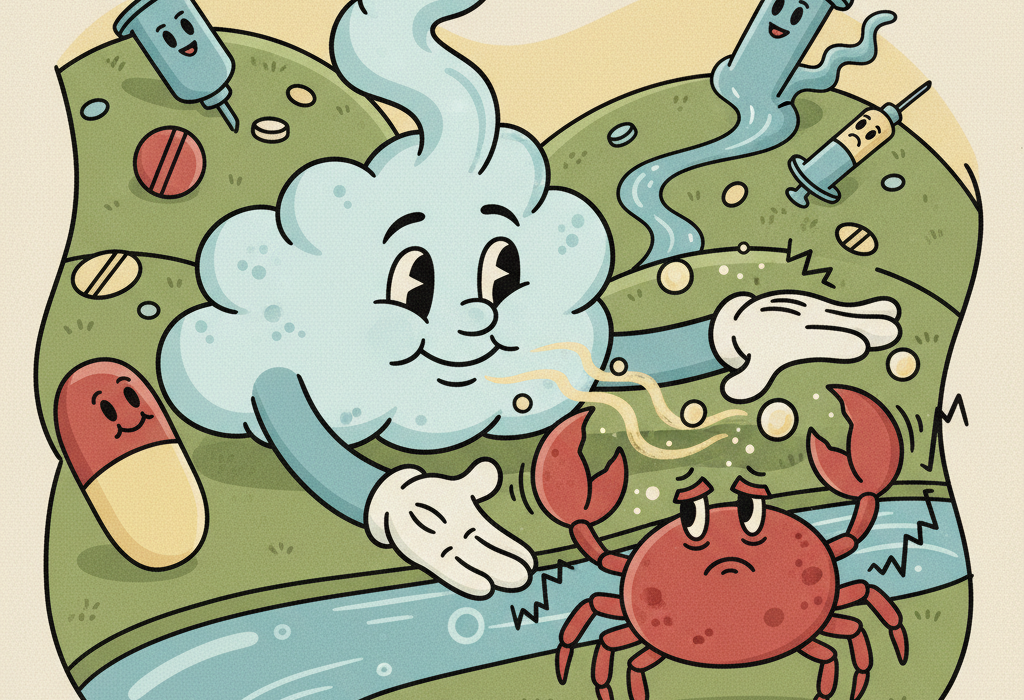
When someone is diagnosed with cancer, one of their most immediate fears is pain. For decades, the medical approach to this problem was straightforward: prescribe stronger medications as the pain increased. However, the human body is a highly complex system. Pain is not just a single physical sensation. It is influenced by genetics, emotions, and the specific way a tumor interacts with nerves and tissues.
Today, scientists understand that managing cancer pain requires much more than just a prescription pad. While medications remain a critical tool, the medical community is increasingly relying on a combination of targeted drugs, psychological support, and integrative therapies.
Related: How Science Actually Manages Chemotherapy Side Effects
What Causes Cancer Pain?
To treat pain effectively, doctors first have to understand where it comes from. Cancer pain is not a single condition. It generally falls into a few distinct categories based on how it affects the body:
- Nociceptive (no-see-SEP-tiv) pain: This happens when physical tissue is damaged. It includes somatic pain, which feels like aching or throbbing in the bones or muscles, and visceral pain, which feels like a deep squeezing or cramping in the internal organs.
- Neuropathic (nur-oh-PATH-ik) pain: This occurs when nerves are damaged or compressed by a tumor or by treatments like surgery and chemotherapy. It often feels like burning, tingling, or electrical shocks.
- Nociplastic (no-see-PLAS-tik) pain: A complex type of pain where the nervous system becomes overly sensitive, making the pain feel more severe than the actual physical damage might suggest.
A 2023 review in Current Oncology notes that up to 40 percent of cancer patients experience neuropathic pain. Because cancer pain is often a mix of these different types, a single medication rarely solves the whole problem.
How Science Approaches Medication
For many years, doctors followed a simple three-step “analgesic ladder” created by the World Health Organization. It suggested starting with mild over-the-counter pain relievers, moving to weak opioids, and finally using strong opioids as pain worsened.
Today, the approach is much more personalized. A 2023 guideline from the American Society of Clinical Oncology confirms that opioids remain a primary tool for moderate to severe cancer pain. However, scientists now know that not all opioids work the same way for every person.
The Role of Genetics in Pain Relief
Have you ever wondered why a pain pill works perfectly for one person but does nothing for someone else? The answer often lies in our DNA.
Pharmacogenomics (far-muh-ko-juh-NO-miks) is the study of how genes affect a person’s response to drugs. A 2019 review in Medicina explains that genetic differences change how our bodies process medications. For example, a liver enzyme called CYP2D6 converts certain medications, like codeine, into their active, pain-relieving forms.
Some people are “poor metabolizers” and get almost no relief from these drugs. Others are “ultra-rapid metabolizers” who process the drug so quickly that they might experience severe side effects from a standard dose. Because of this, doctors often skip weak opioids and rely on carefully managed doses of stronger medications like morphine, oxycodone, or methadone.
A 2024 network meta-analysis in the Journal of Pain and Symptom Management compared different strong opioids and found that methadone was highly effective for cancer-related pain. However, because methadone stays in the body for a long time, it requires careful monitoring by a pain specialist.
Treating Nerve Pain
For nerve pain, traditional opioids are often not enough. Researchers writing in Current Treatment Options in Oncology note that medications originally designed for other conditions are frequently used to calm overactive nerves. These are called adjuvant medications, and they include anti-seizure drugs (like gabapentin) or certain antidepressants (like duloxetine).
Managing Bone Pain
When cancer spreads to the bones, it can cause a unique and intense type of pain. Treating this requires specialized approaches beyond standard painkillers.
A 2021 guideline in Medical Oncology outlines several targeted treatments for bone pain:
- Radiation Therapy: Directing radiation at the specific bone metastasis can shrink the tumor and significantly reduce pain.
- Bone-Modifying Agents: Medications like zoledronic acid or denosumab help strengthen the bone, prevent fractures, and reduce pain over time.
- Vertebroplasty (ver-TEE-bro-plas-tee): If cancer weakens a bone in the spine, doctors can inject a special medical cement into the bone to stabilize it and provide rapid pain relief.
Psychological and Integrative Therapies
Science is increasingly looking outside the medicine cabinet. Integrative therapies are now recognized as a core part of cancer pain management. The goal is not necessarily to replace medications, but to work alongside them to provide better overall relief.
Related: What Science Actually Says About Medical Hypnotherapy
A 2019 review in the Cancer Journal highlights that therapies like acupuncture, massage, and music therapy can significantly reduce pain intensity. Acupuncture, a practice of inserting thin needles into specific body points, is thought to stimulate the nervous system to release natural painkillers called endorphins.
Additionally, psychological support plays a massive role. Pain is not just a physical sensation; it is processed by the brain, and stress or anxiety can make pain feel worse. A 2020 meta-analysis in Current Oncology Reports found that cognitive-behavioral therapy (CBT) and relaxation techniques help patients reframe how they think about their pain, leading to measurable improvements in comfort.
Virtual Reality as a Treatment
Technology is also offering new ways to manage pain. A 2024 randomized controlled trial in Cancer tested Virtual Reality (VR) for hospitalized cancer patients. Patients who used a 10-minute immersive VR experience reported significantly greater pain relief than those who just looked at a standard screen. Remarkably, the benefits of this short VR session lasted for up to 24 hours. The immersive environment helps distract the brain, essentially turning down the volume on pain signals.
The Importance of a Care Team
Managing medications, side effects, and emotional stress is too much for one doctor to handle alone. Research shows that a team approach yields the best results.
The Role of Pharmacists
A 2022 meta-analysis in The Journal of Pain evaluated the impact of having a pharmacist directly involved in a cancer patient’s care team. The results were clear: pharmacist involvement significantly reduced pain intensity and lowered the chances of adverse drug reactions. Pharmacists help catch dangerous drug interactions, adjust doses safely, and educate patients on how to take their medications properly.
The Role of Family Caregivers
Family members carry a heavy load when caring for a loved one with cancer. A 2019 review in Anesthesia and Analgesia found that family caregivers are often the primary providers of pain management at home. They track symptoms, give medications, and communicate with the medical team. The research shows that when nurses and doctors formally train family caregivers in symptom management, it not only improves the patient’s pain but also reduces caregiver stress and burnout.
Special Considerations for Older Adults
Older adults require a highly customized approach to pain management. A 2019 paper in Seminars in Oncology Nursing points out that aging changes how the body absorbs and clears medications.
As kidney and liver function naturally decline with age, drugs can build up in the system. Because of this, older adults often need lower starting doses of pain medications and slower adjustments. If doses are pushed too quickly, older patients are at a higher risk for falls, severe constipation, and confusion.
| Patient Group | Primary Considerations | Recommended Adjustments |
|---|---|---|
| Older Adults | Slower kidney/liver function | Start with lower doses, adjust slowly, monitor for falls. |
| Genetically Variant Metabolizers | Process certain drugs too fast or too slow | Avoid codeine/tramadol; use direct-acting medications like morphine. |
| Patients with Nerve Pain | Standard painkillers may be ineffective | Add adjuvant medications like gabapentin or duloxetine. |
Common Questions About Cancer Pain
Is all cancer pain treated with opioids?
No. Many types of pain are treated with non-opioid medications, nerve-blocking procedures, radiation, or integrative therapies like acupuncture. The treatment depends entirely on the cause and severity of the pain.
Will taking opioids for cancer pain cause addiction?
When taken exactly as prescribed for severe cancer pain, the risk of true psychological addiction is low. However, physical dependence (meaning the body gets used to the drug and needs to be tapered off slowly) is a normal biological response. Doctors closely monitor patients to minimize any risks.
Can I manage cancer pain without medication?
While severe pain usually requires medication, non-drug methods are highly effective add-ons. Techniques like physical therapy, virtual reality, meditation, and acupuncture can reduce the amount of medication you need and help manage side effects.
The Bottom Line
Cancer pain is a complex issue that requires a highly customized approach. Research shows that relying on a single medication is rarely enough. The most effective pain management combines targeted medications, psychological support, and integrative therapies.
We know that genetics play a major role in how well a drug works, and that nerve and bone pain require specialized treatments. Furthermore, the evidence strongly supports a team approach. Including pharmacists, pain specialists, and well-trained family caregivers in the treatment plan leads to better pain control and a higher quality of life.
Quick Reference: Key Studies
| Study Focus | Key Finding | Source |
|---|---|---|
| Virtual Reality | A 10-minute immersive VR session significantly reduced pain in hospitalized cancer patients, with effects lasting 24 hours. | PMID 38943468 |
| Pharmacist Involvement | Including a pharmacist in the care team significantly reduced pain intensity and adverse drug reactions. | PMID 35151871 |
| Strong Opioids | A network meta-analysis found methadone to be highly effective for cancer pain, though it requires careful specialist monitoring. | PMID 38838946 |
| Integrative Medicine | Acupuncture, hypnosis, and music therapy are effective, evidence-based additions to standard pain medications. | PMID 31567462 |
| Psychosocial Interventions | Therapies like CBT and relaxation techniques provide a small but significant reduction in cancer pain intensity. | PMID 31965361 |
| Genetics and Pain | Genetic variations (like the CYP2D6 enzyme) explain why some patients get no relief from certain opioids, requiring personalized drug choices. | PMID 31547335 |
Last updated: March 2026
This article synthesizes findings from peer-reviewed research. It is for educational purposes only and does not constitute medical advice. Consult a healthcare provider before starting any new regimen.
Leave a Reply