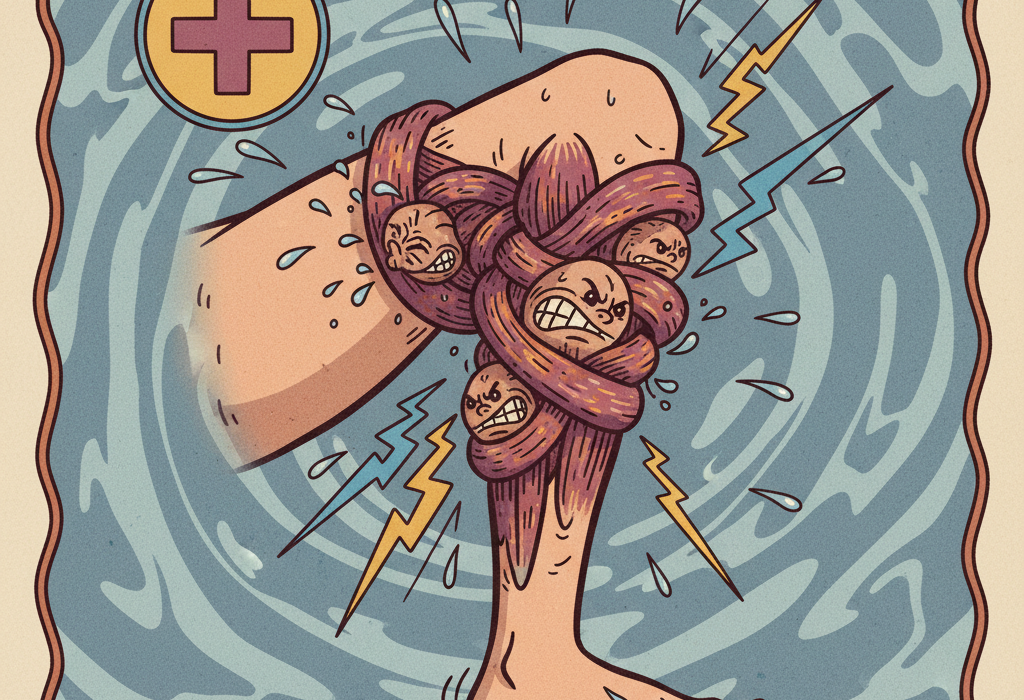
It is a universal and unpleasant experience. You are sleeping peacefully, or perhaps you are miles into a long run, when a sudden, seizing pain grips your calf. Your muscle locks into a hard knot, and for a few agonizing moments, you cannot move.
For decades, coaches, trainers, and health professionals have blamed these muscle cramps on a simple equation: you are dehydrated, or you need more electrolytes like potassium and sodium. The standard advice has always been to drink a sports beverage and eat a banana.
However, modern research paints a very different picture. Scientists are discovering that muscle cramps are rarely about what your body is missing. Instead, they are about a miscommunication in your nervous system.
This article breaks down what peer-reviewed research actually says about why muscles cramp, why the old theories are falling out of favor, and why unexpected remedies like pickle juice might actually work.
Common Questions About Muscle Cramps
What exactly is a muscle cramp?
A muscle cramp is a sudden, involuntary, and painful contraction of a muscle. During a cramp, the nerves that control your muscle fire rapidly and continuously, causing the muscle to lock up rather than contract and relax normally.
Are cramps always caused by dehydration?
No. While severe dehydration can cause widespread muscle issues, research shows that most exercise-associated and nighttime cramps are caused by nerve fatigue and misfiring, not a lack of water or electrolytes.
Does eating a banana stop a cramp?
While bananas are healthy and contain potassium, digesting and absorbing those nutrients takes far too long to stop an active cramp.
The Great Cramp Debate: Electrolytes vs. Nerves
For nearly a century, the leading explanation for exercise-associated muscle cramps was the “electrolyte depletion” and “dehydration” hypothesis. The idea was that sweating out too much water and sodium caused the fluid spaces around your muscles to shrink, which irritated the nerve endings and caused them to misfire.
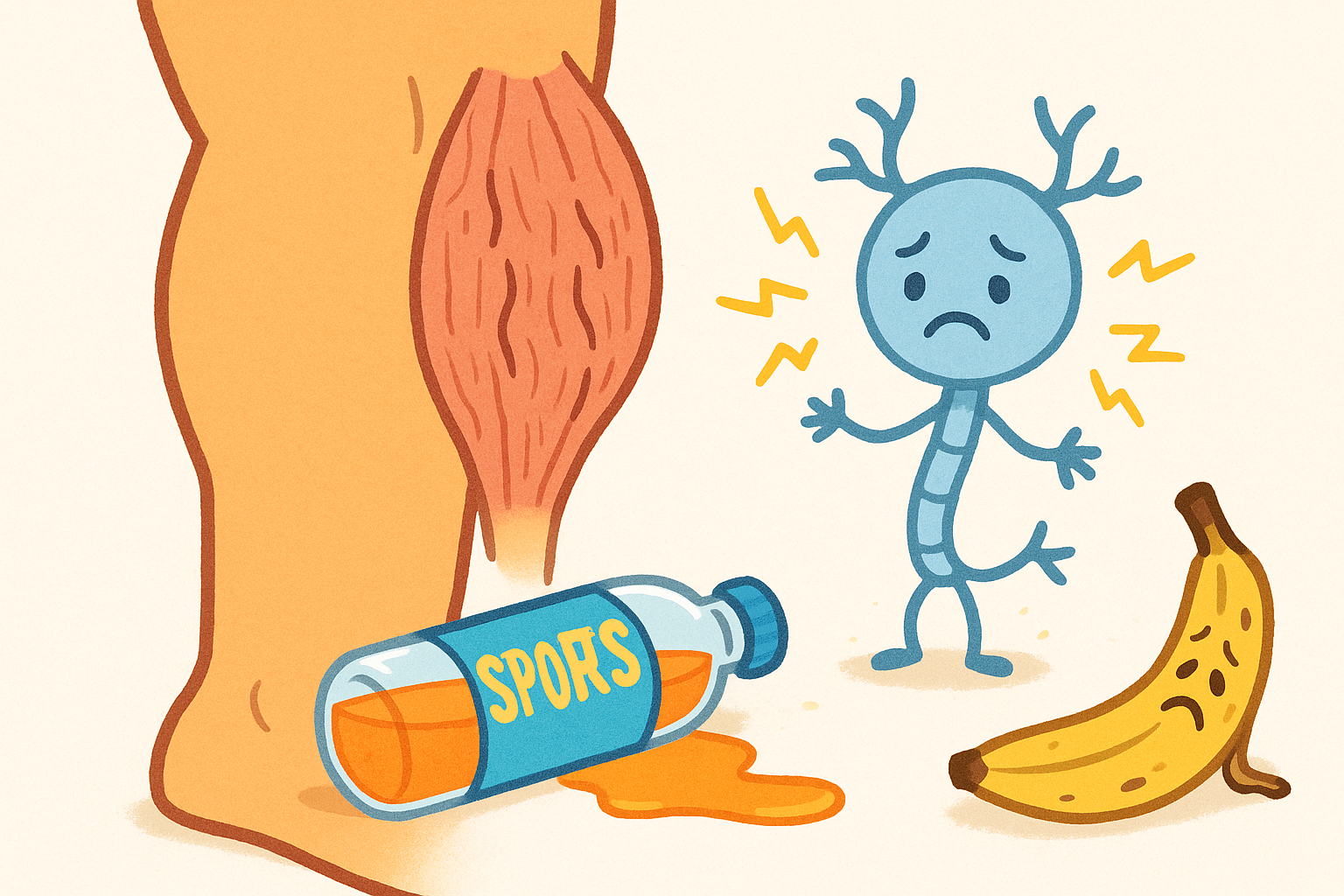
However, a 2009 review in the British Journal of Sports Medicine found major flaws in this theory. When researchers studied endurance athletes like marathon runners and triathletes, they found no significant differences in hydration levels or blood electrolyte concentrations between the athletes who cramped and those who did not.
If dehydration and electrolyte loss were the true culprits, cramps would likely happen all over the body. Instead, cramps usually remain localized to the specific muscles doing the hardest work.
Related: How Much Water Should You Actually Drink? Science vs. The 8-Glass Myth
The Altered Neuromuscular Control Theory
If hydration is not the main issue, what is? Today, the leading scientific explanation is the “altered neuromuscular control” hypothesis.
To understand this, it helps to know two key terms:
- Alpha motor neuron (AL-fuh MOH-ter NOOR-on) – The nerve cell that sends the signal telling your muscle fibers to contract.
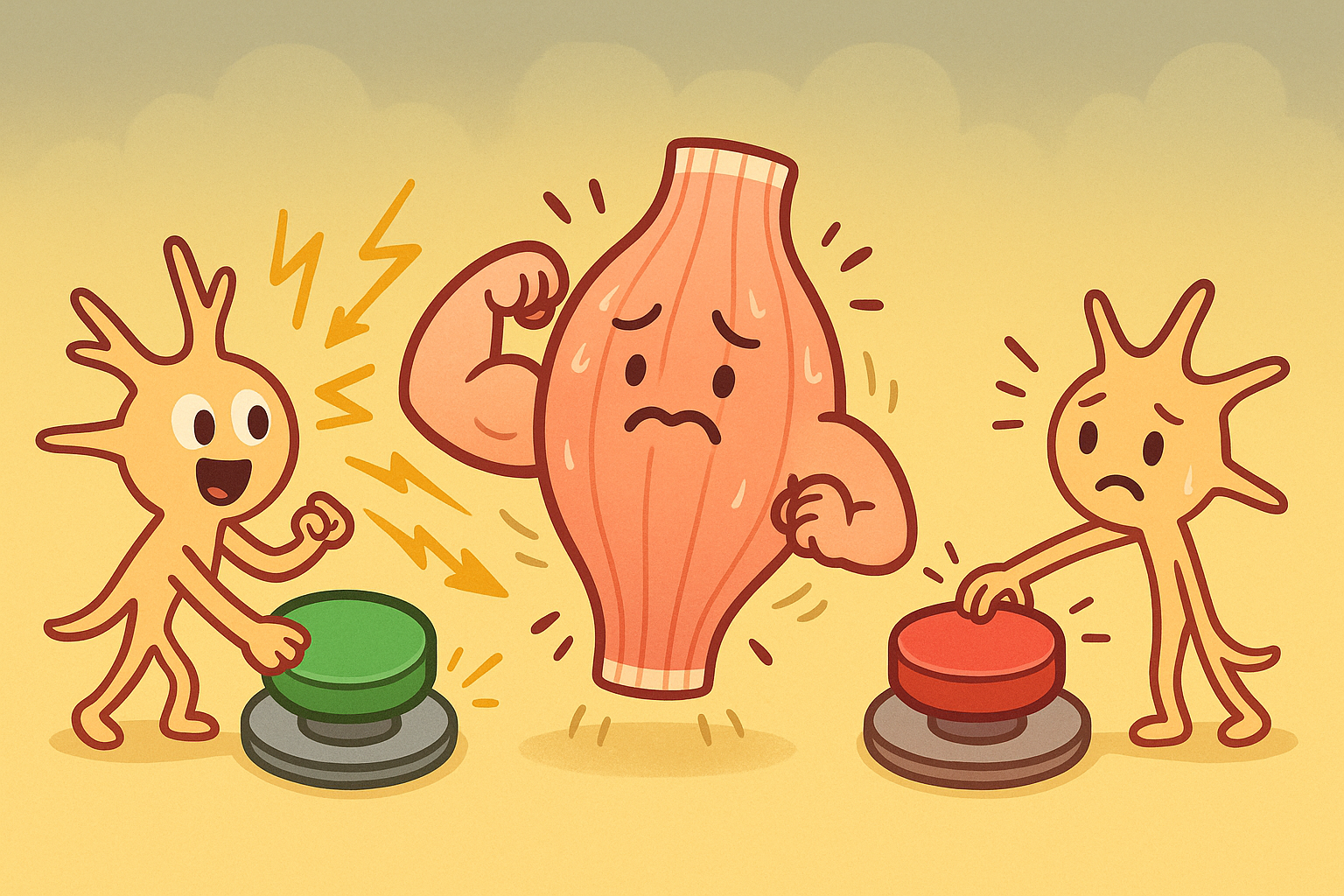
- Golgi tendon organ (GOHL-jee TEN-dun OR-gan) – A sensor located in your tendon that detects tension. When tension gets too high, it acts as a brake, telling the alpha motor neuron to stop firing so the muscle can relax.
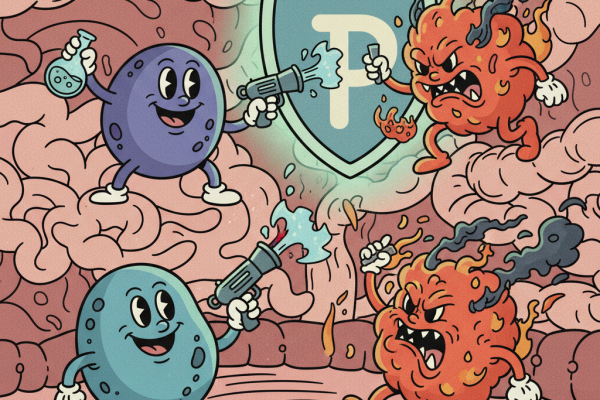
According to a 2018 review in the Journal of Electromyography and Kinesiology, muscle fatigue disrupts this delicate balance. When a muscle becomes overly tired, the sensors that tell the muscle to contract become hyperactive. At the same time, the Golgi tendon organ (the brake) becomes less effective.
Without an effective brake, the alpha motor neuron fires out of control. The muscle locks into a continuous, painful spasm.
Does Pickle Juice Actually Stop Muscle Cramps?
One of the most popular home remedies for muscle cramps is drinking a small amount of pickle juice or eating yellow mustard. For a long time, sports scientists assumed this worked because pickle juice is full of salt, which supposedly restored electrolyte balance.
However, a fascinating 2010 study published in Medicine and Science in Sports and Exercise tested this idea directly. Researchers mildly dehydrated healthy male subjects and then used mild electrical stimulation to induce a cramp in their foot muscles.
When the subjects drank about 2.5 ounces of pickle juice, their cramps stopped in an average of 85 seconds. This was 45% faster than when they drank nothing, and significantly faster than when they drank plain water.
Crucially, the researchers noted that 85 seconds is not nearly enough time for the stomach to digest the pickle juice, absorb the salt, and send those electrolytes through the bloodstream to the foot. The blood tests confirmed this: the subjects’ blood electrolyte levels had not changed at all when the cramp stopped.
How This Might Work: The Acetic Acid Reflex
If the salt did not stop the cramp, what did?
Researchers believe the active ingredient is actually acetic acid (uh-SEE-tik AS-id), the compound that gives vinegar its sour taste. A 2020 chemical analysis in the Journal of Strength and Conditioning Research confirmed that pickle juice, yellow mustard, and sweet relish all contain measurable amounts of acetic acid.
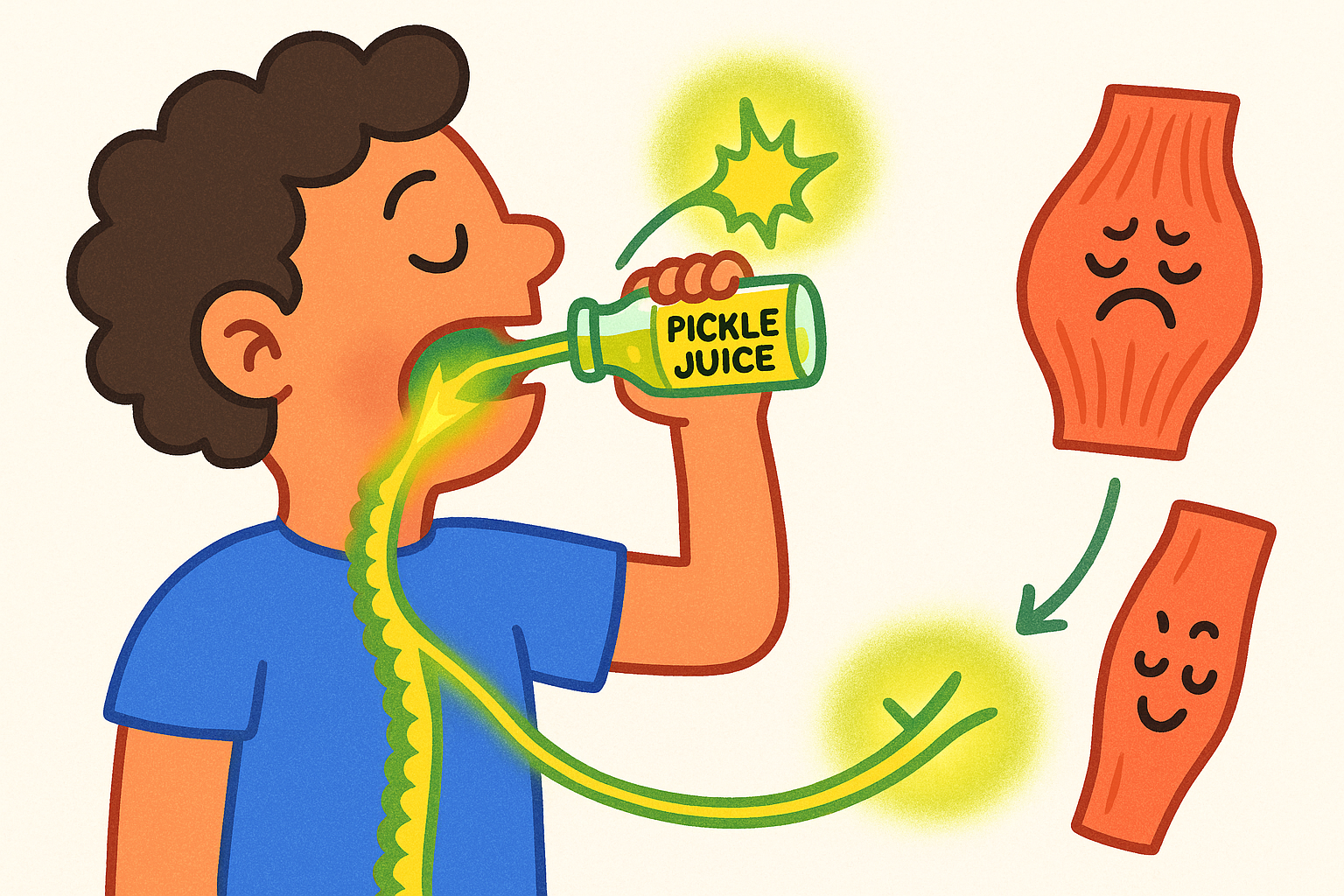
When you swallow something highly acidic and sour, it stimulates nerve receptors in the back of your throat (the oropharyngeal region). This strong sensory signal travels to your spinal cord and triggers an inhibitory reflex. Essentially, the sour shock to your nervous system acts like a system reset, sending a message down your spinal cord to tell the misfiring alpha motor neurons to stop cramping.
Common Misunderstandings About Cramp Treatments
Because cramps are so common, there are many heavily marketed treatments. However, clinical research shows that several of these popular remedies lack strong evidence.
The Magnesium Myth
Walk into any pharmacy, and you will see magnesium supplements marketed specifically for leg cramps. While magnesium is vital for overall health, its ability to stop cramps is highly debated.
A large 2020 Cochrane Database systematic review analyzed 11 trials involving over 700 people. The researchers concluded that it is “unlikely that magnesium supplementation provides clinically meaningful cramp prophylaxis to older adults experiencing skeletal muscle cramps.” The evidence for pregnant women experiencing leg cramps was mixed and conflicting.
Related: What Science Actually Says About Magnesium Supplements
The Quinine Controversy
For decades, doctors prescribed a drug called quinine to treat severe nocturnal leg cramps. A 2010 systematic review found that quinine is actually quite effective, reducing cramp frequency by 28% and cramp intensity by 10% compared to a placebo.
However, effectiveness is not the same as safety. A 2015 review in the Journal of Neurology highlights that the United States Food and Drug Administration (FDA) strongly warns against using quinine for muscle cramps. Quinine can cause a severe and potentially fatal blood disorder called thrombocytopenia, alongside other issues like irregular heartbeats and ringing in the ears. Because muscle cramps are generally harmless, medical guidelines advise that the severe risks of quinine far outweigh the benefits for most people.
Who Benefits Or Needs Caution
While most cramps are benign, the underlying cause can vary depending on your age and health status.
Athletes and Active Individuals: Cramps usually occur due to muscle fatigue, poor conditioning, or pushing a muscle harder than usual. These are best managed with conditioning and stretching.
Older Adults: “Idiopathic nocturnal leg cramps” (cramps with no known cause that happen at night) become much more common as we age. These are likely related to age-related changes in the peripheral nerves and tendons.
People with Liver Disease or Kidney Failure: Cramps are highly prevalent in people with liver cirrhosis and those undergoing dialysis. A 2013 review in Clinical Gastroenterology and Hepatology explains that in liver disease, cramps may be tied to a deficiency in taurine (an amino acid that helps stabilize muscle cell membranes) and actual shifts in blood volume. Similarly, a 2024 systematic review in Seminars in Dialysis notes that rapid fluid shifts during dialysis frequently trigger severe cramps. For these specific medical populations, doctors sometimes use specific amino acids or adjust dialysis settings, which is very different from treating a standard exercise cramp.
Related: Treating Neuropathic Pain: What the Latest Science Says
Practical Guidance: Managing and Preventing Cramps
Based on current peer-reviewed evidence, here is how you can manage muscle cramps effectively and safely.
1. Stretch the Cramping Muscle Immediately
Stretching is the most consistently proven way to stop a cramp in its tracks. A 2018 review in Sportverletzung Sportschaden confirms that stretching physically pulls on the muscle, which increases tension on the Golgi tendon organ. This forces the “brake” to engage, sending an inhibitory signal to the spinal cord that stops the nerve from firing.
2. Try the “Sour Reflex” for Rapid Relief
If you are prone to severe exercise cramps, keeping a small bottle of pickle juice or a packet of yellow mustard nearby may help. Research suggests that consuming just 2 to 3 ounces of pickle juice can trigger the throat reflex needed to quiet the nervous system.
3. Stretch Daily for Prevention
If you suffer from nighttime leg cramps, regular stretching may help keep them away. Studies show that holding gentle calf and hamstring stretches for 30 seconds, a few times a day (especially right before bed), can significantly reduce the frequency of nocturnal cramps by keeping the muscle and tendon flexible.
4. Pace Your Exercise
Because fatigue is the primary driver of exercise cramps, the best prevention is proper training. Gradually increasing the intensity and duration of your workouts gives your muscles and nerves time to adapt, making them less likely to misfire under stress.
The Bottom Line
The science of muscle cramps has shifted significantly. While the sports drink industry continues to heavily market electrolytes and hydration as the ultimate cure for cramps, the evidence suggests that most cramps are a neurological issue, not a nutritional one.
When a muscle becomes overly fatigued, the nerves that control it begin to misfire, locking the muscle into a painful spasm. You can short-circuit this misfire by physically stretching the muscle, or by triggering a nervous system reflex with a strong, sour taste like pickle juice.
While cramps are painful, they are usually harmless. If you experience severe, frequent cramps that do not respond to stretching, or if they are accompanied by muscle weakness or shrinking, it is best to consult a doctor to rule out underlying neurological or metabolic conditions.
Quick Reference: Key Studies
| Study Focus | Key Finding | Source |
|---|---|---|
| Pickle Juice vs. Water | Pickle juice relieved electrically induced cramps in 85 seconds, much faster than water. Blood electrolytes did not change, suggesting a nerve reflex rather than nutrient absorption. | PMID 19997012 |
| Acetic Acid Content | Pickle juice and yellow mustard contain adequate acetic acid to potentially trigger the oropharyngeal reflex that stops cramps. | PMID 32459412 |
| Dehydration Hypothesis | Prospective studies show athletes who cramp are not more dehydrated or depleted of electrolytes than athletes who do not cramp. | PMID 18981039 |
| Magnesium Supplements | A large review found it unlikely that magnesium provides meaningful cramp prevention for older adults with idiopathic cramps. | PMID 32956536 |
| Quinine Treatment | Quinine reduces cramp frequency but carries risks of severe, sometimes fatal side effects. Medical guidelines advise against its routine use. | PMID 21154358 |
| Neuromuscular Theory | Cramps are likely caused by an imbalance between excitatory signals (muscle spindles) and inhibitory signals (Golgi tendon organs) due to fatigue. | PMID 29857264 |
Last updated: March 2026
This article synthesizes findings from peer-reviewed research. It is for educational purposes only and does not constitute medical advice. Consult a healthcare provider before starting any new regimen.

Leave a Reply