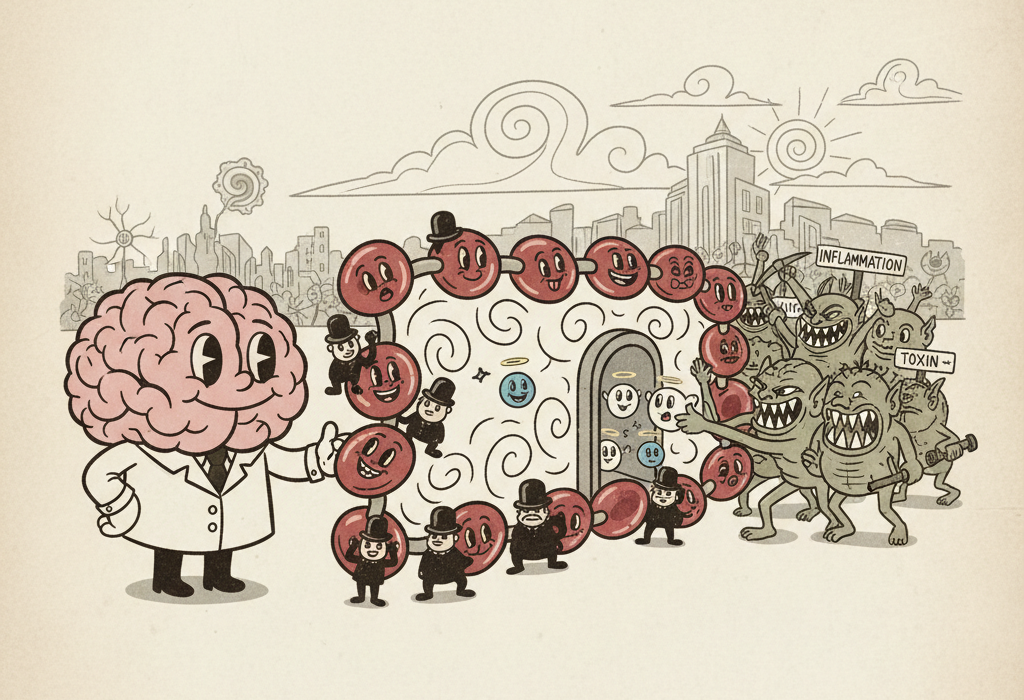
Imagine a highly secure vault. You want to let in the right people, like those bringing food and essential supplies, but you need to keep out intruders, thieves, and harmful elements. Your brain operates in a very similar way. It is the most sensitive organ in your body, and it requires constant protection from toxins, viruses, and fluctuations in your bloodstream. This protection is provided by the blood-brain barrier.
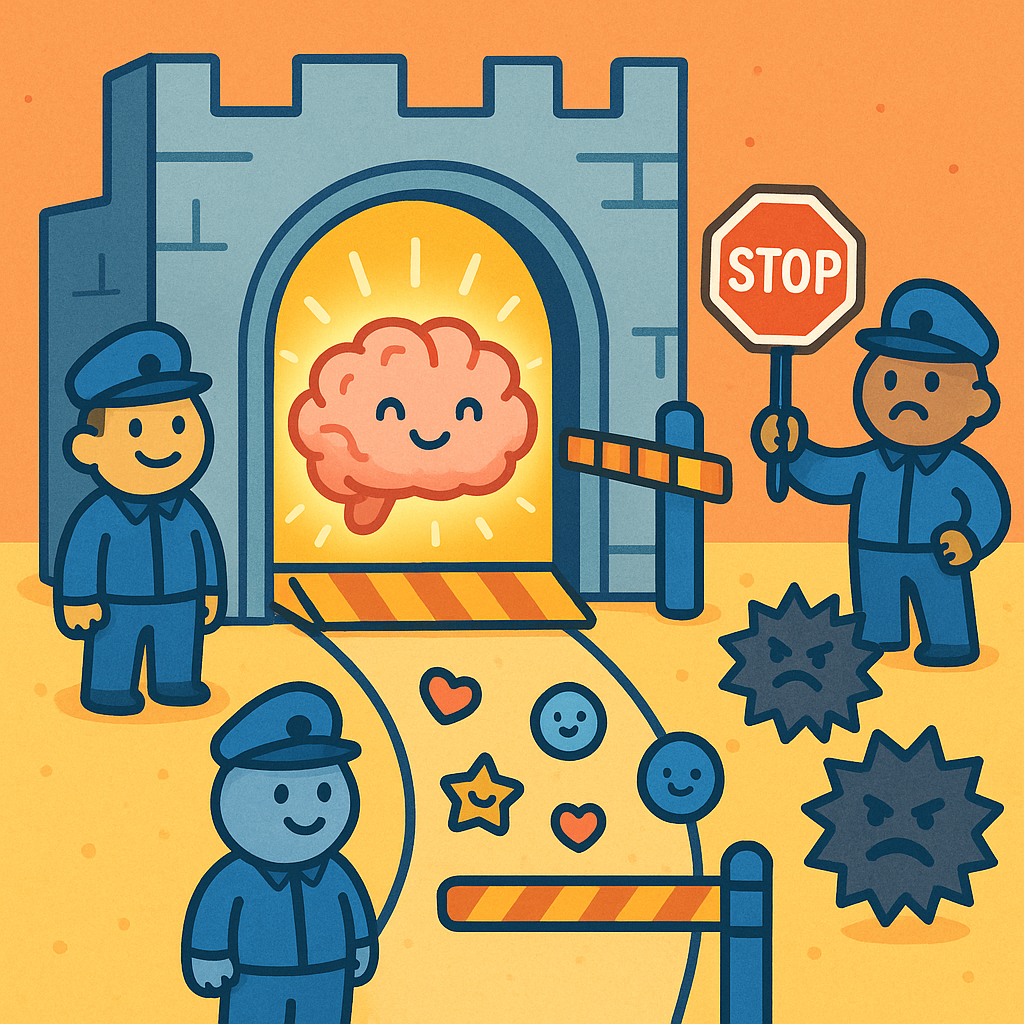
The blood-brain barrier is a microscopic network of blood vessels and tissue that acts as a strict security system for your brain. It allows essential nutrients like oxygen and water to pass through while blocking harmful substances.
However, scientists are discovering a core tension regarding this barrier. On one hand, when the barrier becomes leaky due to aging or disease, it can lead to cognitive decline. On the other hand, the barrier is so effective at keeping things out that it actively blocks life-saving medications, making brain tumors and neurological diseases very difficult to treat.
This article will explore what the latest science says about how this barrier works, why it sometimes fails, and how researchers are learning to bypass it to treat disease.
The History of a Hidden Wall
The story of the blood-brain barrier begins in the late nineteenth century. A scientist named Paul Ehrlich was conducting experiments with chemical dyes. He injected a blue dye into the bloodstream of mice and observed that the dye stained all the organs in the animal’s body blue, except for the brain and the spinal cord.
At first, scientists thought the brain simply did not absorb the dye. However, a few years later, one of Ehrlich’s students injected the same blue dye directly into the fluid surrounding the brain. This time, the brain turned blue, but the rest of the body did not.
This simple experiment proved that there was a physical boundary between the bloodstream and the central nervous system. It took decades and the invention of the electron microscope for scientists to actually see this barrier and understand how it functions.
How the Blood-Brain Barrier Works
To understand how the blood-brain barrier functions, we have to look at the blood vessels themselves. In most parts of your body, the walls of your blood vessels have tiny gaps. These gaps act like a porous garden hose, allowing nutrients and immune cells to flow easily into surrounding tissues.
In the brain, these gaps do not exist. The cells lining the blood vessels are packed tightly together to form a solid wall.
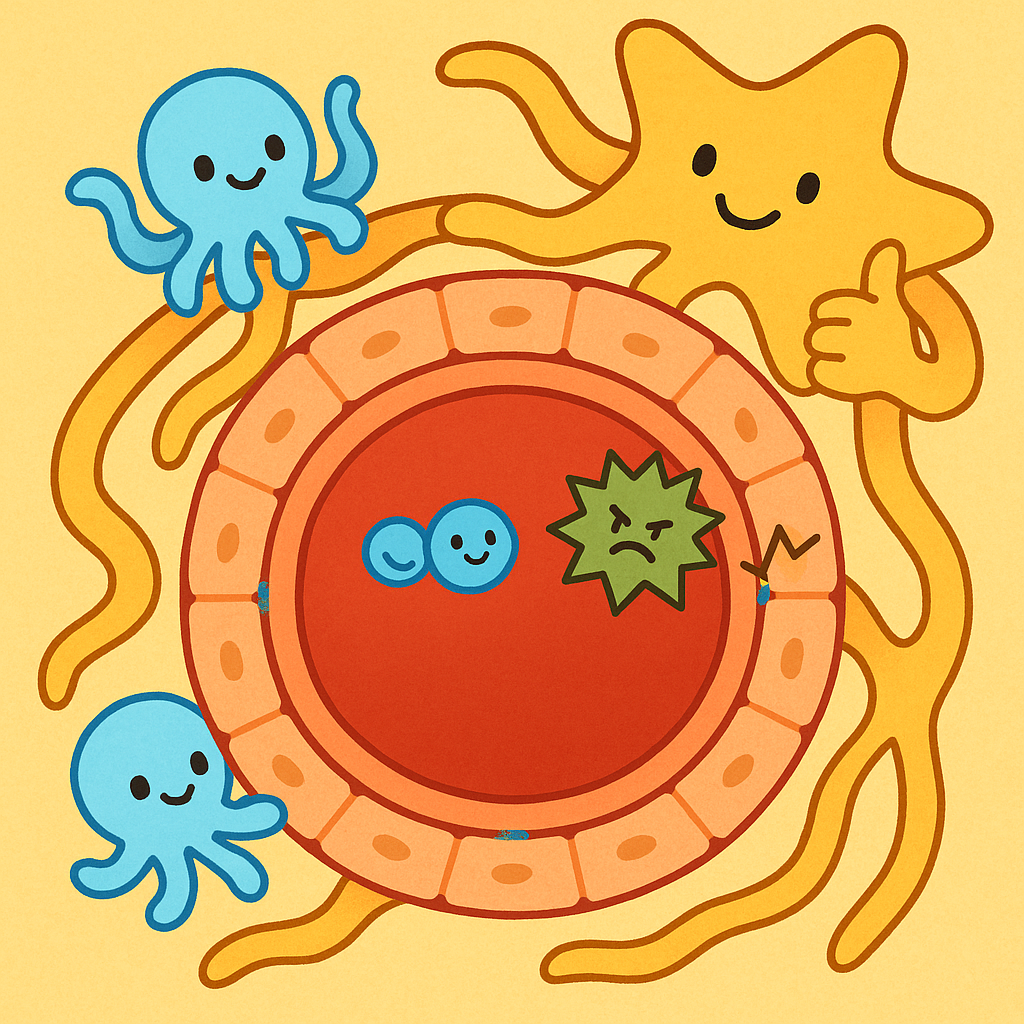
Three main components make up this security system:
- Endothelial cells (en-doh-THEE-lee-ul) – These are the cells that line the inside of the blood vessels. In the brain, they are fused together by proteins called “tight junctions.” These tight junctions act like a waterproof seal, preventing molecules from slipping between the cells.
- Pericytes (PAIR-ih-sites) – These are specialized cells that wrap around the outside of the endothelial cells. They act like clamps, helping to hold the blood vessel structure together and regulating blood flow.
- Astrocytes (AS-troh-sites) – These are star-shaped brain cells. They have long tentacles called “end-feet” that wrap entirely around the blood vessels. Astrocytes provide structural support and send chemical signals that tell the endothelial cells to keep the tight junctions sealed.
How Molecules Cross the Border
Because the blood-brain barrier is so tightly sealed, very few things can cross it passively. Only very small molecules, such as oxygen and carbon dioxide, or molecules that can dissolve in fat, can slip through the cell membranes easily. Alcohol, caffeine, and nicotine are examples of fat-soluble molecules that can cross the barrier quickly, which is why their effects on the brain are felt almost immediately.
Everything else requires special transport systems. For example, your brain consumes a massive amount of glucose (blood sugar) for energy. Glucose cannot slip through the barrier on its own. Instead, specialized transport proteins grab glucose molecules from the blood, carry them physically through the endothelial cells, and release them into the brain tissue.
What the Research Shows: Aging and a Leaky Barrier
For decades, scientists believed that brain diseases started strictly within the brain cells themselves. However, recent research shows that a failing blood-brain barrier might be one of the earliest steps in cognitive decline.
A 2021 review in Nature Reviews Neuroscience examined how the blood-brain barrier changes as we age. The researchers found that as people get older, the tight junctions between the endothelial cells begin to weaken.
When this happens, the barrier becomes “leaky.” Substances from the blood that should never enter the brain, such as inflammatory proteins, toxins, and rogue immune cells, begin to seep in. The brain’s immune system reacts to these foreign substances, causing neuroinflammation. This chronic inflammation can damage brain cells and is a common feature in conditions like Alzheimer’s disease.
Related: How Brain Inflammation Drives Parkinson’s Disease
The study noted that this leakage often occurs in the hippocampus. The hippocampus is the area of the brain responsible for learning and memory. Researchers observed that blood-brain barrier leakage in this area often happens long before significant memory loss or dementia becomes obvious.
What the Research Shows: Physical Trauma to the Brain
Aging is not the only thing that can damage the blood-brain barrier. Physical trauma can cause immediate and severe disruption to this protective system.
A 2018 review on traumatic brain injury highlighted what happens during a concussion or a severe blow to the head. The physical force of the impact can actually stretch and tear the tiny blood vessels in the brain. This physically rips apart the tight junctions between the endothelial cells.
When the barrier is torn, fluid from the blood rushes into the brain tissue, causing swelling. Because the skull is an enclosed space, this swelling increases pressure on the brain, which can lead to further damage. While the blood-brain barrier can often repair itself after a mild injury, repeated head traumas can lead to chronic barrier dysfunction and long-term neurological problems.
What the Research Shows: Sleep and the Brain’s Cleaning System
Sleep is not just a period of rest. It is a time of intense physical maintenance for the brain. The blood-brain barrier plays a crucial role in this daily cleaning process through a network known as the glymphatic system (glim-FAT-ik).
During your waking hours, normal brain activity produces waste proteins. One of these is amyloid-beta, a protein heavily linked to Alzheimer’s disease. If these waste proteins build up, they become toxic to brain cells.
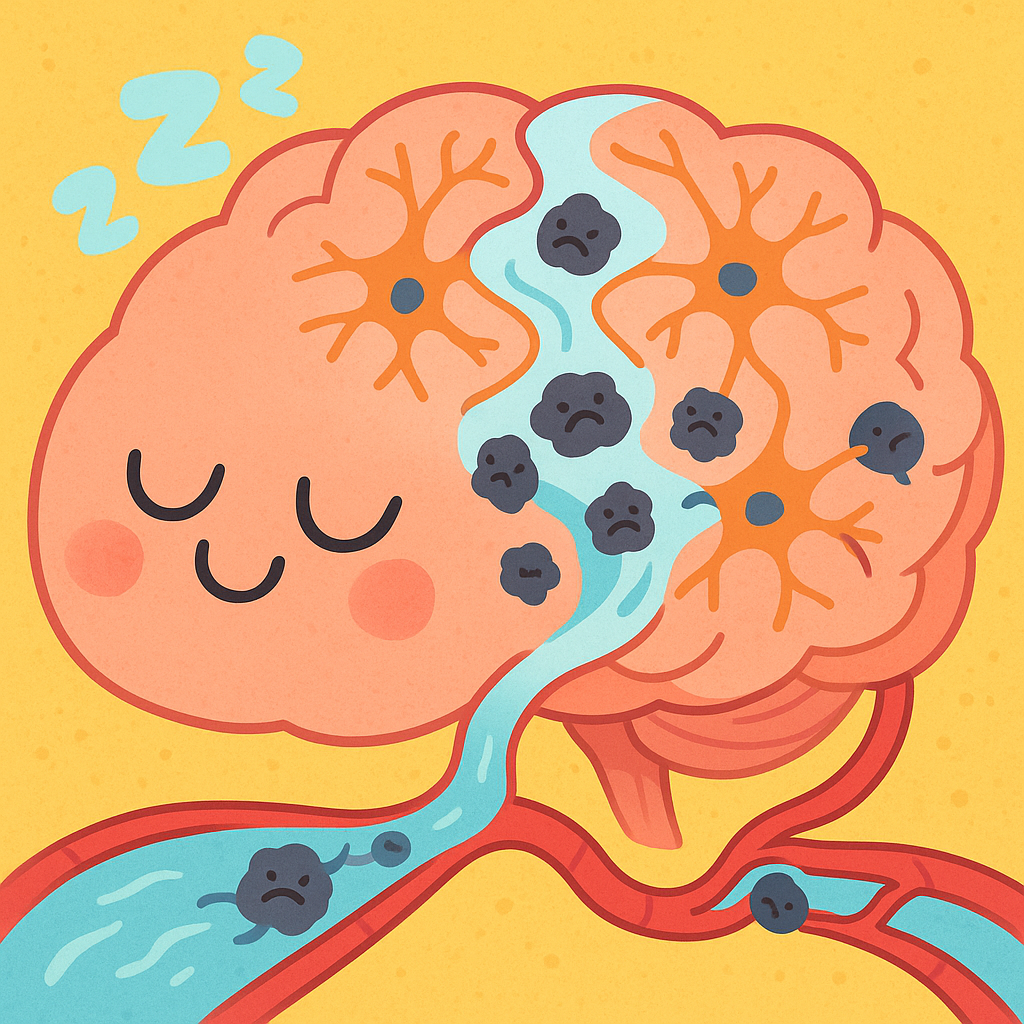
A 2013 study in the journal Science demonstrated a fascinating mechanism that occurs when we sleep. The researchers found that during deep sleep, the space between brain cells actually expands by up to 60 percent. Cerebrospinal fluid washes through the brain tissue, essentially rinsing it out.
This fluid flushes the waste proteins toward the blood vessels. The waste is then transported across the blood-brain barrier and back into the bloodstream, where it is eventually cleared by the liver and kidneys.
When sleep is consistently disrupted, this cleaning process is interrupted. The waste proteins accumulate, which can further damage the blood-brain barrier and create a cycle of inflammation and barrier dysfunction.
What the Research Shows: The Gut-Brain Connection
One of the most surprising discoveries in recent years is that the health of your blood-brain barrier is heavily influenced by the bacteria living in your digestive tract.
A 2014 study in Science Translational Medicine looked at mice raised in sterile environments completely free of gut bacteria. The researchers found that these mice had highly permeable, leaky blood-brain barriers.
When the researchers introduced normal gut bacteria into these mice, their blood-brain barriers strengthened and became less leaky. The science suggests that healthy gut bacteria digest dietary fiber and produce byproducts called short-chain fatty acids. One of the most important of these is butyrate.
These short-chain fatty acids travel from the gut, through the blood, and reach the brain. Once there, they signal the brain’s endothelial cells to tighten their junctions. This means that maintaining a healthy gut microbiome through diet may directly support the physical integrity of your brain’s security system.
Related: Can Gut Bacteria Improve Your Mood? The Science of Psychobiotics
The Medical Challenge: Opening the Barrier on Purpose
While a leaky barrier is bad for aging, doctors actually face the opposite problem when trying to treat brain diseases. The blood-brain barrier is so impenetrable that it blocks roughly 98 percent of potential drugs from reaching the brain.
If a patient has a brain tumor, doctors cannot simply give them standard chemotherapy through an IV. The blood-brain barrier recognizes the chemotherapy drugs as toxic chemicals and refuses to let them pass into the brain tissue. This makes treating brain cancer, Alzheimer’s, and Parkinson’s disease incredibly difficult.
To solve this, scientists are developing ways to trick or temporarily bypass the barrier.
Focused Ultrasound
One of the most promising new techniques is called focused ultrasound. A 2018 study in the New England Journal of Medicine tested this technique for safely opening the barrier.
In this procedure, doctors inject microscopic, gas-filled bubbles into the patient’s bloodstream. They then aim harmless sound waves at a specific part of the brain, such as the location of a tumor. The sound waves cause the microbubbles in that specific area to vibrate rapidly.
This vibration gently stretches the tight junctions in the blood vessels, creating a temporary opening. Doctors can then administer medication, which slips through the opening directly into the targeted area of the brain. Within a few hours, the vibration stops, and the barrier naturally heals and seals itself shut again.
Nanoparticle Delivery
Another approach involves disguising the medication. In nanomedicine, researchers use nanoparticles (tiny, engineered structures) to trick the blood-brain barrier.
A 2019 review of nanomedicine explained how researchers can wrap a drug inside a liposome. A liposome is a tiny sphere made of the same fat molecules that make up human cell membranes. Because the blood-brain barrier allows certain fats to pass through, it accepts the liposome. Once inside the brain, the liposome breaks down and releases the hidden medication. This “Trojan horse” method is currently being studied for delivering targeted genetic therapies and Alzheimer’s medications.
Common Questions About the Blood-Brain Barrier
Does chronic stress affect the blood-brain barrier?
Yes. Prolonged stress leads to high levels of cortisol, a primary stress hormone. Research suggests that chronic exposure to high cortisol can increase systemic inflammation in the body. Over time, this inflammation may weaken the tight junctions in the blood-brain barrier, making it more permeable.
Can diet strengthen the blood-brain barrier?
While no single food acts as a magic shield, diets high in fiber and antioxidants appear to support barrier health. Fiber feeds the gut bacteria that produce barrier-strengthening fatty acids. Antioxidants help reduce the general inflammation that can cause the barrier to degrade.
Do viral infections damage the barrier?
Some viruses can cross or damage the blood-brain barrier. Recent studies indicate that severe viral infections can trigger strong immune responses that temporarily increase barrier permeability. This inflammation and leakage may explain the severe brain fog and neurological symptoms some people experience after an illness.
Related: What Science Actually Says About Long COVID Symptoms and Treatment
The Bottom Line
The blood-brain barrier is an essential, highly complex security system that keeps your brain safe from toxins, pathogens, and dangerous chemical fluctuations. We know with high confidence that the barrier naturally weakens as we age, and that this leakage is strongly linked to neurodegenerative diseases like Alzheimer’s.
We also have strong evidence that lifestyle factors play a significant role in maintaining the strength of this barrier. Getting deep, restorative sleep allows the brain to clear waste across the barrier, while maintaining a healthy gut microbiome provides the chemical signals the barrier needs to stay tightly sealed.
What remains uncertain is exactly how we can repair a leaky barrier once it has suffered long-term damage. While experimental treatments like focused ultrasound and nanoparticles show great promise for temporarily opening the barrier to deliver life-saving drugs, finding medical ways to permanently seal a failing barrier in older adults is still an active and growing area of scientific research.
Quick Reference: Key Studies
| Study Focus | Key Finding | Source |
|---|---|---|
| Aging and Barrier Leakage | The blood-brain barrier weakens with age, allowing inflammatory proteins to enter the brain and contribute to cognitive decline. | PMID 33428915 |
| Gut Bacteria and Brain Health | Mice lacking gut bacteria developed leaky blood-brain barriers, highlighting the gut-brain connection. | PMID 25411471 |
| Sleep and Brain Clearance | Deep sleep allows the brain to flush toxic waste proteins across the barrier and out of the brain. | PMID 24136970 |
| Focused Ultrasound | Sound waves and microbubbles can temporarily open the barrier to allow targeted drug delivery for brain diseases. | PMID 30348228 |
| Traumatic Brain Injury | Physical trauma to the head can physically tear the tight junctions of the barrier, leading to swelling and inflammation. | PMID 29428274 |
Last updated: April 2026
This article synthesizes findings from peer-reviewed research. It is for educational purposes only and does not constitute medical advice. Consult a healthcare provider before starting any new regimen.
Leave a Reply