Your Body Has a Built-In Age Tracker
Imagine your body is like a house. The date it was built is one thing, but the actual condition of the roof, pipes, and foundation tells you a lot more about how well the house is holding up. Your body works the same way. Your birthday tells you your chronological age, but the wear and tear on your cells tells you your biological age, and those two numbers do not always match.
Scientists have figured out a way to read your biological age by looking at chemical tags on your DNA. These tags are part of a system called epigenetics (eh-pih-jeh-NEH-tiks), which controls how your genes are turned on or off without changing the genes themselves. Think of it like sticky notes placed on top of your instruction manual. Over time, these sticky notes shift around, and researchers can use the pattern to estimate how old your body really is on the inside.
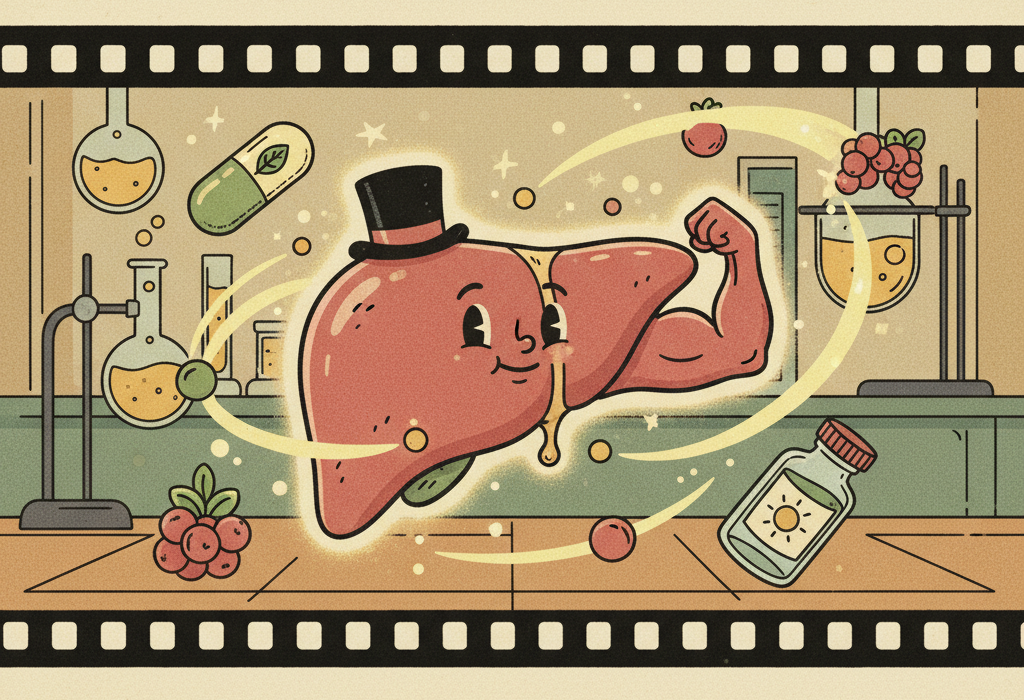
Your liver is one of the hardest-working organs you have. It filters toxins, processes nutrients, makes bile to help digest fat, and handles hundreds of other chemical tasks every day. When the liver ages faster than the rest of your body, it can set off a chain reaction of health problems. So the question is: can taking certain supplements help slow down your liver’s biological aging, and maybe other organs too?
A recent study tried to answer exactly that.
What the Research Shows
The Study Design
A 2025 clinical trial published in Aging followed 51 adults (ages 54 to 84) over the course of one year. The participants took a three-part supplement system called the “Cel System,” made by SRW Laboratories. Blood samples were collected at the start of the study and again at 3 months, 6 months, and 12 months. Researchers also measured physical performance, body composition, inflammation markers, and DNA methylation patterns at each time point.
Participants were also encouraged to walk for 10 minutes and practice mindfulness for 5 minutes daily.
This was a single-arm trial, meaning there was no placebo group for comparison. Everyone in the study took the supplements. This is an important detail we will come back to.
What Was in the Supplements?
The Cel System is not a single pill. It is a combination of three formulas, each targeting different aspects of cellular aging:
| Formula | Key Ingredients | Intended Target |
|---|---|---|
| Cel1 | 2-HOBA, astragalus extract, rutin, vitamin C, folate, vitamin B12, zinc, selenium | DNA repair, telomere health, antioxidant defense |
| Cel2 | NMN, pterostilbene, astaxanthin, L-carnosine, vitamin D, riboflavin | Mitochondrial function, energy production, cell communication |
| Cel3 | Apigenin, fisetin, oleuropein, EGCG, berberine, alpha lipoic acid, withaferin A | Clearing old cells, nutrient sensing, autophagy |
Some of these ingredients are well-known. NMN (nicotinamide mononucleotide, NIK-oh-TIN-ah-mide mono-NOO-klee-oh-tide) is a precursor to NAD+, a molecule your cells need for energy. Fisetin (FIS-eh-tin) is a natural compound found in strawberries that has been studied for its ability to clear out senescent cells (seh-NEH-sent) , which are old, damaged cells that refuse to die and cause problems for their neighbors. Berberine (BUR-buh-reen) is a plant compound that affects how your body handles sugar and energy.
Others, like 2-HOBA and withaferin A, are less commonly discussed but have been studied for their roles in protecting DNA and managing cell stress.
What Happened to the Liver
The researchers used a tool called SystemsAge to estimate the biological age of individual organ systems. This approach uses DNA methylation data to give each organ its own “age score.”
For the liver specifically, biological age increased significantly during the first 3 months (p = 0.000091), then gradually came back down. By 12 months, liver epigenetic age was significantly lower than at baseline (p = 0.034).
| Organ System | Baseline EAA | 3-Month EAA | 12-Month EAA | Baseline vs. 12 Months |
|---|---|---|---|---|
| Liver | -1.48 | +0.73 | -0.27 | p = 0.034 (significant) |
| Lung | +0.56 | -0.53 | -0.45 | p = 0.006 (significant) |
| Heart | -0.89 | +0.13 | -0.48 | p = 0.48 (not significant) |
| Brain | -1.12 | +0.66 | -0.36 | p = 0.30 (not significant) |
| Kidney | -0.59 | +0.43 | -0.09 | p = 0.59 (not significant) |
EAA = Epigenetic Age Acceleration. Negative numbers mean the organ is biologically “younger” than expected.
The liver and lung systems showed statistically significant improvements by the end of the year. Other organs showed a similar pattern of initial increase followed by decline, but the changes were not large enough to be considered statistically significant.
A Curious Pattern: Things Got Worse Before They Got Better
One of the most interesting findings was that many measurements temporarily worsened at the 3-month mark before improving. The liver’s biological age spiked at 3 months. Several epigenetic clocks showed accelerated aging at 3 months. This pattern appeared across multiple organ systems.
The researchers compared this to what happens with senolytic therapies (seh-no-LIT-ik), which are treatments that clear out damaged cells. These therapies can cause an initial stress response before the body settles into a healthier state. It is like cleaning out a cluttered garage: things look worse in the middle of the process before they look better.
This is a hypothesis, not a proven explanation. But it is worth noting that the temporary worsening was followed by improvements in many cases.
Liver-Related Biomarkers Changed Too
Beyond the organ-level aging clocks, the study tracked nearly 400 DNA methylation-based biomarker proxies. Two changed significantly over the 12 months:
- Deoxycholic acid glucuronide (dee-OX-ee-KOH-lik acid gloo-KYOOR-oh-nide) decreased. This is a byproduct of bile acid metabolism in the liver. Lower levels may suggest reduced hepatic (liver) stress.
- Transthyretin (TTHY) increased. This protein transports retinol (vitamin A) and thyroid hormones and is involved in cell growth and differentiation.
Additionally, Hepatocyte Growth Factor Activator, a protein involved in liver tissue repair, decreased. The researchers suggested this might indicate less need for liver repair, meaning the liver was under less stress. However, this interpretation is speculative without a control group to confirm it.
Physical Health and Body Composition
The study also tracked physical performance and body measurements:
| Measurement | Baseline | 12 Months | Significant? |
|---|---|---|---|
| Grip strength | Lower | Higher | Yes (p = 0.004) |
| Chair stand test | Lower | Higher | Yes (p < 0.001) |
| Weight | Higher | Lower | Yes (p = 0.033) |
| BMI | Higher | Lower | Yes (p = 0.038) |
| Waist circumference | 38.7 inches (6 mo) | 36.8 inches (12 mo) | Yes (p = 0.002) |
| Flexibility (touch toes) | Better | Worse | Yes (p = 0.036, worsened) |
| Balance (one leg stand) | No change | No change | No |
| Inflammation (CRP, IL-6) | Baseline levels | Similar levels | No |
Muscle strength improved. Body composition improved. But flexibility actually got worse, and inflammation markers did not change. Balance stayed the same.
Epigenetic Clocks: A Mixed Bag
The study used over 20 different epigenetic clocks. Results were inconsistent:
- The PC Horvath pan-tissue clock showed biological age decreased (p = 0.048). This is a first-generation clock that looks at aging across many tissue types.
- The DamAge clock, which measures cellular damage accumulation, decreased significantly at 3 and 6 months.
- But the DunedinPACE clock, a third-generation tool that measures the speed of aging, actually increased (p = 0.00007), suggesting a faster pace of aging.
- The PC Horvath skin and blood clock also showed a significant increase.
Some clocks went up. Some went down. Some did not change. The researchers noted that different clocks measure different things, and the conflicting results likely reflect the complexity of aging rather than a simple pass/fail grade for the supplement.
Who This Might Help (and Who Should Be Careful)
Who Might Benefit
- Adults over 55 concerned about age-related decline. The study participants were all in this age range.
- People interested in supporting liver health through supplementation. The liver showed one of the most notable improvements in biological age.
- Those already living a generally healthy lifestyle who want to explore additional options. The participants in this study were already biologically younger than a comparison biobank population at baseline.
Who Should Be Careful
| Group | Concern |
|---|---|
| People on medications | Many ingredients (berberine, EGCG, vitamin K-related compounds) can interact with prescription drugs, especially blood thinners, diabetes medications, and liver-metabolized drugs |
| Pregnant or breastfeeding individuals | Not studied in this population; several ingredients lack safety data for pregnancy |
| People with liver disease | While the study hints at liver benefits, participants were healthy at baseline. People with existing liver conditions should consult a doctor first |
| Anyone expecting quick results | The study showed a temporary worsening at 3 months before improvements appeared |
| Budget-conscious consumers | A three-part daily supplement system can be expensive and was not compared to simpler alternatives |
How to Actually Support Your Liver
While the Cel System study is interesting, it is one small trial without a placebo group. Here are some evidence-based ways to support liver health that have stronger backing:
Lifestyle Foundations
1. Limit alcohol. Even moderate drinking stresses the liver over time.
2. Maintain a healthy weight. Excess fat, especially around the waist, is closely linked to non-alcoholic fatty liver disease (NAFLD) (nah-fld), a condition where fat builds up in the liver.
3. Move your body. Regular physical activity helps your liver process fats and sugars. Even the 10 minutes of daily walking encouraged in this study can make a difference.
4. Eat plenty of vegetables, fruits, and fiber. These support the gut-liver connection by feeding healthy gut bacteria and reducing the burden of toxins reaching the liver.
5. Stay hydrated. Water helps your liver flush waste products.
Supplements With Some Evidence for Liver Support
If you are considering supplements, here are individual ingredients from the Cel System (and elsewhere) that have at least some research behind them for liver health:
| Ingredient | What It May Do | Strength of Evidence |
|---|---|---|
| Berberine | May improve fatty liver markers and blood sugar | Moderate (multiple human trials) |
| Alpha lipoic acid | Antioxidant that may reduce liver inflammation | Moderate (some human data) |
| Vitamin E | May reduce liver fat in NAFLD | Moderate (used clinically in some cases) |
| EGCG (green tea extract) | Antioxidant; may support liver enzymes | Mixed (high doses can harm the liver) |
| NMN | Boosts NAD+ levels; animal data suggests liver benefits | Early (mostly animal studies) |
| Milk thistle (silymarin) | Traditional liver support herb | Mixed (not in this study, but widely used) |
A word of caution about EGCG: in concentrated supplement form, green tea extract has been linked to liver injury in some cases. The dose matters, and more is not always better.
Before You Start Any Supplement
- Talk to your doctor, especially if you take medications or have a health condition.
- Look for third-party testing (USP, NSF, or ConsumerLab verification).
- Start one supplement at a time so you can identify any side effects.
- Be patient. Even in this study, meaningful changes took 6 to 12 months to appear.
What We Know and What We Do Not
What This Study Suggests
- A multi-ingredient supplement taken over 12 months was associated with reduced biological age in the liver and lungs, as measured by epigenetic clocks.
- Liver-related biomarkers shifted in directions that may indicate less hepatic stress.
- Physical strength and body composition improved.
- Stem cell division rates slowed, which may be relevant to aging.
What This Study Cannot Tell Us
- There was no placebo group. This is the single biggest limitation. Without a control group, we cannot know whether the supplements caused the changes, or whether the walking, mindfulness, seasonal variation, or simply participating in a study (the Hawthorne effect) played a role.
- The sample was small. Fifty-one people is a starting point, not a conclusion. Not all participants completed every time point.
- The supplement has many ingredients. With over 20 active compounds across three formulas, it is impossible to know which ones drove the results, or whether they all need to be taken together.
- Epigenetic clocks disagreed with each other. Some showed improvement. Some showed worsening. Some showed no change. This is common in aging research, but it makes interpretation difficult.
- The participants were already healthy. They were biologically younger than a reference population at the start. Results might be different for people with existing health problems.
- Correlation is not causation. The study observed associations between supplement use and biological changes, but the design does not allow us to say the supplements caused those changes.
The Honest Take
This is an early-stage, exploratory study. It provides interesting signals, especially regarding liver biological age and certain biomarkers. But it needs to be followed up with a randomized, placebo-controlled trial before anyone can make confident claims about these supplements reversing liver aging or biological aging in general.
The individual ingredients in the Cel System have varying levels of evidence behind them. Some, like berberine and NMN, have a growing research base. Others are less well studied in humans. Taking all of them together in a proprietary blend makes it hard to evaluate what is doing what.
If you are interested in liver health, the strongest evidence still points to lifestyle: managing your weight, eating well, exercising, limiting alcohol, and avoiding unnecessary medications that burden the liver.
Quick Reference: Key Studies
| Study Focus | Key Finding | Source |
|---|---|---|
| Multi-ingredient supplement effects on biological age over 12 months (51 adults, ages 54-84) | Liver epigenetic age decreased significantly by 12 months (p = 0.034); lung age also decreased (p = 0.006); grip strength and body composition improved; no placebo control | PMID 40096467 |
| Liver-related biomarkers | Deoxycholic acid glucuronide (liver bile acid byproduct) decreased; Hepatocyte Growth Factor Activator decreased | PMID 40096467 |
| Epigenetic clock results | Mixed: PC Horvath pan-tissue decreased (p = 0.048), but DunedinPACE increased (p = 0.00007); many clocks showed no significant change | PMID 40096467 |
| Inflammation markers (CRP, IL-6) | No significant change over 12 months | PMID 40096467 |
| Stem cell division rates | Significant decrease in total and intrinsic stem cell divisions by 12 months | PMID 40096467 |
Last updated: June 2025
This article synthesizes findings from peer-reviewed research. It is for educational purposes only and does not constitute medical advice. Consult a healthcare provider before starting any new regimen.

Leave a Reply