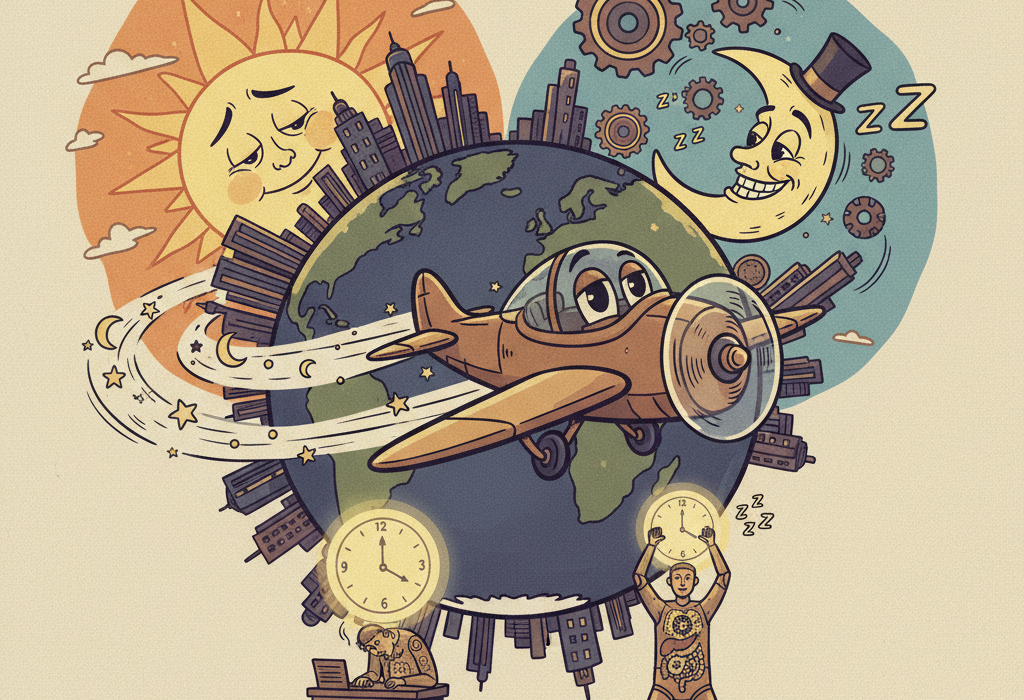
Have you ever stepped off a long flight and felt entirely out of sync with the world around you? Your brain feels foggy, your digestion is sluggish, and you are wide awake at three in the morning. This familiar feeling is not just the result of a bad night of sleep. It is a fundamental disruption of your body’s internal timing system.
For decades, scientists have studied how living things synchronize their biological processes to the 24-hour cycle of day and night. This internal timekeeper is known as your circadian rhythm (sur-KAY-dee-un RIH-thum). While we often associate circadian rhythms with sleep, research shows that they control much more, including hormone production, immune function, and metabolism.

Modern life frequently forces us to ignore these natural rhythms. Whether through cross-country travel, shift work, or simply staying up late on weekends, we regularly subject our bodies to schedule changes. This article explores what peer-reviewed science actually says about how jet lag and circadian disruption affect our bodies, and what evidence-based steps we can take to manage it.
Understanding Travel Fatigue vs. Jet Lag
When you feel exhausted after a trip, you are likely experiencing a combination of two different conditions. A 2021 consensus statement in Sports Medicine clearly separates “travel fatigue” from “jet lag.”
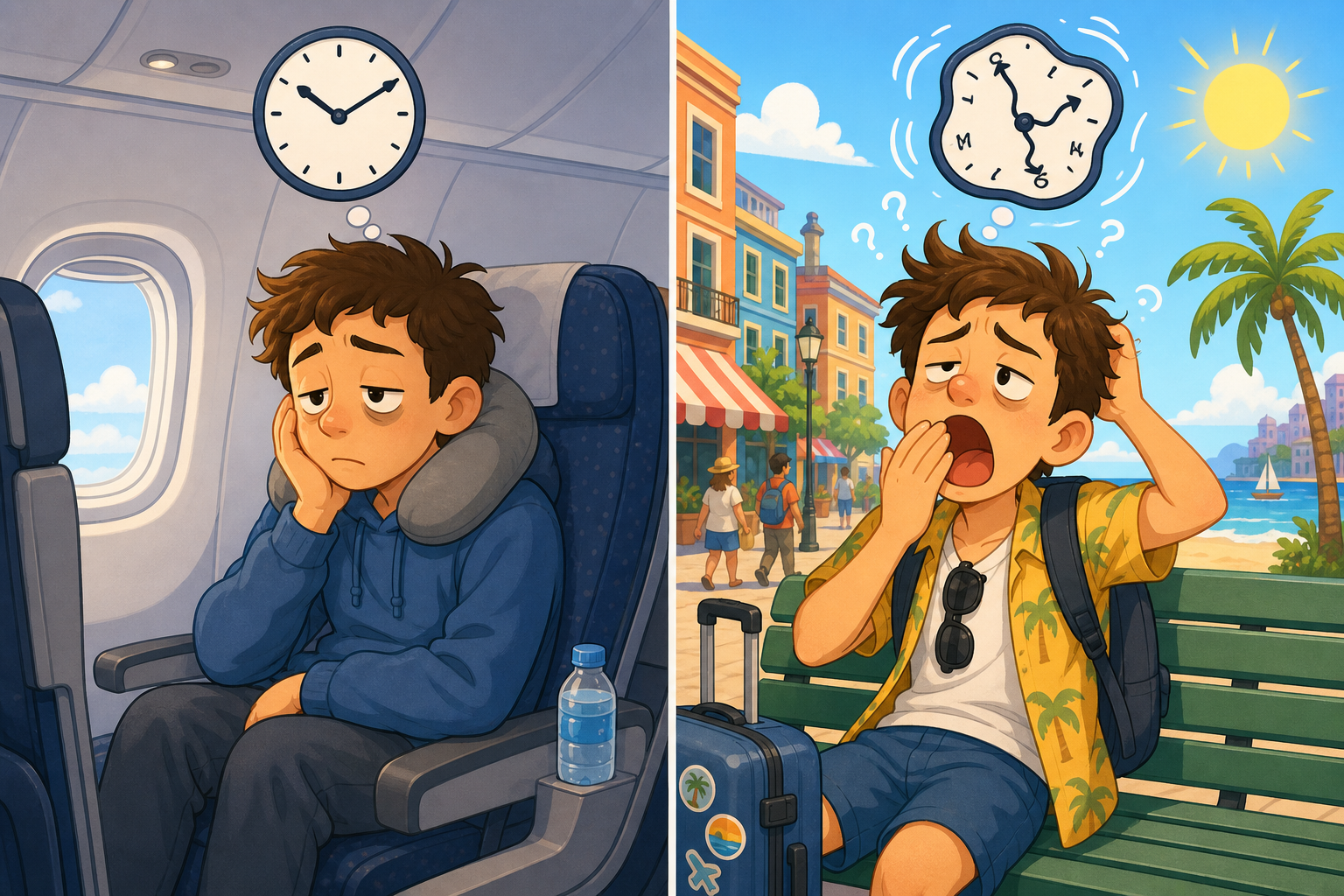
Travel fatigue is the physical and mental exhaustion that comes from the journey itself. It is caused by sitting in cramped seats, breathing dry cabin air, experiencing mild oxygen reduction at high altitudes, and dealing with the stress of transit. Travel fatigue can happen even if you fly directly north or south without changing time zones. It usually resolves after a good night of rest.
Jet lag, on the other hand, is a biological mismatch. It occurs when you travel rapidly across three or more time zones (east or west). Your internal clock is still operating on the time of your departure city, while your physical environment demands that you sleep, eat, and be active on a completely different schedule. Recovering from jet lag requires your body to physically shift its internal timing, a process that takes several days.
What the Research Shows About Circadian Disruption
When your circadian rhythm is thrown off balance, the effects ripple through almost every system in your body. Research shows that this misalignment impacts hormone levels, cellular health, and even the bacteria living in your digestive tract.
Hormonal Confusion
One of the clearest examples of circadian confusion involves cortisol, a hormone that helps regulate metabolism and the body’s stress response. Normally, cortisol levels peak in the early morning to help you wake up and gradually decline throughout the day.
A 2021 study in Endocrine tracked the salivary cortisol levels of 28 healthy travelers flying eastward from North America to Italy. The researchers found that even 36 hours after landing, the travelers’ cortisol rhythms were completely inverted. Their bodies were still producing peak cortisol late at night (local Italian time), matching the morning hours of their departure city. This hormonal lag explains why travelers often feel wired at night and exhausted during the day.
The Gut Microbiome Connection
Your digestive system also operates on a strict schedule. A 2014 study in Cell discovered that the trillions of bacteria in the gut (the microbiome) have their own daily rhythmic fluctuations, which are heavily influenced by when you eat.
When researchers induced jet lag in mice, the rhythm of the gut bacteria was thrown into chaos. This state of imbalance, called dysbiosis, led to glucose intolerance and weight gain. Remarkably, when researchers analyzed humans traveling across time zones, they found a similar disruption in gut bacteria, which correlated with metabolic changes.
Further research highlights how deeply the gut clock is tied to metabolism. A 2019 study in Science found that gut bacteria communicate with the cells lining the intestines to control the absorption of dietary fats. When circadian rhythms were disrupted by simulated jet lag, this biological communication broke down, making the subjects significantly more prone to diet-induced obesity.
Related: How Your Circadian Rhythm Controls Sleep (And What Science Says About Fixing It)
Cellular Stress and Long-Term Risks
While occasional travel is generally harmless, chronic circadian disruption (such as years of shift work or frequent cross-country flying) places significant stress on cells.
A 2025 study in Investigative Ophthalmology & Visual Science found that chronic jet lag in mice led to a buildup of reactive oxygen species (compounds that can damage cells) in the tear glands, causing abnormal cell growth and dry eyes.
More concerning are the potential long-term risks. A 2016 study in Cell Metabolism investigated the link between chronic jet lag and cancer progression. Using mouse models, researchers found that both physiological jet lag and genetic mutations in core clock genes accelerated the growth of lung tumors. The disruption of the clock allowed cancer cells to increase their metabolic activity and multiply faster. While human cancer development is highly complex, these findings support observational data suggesting that long-term shift workers face higher risks for certain health conditions.
The Rise of “Social Jet Lag”
You do not need to board an airplane to experience circadian disruption. Many people suffer from a condition known as “social jet lag.”
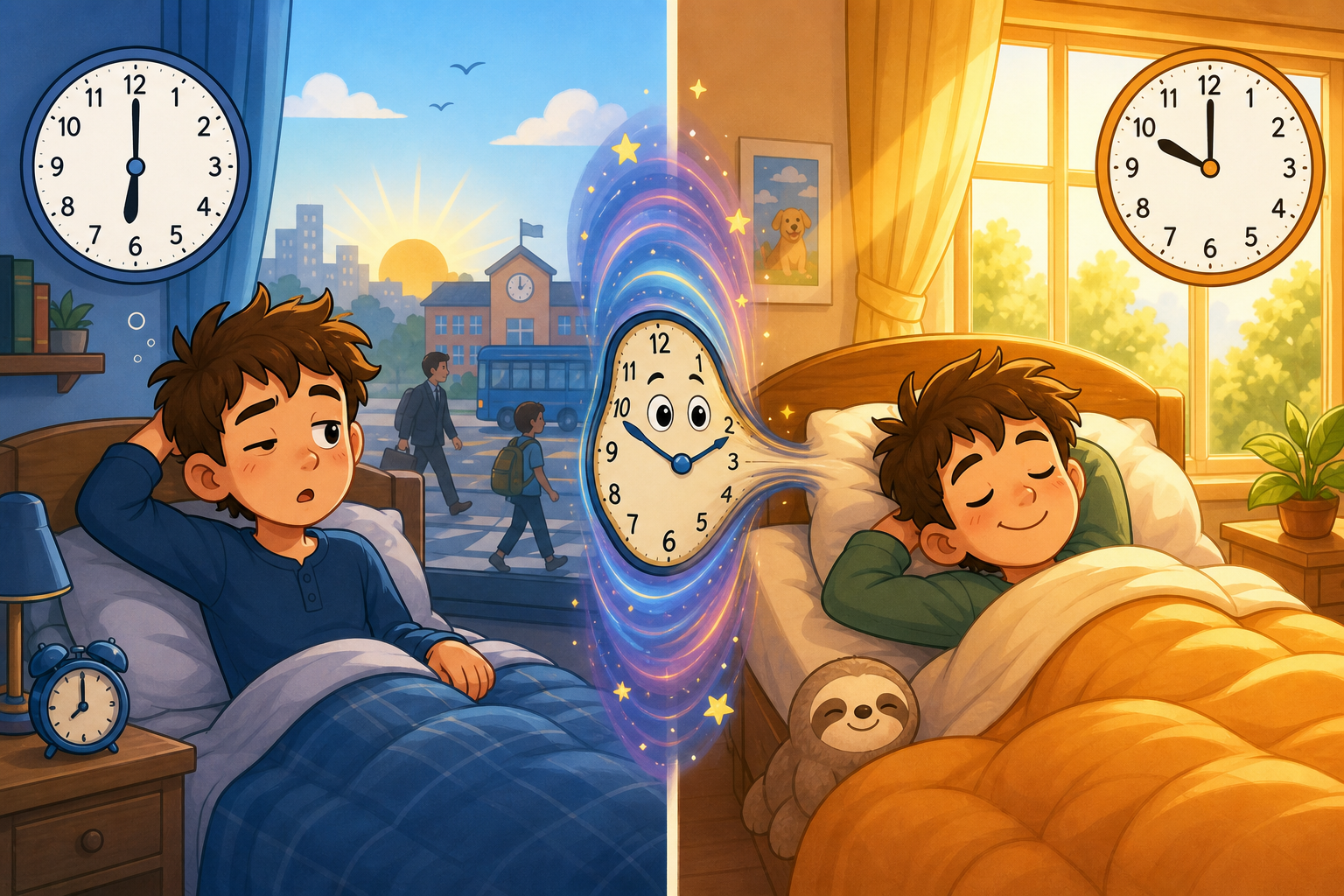
Social jet lag occurs when there is a significant difference between your sleep schedule on workdays and your sleep schedule on free days. For example, if you wake up at 6:00 AM for work during the week, but stay up late and sleep until 10:00 AM on the weekend, you are effectively forcing your body to travel across four time zones every Friday night and travel back every Sunday night.
A 2024 systematic review and meta-analysis in Obesity Reviews examined data from over 230,000 participants. The researchers found a consistent, positive association between social jet lag and higher body mass index (BMI), increased fat mass, and a greater overall risk of obesity.
Behavioral habits heavily influence this phenomenon. A 2025 study in Social Science & Medicine looked at young adults and measured both social jet lag and “eating jet lag” (shifting meal times on weekends). The researchers found that delaying sleep and meals by just one hour on weekends significantly delayed the onset of the body’s natural sleep hormones. Furthermore, a 2022 study in Chronobiology International linked social jet lag to higher rates of emotional eating and a loss of control over food intake.
Who Is Most Affected by Circadian Disruption?
Research indicates that certain groups may be more vulnerable to the effects of shifted schedules than others.
Adolescents
Teenagers are particularly susceptible to circadian misalignment. As children enter puberty, their natural biological preference shifts toward staying up later and sleeping later. However, early school start times force them to wake up before their biological night is over. A 2016 review in the Journal of Physiology, Paris highlights that this mismatch is worsened by late-night screen time. The blue light emitted by smartphones and tablets tricks the brain into thinking it is daytime, suppressing sleep hormones and creating a permanent state of social jet lag that impacts academic performance and mental health.
Men vs. Women
Emerging evidence suggests that men and women may respond differently to chronic circadian disruption. A 2024 study in the Biology of Sex Differences exposed male and female mice to chronic jet lag. The male mice exhibited significant weight gain and developed glucose intolerance. The female mice, surprisingly, experienced a decrease in weight gain, though their internal clock genes showed more severe disruption. The researchers discovered that testosterone played a major role in how the male metabolism responded to the shifting schedules. While human studies are needed to confirm these exact patterns, it is clear that biological sex influences how the body handles irregular schedules.
Athletes
Elite athletes frequently travel for competitions, and even minor drops in performance can alter the outcome of a game. A 2019 review in the International Journal of Sports Medicine noted that sleep deprivation and jet lag reduce reaction time, submaximal strength, and decision-making skills. For athletes, managing travel schedules is a critical component of sports science.
Practical Guidance: How to Manage Jet Lag and Schedule Changes
While we cannot entirely avoid travel or schedule shifts, research provides actionable strategies to help the body adapt faster.
1. Control Light Exposure
Light is the most powerful tool for resetting your internal clock. Your eyes contain special receptors that send direct signals to the brain’s master clock. According to clinical guidelines from a 2015 review in Sleep Medicine Clinics, timing your light exposure is crucial.
If you travel east (losing time), your body needs to advance its clock. You should seek bright morning light at your destination and avoid bright light in the late afternoon. If you travel west (gaining time), your body needs to delay its clock. You should seek bright evening light and avoid bright light early in the morning.
2. Strategic Use of Melatonin
Melatonin (mel-uh-TOE-nin) is a hormone produced by the brain that signals to the body that it is time to sleep. Taking a synthetic melatonin supplement can help promote sleep at the appropriate time in a new time zone. Research suggests that taking a low dose of melatonin a few hours before your target bedtime at your new destination can help shift your circadian phase faster.
3. Sleep Banking
If you know you will lose sleep due to travel or a schedule change, you can prepare in advance. The concept of “sleep banking” involves extending your sleep duration by an hour or two in the days leading up to a trip. The 2019 sports medicine review found that athletes who banked sleep before intentional sleep deprivation performed significantly better on physical and cognitive tasks than those who did not.
4. Align Your Meals
Because the digestive system has its own clock, fasting during a long flight and eating your first meal at a normal mealtime in your new destination can help cue your peripheral clocks to adjust faster. For social jet lag, maintaining a consistent eating window throughout the week and weekend helps anchor your metabolic rhythm.
Related: What Science Actually Says About Weight Loss and Obesity
Common Questions About Jet Lag and Circadian Rhythms
Why is flying East harder than flying West?
Most people find eastward travel more difficult because it requires you to advance your internal clock (go to sleep earlier and wake up earlier). The natural human circadian cycle is actually slightly longer than 24 hours, making it biologically easier to stay up later and sleep in (delay the clock) than to force sleep earlier.
Does your chronotype affect how you handle jet lag?
Yes. Your chronotype (KRO-no-type) is your natural preference for being a morning person or an evening person. A 2012 review in Chronobiology International notes that “evening types” (night owls) generally adapt better to westward travel, while “morning types” (early birds) tend to handle eastward travel slightly better.
Can you permanently adapt to shift work?
True biological adaptation to night shift work is very rare. Because shift workers are still exposed to natural sunlight during their commute home and on their days off, their internal master clock usually remains anchored to the daytime, leaving them in a chronic state of circadian misalignment.
The Bottom Line
Your body operates on a highly synchronized 24-hour schedule. When this schedule is disrupted by travel, shift work, or inconsistent weekend habits, it causes a cascade of biological confusion.
Short-term jet lag results in temporary fatigue, digestive issues, and inverted hormone levels. However, chronic circadian disruption (like long-term social jet lag or frequent time zone hopping) is linked to more serious metabolic issues, including weight gain, glucose intolerance, and cellular stress.
While we cannot always control our schedules, we can use environmental cues to help our bodies adjust. Maintaining consistent sleep and meal times, managing light exposure, and practicing good sleep hygiene are the most scientifically supported ways to keep your internal clocks ticking in harmony.
Quick Reference: Key Studies
| Study Focus | Key Finding | Source |
|---|---|---|
| Social Jet Lag & Obesity | Meta-analysis found social jet lag is consistently associated with higher BMI and increased risk of obesity. | PMID 38072635 |
| Gut Microbiome Rhythms | Jet lag disrupts gut bacteria rhythms, promoting glucose intolerance and diet-induced obesity. | PMID 31604271 |
| Hormonal Inversion | Eastward travelers maintained inverted cortisol rhythms (staying on departure time) for at least 36 hours after landing. | PMID 33543430 |
| Cancer Progression | Chronic jet lag and genetic disruption of clock genes accelerated lung tumor growth in mice. | PMID 27476975 |
| Athlete Sleep Hygiene | Sleep extension and “sleep banking” prior to travel improved sprint times, accuracy, and cognitive function. | PMID 31288293 |
| Sex Differences | Chronic jet lag caused weight gain in male mice but reduced weight gain in female mice, heavily influenced by testosterone. | PMID 39639385 |
| Eating Jet Lag | Shifting meal and sleep times on weekends significantly delayed natural melatonin onset in young adults. | PMID 39799931 |
Last updated: June 2026
This article synthesizes findings from peer-reviewed research. It is for educational purposes only and does not constitute medical advice. Consult a healthcare provider before starting any new regimen.

Leave a Reply