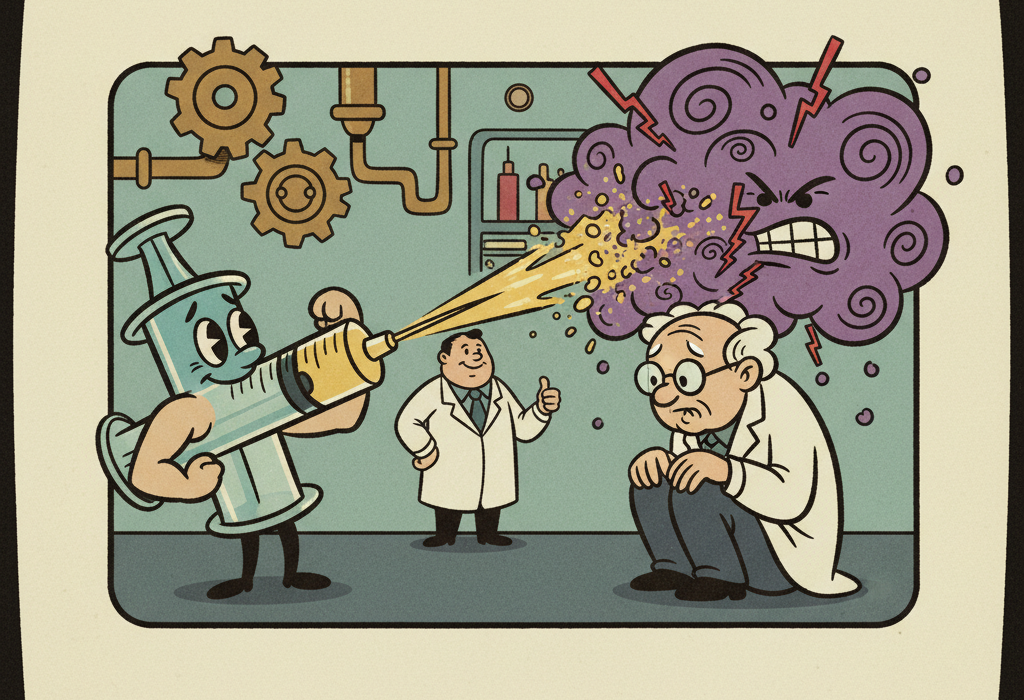
If you had chickenpox as a child, the virus that caused it is still inside you. For decades, it quietly hides in your nervous system. However, as we get older and our immune systems naturally weaken, that same virus can wake up. When it does, it causes shingles, a painful, blistering rash that can lead to long-lasting nerve damage.
To prevent this, medical professionals strongly recommend the shingles vaccine for older adults. But in recent years, scientists noticed a surprising pattern in the medical records of vaccinated patients. People who received the shingles vaccine were not just avoiding a painful rash. They were also developing dementia at significantly lower rates.
This article will explore what the latest peer-reviewed research says about the shingles vaccine, how it works, and why scientists believe it might offer a protective shield for the brain.
Understanding the Virus and the Vaccine
To understand the research, it helps to know a few key terms regarding how this virus operates in the body.
- Varicella-zoster virus (vair-uh-SELL-uh ZOS-ter): The specific virus that causes both chickenpox and shingles.
- Postherpetic neuralgia (post-her-PET-ik noo-RAL-jah): Severe, chronic nerve pain that can last for months or years after a shingles rash has healed.
- Immunosenescence (ih-MYOO-no-suh-NES-ens): The natural, gradual weakening of the immune system as we age.
For many years, the standard protection against shingles was a live-attenuated vaccine known as Zostavax. It contained a weakened version of the live virus. While it helped, its effectiveness dropped significantly as patients got older, and the protection faded over time.
In 2017, a newer vaccine called Shingrix was introduced. This is a recombinant vaccine, meaning it does not contain a live virus. Instead, it uses a specific protein from the virus combined with an adjuvant, an ingredient designed to create a strong immune response.
A 2019 review in Skin Therapy Letter noted that this newer vaccine demonstrated an overall efficacy of over 97% in adults aged 50 and older. Because of this superior protection, the newer recombinant vaccine has entirely replaced the older live vaccine in the United States and is the preferred choice in many other countries.
What the Research Shows: Shingles and Dementia
Over the last few years, multiple large-scale studies have investigated the link between shingles vaccination and cognitive decline. The results consistently point to a protective effect.
The Natural Experiment
In observational studies, researchers often worry about the “healthy vaccinee bias.” This is the idea that people who proactively get vaccines might also exercise more, eat better, and visit the doctor more often. If these people get dementia less often, is it because of the vaccine, or is it because of their generally healthy lifestyle?
To solve this, researchers publishing in Cell looked at a unique situation in Wales. The government rolled out the shingles vaccine using a strict birthdate cutoff. People born just one week after the cutoff were eligible for the vaccine, while people born just one week before were not.
Because people born a few days apart generally have the same lifestyle habits, this created a perfect natural experiment. The researchers found that the group eligible for the vaccine had a significantly lower rate of new dementia diagnoses over a seven-year period. A similar 2025 study in JAMA replicated this exact finding in Australia, showing that vaccine eligibility significantly decreased the probability of receiving a new dementia diagnosis.
The Recombinant Vaccine Effect
While the older live vaccine showed protective benefits, researchers wanted to know if the newer, more effective recombinant vaccine did the same.
A 2024 study in Nature Medicine compared the medical records of over 100,000 people who received the newer recombinant vaccine against those who received the older live vaccine. The researchers found that the newer vaccine was associated with a 17% increase in diagnosis-free time. For those who did eventually develop dementia, the vaccine delayed the onset by an average of 164 days.
Furthermore, a 2025 study in Vaccine looked at over 4.5 million individuals. The researchers found that fully vaccinated individuals had a 32% lower risk of developing dementia compared to unvaccinated individuals.
Interestingly, multiple studies have noted a gender difference. The protective effects against dementia appear to be stronger in women than in men, though men still see a benefit. Researchers are still investigating the exact biological reasons for this difference.
How This Might Work
Why would a vaccine designed to prevent a skin rash protect the brain from cognitive decline? Scientists are currently exploring two main theories.
1. Preventing Direct Brain Damage
The varicella-zoster virus lives inside the nervous system. When it reactivates, it does not just travel to the skin. It can also cause inflammation in the blood vessels of the brain. Some researchers believe that silent, subclinical reactivations of the virus might cause microscopic damage or tiny strokes in the brain over time. By keeping the virus locked down, the vaccine prevents this cumulative damage.
2. Reducing Systemic Inflammation
When the virus wakes up, the body’s immune system launches a massive inflammatory response to fight it. Chronic inflammation is a known risk factor for Alzheimer’s disease and other forms of dementia. Furthermore, some studies suggest that the virus might interact with proteins in the brain, accelerating the buildup of amyloid plaques, which are a hallmark of Alzheimer’s disease.
Supporting this idea, the 2025 study in Vaccine found that when unvaccinated people got shingles and were treated with antiviral medications, their risk of dementia dropped. This suggests that stopping the active virus quickly helps protect the brain.
Related: The Science of Dementia Caregiving: What Research Says About Stress, Sleep, and Support
What About the Risk of Getting Shingles From the Vaccine?
Because the newer recombinant vaccine does not contain a live virus, it cannot give you shingles. However, some patients and doctors have reported a strange phenomenon where patients develop a mild shingles rash shortly after receiving their first dose.
A 2025 report in Clinical Infectious Diseases investigated this by looking at medical records in Australia. They found that in adults aged 65 and older, there was indeed a temporary increase in mild shingles presentations within the first 21 days after the first dose of the vaccine.
Why does this happen? The vaccine causes a massive, temporary immune response. Scientists suspect that while the immune system is distracted by the vaccine, the latent virus takes a brief opportunity to reactivate.
However, the researchers stressed that these cases were generally very mild. More importantly, after the patients received their second dose, their risk of shingles plummeted. Overall, fully vaccinated individuals saw a 73% reduction in shingles cases long-term, and their risk of chronic nerve pain was practically eliminated.
Practical Guidance: Who Should Get Vaccinated?
Because the newer vaccine is so effective, medical guidelines across the globe have been updated.
A 2021 review in Expert Review of Vaccines summarized national guidelines from ten different countries. While exact ages vary by country, the general consensus is clear.
- Age Guidelines: In the United States and Canada, the vaccine is recommended for adults aged 50 and older. In some European countries, the general recommendation starts at age 60 or 65.
- Dosing Schedule: The vaccine requires two doses, usually given two to six months apart.
- Prior History: You should get the vaccine even if you have already had shingles in the past, as the virus can reactivate more than once.
- Previous Vaccines: If you received the older live vaccine (Zostavax) years ago, health authorities still recommend getting the newer recombinant vaccine (Shingrix) for better, longer-lasting protection.
Related: How Science Actually Prevents Infections: From High-Tech Vaccines to Everyday Habits
Why Are Vaccination Rates Low?
Despite the clear benefits for preventing painful rashes and potentially protecting the brain, vaccination rates remain low. A 2022 study in The Journals of Gerontology found that only about 35% of eligible older adults in the United States have received the shingles vaccine.
The researchers noted significant social disparities. Black and Hispanic older adults had roughly 50% lower odds of being vaccinated compared to white adults. Furthermore, a 2024 study in Health Reports looking at Canadian adults found similar trends.
When asked why they skipped the vaccine, over a third of unvaccinated people said they did not think it was necessary. Others cited the cost of the vaccine or stated that their doctor had never mentioned it to them. Public health experts emphasize that improving awareness and access is critical, especially as we learn more about the vaccine’s broader neurological benefits.
Common Questions About the Shingles Vaccine
Do I need the vaccine if I never had chickenpox?
Yes. More than 99% of adults over the age of 40 have had chickenpox, even if they do not remember it or had a very mild case. Health authorities recommend getting the shingles vaccine without bothering to take a blood test to check for prior chickenpox infection.
Can I get the shingles vaccine at the same time as my flu shot?
Yes. Research shows that it is safe to receive the recombinant shingles vaccine at the same time as the annual flu shot. They are simply administered in different arms.
What are the side effects?
The vaccine is known to be highly reactogenic. This means it is very common to experience a sore arm, muscle aches, fatigue, and sometimes a mild fever for one or two days after the injection. This is a normal sign that your immune system is building a strong defense.
The Bottom Line
The primary purpose of the shingles vaccine is to prevent a painful, debilitating nerve rash, and it does this incredibly well. However, a growing body of high-quality evidence suggests it offers a remarkable secondary benefit. By keeping the varicella-zoster virus suppressed, the vaccine appears to significantly lower the risk of developing dementia.
While scientists are still working to understand the exact biological mechanisms, the clinical data is clear. For adults over the age of 50, completing the two-dose shingles vaccine series is one of the most effective steps you can take to protect your nervous system and, quite possibly, your long-term cognitive health.
Quick Reference: Key Studies
| Study Focus | Key Finding | Source |
|---|---|---|
| Dementia Risk (Recombinant Vaccine) | The newer recombinant vaccine delayed dementia onset by an average of 164 days compared to the older vaccine. | PMID 39053634 |
| Dementia Risk (Fully Vaccinated) | Individuals who received both doses of the recombinant vaccine had a 32% lower risk of dementia. | PMID 39733478 |
| Causal Evidence for Dementia | A strict age-cutoff rollout in Wales proved the vaccine prevents or delays mild cognitive impairment and dementia. | PMID 41338191 |
| Short-Term Shingles Risk | There is a mild, temporary risk of shingles within 21 days of the first dose, but a 73% long-term reduction after two doses. | PMID 40924159 |
| Vaccination Disparities | Only about 35% of eligible US adults are vaccinated, with significant racial and socioeconomic disparities. | PMID 33928360 |
| Global Guidelines | A review of 10 countries confirms the recombinant vaccine is universally preferred for adults 50+ (or 60+ in some nations). | PMID 34311643 |
Last updated: March 2026
This article synthesizes findings from peer-reviewed research. It is for educational purposes only and does not constitute medical advice. Consult a healthcare provider before starting any new regimen.
Leave a Reply