
Imagine looking at a clock on the wall and seeing the numbers clearly, but the center where the hands meet is blurred, distorted, or missing entirely. This is a daily reality for millions of people with age-related macular degeneration.
Age-related macular degeneration is a leading cause of vision loss in older adults. It comes in two forms: dry and wet. While the dry form progresses slowly, the wet form can cause rapid and severe vision loss. Today, the standard treatment for wet macular degeneration involves injecting medication directly into the eye.
For many patients, the idea of a needle in the eye sounds terrifying. However, these injections are highly effective at stopping abnormal blood vessels from leaking and destroying central vision.
This article explores what the latest scientific research says about how these injections work, how effective they actually are over time, and what side effects patients should expect.
What Causes Wet Macular Degeneration?
To understand the treatment, it helps to understand the disease.
At the back of your eye is the retina, which acts like the film in a camera. The very center of the retina is called the macula (MACK-you-luh). The macula is responsible for your sharp, straight-ahead vision. It allows you to read, drive, and recognize faces.
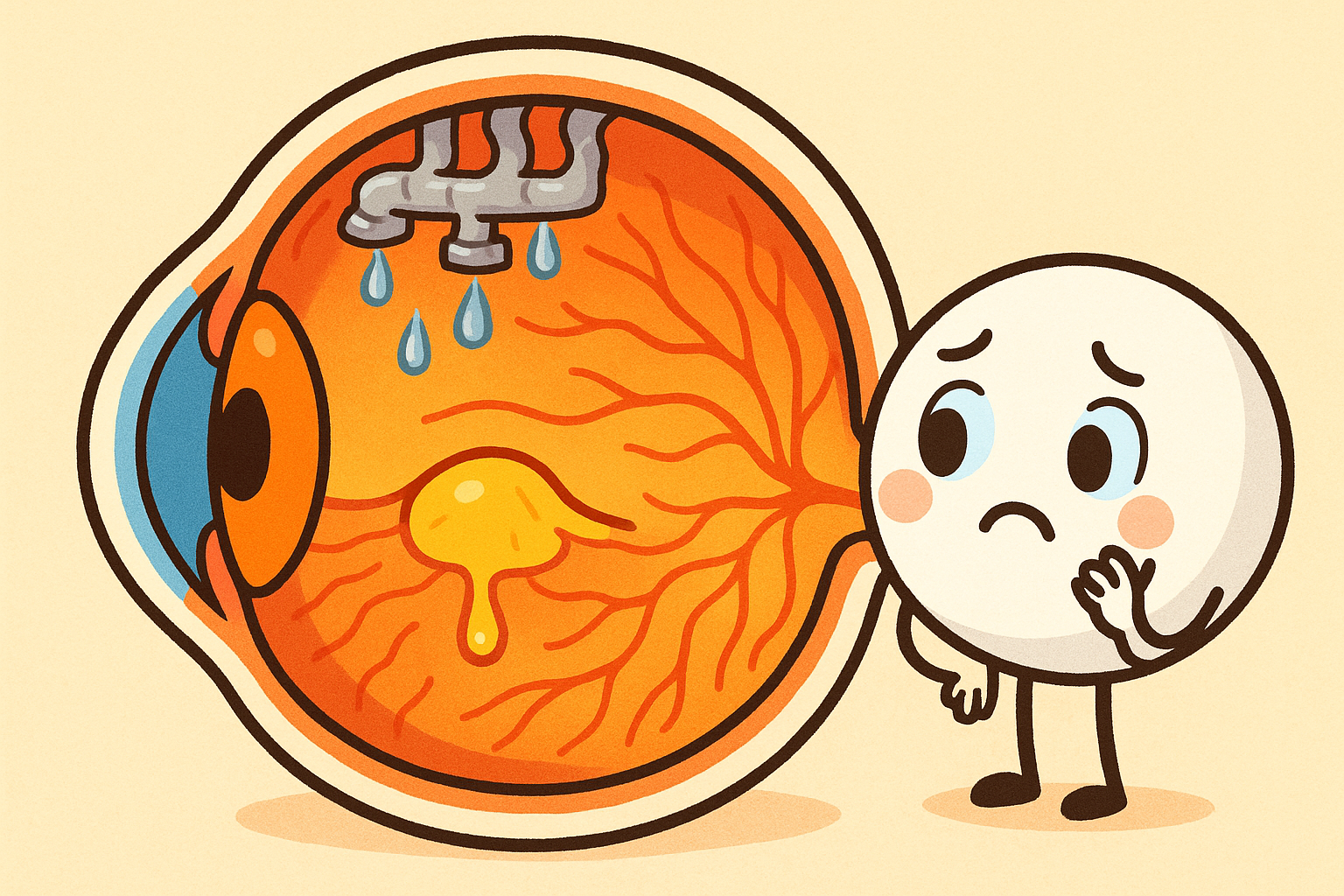
In wet macular degeneration, the eye experiences a shortage of oxygen and nutrients. To fix this, the body sends out a distress signal using a protein called vascular endothelial growth factor (VAS-kyoo-ler en-doh-THEE-lee-ul grohth FAK-ter), or VEGF.
VEGF tells the eye to grow new blood vessels to bring in more oxygen. Unfortunately, these new blood vessels are poorly built. They are fragile and leak fluid and blood into the macula. This fluid damages the delicate cells of the retina, leading to rapid vision loss.
Related: How to Prevent Diabetic Eye Disease: What the Science Says
How Do Anti-VEGF Eye Injections Work?
The medical term for an eye injection is an intravitreal injection (in-truh-VIT-ree-uhl). This means the medication is placed directly into the jelly-like fluid that fills the inside of the eye.
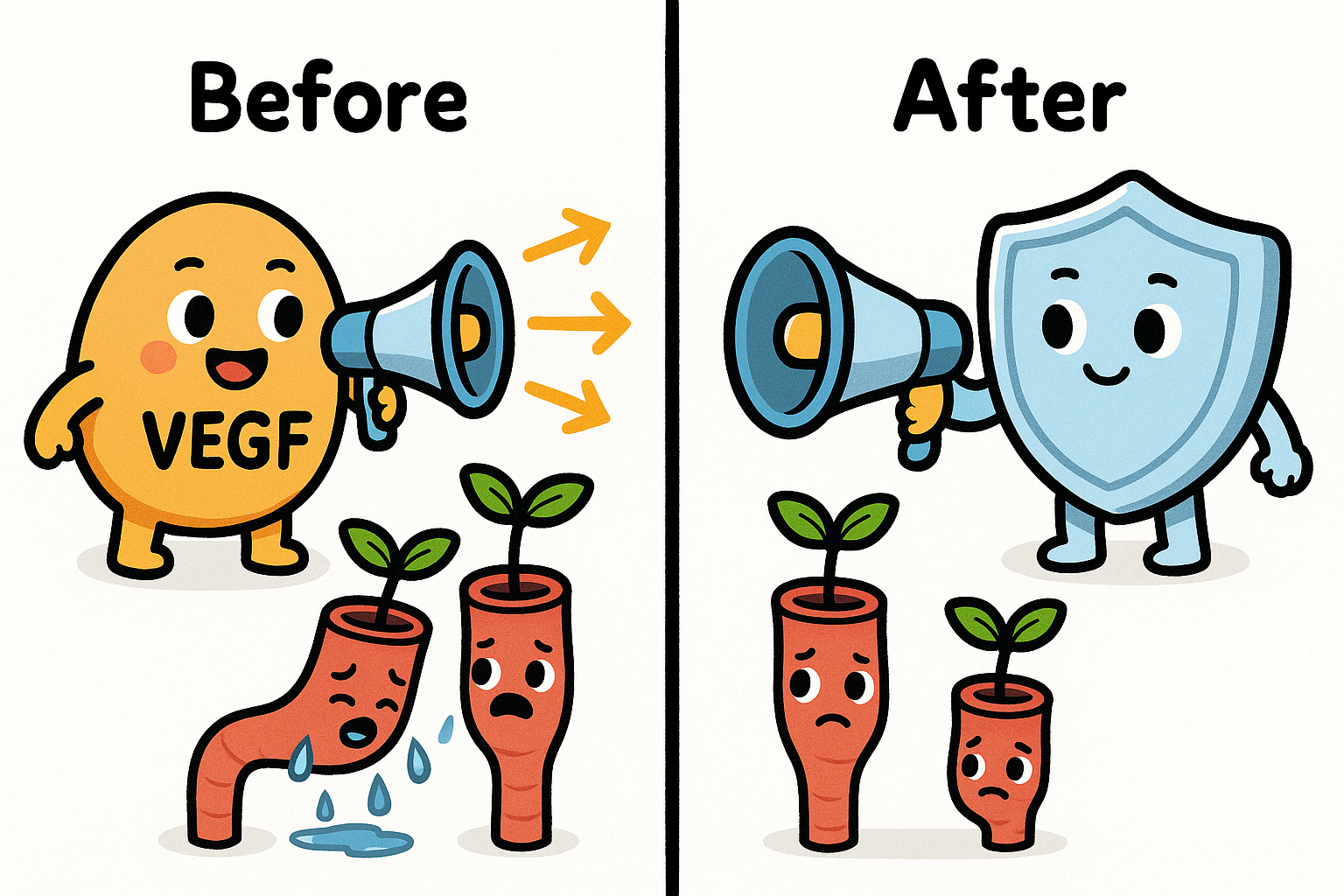
The medications used are called anti-VEGF drugs. They bind to the VEGF proteins and neutralize them. If we think of VEGF as a signal shouting at the eye to grow leaky pipes, anti-VEGF medications silence that signal. This stops new vessels from growing and helps existing vessels stop leaking, allowing the body to slowly clear away the trapped fluid.
Do Eye Injections Actually Improve Vision?
Before anti-VEGF treatments became available in the early 2000s, wet macular degeneration almost always led to severe central vision loss. The introduction of these drugs fundamentally changed how doctors treat the disease.
The Short-Term Success
Research consistently shows that anti-VEGF injections are highly effective at halting vision loss. A landmark 2006 study in The New England Journal of Medicine followed over 700 patients receiving a drug called ranibizumab. After one year, 94.5 percent of the patients receiving the medication maintained their vision, compared to only 62.2 percent of those who did not receive the drug. Furthermore, about one-third of the treated patients actually experienced significant vision improvement.
More recent real-world data confirms these early findings. A 2011 study in the Medical Science Monitor tracked patients receiving monthly ranibizumab injections. After 12 months, 92 percent of patients saw their vision stabilize or improve. Brain scans of the retina also showed that the physical thickness of the macula decreased, proving that the trapped fluid was draining away.
The Long-Term Reality
While the short-term results are excellent, long-term maintenance requires strict adherence to a treatment schedule.
A 2019 study in Graefe’s Archive for Clinical and Experimental Ophthalmology looked at the 5-year outcomes of patients in Japan. The researchers found that while vision improved significantly in the first year, it slowly declined over the next four years.
The researchers noted that these patients were treated on an “as needed” basis, meaning they only received injections when fluid reappeared. The study concluded that waiting for fluid to return before giving another injection might not be enough to preserve vision long-term. Continuous, proactive treatment appears to yield better results than reactive treatment.
The Challenge of Frequent Injections
The biggest drawback of anti-VEGF therapy is the burden of frequent clinic visits. Most patients start with one injection every four weeks. Over time, if the eye remains dry, doctors try to stretch the time between visits to six, eight, or twelve weeks. This is known as a “treat-and-extend” protocol.
A 2017 study in Ophthalmologica evaluated the treat-and-extend approach using a drug called aflibercept. Over two years, patients needed an average of 13.6 injections. They successfully maintained their vision and kept the fluid out of their macula, but the sheer number of appointments remains a heavy burden for elderly patients and their caregivers.
Newer Drugs Aim for Longer Spacing
To reduce the number of injections, scientists have developed newer medications designed to last longer in the eye.
One approach is to target multiple chemical pathways at once. A drug called faricimab blocks both VEGF and another protein called ANG-2, which also contributes to leaky blood vessels. A 2025 study in the Japanese Journal of Ophthalmology showed that blocking both pathways reduced vessel leakage more effectively than blocking VEGF alone in animal models.
When applied to humans, this dual-action approach shows promise. A 2025 study in Ophthalmology Retina tracked patients who required highly frequent injections and switched them to faricimab. After one year, patients maintained their vision while extending their average time between injections to nearly seven weeks.
Another newer drug, brolucizumab, has also shown an ability to stretch treatment intervals. A 2024 study in the Indian Journal of Ophthalmology found that patients treated with brolucizumab could go an average of 19 weeks between injections while maintaining their visual gains.
Side Effects: Inflammation and Dry Eye
While eye injections are generally safe, they carry specific risks. The most severe, though rare, risk is a bacterial infection inside the eye. To prevent this, doctors clean the eye with a strong iodine solution before every injection.
Beyond infection, researchers are closely monitoring two other side effects: internal inflammation and dry eye disease.
Intraocular Inflammation
Intraocular inflammation (in-truh-AHK-yoo-ler in-fluh-MAY-shun) occurs when the eye reacts to the injected medication, causing swelling and irritation inside the eye.
Newer, longer-lasting drugs seem to carry a slightly higher risk of this inflammation. A 2024 study in the Japanese Journal of Ophthalmology examined patients receiving a high-dose (8 mg) version of aflibercept. While the drug was excellent at drying out the macula, 8.6 percent of patients developed non-infectious inflammation and retinal vasculitis (swelling of the blood vessels). Fortunately, these cases were mild and resolved with steroid eye drops without causing vision loss.
Similarly, the previously mentioned Indian study on brolucizumab reported an inflammation rate of about 2.1 percent.
Dry Eye and Surface Irritation
Because patients receive injections repeatedly, their eyes are frequently exposed to iodine cleaners and numbing drops. Scientists have wondered if this repeated chemical exposure damages the surface of the eye.
The research here is mixed, but it points to a need for caution:
- A 2024 study in BMC Ophthalmology compared the treated eyes of patients against their untreated healthy eyes. They found no significant differences in tear production or overall dry eye scores after serial injections.
- However, a 2022 study in the Turkish Journal of Ophthalmology looked specifically at the meibomian glands (my-BOH-mee-un), which produce the oil that keeps tears from evaporating. They found that eyes receiving multiple injections had significantly more gland loss in the lower eyelid. The researchers suspect that repeated pooling of iodine and preservatives in the lower eyelid may slowly damage these glands over time.
Patients receiving frequent injections who experience gritty, burning eyes should talk to their doctors about using preservative-free lubricating drops to protect their eye surface.
The Future of Treatment
Scientists are actively working on ways to eliminate the need for regular injections entirely.
A 2019 review in the Journal of Controlled Release highlighted the development of tiny, biodegradable implants that can be placed inside the eye to slowly release medication over many months.
Even more promising is gene therapy. A 2023 study in Molecular Therapy tested a novel gene therapy that delivers genetic instructions to the cells of the retina, teaching them to produce their own anti-VEGF medicine. In primate models, a single injection resulted in sustained anti-VEGF production that prevented fluid leakage for more than 96 weeks. If proven safe and effective in humans, this could eventually turn a monthly chore into a one-time treatment.

Common Questions About Eye Injections
Do the injections hurt?
Most patients report feeling pressure rather than sharp pain. The eye is heavily numbed with drops or a localized anesthetic gel before the procedure begins.
Will I need injections for the rest of my life?
Currently, macular degeneration has no cure. Most patients will require ongoing monitoring and intermittent injections for the rest of their lives, though the time between injections often increases as the disease stabilizes.
Can I stop getting injections if my vision improves?
Stopping treatment entirely is risky. Research shows that when treatment is stopped, the fluid usually returns, which can cause permanent scarring and vision loss. Always follow a doctor’s guidance on spacing out treatments.
The Bottom Line
Intravitreal anti-VEGF injections remain one of the greatest success stories in modern eye care. Before their invention, wet macular degeneration almost guaranteed a loss of central vision. Today, these medications allow the vast majority of patients to maintain their vision and their independence.
However, the treatment requires dedication. The evidence clearly shows that consistency is vital. Skipping appointments or waiting too long between injections can allow fluid to return and cause irreversible damage. While newer drugs are helping to stretch the time between visits, and future gene therapies offer hope for a one-and-done solution, current patients must stick to their prescribed schedules to protect their sight.
Quick Reference: Key Studies
| Study Focus | Key Finding | Source |
|---|---|---|
| Faricimab vs single-target drugs | A dual-action drug targeting VEGF and ANG-2 showed superior reduction in vessel leakage in models. | PMID 40347367 |
| High-dose aflibercept safety | 8 mg dose effectively improved vision but caused mild, treatable inflammation in 8.6% of patients. | PMID 39162906 |
| Long-term ranibizumab outcomes | Vision improved in year 1 but slowly declined by year 5 when injections were given only “as needed.” | PMID 31119425 |
| Switching to Faricimab | Patients with high treatment burdens maintained vision and extended injection intervals to ~7 weeks. | PMID 39084554 |
| Injections and Dry Eye | Repeated injections correlated with meibomian gland loss in the lower eyelid, likely due to iodine cleaners. | PMID 35769012 |
| Future Gene Therapy | A single gene therapy injection in primates maintained anti-VEGF production for over 96 weeks. | PMID 37752703 |
Last updated: March 2026
This article synthesizes findings from peer-reviewed research. It is for educational purposes only and does not constitute medical advice. Consult a healthcare provider before starting any new regimen.


Leave a Reply