What Are GLP-1 Drugs and Why Is Everyone Talking About Them?
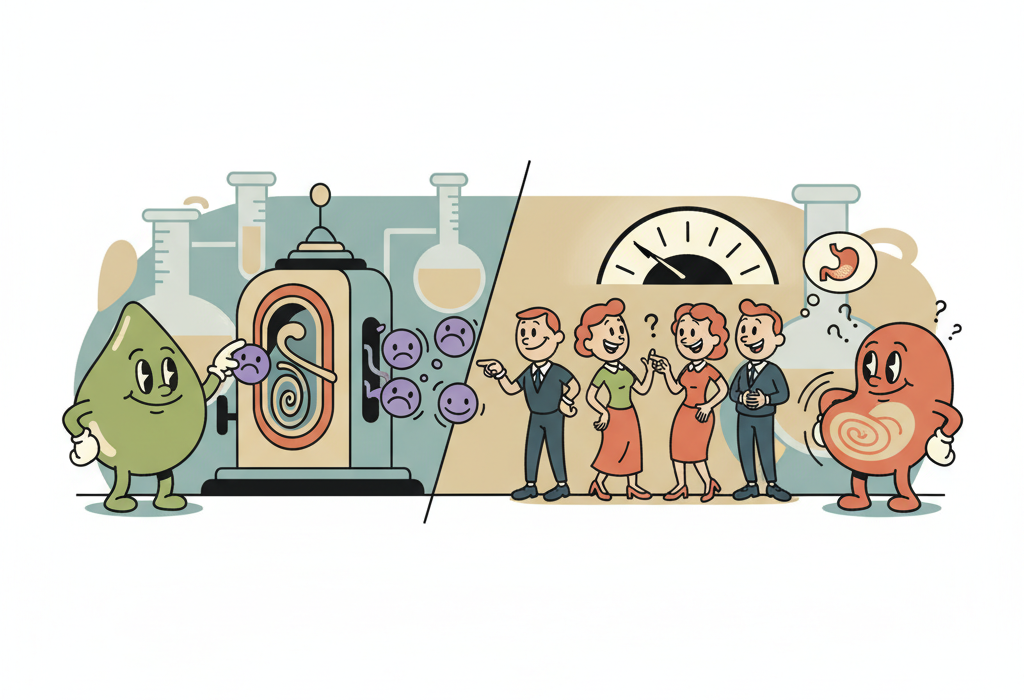
Imagine your body has a built-in appetite thermostat. When you eat, your gut releases hormones that tell your brain, “We’re full, stop eating.” One of those hormones is called GLP-1 (GLIP-one), short for glucagon-like peptide-1 (GLOO-kah-gon like PEP-tide one). It is a natural chemical your intestines make after meals to help control blood sugar and signal fullness.
GLP-1 receptor agonist medications (we will call them GLP-1 drugs for short) are lab-made versions of this hormone. They basically turn up the volume on that “I’m full” signal. Think of it like adjusting the sensitivity on a smoke detector. The detector is already there, but the medication makes it go off sooner and louder, so you feel satisfied with less food.
Three GLP-1 drugs are currently approved for weight loss:
- Liraglutide (leer-ah-GLOO-tide), brand name Saxenda, a daily injection
- Semaglutide (sem-ah-GLOO-tide), brand name Wegovy, a weekly injection
- Tirzepatide (teer-ZEP-ah-tide), brand name Zepbound, a weekly injection that targets two hormones instead of one
Clinical trials have shown impressive results: up to 6% body weight loss with liraglutide, 14% with semaglutide, and 18% with tirzepatide compared to placebo. But clinical trials are carefully controlled environments with hand-picked participants and close monitoring. A 2025 narrative review in Diabetes, Obesity & Metabolism looked at what actually happens when everyday people use these drugs in the real world, and the picture is more complicated.
What the Research Shows
Real-World Weight Loss Is Usually Lower Than in Trials
The 2025 review examined 24 observational studies tracking real-world weight loss with GLP-1 drugs. Across the board, the weight loss people experienced in everyday life tended to be lower than what was seen in clinical trials.
Here is how the numbers looked over 6 to 12 months of follow-up:
| Drug | Clinical Trial Weight Loss (vs. placebo) | Real-World Range |
|---|---|---|
| Liraglutide | Up to ~6% | 2.2% to 18.5% |
| Semaglutide | Up to ~14% | 4.4% to 19.5% |
| Tirzepatide | Up to ~18% | 4.8% to 21.2% |
That is a wide range, and the variation comes down to several factors: whether people had type 2 diabetes (they tend to lose less weight), what dose they actually took, how long they stuck with the medication, and how the study measured weight.
Adherence Makes or Breaks the Results
Here is the key finding: people who stuck with their medication and reached the recommended dose saw results close to what clinical trials promised. People who did not stay on the drug, or who used lower doses, saw much less benefit.
One US study of 304 people on semaglutide for weight loss found that those without type 2 diabetes who stayed on the drug for 12 months lost an average of 15.8% of their body weight. That is right in line with clinical trial results. But when studies counted everyone who started the drug, including those who stopped early, the average dropped to as low as 3.7%.
The problem is that sticking with these drugs is genuinely difficult for many people.
Half of Users Quit Within a Year
The review found that 20% to 50% of people stop taking GLP-1 drugs within the first year. In one large Danish study of nearly 111,000 people who started semaglutide for obesity, about half had stopped by the one-year mark. Even more striking, only 10% followed the recommended dose increases every four weeks, and only 12% reached the target dose of 2.4 mg by their fifth prescription. One in three users stayed on the low 1.0 mg dose for a prolonged time.
Why do so many people quit? The review identified several reasons:
- Side effects, especially nausea and other digestive problems
- Cost, particularly for people without insurance coverage
- Drug supply shortages, which have been a real issue globally
- Difficulty with injections or keeping up with the treatment plan
Preliminary data also suggest that people in lower-income areas, those with mental health conditions, and younger users are more likely to stop early.
How the Three Drugs Compare Head-to-Head
The review also looked at studies that directly compared these drugs against each other. The evidence, while still limited, suggests a clear ranking:
| Comparison | Finding |
|---|---|
| Semaglutide vs. Liraglutide | Semaglutide linked to about twice the odds of achieving 10% or more weight loss |
| Tirzepatide vs. Semaglutide | Tirzepatide showed greater weight loss at 12 months (15.3% vs. 8.3% in one large study) |
| Liraglutide vs. Dulaglutide | No clear difference in weight loss |
One important note: these comparisons should be interpreted carefully. The studies used different doses, and many participants were using these drugs at doses labeled for type 2 diabetes rather than the higher weight loss doses. The review emphasizes that more well-designed head-to-head studies are needed.
Side Effects: What Actually Happens
Side effects are one of the biggest reasons people stop these drugs. Here is what the evidence shows for each concern:
Digestive problems (very common)
About 80% of people in clinical trials reported some kind of gastrointestinal issue. In real-world pharmacy surveys, about 60% of semaglutide users reported side effects. The most common ones are nausea (35%), constipation (29%), abdominal pain, bloating, vomiting, and diarrhea. These tend to be worst during the dose escalation period and often improve over time.
Gallbladder disease (modestly increased risk)
A meta-analysis of 76 clinical trials found a modestly elevated risk of gallbladder or biliary disease with GLP-1 drugs (about 37% higher risk overall). The risk was higher when these drugs were used for weight loss (about 2.3 times higher) than for diabetes (about 1.3 times higher). However, this is worth noting: rapid weight loss from any cause, including bariatric surgery, increases gallstone risk.
Pancreatitis and pancreatic cancer (no clear increase)
This has been a concern for years, but the evidence is reassuring. Multiple meta-analyses of clinical trials found no statistically significant increase in pancreatitis or pancreatic cancer. Large real-world studies of people with type 2 diabetes have backed this up. Some registry studies have even suggested GLP-1 drug users may have a lower risk of pancreatic cancer, though that finding needs more research.
Thyroid cancer (likely very low or no risk)
Animal studies found that some GLP-1 drugs caused thyroid tumors in rodents. In humans, the evidence is much more reassuring. A meta-analysis of 45 trials found a weak overall association with thyroid disorders but the risk for thyroid cancer specifically was not statistically significant. Two large real-world studies from Scandinavia found no increased thyroid cancer risk.
Depression and suicidal thoughts (no clear link)
This concern made headlines when the European Medicines Agency investigated reports in 2023. However, systematic reviews and two large real-world studies found no clear evidence that GLP-1 drugs increase the risk of depression, suicidal thoughts, or self-harm.
Eye disease (uncertain, needs more research)
This is one area where the evidence is genuinely mixed. One clinical trial of semaglutide suggested a possible link with worsening diabetic retinopathy, but later analysis suggested this was likely due to rapid blood sugar improvement rather than the drug itself. Three large real-world studies have produced conflicting results. Additionally, two Scandinavian studies found a more than doubled risk of a rare eye condition called NAION (NAY-on), or non-arteritic anterior ischemic optic neuropathy (non-ar-TAIR-it-ik iss-KEY-mik OP-tik new-ROP-uh-thee), which is a rare cause of vision loss. More research is clearly needed here.
Here is a summary of the safety evidence:
| Concern | Evidence Level | Bottom Line |
|---|---|---|
| GI symptoms (nausea, constipation) | Strong evidence from trials and real world | Very common, usually mild-moderate, often improves over time |
| Gallbladder disease | Moderate evidence | Modestly increased risk, likely related to rapid weight loss itself |
| Pancreatitis | Strong evidence | No clear increased risk in trials or most real-world studies |
| Pancreatic cancer | Moderate evidence | No clear increased risk; some data suggest possible decreased risk |
| Thyroid cancer | Moderate evidence | Likely very low or no risk in humans |
| Depression/suicidality | Moderate evidence | No clear link found |
| Eye disease (retinopathy) | Mixed evidence | Uncertain; may relate to rapid blood sugar changes |
| Eye disease (NAION) | Emerging evidence | Possibly increased risk; needs more study |
| Gastroparesis/bowel obstruction | Limited evidence | Rare; evidence from one study with methodological concerns |
Who May Benefit Most and Who Should Be Careful
Who tends to benefit most
- People with obesity who do not have type 2 diabetes. Across multiple studies, people without diabetes consistently lost more weight than those with diabetes. For example, one study found 15.8% weight loss at 12 months in people without diabetes versus 9.8% in people with diabetes, both using semaglutide.
- People who can afford and access the medication long-term. Adherence is the single biggest predictor of success. Those with insurance coverage or the financial means to sustain treatment see the best results.
- People who are new to GLP-1 drugs. Several studies found that people who had never taken a GLP-1 drug before (“GLP-1 naive” patients) lost more weight than those switching from another GLP-1 drug.
- People who can tolerate higher doses. Weight loss is dose-dependent. One study found 12.1% weight loss at the higher semaglutide dose versus 9.2% at lower doses.
Who should be especially careful
- People with a history of pancreatitis. While there is no clear increased risk from the drugs themselves, clinical guidelines still list this as a precaution.
- People with a personal or family history of medullary thyroid cancer or MEN2 syndrome. The FDA lists these as contraindications.
- People with diabetic retinopathy. Rapid blood sugar improvement may temporarily worsen eye disease, so close monitoring is important.
- People facing surgery. The American Society of Anesthesiologists recommends stopping daily GLP-1 drugs on the day of surgery and weekly ones a week before elective procedures, due to the risk of slowed stomach emptying during anesthesia.
- People who cannot commit to long-term treatment. Weight tends to return when the drug is stopped. The review notes that understanding what happens after stopping treatment is an important area for future research.
How to Make the Most of GLP-1 Treatment
If you and your doctor decide a GLP-1 drug is right for you, the research suggests several strategies for better outcomes:
Start low and go slow
All three drugs are meant to be started at low doses and gradually increased. This helps your body adjust and reduces the chance of severe nausea or vomiting. The recommended schedule for semaglutide, for example, calls for dose increases every four weeks. Talk to your doctor before skipping steps.
Manage digestive side effects proactively
- Eat smaller meals throughout the day rather than large ones
- Avoid high-fat and very rich foods, especially during the dose increase period
- Stay hydrated, particularly if you experience vomiting or diarrhea
- Know that nausea typically gets better with time as your body adjusts
- Tell your doctor if symptoms are severe. Slowing the dose increase can help.
Plan for the long haul
The research is clear: people who stay on these drugs longer and reach adequate doses see the best results. That means thinking ahead about:
- Cost: Check your insurance coverage before starting. Some manufacturers offer savings programs.
- Consistency: Set reminders for weekly injections. Missing doses reduces effectiveness.
- Support: People in structured weight management programs with regular follow-up tended to do better than those managing on their own.
Combine with lifestyle changes
GLP-1 drugs are not meant to replace healthy habits. They work best alongside a balanced diet and regular physical activity. Studies that included structured lifestyle support alongside medication tended to show better results.
Monitor for side effects beyond the gut
While digestive issues get the most attention, keep your doctor informed about any changes in vision, mood, or abdominal pain. If you have diabetes, discuss the pace of blood sugar improvements with your doctor, since very rapid drops in HbA1c may temporarily affect your eyes.
What We Know and What We Don’t
What we can say with reasonable confidence:
- GLP-1 drugs, particularly semaglutide and tirzepatide, can produce meaningful weight loss in real-world settings.
- People who stick with the medication and reach appropriate doses can achieve results similar to clinical trials.
- The most common side effects are gastrointestinal (nausea, constipation, vomiting) and usually improve with time.
- There is no strong evidence that these drugs cause pancreatitis, pancreatic cancer, thyroid cancer, or depression.
- Tirzepatide appears to produce greater weight loss than semaglutide in the limited head-to-head data available.
- Discontinuation rates are high: 20% to 50% within the first year.
What we still do not know:
- Long-term safety beyond 1 to 2 years, especially at the higher doses used for weight loss
- What happens after stopping the medication and how to prevent weight regain
- The full picture on eye disease, including both diabetic retinopathy and NAION
- Effects on hard clinical outcomes like heart attacks, strokes, kidney disease, and cancer in real-world obesity populations
- Why so many people stop treatment early and how to improve adherence
- Cost-effectiveness in real-world settings where adherence is imperfect
- How these drugs perform in underrepresented groups, including people with lower incomes, mental health conditions, and younger adults
The 2025 review outlines 10 priority areas for future research, emphasizing that we need better data on the drivers of early discontinuation, the effects of stopping treatment, and the long-term impact on conditions like heart disease, cancer, musculoskeletal problems, and infections.
These drugs represent a genuine advance in obesity treatment. But they are not a simple fix. They work best for people who can access them consistently, tolerate the side effects, and use them as part of a broader approach to health.
Quick Reference: Key Studies
| Study Focus | Key Finding | Source |
|---|---|---|
| Real-world utilization, effectiveness, and safety of GLP-1 drugs for weight loss (narrative review of 24+ studies) | Real-world weight loss is generally lower than in trials; adherent patients can match trial results; 20%-50% discontinue within year one; no clear increase in pancreatitis, thyroid cancer, or depression; eye disease risks uncertain | PMID 40196933 |
Last updated: June 2025
This article synthesizes findings from peer-reviewed research. It is for educational purposes only and does not constitute medical advice. Consult a healthcare provider before starting any new regimen.


Leave a Reply