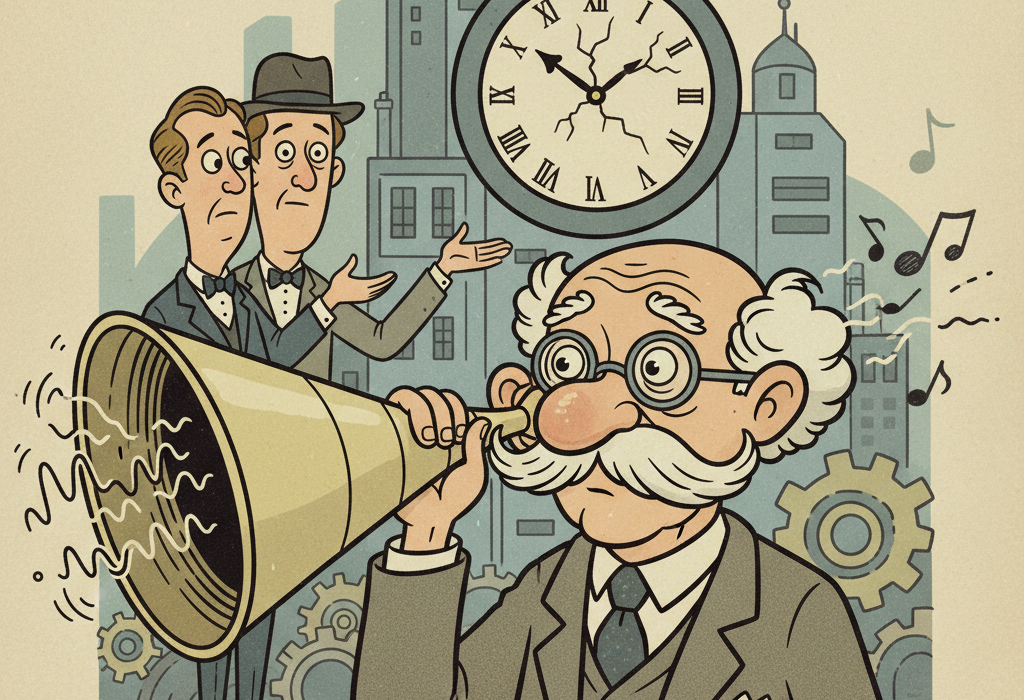
You probably don’t think much about your hearing until something changes. Maybe you start turning up the TV volume. Maybe a child isn’t responding to their name. Or maybe a grandparent seems to withdraw from conversations. Hearing loss is one of the most common health conditions worldwide, yet it remains widely undertreated and often misunderstood.
Here’s the short version: hearing loss can happen at any age, from birth through old age. In children, the most common causes are genetic mutations and infections. In adults, age-related changes in the inner ear are the primary driver, often compounded by noise exposure. About two-thirds of Americans over 70 have clinically significant hearing loss, yet only 15% to 20% of older adults who could benefit from hearing aids actually use them. Early detection matters enormously, whether someone is 3 months old or 73 years old.
Let’s walk through what the research tells us.
How Common Is Hearing Loss, Really?
The numbers are larger than most people expect. Permanent hearing loss affects roughly 1 to 3 per 1,000 newborns, making it one of the most common conditions present at birth. A 2020 review in JAMA noted that by age 18, nearly 1 in 5 children in the United States has some degree of hearing loss, because kids continue to lose hearing from injuries, infections, medications, and delayed-onset genetic causes.
In adults, the prevalence roughly doubles with each decade of life. A 2020 review in the Annals of Internal Medicine estimated that about two-thirds of Americans aged 70 and older have hearing loss. A 2014 study in Primary Care provided a useful breakdown by age group:
| Age Group | Estimated Prevalence of Hearing Loss |
|---|---|
| 21-34 | 2.9% |
| 35-44 | 6.4% |
| 45-54 | 10.9% |
| 55-64 | 25.1% |
| 65-84 | 42.7% |
In school-aged children, a 2023 review in Acta Oto-Laryngologica found prevalence ranging from 0.2% to 7.8%, depending on how hearing loss was defined and whether high-frequency losses were included.
A 2023 editorial in The Lancet Public Health called for addressing hearing loss at all ages, noting its status as a growing public health concern.
What Causes Hearing Loss in Children?
Childhood hearing loss has two broad categories: genetic and acquired. According to a 2022 review in Pediatric Clinics of North America, up to 80% of congenital hearing loss in developed countries is now attributed to genetic causes, with the remaining 20% coming from environmental or acquired factors.
Genetic causes
More than 110 gene mutations have been linked to nonsyndromic hearing loss (hearing loss without other physical features). The most common is a mutation in a gene called GJB2 (also known as connexin 26), which encodes a gap junction protein important for maintaining the chemical balance inside the inner ear. A 2019 study in the European Journal of Pediatrics evaluating 423 children found that GJB2 mutations were the most frequent genetic cause, identified in 30% of genetically confirmed cases.
Some genetic hearing loss is syndromic (sin-DROM-ik), meaning it occurs alongside other health conditions. Common examples include Usher syndrome (hearing loss plus progressive vision loss), Pendred syndrome (hearing loss plus thyroid issues), and Waardenburg syndrome (hearing loss plus pigmentation differences).
A large-cohort study of over 10,000 Japanese patients published in Human Genetics showed that mutations in a gene called CDH23 can cause a remarkably wide spectrum of hearing loss. Some CDH23 variants cause profound hearing loss from birth, while others cause progressive, high-frequency hearing loss that doesn’t appear until the 50s or 60s. The researchers found that different combinations of CDH23 variants correlated with different ages of onset and severity. This illustrates something important: the same gene can produce very different outcomes depending on which specific mutation a person carries.
Acquired causes
The most common non-genetic cause of congenital hearing loss is congenital cytomegalovirus (CMV) infection (sy-toe-MEG-ah-lo-VY-rus). The 2019 European Journal of Pediatrics study found congenital CMV in 21% of children tested. CMV-related hearing loss is tricky because 85% to 90% of infected newborns appear asymptomatic at birth, yet 10% to 15% will develop sensorineural hearing loss (SEN-soh-ree-NOOR-ul) later. As the 2022 Pediatric Clinics review noted, up to 33% to 50% of CMV-related hearing loss is late onset, meaning these children may pass their newborn hearing screen and only show problems months or years later.
Other acquired causes include bacterial meningitis, trauma, ototoxic medications (like certain antibiotics and chemotherapy drugs), and noise exposure.
Why Early Detection in Children Changes Everything
The first three years of life are a critical window for language development. The brain is wiring itself for speech and communication during this period, and it needs auditory input to do so. Without sound, those neural pathways don’t develop normally.
A 2019 study in the European Archives of Oto-Rhino-Laryngology examined 169 children with bilateral sensorineural hearing loss. Children diagnosed before 6 months who received hearing aids and auditory-verbal therapy early showed normal development across all domains: personal-social, language, fine motor, and gross motor skills. As the age of diagnosis and intervention increased, developmental delays became significantly more common.
| Timing of Intervention | Normal Language Development | Normal Personal-Social Development |
|---|---|---|
| Diagnosed before 6 months | 87% | 83.3% |
| Diagnosed 6-12 months | 64.2% | 73.1% |
| Diagnosed 12-18 months | 41.7% | 37.5% |
This aligns with guidelines from the Joint Committee on Infant Hearing, which recommends the “1-3-6” approach: screen by 1 month, diagnose by 3 months, and begin intervention by 6 months.
Even with early intervention, challenges persist. A 2022 study in the International Journal of Pediatric Otorhinolaryngology found that school-aged children (7-12 years) with mild to moderately severe hearing loss had significantly smaller expressive vocabularies than their normal-hearing peers, despite using hearing aids. However, children who wore their hearing aids more than 9 hours per day performed significantly better on nonword repetition tasks, a measure related to learning new words. This suggests consistent hearing aid use matters for language building, even when the hearing loss isn’t severe.
Related: Not All Protein Is Created Equal: What Your Body Actually Absorbs
What Happens to Hearing as We Age?
Presbycusis (prez-bih-KYOO-sis), or age-related hearing loss, is the most common type of hearing loss in adults. It typically begins in middle age, starting with high-frequency sounds (like consonants in speech) and gradually progressing to lower frequencies.
A 2007 review in Minnesota Medicine described presbycusis as a progressive worsening of hearing with age, driven by changes in both the inner ear and central auditory pathways. A 2018 review in Clinics in Geriatric Medicine explained why this matters practically: consonants carry most of the meaning in words and vibrate at higher frequencies than vowels. Losing consonant sounds makes speech sound “mumbled.” Patients often say they can hear people talking but can’t understand what’s being said.
How it works biologically
A 2023 review in Hearing Research outlined the role of mitochondrial dysfunction (my-toe-KON-dree-ul) and oxidative stress in age-related hearing loss. The cochlea, particularly the sensory hair cells and the stria vascularis (STRY-ah vas-kyoo-LAIR-iss), the structure that maintains the chemical environment of the inner ear, has very high energy demands. Over time, the mitochondria (the energy-producing structures inside cells) accumulate damage. This produces excess reactive oxygen species (ROS), which are chemically unstable molecules that damage cells. The result is a gradual loss of the delicate hair cells that convert sound waves into electrical signals.
Unlike birds and some other animals, humans cannot regenerate cochlear hair cells once they are lost. This is why age-related hearing loss is currently irreversible, though research into regenerative therapies is active.
Genetics also plays a role. The CDH23 study in Human Genetics showed that certain CDH23 gene variants are associated with age-related hearing loss, not just childhood deafness. Animal studies have confirmed that CDH23 mutations contribute to age-related hearing loss in mouse models. This suggests that some people may be genetically predisposed to losing their hearing earlier or faster as they age.
Does Hearing Loss Affect the Brain?
This is one of the most active areas of hearing research, and the findings are concerning. Multiple studies have found associations between hearing loss and cognitive decline, though the relationship is not fully understood.
A 2020 MRI study in Scientific Reports examined brain structure in 99 participants across three groups: people with hearing loss and tinnitus, people with hearing loss without tinnitus, and controls with normal hearing. The researchers found:
- Age-related gray matter (GRAY MAT-er), the brain tissue that processes information, declined in all groups, particularly in the auditory cortex and cingulate areas.
- People with hearing loss (but no tinnitus) showed significantly reduced gray matter volume in areas beyond just the auditory cortex, including brain regions associated with cognition, like the middle temporal gyri, orbitofrontal cortex, and cingulate cortex.
- Interestingly, people with both hearing loss and tinnitus did not show these same reductions. Their brain volume looked more similar to the controls.
This last finding is puzzling. The researchers speculated that tinnitus might reflect a form of neural activity that partially maintains brain volume, but this is still speculative and the study was cross-sectional, meaning it captured a single point in time and cannot prove causation.
The Annals of Internal Medicine review noted that hearing loss has been identified as an independent, modifiable risk factor for dementia by the Lancet Commission. Longitudinal data show that hearing impairment is associated with a greater likelihood of developing cognitive impairment. However, it remains unclear whether treating hearing loss can slow or prevent cognitive decline. Randomized trials are underway to test this.
It’s important to be precise here: these studies show a correlation between hearing loss and cognitive decline, not necessarily causation. Hearing loss might contribute to cognitive decline through social isolation and reduced brain stimulation. Or there may be common underlying biological processes, like vascular changes, that cause both.
Related: Can Supplements Slow Down Your Liver’s Aging Clock?
Does Age Affect How People Experience Hearing Difficulties?
A 2022 study in the International Journal of Audiology analyzed hearing complaints from 995 patients attending audiology clinics. The researchers found a clear trend: specific listening difficulties increased with age beyond what peripheral hearing loss alone would predict.
For example, difficulty hearing the TV, hearing one person in quiet, and hearing groups in quiet were all primarily predicted by age rather than the degree of hearing loss on an audiogram. This suggests that age-related changes in the central auditory system, not just the ear itself, contribute to hearing difficulty in older adults.
Importantly, hearing aid benefit did not decline with age or degree of hearing loss. Patients with mild hearing loss reported at least as much benefit from hearing aids as those with more severe loss. The study also found that hearing the TV was the single most common complaint, reported by 46% of all patients.
What Treatment Options Are Available?
Treatment depends on the type and severity of hearing loss.
Hearing aids
For mild to moderate sensorineural hearing loss, hearing aids remain the primary intervention. Modern digital hearing aids can be programmed for different frequencies, reduce background noise, and connect to smartphones via Bluetooth. The 2020 Annals of Internal Medicine review noted that over-the-counter hearing aids, created through 2017 legislation, now offer a more affordable and accessible option for adults with mild to moderate hearing loss.
Despite their effectiveness, hearing aid uptake remains low. As the 2018 Clinics in Geriatric Medicine review noted, fewer than half of patients report being asked about hearing loss by their healthcare provider. Cost, stigma, and difficulty managing small devices are common barriers.
Cochlear implants
For people with severe to profound hearing loss who don’t benefit sufficiently from hearing aids, cochlear implants (KOK-lee-er) bypass the damaged hair cells and directly stimulate the auditory nerve. The 2020 JAMA review described how outcomes have improved with earlier implantation in children. Children implanted before 12 months had significantly higher speech perception and language scores than those implanted later.
In adults, cochlear implantation is safe even in patients in their 80s and 90s, and older adults perform comparably to younger adults in speech perception tests, though they may show somewhat slower initial gains.
Emerging therapies
The 2018 Clinics in Geriatric Medicine review outlined promising research into hair cell regeneration through gene therapy, stem cells, and pharmaceutical approaches. These are still in early stages but represent a potential future where age-related hearing loss could be partially reversed rather than just managed.
The 2023 Hearing Research review discussed antioxidant therapies being evaluated in preclinical and clinical studies for noise-induced and drug-induced hearing loss. While some show promise in animal models, none have been definitively proven effective in humans yet.
Who Should Get Their Hearing Checked?
A 2024 plain language summary of the Clinical Practice Guideline for Age-Related Hearing Loss recommended that any adult aged 50 or older be aware of the signs of hearing loss. The American Speech-Language-Hearing Association recommends screening all adults once per decade until age 50, then every 3 years.
For children, newborn hearing screening is now performed on approximately 97% of all infants born in the United States. The 2014 review in Pediatrics in Review emphasized that children with risk factors, including family history, NICU stays, or craniofacial abnormalities, should receive ongoing monitoring even if they pass their newborn screen.
Signs to watch for in children include not responding to sounds, speech delay, and difficulty in school. In adults, watch for turning up the TV, frequently asking people to repeat themselves, or withdrawing from group conversations.
Common Questions About Hearing Loss
Is hearing loss a normal part of aging?
Hearing changes are very common with age, but no degree of hearing loss should be dismissed as “just normal aging.” Treatment options exist at every level of severity.
Can loud noise actually damage hearing permanently?
Yes. Nearly 40 million Americans between ages 20 and 69 have audiometric evidence of noise-induced hearing loss. Wearing hearing protection is the single best prevention.
Do hearing aids prevent dementia?
This has not been proven. Research shows a correlation between hearing loss and cognitive decline, and randomized trials are testing whether hearing treatment can slow dementia progression.
My child passed the newborn hearing screen. Could they still develop hearing loss later?
Yes. Delayed-onset hearing loss can occur from genetic causes, CMV infection, or other factors. If you have any concerns about your child’s hearing or speech development, request a formal hearing evaluation.
The Bottom Line
Hearing loss is far more common than most people realize, affecting people from birth through old age. In children, genetic mutations (especially GJB2) and congenital CMV infection are the leading causes. In adults, age-related changes in the inner ear, often compounded by noise exposure, gradually erode the ability to understand speech.
The evidence is strong that early detection and intervention dramatically improve outcomes, particularly in children. For older adults, hearing aids provide meaningful benefit regardless of age or severity of hearing loss, yet most people who could benefit don’t use them.
What remains uncertain is whether treating hearing loss can prevent or slow cognitive decline. This is an active area of research, and definitive answers from randomized trials are expected in the coming years. Also still in early stages: regenerative therapies that could one day restore lost hair cells.
The most important takeaway is simple: if you or someone you know has trouble hearing, get it checked. The sooner hearing loss is identified and addressed, the better the outcomes, whether the patient is 3 months old or 83.
Quick Reference: Key Studies
| Study Focus | Key Finding | Source |
|---|---|---|
| Hearing loss prevalence in children | By age 18, nearly 1 in 5 children affected | PMID 33258894 |
| CDH23 gene and hearing loss spectrum | Same gene causes congenital to age-related hearing loss depending on variant | PMID 35020051 |
| Gray matter changes with hearing loss | Hearing loss linked to reduced brain volume beyond auditory cortex | PMID 33311548 |
| Etiology of childhood SNHL | 67% of cases identified a cause; genetic most common in bilateral SNHL | PMID 31152317 |
| Congenital hearing loss causes | Up to 80% genetic in developed countries; CMV most common acquired cause | PMID 35337535 |
| Age vs. hearing loss as predictor of difficulty | Age predicted hearing problems (e.g., TV, quiet speech) beyond audiogram loss | PMID 34137647 |
| Vocabulary in children with hearing loss | School-aged children with HL had significantly smaller expressive vocabulary | PMID 36001910 |
| Early intervention outcomes | Children diagnosed < 6 months showed normal development across all domains | PMID 31190221 |
| Hearing loss screening and management | Two-thirds of adults 70+ have hearing loss; only 15-20% use aids | PMID 33253610 |
| Hearing loss in elderly and cognition | 60% of older adults with cognitive impairment have hearing loss | PMID 29661329 |
| Pediatric hearing loss overview | Newborn screening decreased diagnosis age from 2.5 years to 2-3 months | PMID 25361905 |
| Hearing loss diagnosis and management | Prevalence ranges from 2.9% (ages 21-34) to 42.7% (ages 65-84) | PMID 24439878 |
| Age-related hearing loss guideline | Summary for patients aged 50+ on managing age-related hearing loss | PMID 38682759 |
| Mitochondrial dysfunction in SNHL | Oxidative stress and mitochondrial damage are central to age-related and noise-induced hearing loss | PMID 37167889 |
| Hearing loss in school-aged children | Prevalence ranges from 0.2% to 7.8% depending on definition used | PMID 36638044 |
| Presbycusis overview | Age-related hearing loss is progressive and anticipated to grow with aging population | PMID 18038744 |
| Addressing hearing loss at all ages | Editorial calling for global action on hearing loss across the lifespan | PMID 37120254 |
Last updated: February 2026
This article synthesizes findings from peer-reviewed research. It is for educational purposes only and does not constitute medical advice. Consult a healthcare provider before starting any new regimen.

Leave a Reply