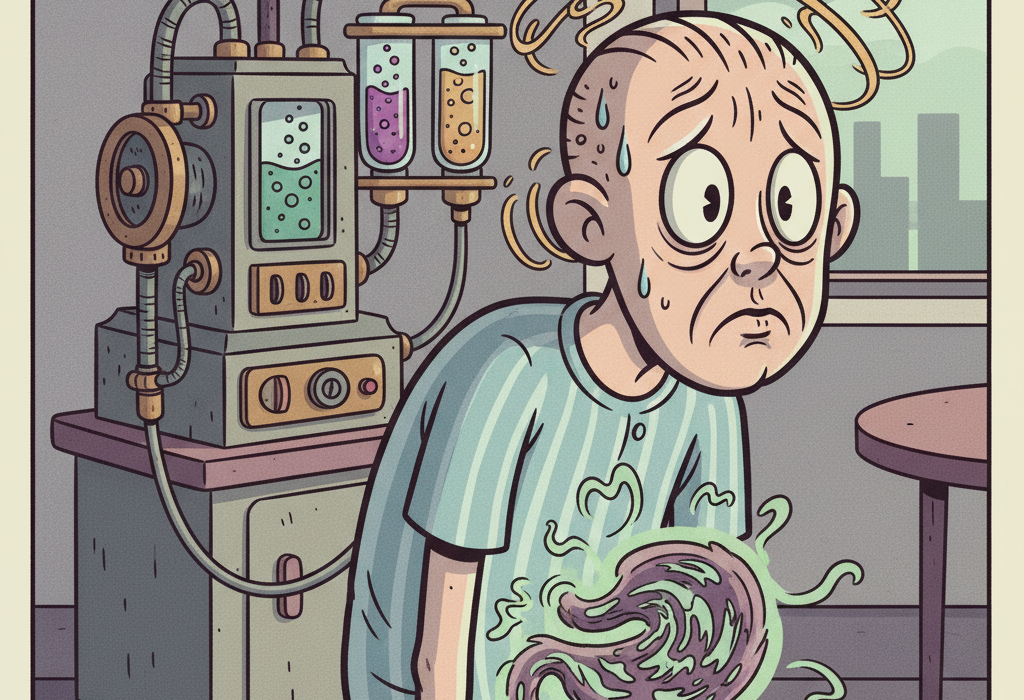
For many people starting cancer treatment, the fear of severe sickness is just as daunting as the diagnosis itself. Decades ago, severe nausea and vomiting were considered unavoidable parts of the process. Today, the landscape is entirely different.
Chemotherapy-induced nausea and vomiting, often abbreviated as CINV, is now managed using a sophisticated combination of drugs that block specific chemical signals between the gut and the brain. By intercepting these signals, doctors can prevent the sickness reflex before it ever begins.
While science has become incredibly effective at stopping the physical act of vomiting, the sensation of nausea remains a stubborn challenge. This is because vomiting is a mechanical reflex, while nausea is a complex sensory experience.
Related: How Science Actually Manages Chemotherapy Side Effects
This article explores what the latest research says about how chemotherapy causes nausea, how modern medications stop it, and why a patient’s mindset plays a surprisingly large role in their physical symptoms.
The Three Timelines of Chemotherapy Sickness
To treat CINV effectively, doctors first had to realize that it does not happen all at once. A 2008 review in The New England Journal of Medicine explains that chemotherapy sickness actually occurs in three distinct phases. Each phase is driven by different biological triggers.
- Acute Phase: This occurs within the first 24 hours after receiving chemotherapy. It is primarily driven by a chemical called serotonin in the gut.
- Delayed Phase: This occurs between 24 and 120 hours (days 2 to 5) after treatment. It is primarily driven by a different chemical in the brain called substance P.
- Anticipatory Phase: This occurs before the chemotherapy is even given. It is a learned psychological response triggered by the sights, smells, or thoughts of the clinic after a previous negative experience.
Because these phases operate differently, a medication that works perfectly on day one might be completely useless on day three.
How This Might Work: The Gut-Brain Alarm System
To understand how anti-sickness drugs work, it helps to understand how the body detects chemotherapy in the first place.
The body is designed to protect itself from toxins. When chemotherapy drugs enter the bloodstream or the digestive tract, the body registers them as a threat. This triggers a biological alarm system.
The first alarm goes off in the gut. Specialized cells in the stomach lining detect the drugs and release a neurotransmitter called serotonin. Serotonin binds to nearby nerve endings, specifically the vagal afferents (VAY-gul AFF-er-ents), which are communication wires that travel from the gut straight to the brain.
These wires plug into a specific part of the brain stem called the area postrema. This area acts as the brain’s chemical sensor. Because it sits outside the brain’s normal protective barrier, it can easily detect toxins in the blood.
Once the area postrema receives the alarm from the gut, it releases its own chemical messengers, including one called substance P. Substance P binds to specific receptors in the brain, officially triggering the physical reflexes of nausea and vomiting.
Modern anti-sickness drugs work by cutting the wires of this alarm system at different points.
What the Research Shows: The Evolution of Treatment
Over the last thirty years, scientists have developed highly targeted medications to block the specific receptors involved in CINV. These drugs are known as antiemetics (an-tie-eh-MET-iks).
Blocking the Gut’s Alarm: 5-HT3 Antagonists
The first major breakthrough in CINV prevention was the development of drugs that block serotonin from binding to nerve endings in the gut. These are called 5-HT3 receptor antagonists.
Common examples include ondansetron, granisetron, and palonosetron. These drugs are highly effective at stopping acute nausea and vomiting on the first day of treatment. However, older drugs in this class have short half-lives, meaning they leave the body quickly and struggle to prevent delayed sickness.
To fix this, scientists developed palonosetron, a newer version that stays in the body for about 40 hours. A 2017 review in Expert Opinion on Pharmacotherapy highlights that palonosetron is generally superior to older drugs for preventing delayed nausea.
Scientists have also created extended-release versions of older drugs. A 2016 study in Drugs examined an extended-release injection of granisetron. By using a special polymer delivery system, the drug slowly releases into the body over seven days, providing excellent coverage for both the acute and delayed phases.
Blocking the Brain’s Alarm: NK1 Antagonists
While serotonin blockers handle the first 24 hours, they do not stop the brain from releasing substance P during the delayed phase. To combat this, scientists developed a class of drugs called Neurokinin-1 (NK1) receptor antagonists.
These drugs, which include aprepitant, rolapitant, and netupitant, cross into the brain and block substance P from triggering the vomiting center.
A large 2012 meta-analysis in the Journal of the National Cancer Institute looked at 17 trials involving over 8,700 patients. The researchers found that adding an NK1 antagonist to standard therapy increased the overall success rate (no vomiting and no need for rescue medications) from 54 percent to 72 percent.
These drugs are highly effective, but they can interact with other medications. For example, aprepitant interacts with an enzyme in the liver that also processes steroid medications. Rolapitant, however, does not interact with this specific enzyme, making it a simpler option for patients taking complex medication lists, according to a 2017 review in Drugs.
The Multi-Target Approach: Olanzapine
Even with serotonin and substance P blockers, some patients still experience stubborn nausea. In these cases, doctors turn to a drug called olanzapine.
Originally developed as an antipsychotic medication, olanzapine has a unique ability to block multiple different receptors at once, including pathways for dopamine, serotonin, and histamine.
A 2016 review in Current Opinion in Supportive and Palliative Care notes that olanzapine is highly effective for “breakthrough” nausea, which is nausea that occurs despite preventative medications. In one key trial, 70 percent of patients given olanzapine for breakthrough sickness experienced no further vomiting, compared to only 31 percent of patients given standard rescue drugs.
Olanzapine is now widely recommended by major oncology guidelines for stubborn CINV, as noted in a 2017 summary by the Multinational Association of Supportive Care in Cancer.
Combining Forces for Maximum Protection
Today, doctors rarely rely on a single drug. Instead, they use a multi-targeted approach based on the emetogenic (eh-MET-oh-jen-ik) potential of the chemotherapy. This simply means how likely the drug is to cause vomiting.
For highly emetogenic chemotherapy, patients typically receive a three-drug or four-drug combination before their infusion begins:
1. A serotonin blocker (like palonosetron)
2. A substance P blocker (like aprepitant)
3. A corticosteroid (like dexamethasone, which reduces inflammation and boosts the effect of the other drugs)
4. Sometimes olanzapine is added for maximum protection.
To make this easier for patients, pharmaceutical companies have started combining these drugs into single pills. A 2021 review in Drugs evaluated a combination pill called NEPA, which contains both a serotonin blocker and a substance P blocker. Taking just one pill before chemotherapy significantly improves patient convenience while providing dual-pathway protection.
Who Benefits Or Needs Caution
Not everyone experiences chemotherapy sickness the same way. Research shows that specific personal characteristics can make a patient more or less likely to experience nausea.
A 2016 study in the International Journal of Clinical Oncology tracked over 700 patients and identified several strong risk factors for CINV.
| Risk Factor | Impact on Nausea Risk |
|---|---|
| Female gender | Increases risk |
| Age under 60 | Increases risk |
| History of motion sickness | Increases risk |
| History of morning sickness | Increases risk |
| High anxiety or expectation of nausea | Increases risk |
| History of heavy alcohol use | Decreases risk |
It is not entirely clear why younger people and women are at higher risk, though differences in hormone levels and receptor sensitivity likely play a role. Interestingly, patients with a history of heavy alcohol consumption consistently show a lower risk of chemotherapy sickness, possibly due to long-term changes in brain receptor sensitivity.
The Power of the Mind: Anticipatory Nausea
One of the most fascinating aspects of CINV is how heavily it is influenced by psychology.
A 2004 paper in the Journal of the National Comprehensive Cancer Network explored the biobehavioral factors of nausea. The researchers found that a patient’s expectation of getting sick is one of the strongest predictors of whether they will actually get sick.
If a patient has a terrible experience with nausea during their first chemotherapy cycle, their brain forms a powerful association between the clinic environment and the feeling of sickness. By the third or fourth cycle, just the smell of the rubbing alcohol or the sight of the nurse can trigger severe nausea before the chemotherapy drug is even administered. This is called anticipatory nausea.
Because anticipatory nausea is a learned psychological response, standard anti-sickness medications often fail to stop it.
Practical Guidance: Behavioral Therapies
To combat anticipatory nausea, patients often need behavioral interventions rather than more pills. Research supports several non-drug approaches:
- Progressive Muscle Relaxation: Learning to systematically tense and relax muscle groups can lower the body’s autonomic arousal, making the brain less reactive to anxiety triggers.
- Systematic Desensitization: A therapy technique where patients are gradually exposed to clinic-like triggers while practicing relaxation techniques, helping the brain unlearn the association between the clinic and sickness.
- Cognitive Distraction: Engaging in immersive tasks, such as playing complex video games or using virtual reality, forces the brain to focus on sensory input other than nausea signals.
Common Misunderstandings or Myths
Myth: Ginger and herbal teas are proven cures for chemotherapy nausea.
While ginger is a popular home remedy for mild upset stomachs, its effectiveness against severe chemotherapy nausea is not strongly supported by science. A 2020 integrative review in the Revista Brasileira de Enfermagem analyzed 24 studies on ginger for CINV. The researchers concluded that while ginger is cheap and safe, there is no statistical confirmation that it effectively manages clinical nausea and vomiting in cancer patients. Similarly, a 2019 study in Die Pharmazie tested a traditional herbal medicine called rikkunshito and found no significant difference in nausea control compared to standard care alone.
Myth: Nausea and vomiting are the exact same problem.
Medically, they are distinct issues. Modern antiemetic drugs are incredibly successful at stopping the physical reflex of vomiting. However, as noted in recent FDA draft guidance for drug development, stopping the sensation of nausea is much harder. A patient might not vomit at all but could still suffer from debilitating, days-long nausea. This is why researchers now measure “Complete Response” in trials, which requires a patient to be completely free of both vomiting and the need for rescue medications.
The Bottom Line
Science has dramatically changed the experience of receiving chemotherapy. By understanding the chemical alarm systems connecting the gut and the brain, researchers have developed targeted drugs that block sickness before it starts.
- Vomiting is largely preventable: By combining serotonin blockers, substance P blockers, and steroids, doctors can stop the physical vomiting reflex in the vast majority of patients.
- Nausea remains a challenge: The sensation of nausea is harder to eliminate completely, especially in the delayed phase (days 2 to 5 after treatment).
- Mindset matters: Anxiety and the expectation of sickness can physically trigger nausea. Behavioral therapies like relaxation and distraction are scientifically proven to help.
- Personalized care is key: Patients who are younger, female, or prone to motion sickness may need more aggressive anti-sickness plans from day one.
If you are preparing for chemotherapy, communicate openly with your care team. There are numerous medications available, and if one combination does not work, another likely will.
Quick Reference: Key Studies
| Study Focus | Key Finding | Source |
|---|---|---|
| NK1 Antagonists Overview | Adding NK1 blockers to standard therapy increased complete CINV protection from 54% to 72%. | PMID 22911671 |
| Olanzapine for Breakthrough Nausea | Olanzapine stopped breakthrough nausea in 70% of patients, compared to 31% using standard rescue drugs. | PMID 27028050 |
| Combination Pills (NEPA) | A single pill combining netupitant and palonosetron effectively prevents both acute and delayed CINV. | PMID 34292534 |
| Risk Factors for CINV | Women, patients under 60, and those receiving anthracycline-based chemo are at the highest risk for nausea. | PMID 26475354 |
| Psychological Factors | A patient’s expectation of getting sick is one of the strongest predictors of anticipatory nausea. | PMID 19780257 |
Last updated: March 2026
This article synthesizes findings from peer-reviewed research. It is for educational purposes only and does not constitute medical advice. Consult a healthcare provider before starting any new regimen.

Leave a Reply