
Imagine you are settling into your seat for a 12-hour international flight. You might have heard warnings to get up and walk around to avoid getting a blood clot in your leg. While this is good advice, the reality of blood clots is much broader than air travel.
Deep vein thrombosis (DEEP vayn throm-BOH-sis), commonly called DVT, happens when a blood clot forms in a deep vein, usually in the lower leg, thigh, or pelvis. If that clot breaks loose and travels to the lungs, it becomes a pulmonary embolism (PULL-muh-nair-ee EM-boh-lizm), or PE, which is a medical emergency. Together, these conditions are known as venous thromboembolism (VEE-nus throm-boh-EM-boh-lizm), or VTE.
So, how do we prevent these clots from forming in the first place? The short answer is that preventing DVT relies on a combination of physical movement, mechanical compression devices, and, for those at higher risk, blood-thinning medications.
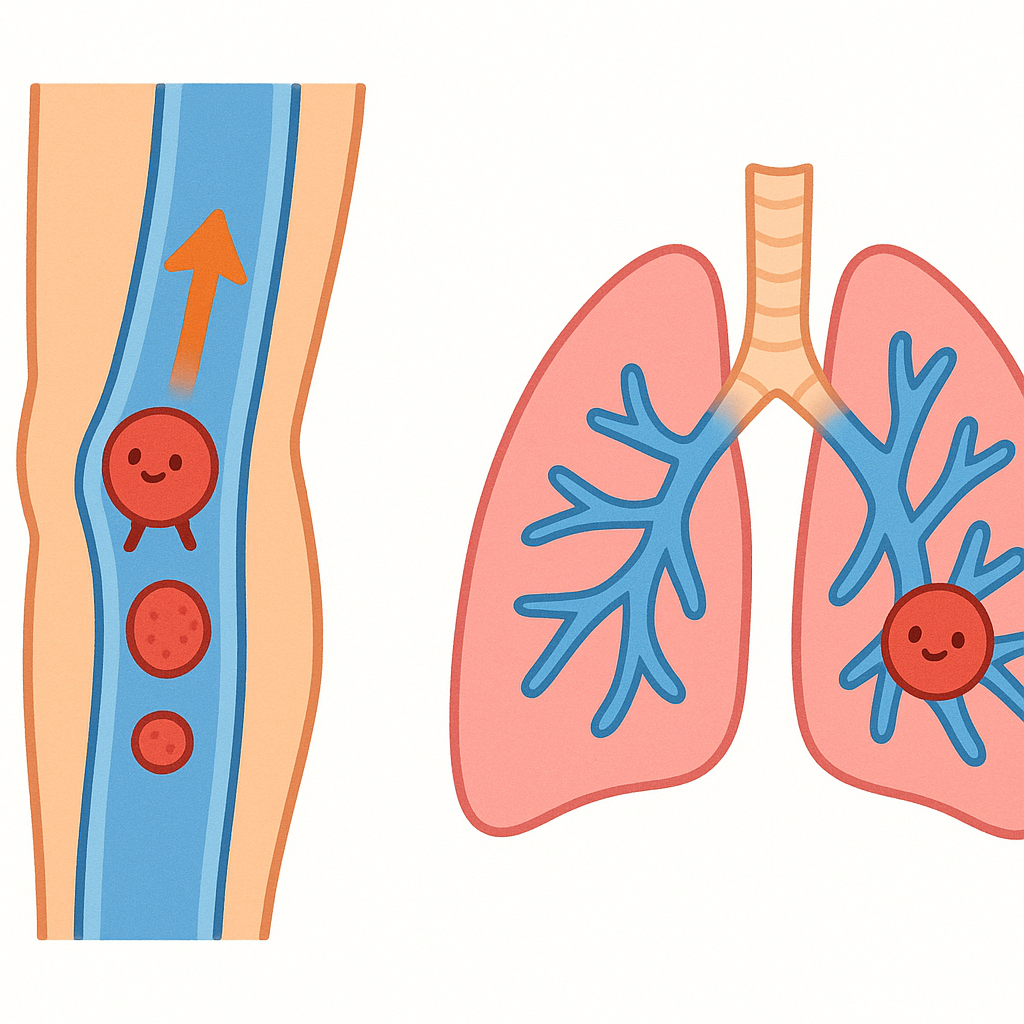
This article breaks down what current medical research says about how blood clots form, who is most at risk, and the most effective ways to prevent them and their long-term complications.
What the Research Shows About Blood Clots
To understand how to prevent DVT, it helps to know why clots form. Scientists generally point to three main triggers, a concept known in medicine as Virchow’s Triad. A clot is likely to form if there is:
1. Slow blood flow (stasis), often from prolonged immobility.
2. Damage to the blood vessel wall, which can happen during surgery or trauma.
3. A change in blood chemistry that makes it clot more easily, which can be caused by genetics, certain medications, or diseases like cancer.

According to a 2022 review in the Annals of Internal Medicine, VTE is the third most common cardiovascular disorder. However, the research also shows that about half of these events are tied to temporary risk factors and are highly preventable.
The Real Risks: Hospitals and Surgery
While travel gets a lot of attention, hospitalization and surgery are actually among the highest risk factors for developing a blood clot.
When you are in the hospital, you spend a lot of time in bed, which slows down blood flow. A 1995 study in The British Journal of Clinical Practice noted that most DVT cases arise as complications during the perioperative period (the time around a surgery). This is especially true for major orthopedic surgeries, like hip and knee replacements. According to a 2000 review in Orthopedic Nursing, the combination of bone surgery, vessel damage, and post-surgery bed rest creates a perfect storm for clot formation.
Medical devices can also increase risk. For example, patients who need long-term intravenous (IV) medications often receive a Peripherally Inserted Central Catheter (PICC). A 2013 study in Chest found that the physical presence of the catheter in the vein can disrupt blood flow and cause a clot. The researchers discovered that using the smallest possible catheter with the fewest number of tubes (lumens) significantly reduced the risk of DVT.
Similarly, a 2025 study in the Journal of Thrombosis and Thrombolysis looked at patients undergoing stem cell transplants who required central venous catheters. The researchers found that simply being admitted to the hospital as an inpatient was the single strongest predictor for developing a catheter-related blood clot.
Cancer and Blood Clots
Cancer and its treatments can change the chemistry of the blood, making it much more likely to clot. A 2025 review in the International Journal of Surgery highlights that lung cancer, in particular, carries a very high incidence of DVT. Tumors can release substances that activate the body’s clotting system. Because of this, guidelines published in Acta Medica Indonesiana in 2022 emphasize that cancer patients frequently need preventive blood-thinning medications, especially when hospitalized or undergoing active treatment.
What About Travel and DVT?
The association between long-haul flights and blood clots is real, but the absolute risk for a healthy person is quite low.
A 2005 review in Blood Reviews examined the data on travel-related thrombosis. The research shows that the risk increases significantly only after journeys lasting longer than 8 to 12 hours. For flights over 12 hours, the risk of developing a symptomatic blood clot is about 0.5%.
However, the risk is not spread evenly. A 2025 review in Seminars in Thrombosis and Hemostasis confirms that prolonged immobility, dehydration, and cabin pressure changes contribute to sluggish blood flow. Yet, the vast majority of people who develop a clot after flying already had underlying risk factors, such as a history of previous clots, obesity, pregnancy, or recent surgery.
Related: GLP-1 Weight Loss Drugs: What Real-World Results Actually Show
Practical Guidance: How to Prevent DVT
Because DVT is triggered by different factors, preventing it requires different tools depending on the situation.
Mechanical Prevention
For keeping blood moving when you cannot walk around, physical tools are highly effective.
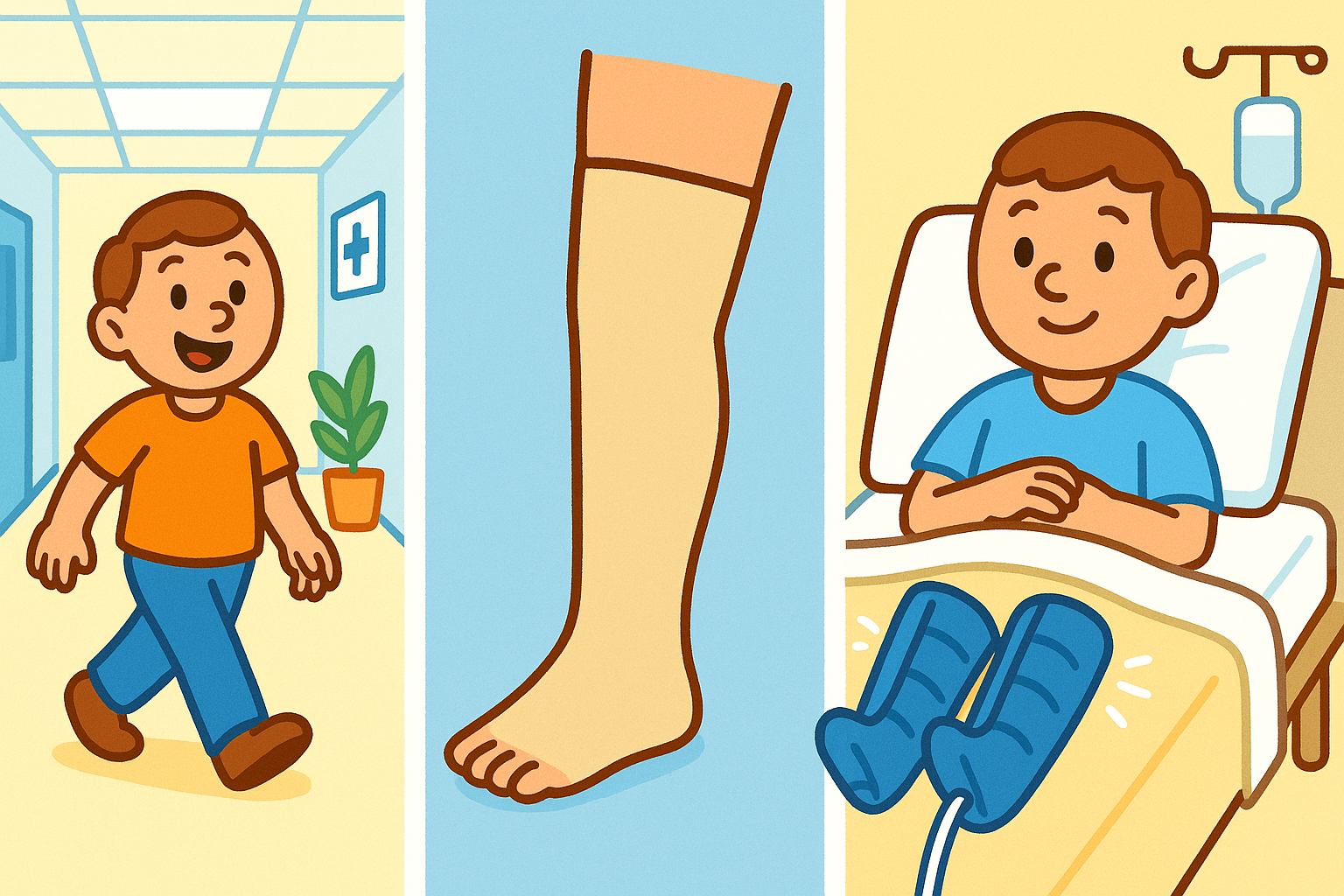
- Early Mobilization: Simply getting out of bed and walking as soon as possible after surgery is one of the most effective ways to prevent clots.
- Compression Stockings: These tight-fitting socks gently squeeze the legs, helping veins push blood back up to the heart. They are frequently recommended for long flights and post-surgery recovery.
- Intermittent Pneumatic Compression (IPC): Often used in hospitals, these are inflatable sleeves that wrap around the legs. An air pump inflates and deflates them on a cycle, mimicking the natural pumping action of walking muscles. A 2009 review in the Journal of Perioperative Practice notes that IPC devices are highly effective for surgical patients, especially when blood-thinning drugs are too risky due to bleeding concerns.
Medical Prevention
When mechanical methods are not enough, doctors use anticoagulants (an-tee-koh-AG-yoo-lants), commonly known as blood thinners.
- Low-Molecular-Weight Heparin (LMWH): Given as a small injection under the skin, this is the standard preventive medication used in hospitals and for high-risk pregnant women or cancer patients.
- Direct Oral Anticoagulants (DOACs): These are newer pill-form blood thinners. According to the 2024 German AWMF S2k Guidelines in Hamostaseologie, DOACs are now clearly favored over older drugs like warfarin for treating and preventing DVT because they are easier to manage and carry a lower risk of severe bleeding.
| Prevention Method | How It Works | Best Used For |
|---|---|---|
| Movement / Walking | Uses leg muscles to pump blood back to the heart naturally. | Everyone, especially during travel or after surgery. |
| Compression Stockings | Applies graduated pressure to keep blood from pooling in the lower legs. | Travelers, pregnant women, mild hospital cases. |
| IPC Devices (Leg Pumps) | Mechanically squeezes legs to mimic walking. | Hospitalized patients, especially during and right after surgery. |
| Anticoagulants (Blood Thinners) | Alters blood chemistry to stop clots from forming. | High-risk surgical patients, cancer patients, people with a history of DVT. |
The Long-Term Threat: Post-Thrombotic Syndrome (PTS)
One of the biggest reasons doctors work so hard to prevent DVT is to avoid its most common long-term complication: Post-thrombotic syndrome (POST throm-BAH-tik SIN-drome).
PTS occurs when a blood clot permanently damages the delicate one-way valves inside your veins. When these valves fail, blood pools in the leg, causing chronic swelling, heaviness, daily pain, and in severe cases, open skin ulcers.
A 2025 overview in The Medical Clinics of North America notes that PTS affects up to 70% of patients within 10 years of a DVT. Other studies, such as a 2010 review in Hematology, estimate the rate between 30% and 50%. Regardless of the exact percentage, it is a frequent and disabling condition.
The Debate Over Compression Stockings for PTS
For decades, the standard medical advice was that anyone who suffered a DVT should wear prescription-strength compression stockings daily for two years to prevent PTS. This was based on early studies showing massive benefits.
However, newer science has complicated this picture. A 2018 review in Blood explains that a large, rigorous, placebo-controlled study called the SOX trial turned this advice upside down. The SOX trial compared real compression stockings to “sham” (fake, loose) stockings and found no difference in the rates of PTS between the two groups.
Because of this conflicting evidence, a 2018 Cochrane Database Systematic Review and current guidelines suggest that while stockings may not definitively prevent the biological damage of PTS, they are still highly useful for managing the symptoms. Doctors now generally recommend a trial of compression stockings for patients who have residual leg swelling or discomfort after a DVT, continuing them as long as the patient feels relief.
Where The Science Is Still Uncertain
Medical science is still trying to figure out the best way to deal with massive blood clots once they form, in order to prevent permanent vein damage.
Catheter-Directed Thrombolysis (CDT): For very large clots in the thigh or pelvis, doctors sometimes use a procedure called CDT. They thread a tiny tube directly into the clot and deliver strong “clot-busting” drugs. The goal is to dissolve the clot immediately to save the vein valves. However, the 2012 CHEST Guidelines and later updates show that while CDT might reduce the severity of PTS, it does not completely prevent it, and it comes with a significantly higher risk of dangerous bleeding. Therefore, it is usually reserved only for the most severe cases.
Future Treatments: Researchers are looking for ways to dissolve clots without causing bleeding. A fascinating 2023 study on mice in the Journal of the American Heart Association tested an inhibitor that targets a specific enzyme (chymase) inside mast cells. By inhibiting this enzyme, the researchers were able to resolve and prevent deep vein thrombosis in mice without increasing their bleeding time. While this is early animal research, it represents a potential future where we might treat clots more safely.
Common Questions About DVT
Does taking an aspirin before a flight prevent blood clots?
Aspirin affects platelets, which are more involved in arterial clots (like heart attacks) than venous clots (like DVT). While some travelers take it, most medical guidelines suggest that for healthy people, staying hydrated and moving around is safer and more effective. For high-risk individuals, doctors usually prescribe specific blood thinners (like LMWH injections) rather than aspirin.
Is “economy class syndrome” real?
The term is a bit of a myth. The risk of a blood clot during travel comes from the length of time you sit still, not the price of your ticket. Studies show that passengers in business and first class also develop blood clots if they remain immobile for long periods.
The Bottom Line
Deep vein thrombosis is a serious but largely preventable condition. The research clearly shows that while long-haul travel carries a slight risk, the greatest dangers lie in hospital stays, major surgeries, and underlying conditions like cancer.
We know that keeping blood flowing through early walking, compression stockings, and mechanical leg pumps is highly effective. For those at higher risk, modern blood-thinning medications (DOACs and LMWH) provide excellent protection.
While we cannot always prevent the long-term complication of post-thrombotic syndrome (PTS), the absolute best way to protect your veins is to prevent the first blood clot from forming.
Quick Reference: Key Studies
| Study Focus | Key Finding | Source |
|---|---|---|
| Travel Risks | The risk of symptomatic DVT increases on flights over 12 hours, but absolute risk remains low (~0.5%) and mostly affects those with pre-existing risks. | PMID 15963832 |
| Hospital Risks (PICCs) | Using the smallest possible IV catheter with fewer tubes significantly reduces the risk of DVT in hospitalized patients. | PMID 23460144 |
| Treatment Guidelines | Direct Oral Anticoagulants (DOACs) are now favored over older blood thinners for safety and ease of use. | PMID 38688268 |
| Post-Thrombotic Syndrome | PTS affects up to 50-70% of DVT patients. The SOX trial challenged the idea that compression stockings actively prevent PTS, though they still aid symptom relief. | PMID 29545327 |
| Future Treatments | A mouse study showed that inhibiting a specific enzyme (chymase) dissolved clots without increasing bleeding risk, pointing to potential future therapies. | PMID 36752268 |
Last updated: March 2026
This article synthesizes findings from peer-reviewed research. It is for educational purposes only and does not constitute medical advice. Consult a healthcare provider before starting any new regimen.


Leave a Reply