Introduction
If you have ever walked into a kitchen where garlic is cooking, you know it instantly. That pungent, sharp aroma is unmistakable. But that smell isn’t just for flavor: it is the sound of a chemical alarm going off. The compounds that give garlic its bite are the same ones that plants use to defend themselves against pests. When we eat them, these compounds may help defend us, too.
For thousands of years, garlic (Allium sativum) has been used as a medicine for everything from infections to heart problems. But in modern science, we don’t just trust tradition; we look for mechanisms. Recent research has focused heavily on garlic’s role as an antioxidant, a substance that protects your cells from “rusting” or breaking down under stress.
However, the science is more complicated than just “eat more garlic.” It turns out that how you eat it matters immensely. Does cooking destroy the benefits? Is black garlic better than raw? What about sprouted garlic? This article breaks down the latest research on garlic’s ability to fight oxidative stress and improve metabolic health.
Understanding the “Rust”: Why We Need Antioxidants
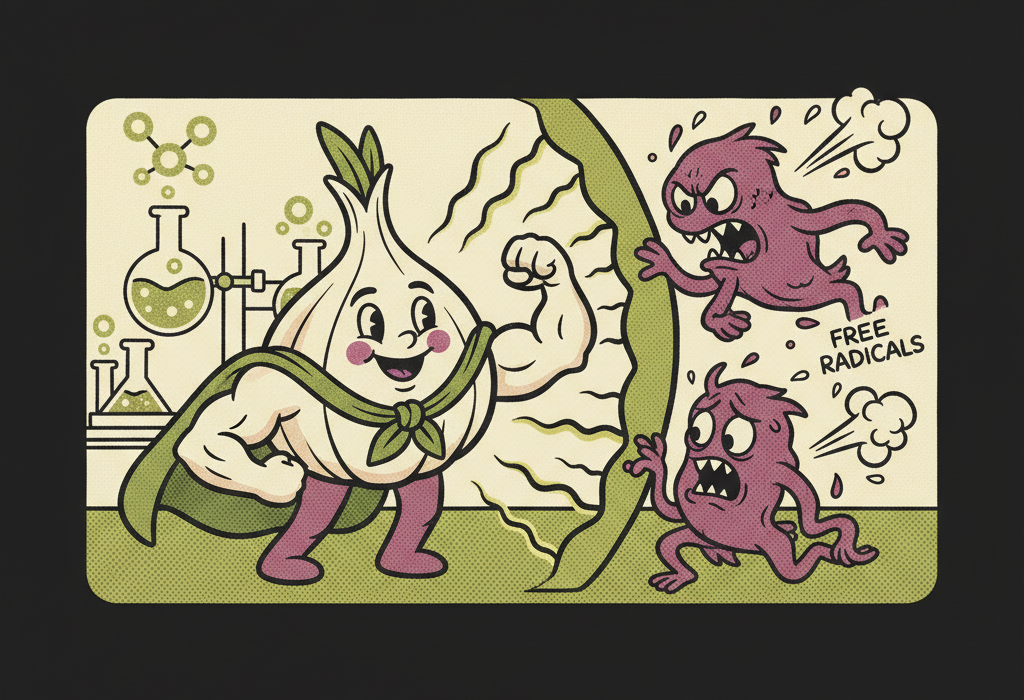
To understand why garlic matters, we first need to understand oxidative stress. Imagine a slice of apple left on the counter turning brown. That is oxidation. Inside your body, a similar process happens. Normal metabolism and exposure to toxins produce unstable molecules called free radicals (or Reactive Oxygen Species, ROS).
If left unchecked, these free radicals damage your cells, proteins, and DNA. This damage is a primary driver of aging, heart disease, inflammation, and cancer. Your body has its own internal cleanup crew (endogenous antioxidants), but sometimes the mess is too big, and it needs outside help.
This is where garlic steps in. Research suggests garlic doesn’t just scrub away free radicals directly; it also flips the switches that turn on your body’s own defense systems.
The Chemistry of the Clove
Garlic isn’t just one thing; it is a chemical factory. When a clove is whole, it contains a compound called alliin (AL-ee-in). It is stable and odorless. But when you crush or chop the garlic, an enzyme called alliinase is released. This enzyme converts alliin into allicin (AL-i-sin).
Allicin is the compound responsible for the strong smell and many of garlic’s antibacterial and antioxidant effects. However, allicin is chemically unstable. It breaks down quickly into other sulfur compounds, such as:
- Diallyl disulfide (DADS)
- Diallyl trisulfide (DATS)
- S-allyl cysteine (SAC) (found heavily in aged garlic)
According to a 2024 review in Frontiers in Immunology, these sulfur compounds are the heavy lifters. They can trap free radicals, reduce inflammation, and even signal your cells to produce more of their own protective enzymes.
What the Research Shows: Forms Matter
Not all garlic is created equal. The processing method dramatically changes which compounds are present and how effective they are. Here is what recent studies have found comparing different types of garlic.
1. Fresh vs. Cooked Garlic
Heat is a double-edged sword. A 2023 study in Nutrients compared several forms of garlic. They found that fresh, crushed garlic had potent antioxidant activity. However, if the garlic was heated immediately (like in a microwave) without sitting first, it lost significant activity.
Why? The enzyme alliinase is destroyed by heat. If you cook garlic immediately after chopping, you stop the production of allicin before it starts.
2. The Surprising Power of Sprouted Garlic
Most of us throw away garlic when it starts to sprout green shoots, assuming it has gone “bad.” Science suggests we are making a mistake.
A study in the Journal of Agricultural and Food Chemistry found that garlic sprouted for 5 days had higher antioxidant activity than fresh, un-sprouted garlic. Sprouting triggers the plant to synthesize new protective compounds (phytoalexins) to defend the growing shoot. These compounds showed a stronger ability to protect neuronal cells from damage compared to raw garlic.
3. Black Garlic: The Antioxidant King?
Black garlic is fresh garlic that has been aged at high humidity and temperature for weeks. It turns black, sticky, and sweet. This process is a controlled version of the Maillard reaction (the same chemistry that browns a searing steak).
According to a 2023 study in Molecules, black garlic (BG) showed the highest antioxidant activity compared to white, green, or vinegar-soaked (Laba) garlic. The aging process destroys allicin but drastically increases S-allyl cysteine (SAC) and polyphenols.
- Why this matters: Allicin is unstable and can irritate the stomach. SAC is stable, bioavailable (easily absorbed), and generally better tolerated. A 2023 clinical trial found that aged black garlic effectively lowered blood pressure in patients with hypertension, partly by increasing nitric oxide and antioxidant status.
| Garlic Form | Key Compound | Best For | Potential Downside |
|---|---|---|---|
| Raw/Crushed | Allicin | Antibacterial, immediate potency | Stomach irritation, unstable |
| Cooked | Diallyl sulfides | Heart health, milder flavor | Enzyme destroyed if cooked too fast |
| Sprouted | Phytoalexins | High antioxidant potential | Harder to find commercially |
| Aged (Black) | S-allyl cysteine (SAC) | Long-term antioxidant support, BP | Sweet taste (not for savory cooking) |
Key Health Benefits
1. Heart Health and Blood Pressure
Oxidative stress is a major cause of high blood pressure (hypertension). It damages the lining of blood vessels, making them stiff.
A systematic review in Critical Reviews in Food Science and Nutrition analyzed multiple trials and confirmed that garlic can reduce blood pressure, waist circumference, and cholesterol levels (LDL and triglycerides).
Additionally, a 2024 review highlighted that garlic increases the production of Nitric Oxide (NO). NO is a gas that tells blood vessels to relax and widen, which lowers blood pressure. This effect is often linked to the sulfur compounds acting as “donors” of hydrogen sulfide (H2S), another gaseous signaling molecule that relaxes vessels, as detailed in a 2018 review in Trends in Pharmacological Sciences.
2. Liver Protection and Detoxification
Your liver is your body’s filtration system, which makes it prone to oxidative damage from toxins.
Research indicates garlic may act as a shield for the liver. A 2023 study on cadmium toxicity (a heavy metal) showed that garlic extract helped normalize liver enzymes and reduce oxidative stress markers. Similarly, a 2020 review described garlic as a potential “universal antidote” or protective agent against various chemical toxicities, largely due to its ability to scavenge free radicals and boost the liver’s own antioxidant enzymes.
Related: Can Supplements Slow Down Your Liver’s Aging Clock?
3. Asthma and Inflammation
Asthma is driven by chronic inflammation in the airways. A 2022 review in the International Journal of Molecular Sciences explored how garlic’s sulfur compounds might help. The study highlighted that garlic compounds can inhibit the NF-κB pathway, a major protein complex that controls inflammation. By calming this pathway and reducing oxidative stress, garlic may help reduce the airway remodeling and mucus secretion associated with asthma.
Practical Guidance: The 10-Minute Rule
If you want to maximize the health benefits of garlic in your cooking, science offers a simple trick.
When you crush garlic, the enzyme reaction that creates allicin takes time. If you crush garlic and immediately throw it into a hot pan, the heat destroys the enzyme before it finishes its job.
The Protocol:
1. Crush or chop your garlic.
2. Wait 10 minutes before cooking.
3. This waiting period allows the allicin to fully develop. Once developed, the compounds are more resistant to heat, preserving more of the medicinal benefit.
This method is supported by comparative studies, such as the 2023 analysis which showed that “fresh garlic set aside for 10 minutes” had significantly higher antioxidant activity than garlic heated immediately.
Who Benefits or Needs Caution
While garlic is generally healthy, it is powerful chemistry. A 2003 review titled “The Good, The Bad and The Ugly” highlights that high doses of raw garlic can actually be toxic to the liver and stomach.
- Blood Thinning: Garlic has natural anticoagulant properties. People taking blood thinners (like warfarin) or preparing for surgery should consult their doctor, as high doses of garlic could increase bleeding risk.
- Stomach sensitivity: Raw garlic can cause heartburn, gas, and irritation of the digestive tract. Aged Black Garlic is often better tolerated by those with sensitive stomachs.
Related: Not All Supplements Are Created Equal: Bioavailability
The Bottom Line
Garlic is far more than a flavor enhancer; it is a complex delivery system for sulfur-based antioxidants. The research is clear: garlic can lower oxidative stress, support heart health, and aid in detoxification. However, the form you choose matters.
For general cooking, use the 10-minute rule to maximize potency. For targeted therapeutic benefits (like blood pressure control), Aged Black Garlic appears to offer the highest antioxidant capacity with the lowest risk of stomach irritation. Sprouted garlic, often discarded, is actually a nutritional powerhouse and should be eaten, not tossed.
Quick Reference: Key Studies
| Study Focus | Key Finding | Source |
|---|---|---|
| Hypertension | Aged Black Garlic (low dose SAC) lowered systolic BP by ~1.8 mmHg and increased antioxidant status. | PMID 37686723 |
| Garlic Forms | Fresh garlic (rested 10 min) and specific supplements (“Garlicin”) had highest antioxidant activity; heating reduced it. | PMID 37836382 |
| Sprouting | Garlic sprouted for 5 days showed higher antioxidant activity and neuroprotection than fresh garlic. | PMID 24512482 |
| Black Garlic | Black garlic had significantly higher total phenolics and flavonoids than white or green garlic. | PMID 36677862 |
| Asthma | Garlic sulfur compounds reduce airway inflammation and oxidative stress via Nrf2 pathway. | PMID 36555240 |
| Toxicity | High doses of raw garlic can be toxic to liver and heart; dosage matters. | PMID 12601669 |
Last updated: February 2026
This article synthesizes findings from peer-reviewed research. It is for educational purposes only and does not constitute medical advice. Consult a healthcare provider before starting any new regimen.

Leave a Reply