Introduction
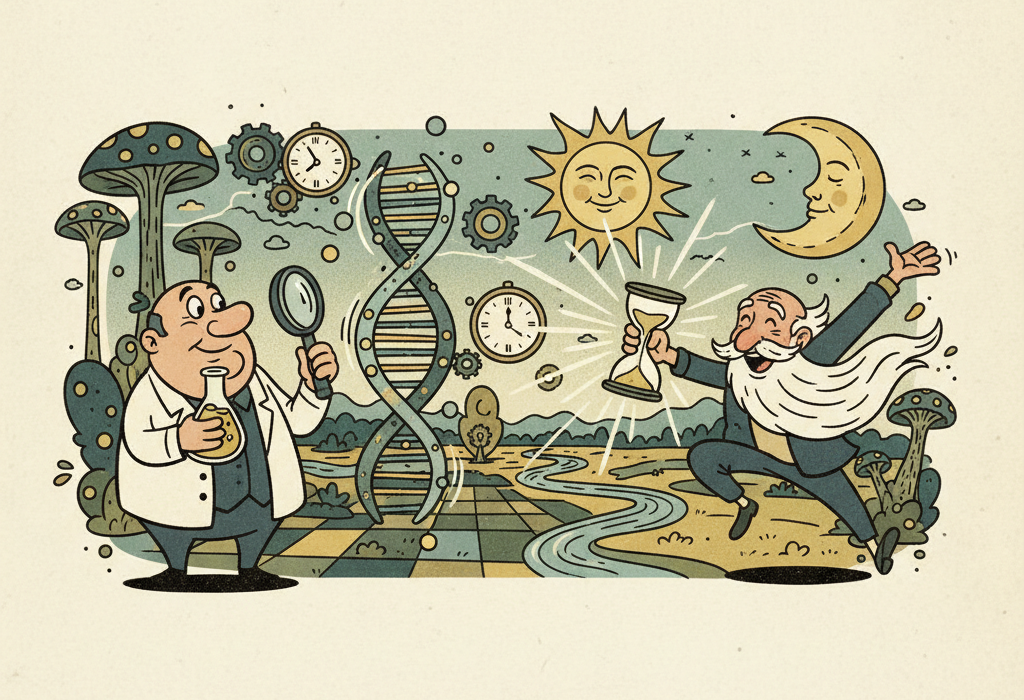
We often look at centenarians, people who live to be 100 or older, and wonder if they won a genetic lottery. Did they inherit a special DNA sequence that protects them from time itself? For decades, scientists have been hunting for a specific “longevity gene” that explains why some people stay healthy well into their 90s while others struggle with age-related diseases much earlier.
The answer, it turns out, is both yes and no. There is no single switch that turns off aging. Instead, longevity is a complex puzzle involving hundreds of genes that act like a maintenance crew for a large building. Some genes reinforce the foundation, others repair the electrical wiring, and some take out the trash. If this crew works efficiently, the building stands longer.

Recent research on humans, dogs, and microscopic worms has revealed that living longer isn’t just about luck; it is about specific biological systems: like how we process food, how we handle inflammation, and how our cells repair themselves. This article explores the specific genes scientists have identified and what they tell us about the biology of aging.
The “Fuel Gauge” Genes: Insulin and Metabolism
One of the most significant discoveries in the genetics of aging involves how our bodies sense and use energy. It implies that the systems regulating our growth and metabolism are tightly linked to how long we live.
The Worm That Lived Twice as Long
In the 1990s, researchers made a startling discovery using a tiny nematode worm called C. elegans. By mutating a single gene called daf-2, they were able to double the worm’s lifespan. This gene is similar to the insulin receptor gene in humans. When the gene’s activity was reduced, the worms didn’t just live longer; they stayed active and youthful for a greater percentage of their lives.
Research published in Science and Nature revealed that this gene acts like a master switch. When an animal has plenty of food, the gene signals the body to grow and reproduce. When the gene’s signaling is dampened (as if food were scarce), the body shifts into a “maintenance mode,” prioritizing repair and stress resistance over growth. This shift appears to extend life.
The Human Connection: IGF-1
Humans have a similar system involving a hormone called Insulin-like Growth Factor 1 (IGF-1). While IGF-1 is essential for growth during childhood and muscle maintenance in adults, high levels in later life have been linked to faster aging and cancer risk. Conversely, studies on centenarians suggest that lower activity in this pathway might be protective.
A review in Free Radical Research noted that centenarians often have a preserved sensitivity to insulin but lower levels of IGF-1 plasma. This suggests that maintaining a delicate balance in how our bodies process energy is crucial for reaching extreme old age. This connection between metabolism and aging is one reason why intermittent fasting has become a popular topic in longevity research, as it may mimic some of these genetic effects.
The Body Size Connection
Interestingly, the link between growth hormones and lifespan isn’t limited to worms and humans. It is also clearly visible in our pets. A 2020 study analyzing over 72,000 dogs found a strong genetic correlation between body size and longevity.
Larger dog breeds, which have higher levels of growth-promoting hormones like IGF-1, tend to have shorter lives and higher cancer mortality rates. Smaller breeds, which have different genetic variants in these growth pathways, typically live longer. This reinforces the idea that biological programs designed for rapid growth may come at the cost of long-term durability.
The Cleanup Crew: Autophagy and Waste Management
As we age, our cells accumulate damage: misfolded proteins, broken cellular parts, and metabolic waste. Long-lived organisms seem to have superior genetic equipment for cleaning up this mess. This process is often driven by a mechanism called autophagy (aw-TOFF-uh-gee), which literally means “self-eating.”

Recycling Cellular Junk
Research on yeast cells has identified specific genes, such as RAS2 and TOR, that regulate this cleanup process. A 2022 review in Cells highlighted that inhibiting the TOR pathway (which senses nutrients) activates autophagy. When the cell isn’t busy growing, it recycles its damaged parts. This is a critical mechanism for extending lifespan across species, from yeast to mammals.
New Candidates: Sugar and Waste
A recent large-scale study of German, French, and Danish long-lived individuals (many over 100 years old) identified two new potential longevity genes: FN3KRP and PGP. Published in The Journals of Gerontology, this study found that variants in these genes might help the body manage “glycation”: a process where sugar molecules bond to proteins and gum up the works (similar to how sugar caramelizes and hardens).
By efficiently removing these sugar-damaged proteins or managing metabolic byproducts, these genes may help keep tissues flexible and functional for longer. This aligns with the broader theory that longevity is largely about waste management efficiency.
The “Zombie Cell” Problem: Cellular Senescence
Not all cells die when they are supposed to. Some enter a state called cellular senescence (seh-NESS-ens). These cells stop dividing but refuse to die, lingering in the body and releasing inflammatory chemicals that damage neighboring healthy cells. They are often referred to as “zombie cells.”
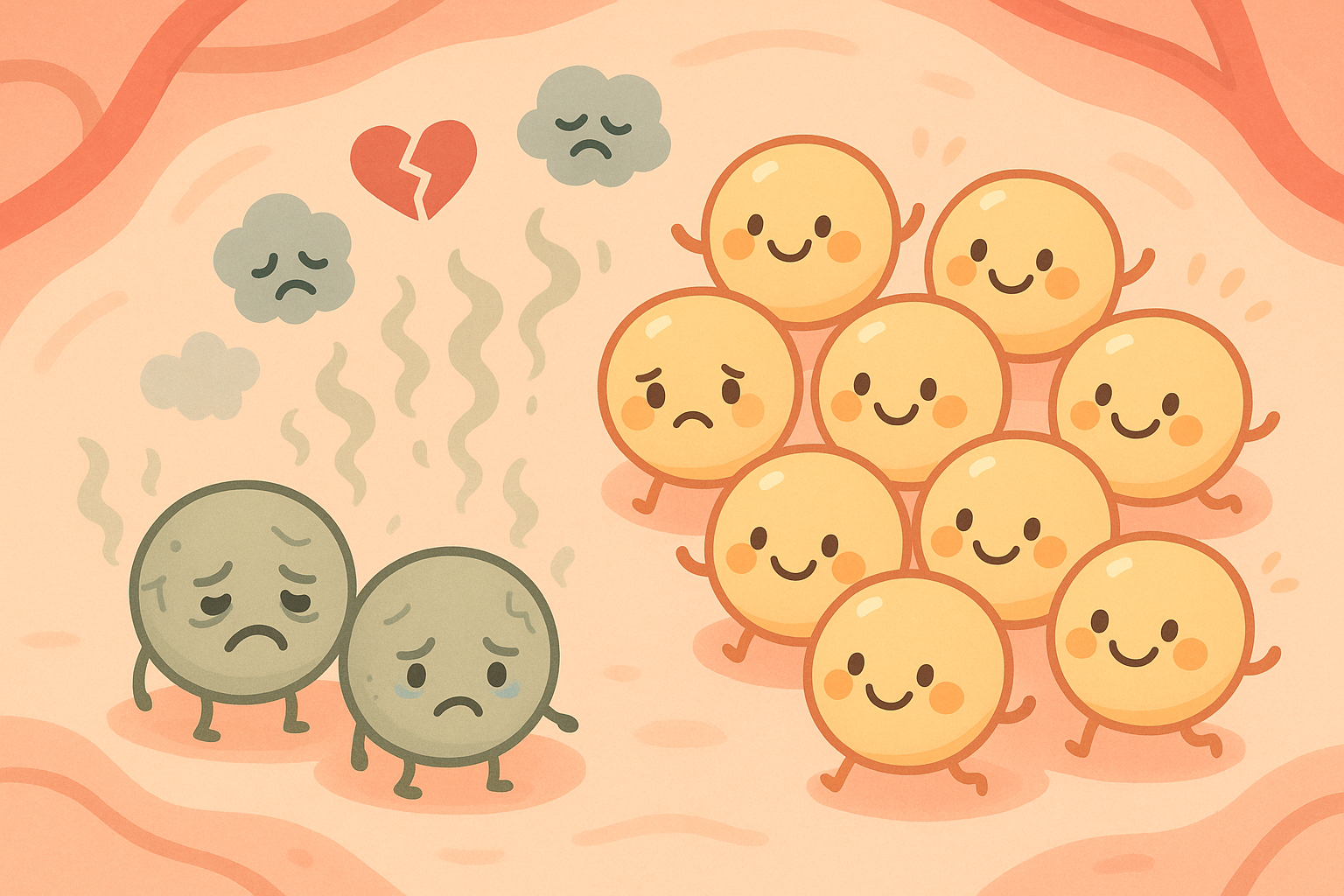
A comprehensive analysis of 279 human genes published in Genome Biology found a complex relationship between these cells and aging:
- Inducers: Genes that trigger senescence (stopping cell division) are often tumor suppressors. They stop cancer from forming early in life but promote aging later in life by creating these zombie cells.
- Inhibitors: Genes that prevent senescence might keep tissues youthful but can increase cancer risk if uncontrolled.
The study found that genes which induce senescence tend to become overactive as we age, contributing to tissue deterioration. This creates a difficult trade-off: the very mechanisms that protect us from cancer in our youth may contribute to aging in our later years.
The Engine Room: Mitochondria and Oxidative Stress
Mitochondria (my-toe-KON-dree-uh) are the power plants of our cells. They convert food into energy, but this process produces toxic byproducts called free radicals (oxidative stress). If the mitochondria are genetically prone to leaks or poor repair, this damage accumulates faster.
Genetic Shields
Certain genetic variations in mitochondrial DNA (mtDNA) seem to offer protection. A systematic review in Mitochondrion identified specific mutations in mitochondrial genes (like ND2 and ATP8) that are found frequently in centenarians, particularly in Japanese populations. These variations might make the energy-production process cleaner, producing fewer toxic free radicals.
Additionally, a gene called PON1 has attracted significant attention. PON1 produces an enzyme that rides on “good” cholesterol (HDL) and breaks down oxidized fats that would otherwise clog arteries. Research summarized in Free Radical Research suggests that certain variants of the PON1 gene are more common in centenarians, potentially protecting them from atherosclerosis and heart disease.
Inflammation: The Silent Ager
Chronic, low-grade inflammation is a hallmark of aging, often termed “inflamm-aging.” It drives conditions like heart disease, diabetes, and Alzheimer’s. Consequently, genes that regulate the immune system play a massive role in how long we live.
Studies on Italian centenarians have focused on genes for cytokines: chemical messengers of the immune system. Specifically, variants of the IL-6 (Interleukin-6) and IL-10 genes appear significant.
- IL-6: High levels of this pro-inflammatory messenger are linked to frailty and mortality. Centenarians, particularly men, are less likely to carry the gene variant associated with high IL-6 production (Mechanisms of Ageing and Development).
- IL-10: This is an anti-inflammatory messenger. Genetic variants that promote higher production of IL-10 may help counteract the wear and tear of inflammation over decades.
The Personality Connection
Can your genes influence your personality in a way that helps you live longer? It is possible. A study in the American Journal of Medical Genetics looked at longevity candidate genes and personality traits in the elderly.
They found that a gene called SYNJ2 was associated with the personality trait of “agreeableness.” While the exact biological mechanism linking this gene to both mood and longevity is still being explored, it hints at a biological basis for the observation that lower psychological distress and stable mood are often found in long-lived individuals.
Common Questions About Longevity Genes
If my parents lived to be 90, will I?
Not necessarily. While genetics play a role, studies suggest heritability accounts for only about 20, 25% of lifespan variation in the general population. Lifestyle and environment matter more for getting to 80 or 90. Genetics become much more dominant for reaching extreme ages, like 100+.
Can we edit these genes to live longer?
Currently, no. Longevity is a “complex trait,” meaning it is controlled by hundreds of small genetic nudges rather than one big push. Editing one gene might cause unforeseen side effects, such as increased cancer risk.
Do longevity genes protect against all diseases?
Generally, yes. Centenarians tend to delay the onset of almost all age-related diseases (cancer, heart disease, dementia) until the very end of their lives. This suggests their genetic advantage slows the fundamental process of aging itself.
The Bottom Line
There is no single “immortality gene.” Instead, longevity is the result of winning a genetic lottery across multiple biological systems. People who live to 100 tend to have a specific combination of variants that:
1. Dampen Growth Signals: They have reduced insulin/IGF-1 signaling, keeping their bodies in a maintenance and repair mode.
2. Manage Inflammation: They carry variants that keep chronic inflammation (inflamm-aging) in check.
3. Protect Cells: They have efficient systems for cleaning up cellular waste (autophagy) and neutralizing free radicals.
However, having these genes is only part of the equation. Many of the pathways described here, like insulin signaling and inflammation, are heavily influenced by what we eat, how much we move, and how we manage stress. While you cannot change your DNA, you can influence how those genes are expressed through your lifestyle.
Quick Reference: Key Studies
| Study Focus | Key Finding | Source |
|---|---|---|
| Insulin Signaling | Mutations in the daf-2 gene (insulin receptor) doubled the lifespan of C. elegans worms. | PMID 9252323 |
| New Candidates | Identified FN3KRP and PGP as potential human longevity genes involved in sugar metabolism. | PMID 33491046 |
| Mitochondria | Specific mutations in mitochondrial DNA (ND2, ATP8) are associated with longevity in Asian populations. | PMID 35817296 |
| Body Size | Larger dog breeds have higher cancer mortality and shorter lives due to IGF-1 variations. | PMID 32661568 |
| Inflammation | Centenarian men are less likely to carry pro-inflammatory IL-6 gene variants. | PMID 15621218 |
| Senescence | Genes that stop cell division (senescence) prevent cancer early in life but may drive aging later. | PMID 32264951 |
Last updated: March 2026
This article synthesizes findings from peer-reviewed research. It is for educational purposes only and does not constitute medical advice. Consult a healthcare provider before starting any new regimen.
Leave a Reply