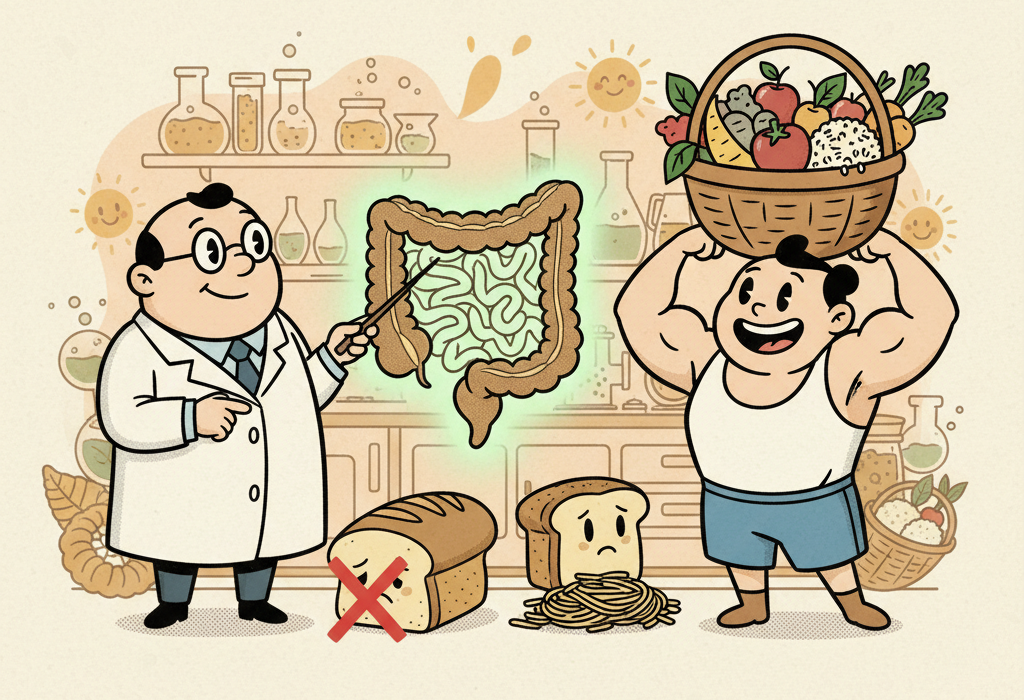
Imagine your body mistaking a simple crumb of bread for a dangerous invader. For about 1 percent of the global population, this is a daily reality.
Celiac disease (SEE-lee-ak) is an autoimmune (aw-toh-ih-MYOON) condition where eating gluten (GLOO-tin), a protein found in wheat, barley, and rye, triggers the immune system to attack the lining of the small intestine. Over time, this damage prevents the body from absorbing essential nutrients and can lead to severe health complications.
Currently, there is no pill or surgery to cure celiac disease. The only recognized medical treatment is a strict, lifelong gluten-free diet.
However, switching to a gluten-free lifestyle is not as simple as swapping regular bread for gluten-free bread. Recent scientific research reveals that while a gluten-free diet is absolutely necessary for those with celiac disease, relying heavily on packaged gluten-free foods can introduce new, unexpected health risks.
What the Research Shows: The Healing Power of Eliminating Gluten
When a person with celiac disease stops eating gluten, their body begins a remarkable healing process.
A 2022 review in The Lancet explains that removing gluten stops the immune system’s attack on the small intestine. Over weeks and months, the damaged intestinal lining repairs itself. This healing improves the absorption of nutrients, stops chronic diarrhea and stomach pain, and restores energy levels.
But the benefits go far beyond the stomach. Celiac disease is a systemic condition, meaning it affects the entire body. A 2022 study in Alimentary Pharmacology & Therapeutics detailed how untreated celiac disease can lead to weakened bones (osteoporosis), reproductive issues, neurological symptoms like “brain fog,” and an increased risk of certain cancers. By strictly adhering to a gluten-free diet, patients significantly lower these risks.
Furthermore, a 2025 population study in Nature Reviews Gastroenterology & Hepatology tracking over 49,000 patients in Sweden confirmed that untreated celiac disease is associated with a small but statistically significant increase in mortality risk. A strict diet is the primary defense against this risk.
The Hidden Nutritional Traps of Gluten-Free Foods
While avoiding gluten is medically necessary, the way many people replace it can be problematic. A common misunderstanding is that a “gluten-free” label automatically means “healthy.” Science tells a different story.
When food manufacturers remove gluten, which gives bread its fluffy texture and elasticity, they must add other ingredients to make the food taste good and hold together. A 2019 review in Nutrients analyzed the nutritional profile of packaged gluten-free foods across several countries. The researchers found that compared to standard wheat products, packaged gluten-free substitutes frequently contain:
- More fat and saturated fat
- Higher amounts of sugar and salt
- Fewer proteins
- Less dietary fiber
- Fewer essential vitamins and minerals (like iron, folate, and vitamin B12) because gluten-free flours are rarely fortified.
The Rise of Metabolic Issues
This shift in nutrition has real-world consequences. A 2024 review in Gastroenterology highlighted that people with celiac disease who rely heavily on processed gluten-free foods are at a higher risk of becoming overweight or obese.
Even more concerning, a 2024 study in Digestive Diseases and Sciences investigated 147 celiac patients on a gluten-free diet and found that nearly 31 percent had developed Non-Alcoholic Fatty Liver Disease (NAFLD). The researchers linked this directly to the high consumption of packaged gluten-free bakery items and convenience foods. The high levels of carbohydrates and fats in these products can overwhelm the liver, leading to fat buildup.
The Microbiome Connection
Your gut is home to trillions of bacteria, collectively known as the microbiome (my-kroh-BY-ohm), which help digest food and regulate your immune system. Diet is the biggest factor in shaping this bacterial community.
A 2021 study in the Annals of Medicine explored how a gluten-free diet affects gut bacteria. The researchers found that even after years on a strict gluten-free diet, the gut microbiomes of celiac patients often remain unbalanced.
Why does this happen? The primary reason is a lack of dietary fiber. Wheat and other gluten-containing grains are a major source of fiber in the standard diet. Fiber acts as food for beneficial gut bacteria. When people switch to a gluten-free diet based heavily on refined rice and corn flours, their beneficial bacteria starve and decrease in number, while less helpful bacteria can multiply. Incorporating naturally gluten-free, high-fiber foods like legumes, quinoa, and vegetables is crucial to counteracting this issue. Related: Does Leaky Gut Syndrome Actually Exist? What the Latest Science Says
Common Questions About Celiac Disease and Gluten
How much gluten is safe for someone with celiac disease?
For a person with celiac disease, there is no safe amount of gluten. A 2017 review in the European Journal of Nutrition notes that even microscopic amounts of gluten (as little as 50 milligrams, or about the size of a breadcrumb) can trigger intestinal damage. This is why international standards require foods labeled “gluten-free” to contain less than 20 parts per million (ppm) of gluten.
Does a gluten-free diet help with Autism?
Many parents of children with Autism Spectrum Disorder (ASD) try gluten-free diets hoping to improve behavioral symptoms. However, a 2021 review in Nutrients found no proven benefit of a gluten-free diet for autism symptoms unless the child also has diagnosed celiac disease or a specific wheat allergy. While there is a modest overlap between the two conditions, placing a child on a restrictive diet without a medical need can lead to unnecessary nutritional deficiencies.
Practical Guidance: Doing a Gluten-Free Diet Safely
Based on the latest nutritional science, experts recommend shifting the focus away from processed substitutes and toward naturally gluten-free whole foods.
If you or a loved one are managing celiac disease, consider these evidence-based practices:
- Focus on whole foods: Base your diet on fresh fruits, vegetables, lean meats, fish, eggs, and dairy, which are naturally free of gluten.
- Explore alternative grains: Instead of relying solely on white rice or corn-based products, incorporate nutrient-dense, gluten-free grains like quinoa, buckwheat, amaranth, and millet.
- Read labels carefully: Look out for hidden gluten in sauces, dressings, and marinades.
- Watch for cross-contamination: Use separate toasters, cutting boards, and butter dishes at home to prevent crumbs from regular bread from contaminating gluten-free food.
Beyond the Diet: Future Treatments
Because maintaining a strict gluten-free diet is incredibly difficult and accidental exposure is common, scientists are actively researching non-dietary treatments.
A 2020 review in Digestive and Liver Disease and a 2024 paper in Drug Discovery Today outlined several experimental therapies currently in clinical trials:
1. Enzyme Pills (Endopeptidases): These are medications designed to be taken with meals to break down small amounts of gluten in the stomach before it reaches the intestines. They are not meant to allow patients to eat a slice of pizza, but rather to protect against accidental cross-contamination.
2. Zonulin Inhibitors (Larazotide): This drug aims to tighten the junctions between the cells of the intestinal wall, preventing gluten fragments from slipping through and triggering an immune response.
3. Vaccines and Immunotherapy: Researchers are testing therapies designed to retrain the immune system to tolerate gluten without launching an attack.
While these treatments offer hope, none are currently approved to replace the gluten-free diet. For now, strict dietary management remains the only proven therapy.
The Bottom Line
For individuals with celiac disease, a strict gluten-free diet is a medical necessity that heals the gut, resolves painful symptoms, and prevents serious long-term complications. However, the diet comes with its own set of challenges.
Heavily processed gluten-free foods are often less nutritious than their wheat-based counterparts, packing extra sugar and fat while lacking essential fiber and vitamins. This can lead to unintended weight gain and liver issues over time. The healthiest approach to managing celiac disease is to focus on naturally gluten-free whole foods, ensuring the body gets the balanced nutrition it needs to thrive.
Quick Reference: Key Studies
| Study Focus | Key Finding | Source |
|---|---|---|
| Mortality Risk | Untreated celiac disease is associated with a small but significant increased risk of mortality. | PMID 39875649 |
| Liver Health | High consumption of packaged gluten-free foods is linked to an increased risk of fatty liver disease. | PMID 39033260 |
| Systemic Health | A strict gluten-free diet helps prevent bone loss, reproductive issues, and neurological symptoms. | PMID 35815828 |
| Gut Microbiome | A gluten-free diet can alter gut bacteria due to lower fiber intake, highlighting the need for dietary balance. | PMID 34647492 |
| Nutritional Quality | Packaged gluten-free foods often have more fat, sugar, and salt, and less protein and fiber than wheat products. | PMID 30650530 |
| Future Therapies | Experimental drugs like enzyme pills and zonulin inhibitors are being tested to help manage accidental gluten exposure. | PMID 31831308 |
Last updated: March 2026
This article synthesizes findings from peer-reviewed research. It is for educational purposes only and does not constitute medical advice. Consult a healthcare provider before starting any new regimen.


Leave a Reply