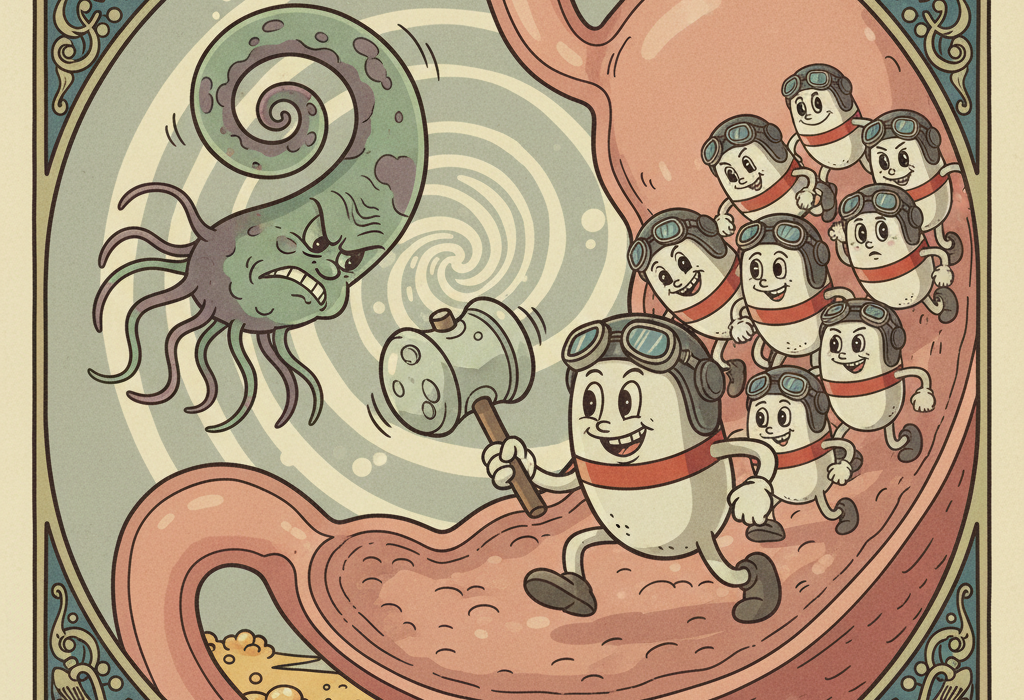
If you have ever experienced a burning ache in your stomach that just will not go away, you might have been introduced to a microscopic spiral-shaped bacterium called Helicobacter pylori (hel-ih-koh-BAK-ter pie-LORE-ee). This common bug infects roughly half of the global population. While many people never show symptoms, it is the leading cause of chronic gastritis, stomach ulcers, and even certain types of gastric cancer.
For decades, doctors treated this infection with a straightforward, one-size-fits-all approach: a combination of two antibiotics and an acid-blocking pill taken for a week. But today, this standard treatment is failing at an alarming rate.
The core tension in treating H. pylori today is a classic evolutionary arms race. The bacteria are adapting to the drugs we use to kill them, a phenomenon known as antibiotic resistance. As a result, gastroenterologists and infectious disease experts are entirely rewriting the rulebook on how to cure this stubborn stomach bug.

Here is a look at why standard treatments are failing, how the bacteria defend themselves, and what the latest scientific research says about getting rid of H. pylori for good.
Why the Standard Treatment is Failing
To understand how to treat the infection today, it helps to know how we used to treat it. In the 1990s, the medical community settled on a treatment called “standard triple therapy.” This consisted of:
1. A proton pump inhibitor (PRO-tahn pump in-HIB-ih-ter) or PPI, which is a medication that stops the stomach from making acid.
2. Clarithromycin (an antibiotic).
3. Amoxicillin or metronidazole (a second antibiotic).
When this therapy was first introduced, it cured over 90% of infections. However, a 2024 review in Helicobacter analyzed ten years of global data and found that resistance to these primary antibiotics has reached alarming levels worldwide.
Today, in many parts of the world, standard triple therapy fails in more than 20% to 30% of patients. A 2021 review in Nature reviews. Gastroenterology & hepatology argues that because of this widespread resistance, standard triple therapy should no longer be used as a “best guess” treatment unless doctors know for a fact that the local resistance rates are very low.
How This Might Work: The Bacteria’s Defense Systems
How exactly does a microscopic organism outsmart modern medicine? H. pylori has developed several biological defense mechanisms to survive the harsh, acidic environment of the stomach and resist the antibiotics meant to destroy it.
A 2024 study in the Journal of Korean medical science outlines the primary ways these bacteria defend themselves:
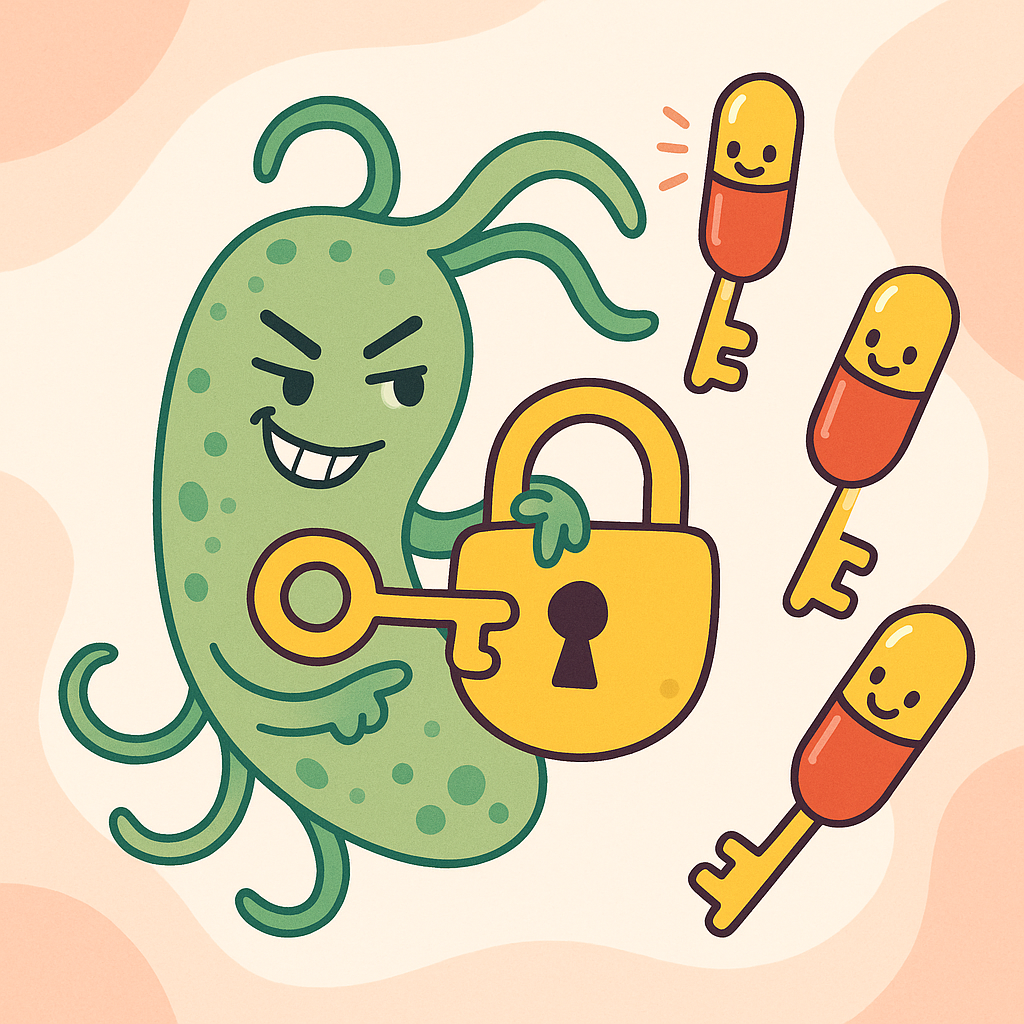
Genetic Mutations: Antibiotics work like keys fitting into specific locks on the bacterial cell. H. pylori* can mutate its DNA, slightly changing the shape of its “locks.” For example, a tiny mutation in the bacteria’s genetic code can prevent the antibiotic clarithromycin from binding to it, making the drug completely useless.
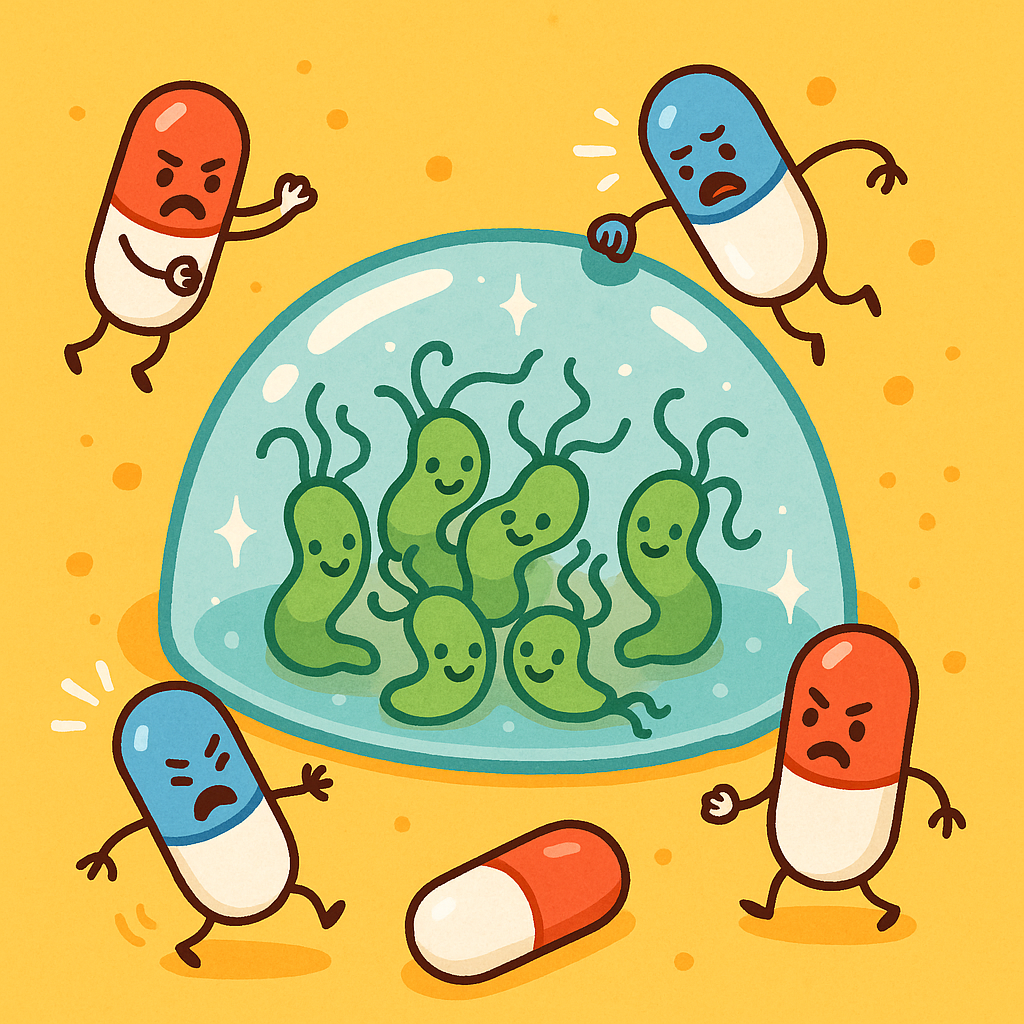
Biofilms (BY-oh-films): When under stress, H. pylori* can group together and secrete a slimy, protective shield called a biofilm. This matrix acts like a bunker, preventing antibiotics and the body’s immune cells from reaching the bacteria inside.
Coccoid Forms: Normally, H. pylori* is spiral-shaped, which helps it drill into the stomach lining. But when exposed to antibiotics, it can shrink into a dormant, round shape called a coccoid form. In this state, it stops growing and multiplying, which makes it invisible to many antibiotics that only target actively growing cells.
Heteroresistance: Sometimes, a single patient is infected with multiple strains of H. pylori* at the same time. One strain might be killed by an antibiotic, while another strain in a different part of the stomach survives.
Because of these overlapping defense systems, researchers are realizing that treating H. pylori requires a much more calculated approach.
What the Research Shows: The New Rules of Eradication
Because the bacteria have changed, the treatment guidelines have changed. Recent consensus statements and clinical studies highlight several new strategies to ensure the infection is actually cured.
1. Test for Susceptibility First
In most areas of medicine, doctors test a bacteria to see which antibiotics will kill it before prescribing a drug. For a long time, this was not done with H. pylori because it is difficult to grow in a lab. However, experts now strongly recommend susceptibility testing whenever possible. By testing the bacteria (often through a biopsy taken during an endoscopy or through advanced stool tests), doctors can prescribe the exact antibiotic needed rather than guessing.
2. Move to Quadruple Therapy
If susceptibility testing is not available, researchers now recommend abandoning the old three-drug approach in favor of four-drug regimens. The most common is Bismuth Quadruple Therapy. This includes:
- A proton pump inhibitor (PPI)
- Bismuth (the active ingredient in Pepto-Bismol)
- Tetracycline (an antibiotic)
- Metronidazole (an antibiotic)
Bismuth is a heavy metal that has mild antibacterial properties and helps protect the stomach lining. More importantly, it makes the antibiotics work better. Studies show that bismuth quadruple therapy can overcome certain types of antibiotic resistance, making it highly effective even when other treatments fail.
3. Treat for a Full 14 Days
In the past, doctors often prescribed antibiotics for 7 or 10 days. Research now shows this is usually not long enough. A 2021 review in Nature reviews. Gastroenterology & hepatology notes that H. pylori hides in various niches in the stomach, from the outer mucus layer to inside the actual stomach cells. Treating the infection for a full 14 days gives the drugs enough time to penetrate these different hiding spots.
4. Aggressively Block Stomach Acid
Antibiotics like amoxicillin and clarithromycin are highly sensitive to acid. If the stomach is too acidic, the antibiotics break down before they can kill the bacteria. Furthermore, H. pylori only actively multiplies when the stomach pH is closer to neutral. Because antibiotics work best on dividing cells, doctors must use high doses of acid-blocking medications (PPIs) to keep the stomach environment neutral around the clock.
The Role of Probiotics and Gut Health
Taking multiple antibiotics for two weeks can be harsh on the body. These drugs do not just kill H. pylori; they also wipe out the beneficial bacteria in your digestive tract. This collateral damage often leads to side effects like nausea, bloating, and severe diarrhea, which causes many patients to stop taking their medication early.
This is where probiotics come into the picture. Probiotics are live, beneficial bacteria that can help restore the balance of your gut microbiome.
A 2022 review in Archives of microbiology examined the impact of probiotics on H. pylori treatment. The research shows a clear pattern:
Probiotics alone cannot cure the infection. Taking probiotic supplements or eating fermented foods will not eradicate H. pylori* on its own.
- Probiotics reduce side effects. When taken alongside standard antibiotic therapy, probiotics significantly lower the risk of antibiotic-associated diarrhea and nausea.
Probiotics improve cure rates. By reducing side effects, patients are more likely to finish their full 14-day course of antibiotics. Additionally, some specific probiotic strains (like certain Lactobacillus species) secrete substances that make it harder for H. pylori* to stick to the stomach wall, giving the antibiotics a slight boost.
A 2024 study in Infection also noted that eradication therapy alters both the oral and gut microbiomes. Using probiotics during and after treatment can help prevent the long-term loss of healthy gut bacteria.
Related: What Science Actually Says About Fecal Transplants for Gut Health
Where The Science Is Still Uncertain: Novel Treatments
Because antibiotic resistance continues to climb, scientists are actively looking for entirely new ways to treat the infection without relying on traditional antibiotics.
One emerging area of research involves medications originally designed for other diseases. For example, a 2023 study in the International journal of molecular sciences investigated Artesunate, a drug traditionally used to treat malaria. Researchers created a water-soluble formulation of Artesunate and tested it alongside a single antibiotic and an acid blocker. In animal models, this combination showed a 90% eradication rate. The drug appears to work by generating reactive oxygen species that damage the bacteria’s protective structures. While these results are promising, human clinical trials are still needed before this becomes a standard option at the doctor’s office.
Additionally, researchers are exploring new, stronger acid blockers called Potassium-Competitive Acid Blockers (P-CABs). Drugs like vonoprazan block stomach acid more quickly and consistently than traditional PPIs. Early studies suggest that combining these new acid blockers with antibiotics yields very high cure rates, and they are already being used as a first-line treatment in some countries like Japan.
Comparison of Common Treatment Strategies
The table below summarizes how different treatment approaches compare based on current scientific consensus.
| Therapy Type | Medications Used | Effectiveness Today | Best Use Case |
|---|---|---|---|
| Standard Triple Therapy | 1 acid blocker + 2 antibiotics (usually clarithromycin & amoxicillin) | Declining (fails in 20-30% of cases) | Only in regions where clarithromycin resistance is known to be very low. |
| Bismuth Quadruple Therapy | 1 acid blocker + bismuth + 2 antibiotics (tetracycline & metronidazole) | High (often >90% when taken for 14 days) | First-line treatment in most areas, especially if the patient has taken antibiotics previously. |
| Concomitant Therapy | 1 acid blocker + 3 antibiotics taken at the same time | High | Alternative first-line treatment if bismuth is unavailable. |
| Probiotic Adjunct Therapy | Standard therapy + a probiotic supplement | Improves base therapy success by 10-15% | Recommended to reduce side effects and help patients finish their medication. |
Common Questions About Treating H. pylori
Can I cure H. pylori naturally with diet or supplements?
No. While certain foods (like broccoli sprouts) and supplements (like probiotics or mastic gum) can reduce the amount of bacteria in your stomach and soothe symptoms, research shows they cannot completely eradicate the infection. Antibiotics remain necessary for a total cure.
Why do I have to take so many pills?
H. pylori is incredibly resilient and hides deep within the stomach lining. It takes a combination of different antibiotics attacking the bacteria from multiple angles, plus an acid blocker to create the right environment for the drugs to work, to successfully clear the infection.
How do I know if the treatment actually worked?
Because treatments fail more often now, doctors strongly recommend a “test of cure” four weeks after you finish your antibiotics. This is usually done with a simple breath test or a stool test. Blood tests should not be used for this, as your immune system will show antibodies for H. pylori long after the bacteria are dead.
The Bottom Line
H. pylori is no longer a simple infection that can be cured with a quick round of basic antibiotics. Because the bacteria have evolved to resist common drugs, the medical approach has had to evolve as well.
We know that treating the infection is crucial for healing ulcers and preventing gastric cancer. We also know that the most effective treatments today require four medications (usually including bismuth), taken for a full 14 days, alongside strong acid blockers. While the science on novel non-antibiotic treatments is progressing, the best defense right now is a carefully chosen, evidence-based antibiotic regimen, potentially supported by probiotics to protect your overall gut health.
If you are diagnosed with H. pylori, talk to your doctor about local antibiotic resistance rates and ensure your treatment plan reflects the most current, multi-drug guidelines.
Quick Reference: Key Studies
| Study Focus | Key Finding | Source |
|---|---|---|
| Global Resistance Rates | A 10-year meta-analysis found primary antibiotic resistance has reached alarming levels worldwide, making older treatments less effective. | PMID 38898622 |
| Resistance Mechanisms | The bacteria survive via genetic mutations, biofilms, and dormant states, requiring tailored or 4-drug therapies to overcome. | PMID 38288543 |
| Clinical Guidelines | Standard triple therapy should generally be abandoned in favor of 14-day quadruple therapies due to widespread clarithromycin resistance. | PMID 34002081 |
| Role of Probiotics | Probiotics do not cure the infection alone, but they significantly reduce antibiotic side effects (like diarrhea) and slightly improve eradication rates. | PMID 36344628 |
| Novel Treatments | An experimental water-soluble malaria drug (Artesunate) showed high efficacy against the bacteria in animal models when combined with standard drugs. | PMID 37446184 |
Last updated: March 2026
This article synthesizes findings from peer-reviewed research. It is for educational purposes only and does not constitute medical advice. Consult a healthcare provider before starting any new regimen.


Leave a Reply