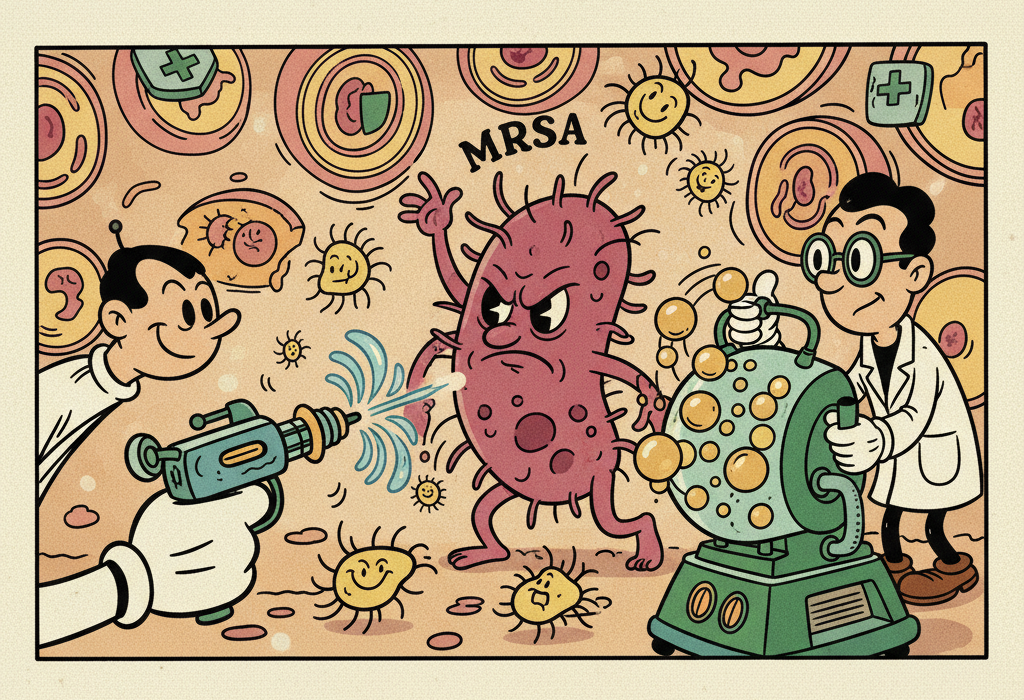
A minor scrape turns red and swollen, and a standard antibiotic prescription does not seem to help. For many people, this is their first encounter with a highly stubborn type of bacteria.
Methicillin-resistant Staphylococcus aureus (meth-uh-SILL-in ree-ZIS-tuhnt staf-uh-low-KOK-us AW-ree-us), commonly known as MRSA, is a type of bacteria that has evolved to survive the medications we traditionally use to kill it. While standard staph bacteria live harmlessly on the skin of about one-third of the population, MRSA is carried by roughly 1 to 3 percent of people. When it breaches the skin or enters the bloodstream, it can cause severe infections.
For decades, the core tension in treating MRSA has been a biological arms race. Every time scientists develop a new antibiotic, the bacteria eventually adapt. However, recent scientific reviews show that medical treatment is improving. Doctors now have faster diagnostic tools, clearer guidelines on how long to use antibiotics, and emerging strategies that target the bacteria without destroying the body’s natural microbiome.
This article explores how MRSA evades treatment, what current medical guidelines recommend, and how new research is shifting the way we manage these infections.
How MRSA Builds Its Defenses
To understand why MRSA is difficult to treat, it helps to understand how it defends itself. A 2020 review in Frontiers in Cellular and Infection Microbiology outlines several mechanisms the bacteria use to survive:
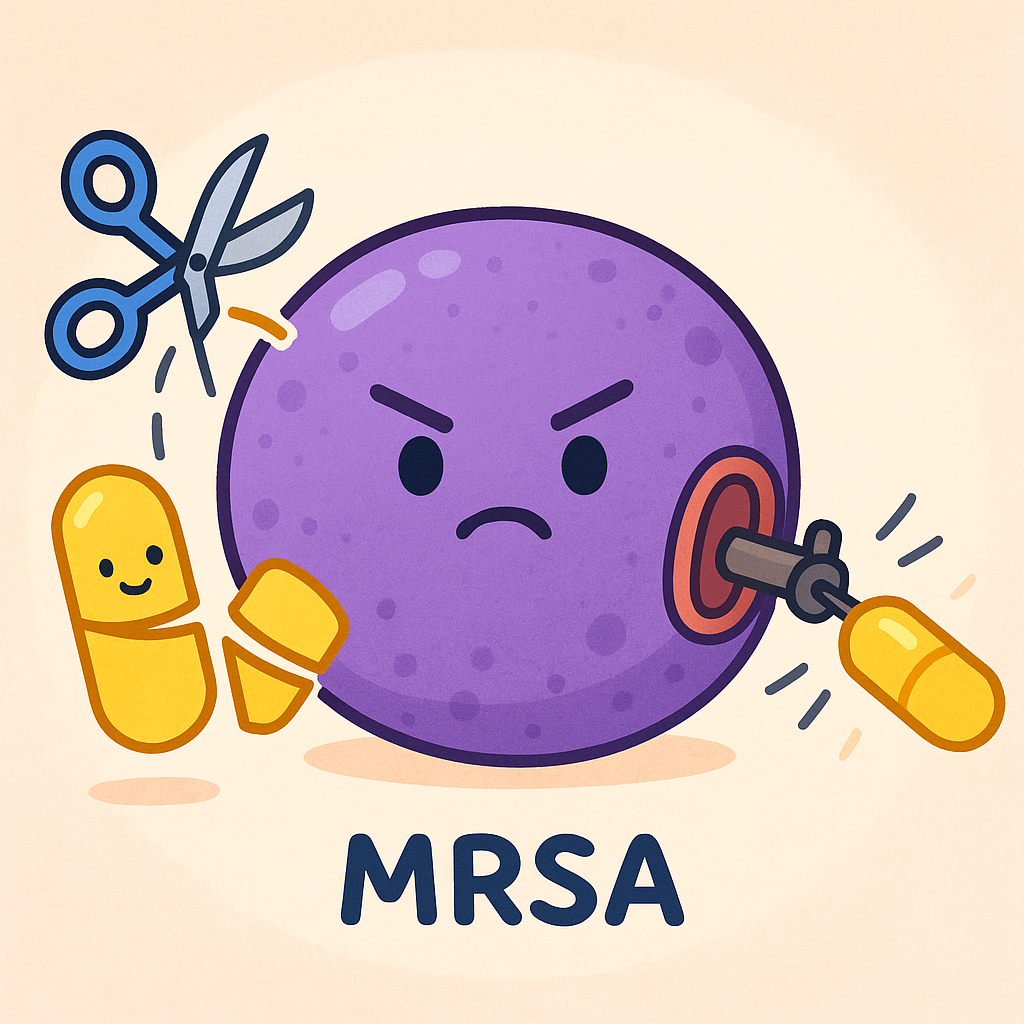
- Molecular Scissors: MRSA produces an enzyme called beta-lactamase. This enzyme acts like molecular scissors, cutting up penicillin-based antibiotics before they can harm the bacteria.
- Efflux Pumps: The bacteria have microscopic pumps on their surface. If an antibiotic enters the bacterial cell, these pumps immediately flush the drug back out.
- Persister Cells: Some MRSA cells can temporarily shut down their metabolism. Because many antibiotics only target growing bacteria, these dormant cells survive the treatment and wake up later, causing the infection to return.
Another major defense mechanism is the creation of a biofilm (BY-oh-film). A 2024 study in Pathogens explains that a biofilm is a sticky, complex matrix of sugars and proteins that MRSA builds around itself. When bacteria hide inside a biofilm, they can be up to 1,000 times more resistant to antibiotics than free-floating bacteria. Biofilms frequently form on medical devices, such as artificial joints or intravenous catheters.

What the Research Shows: Current Treatment Guidelines
When MRSA enters the bloodstream, it causes a condition called bacteremia (bak-tuh-REE-mee-uh). A 2025 review in JAMA outlines the current standard of care for managing these serious infections.
1. Rapid Diagnostics
Historically, it took two to three days to grow a culture in a lab and confirm an MRSA infection. Today, hospitals use rapid molecular tests that detect the bacteria’s DNA. These tests can identify MRSA within hours, allowing doctors to start the correct targeted therapy much sooner, which significantly improves survival rates.
2. Targeted Intravenous Antibiotics
Because MRSA is resistant to standard penicillins, doctors rely on specific intravenous antibiotics. The most common first-line treatments are vancomycin and daptomycin. These drugs work through different mechanisms to break down the bacterial cell wall. If a patient does not respond well to these, newer drugs like ceftobiprole are now available as alternatives.
3. Source Control
Antibiotics alone are rarely enough if the bacteria have established a physical stronghold. The JAMA review emphasizes that “source control” is a critical component of treatment. This means doctors must physically remove the source of the infection. If the MRSA is hiding in a skin abscess, the abscess must be drained. If it is growing on a medical catheter, the catheter must be removed.
Uncomplicated vs. Complicated Infections
Doctors tailor the length of treatment based on how deeply the infection has settled into the body.
| Infection Type | Clinical Signs | Typical Treatment Duration |
|---|---|---|
| Uncomplicated | Fever resolves within 72 hours, no artificial joints or heart valves involved, follow-up blood tests are clear. | Usually 14 days of antibiotics. |
| Complicated | Infection spreads to heart valves or bones, fever persists, or artificial medical devices are present. | 4 to 6 weeks of antibiotics, often requiring surgery. |
Historically, patients required intravenous antibiotics for their entire treatment. However, recent clinical trials suggest that for stable, uncomplicated cases, switching to oral antibiotics halfway through treatment may be just as safe and allows patients to recover at home.
The Challenge of Decolonization
Many people carry MRSA harmlessly in their nose, gut, or on their skin without getting sick. This is known as colonization. However, if that person needs surgery, the bacteria can easily travel from their skin into the surgical wound.
To prevent this, hospitals often use a process called decolonization. A 2026 review in Nature Reviews Microbiology details how this is traditionally done using an antibiotic ointment in the nose and bathing the patient in an antiseptic soap called chlorhexidine.
While this method reduces surgical infections, it has significant limitations. The harsh antiseptics and antibiotics kill off the good bacteria along with the bad. Just as we are learning from research on fecal transplants for gut health, a healthy microbiome is essential for keeping harmful pathogens in check. When standard decolonization wipes out the skin and gut microbiome, MRSA often returns within a few months because there are no good bacteria left to crowd it out.
Where the Science is Heading: Microbiome-Friendly Strategies
Because traditional antibiotics are losing their effectiveness and harming our natural microbiomes, scientists are exploring alternative treatments.
Probiotic Interference
Instead of using harsh chemicals to kill MRSA, researchers are testing ways to use good bacteria to evict it. The 2026 Nature Reviews paper highlights clinical trials using Bacillus subtilis, a harmless probiotic spore. When taken orally, this probiotic produces a natural substance that blocks MRSA’s communication signals. In trials, this method eliminated over 95 percent of MRSA colonizing the human body without harming the rest of the gut microbiome.
Antibiotic Adjuvants
Another approach is to force MRSA to drop its defenses so that older, safer antibiotics can work again. A 2025 study in Advanced Science tested a synthetic molecule called GN1. When GN1 is given alongside standard penicillin-like drugs, it disables the MRSA enzymes that normally destroy the antibiotic. In animal models, this combination successfully cleared skin wounds that were previously resistant to treatment.
Bacteriophage Therapy
Researchers are also looking at bacteriophages, which are naturally occurring viruses that only infect and kill bacteria. A 2024 review in Pathogens notes that these viruses can penetrate thick MRSA biofilms. When combined with traditional antibiotics, bacteriophages show promise in clearing stubborn infections, though this therapy is still largely in the experimental phase.
Common Questions About MRSA
Is MRSA only caught in hospitals?
No. While it used to be strictly a hospital-acquired infection (HA-MRSA), a different strain known as community-associated MRSA (CA-MRSA) emerged in the late 1990s. As noted in a 2017 review in Critical Care, community strains often spread in places with close physical contact, such as locker rooms or daycare centers, and frequently present as painful skin boils.
Can MRSA cause pneumonia?
Yes. MRSA is a known cause of severe respiratory infections. It can sometimes act as a secondary infection, invading the lungs after a person’s immune system has been weakened by a virus. This is similar to how scientists study whether COVID-19 causes different kinds of pneumonia by making the lungs vulnerable to bacterial invaders.
Will I always have MRSA if I get infected once?
Not necessarily. While some people become long-term carriers, many people clear the bacteria completely after a successful treatment and proper hygiene practices.
The Bottom Line
MRSA remains a formidable pathogen because of its ability to adapt, build protective biofilms, and hide from both our immune system and our medications.

However, the medical community is not without effective tools. We know that rapid diagnosis, targeted intravenous antibiotics like vancomycin or daptomycin, and physical removal of the infection source are highly effective at saving lives.
What remains uncertain is the best way to permanently remove MRSA from a person’s body without damaging their natural microbiome. The future of MRSA treatment will likely rely less on discovering newer, harsher antibiotics, and more on clever strategies like probiotic interference, biofilm-disrupting molecules, and therapies that restore the body’s natural bacterial balance.
Quick Reference: Key Studies
| Study Focus | Key Finding | Source |
|---|---|---|
| Bacteremia Management | Rapid diagnostics and combining source control with targeted antibiotics (like vancomycin or daptomycin) are critical for survival. | PMID 40193249 |
| Decolonization & Probiotics | Traditional decolonization harms the microbiome, but specific probiotics (like Bacillus subtilis) can reduce MRSA colonization naturally. | PMID 40835978 |
| Antibiotic Adjuvants | A new peptide called GN1 can disable MRSA’s defenses, making it vulnerable to standard penicillin-like antibiotics again. | PMID 39976117 |
| Biofilm Resistance | MRSA biofilms make the bacteria up to 1,000 times more resistant to drugs; experimental therapies like bacteriophages show promise in breaking them down. | PMID 38251383 |
| Epidemiology | Community-acquired MRSA has superseded hospital-acquired strains globally, frequently impacting otherwise healthy individuals. | PMID 28807042 |
Last updated: March 2026
This article synthesizes findings from peer-reviewed research. It is for educational purposes only and does not constitute medical advice. Consult a healthcare provider before starting any new regimen.

Leave a Reply