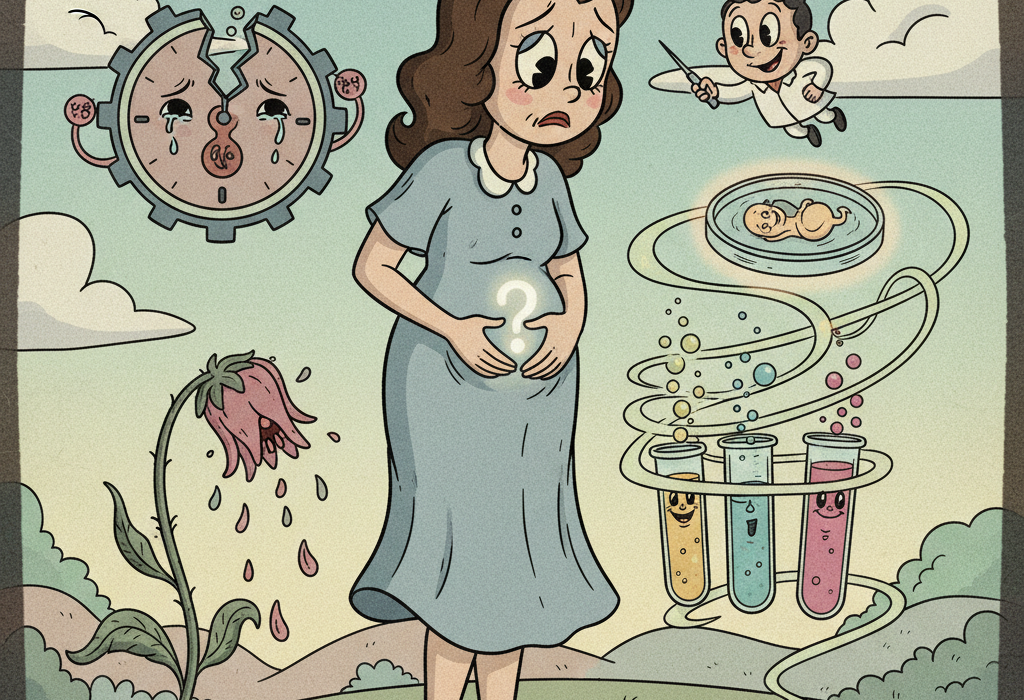
About one in six people worldwide experience infertility, defined as the inability to conceive after 12 months of regular, unprotected sex. For women, navigating an infertility diagnosis can feel overwhelming. The internet is flooded with advice, supplement advertisements, and expensive clinic add-ons.
However, the scientific reality is often much more grounded. Researchers have made significant strides in understanding how body chemistry, immune function, and structural issues affect a woman’s ability to get pregnant. While some treatments have decades of solid data behind them, others remain experimental.
The Primary Drivers of Female Infertility
The female reproductive system is like a highly synchronized biological clock. For conception to happen, hormones, ovaries, fallopian tubes, and the uterus must all work together perfectly. When this process breaks down, researchers generally look at a few main culprits.
Polycystic Ovary Syndrome (PCOS) and Insulin Resistance
PCOS is the most common cause of ovulation failure. A major driver of PCOS is insulin resistance (IN-suh-lin ree-ZIS-tuhns), which is when your body stops responding well to insulin. A 2024 review in Frontiers in Endocrinology explains that high insulin levels force the ovaries to produce excess androgens (male hormones). This hormone imbalance disrupts the growth and release of eggs. Related: What Science Actually Says About PCOS and Pregnancy
Endometriosis
Endometriosis (en-doh-mee-tree-OH-sis) occurs when tissue similar to the lining of the uterus grows outside of it. A 2012 review in Obstetrics and Gynecology Clinics of North America notes that this does not just cause physical blockages. It creates an inflammatory environment in the pelvis that can damage eggs, impair sperm movement, and make it harder for an embryo to attach to the uterine wall.
Obesity and Body Chemistry
Excess weight affects fertility even in women who have regular periods. According to a 2017 study in Fertility and Sterility, one mechanism is lipotoxicity (lip-oh-tok-SIS-ih-tee). This happens when excess free fatty acids circulate in the blood and cause cellular stress. This stress can damage the mitochondria (the energy centers) inside the egg, making it harder for the egg to develop into a healthy embryo.
The Truth About AMH and Ovarian Reserve
One of the most common blood tests given to women exploring fertility is Anti-Mullerian Hormone (AMH). AMH is produced by small follicles in the ovaries.
Many people believe AMH is a fertility test that predicts their chances of getting pregnant naturally. A 2022 review in The Journal of Clinical Endocrinology and Metabolism clarifies this misunderstanding. AMH is an excellent tool for estimating how many eggs a woman might produce during an In Vitro Fertilization (IVF) cycle. However, it does not measure egg quality and it does not predict a woman’s ability to conceive naturally. Age remains the strongest predictor of egg health and pregnancy success.
What the Research Shows: First-Line Treatments
Fertility treatments range from simple lifestyle adjustments to complex laboratory procedures. Here is what the evidence supports.
Lifestyle and Nutrition
For women with PCOS or a high Body Mass Index, lifestyle changes are the scientifically backed first step. A 2021 international guideline published in Nature Reviews Endocrinology strongly recommends a 5 to 10 percent weight loss for overweight patients. This small reduction is often enough to restore regular ovulation and improve the body’s response to fertility medications. Dietary patterns that focus on unsaturated fats and low-glycemic carbohydrates, such as the Mediterranean diet, also show a positive correlation with fertility outcomes.
First-Line Medications
If lifestyle changes are not enough, doctors use medications to stimulate the ovaries.
- Clomiphene citrate: This oral medication has been the standard for decades. It tricks the brain into producing more hormones to stimulate the ovaries.
- Letrozole: Originally developed for breast cancer, this drug is often used off-label for fertility. Recent research, including a 2021 review in Gynecological Endocrinology, indicates that letrozole may result in higher ovulation and live birth rates for women with PCOS compared to clomiphene.
- Metformin: This diabetes medication improves insulin resistance. While it is no longer recommended as a standalone fertility drug, it is often combined with other medications for women with PCOS.
Advanced Medical Procedures
When basic treatments fail, or if there is severe tubal damage or male factor infertility, Assisted Reproductive Technology (ART) is used.
- In Vitro Fertilization (IVF): Eggs are retrieved and fertilized in a lab, and the resulting embryo is transferred to the uterus. Related: What Science Actually Says About IVF and Pregnancy Success
- Ovarian Drilling: For women with PCOS who do not respond to medication, a minor surgery can be performed to puncture the ovary. This temporarily lowers androgen production and can restore ovulation.
Where The Science Is Still Uncertain
Many patients seek out supplements, acupuncture, and add-on clinic procedures to boost their chances. The science here is often mixed.
Supplements and Antioxidants
A 2024 umbrella review in Nutrients looked at massive amounts of data regarding supplements like CoQ10, melatonin, myo-inositol, and Vitamin D. The researchers found that these supplements might improve clinical pregnancy rates, especially in women with PCOS undergoing IVF. However, the authors noted that the certainty of this evidence is very low. The good news is that these supplements do not appear to cause any significant harm.
Acupuncture and Herbal Medicine
A 2024 review in Frontiers in Endocrinology found that acupuncture is frequently studied for PCOS and ovulation disorders. While some trials show improved pregnancy rates compared to no treatment, the overall quality of the studies is low. Similarly, a 2024 review in the Journal of Ethnopharmacology noted that traditional herbal medicines might improve pregnancy rates, but the studies testing them suffer from poor design.
IVF Add-Ons
A 2019 commentary in The Lancet raised concerns about the commercialization of IVF. Clinics sometimes offer expensive add-on treatments, such as advanced sperm selection techniques or endometrial scratching. The review emphasized that many of these procedures lack robust clinical trial data to prove they actually increase live birth rates.
Common Questions About Female Infertility
Do fertility treatments increase the risk of cancer?
No. A 2022 review in Urologia analyzed decades of data and found no significant increased risk of endometrial, cervical, or ovarian cancer in patients who underwent infertility treatments.
Does thyroid disease cause infertility?
It can be a factor. A 2022 review in Frontiers in Endocrinology explains that having thyroid antibodies (even if your thyroid hormone levels are normal) is linked to a higher risk of miscarriage. However, doctors still debate whether treating these patients with thyroid medication actually improves their chances of having a baby.
The Bottom Line / Takeaways
- What we know: Female infertility is heavily influenced by hormonal imbalances (like PCOS), structural issues (like endometriosis), and metabolic stress (like obesity). Lifestyle adjustments and established medications like letrozole and clomiphene are highly effective first steps.
- What remains uncertain: The exact benefits of many dietary supplements, herbal medicines, and acupuncture remain unclear due to low-quality research.
- Confidence level: The medical community is highly confident in the effectiveness of standard ovulation medications and IVF. However, patients should be cautious about paying for experimental clinic add-ons that lack solid scientific proof.
Quick Reference: Key Studies
| Study Focus | Key Finding | Source |
|---|---|---|
| Nutrient Supplements | Supplements like CoQ10 and myo-inositol may improve pregnancy rates in PCOS, but evidence certainty is very low. | PMID 39796491 |
| Insulin Resistance | Insulin resistance negatively affects egg quality and endometrial health, contributing to infertility. | PMID 38348417 |
| PCOS Guidelines | Lifestyle intervention is the first-line treatment for PCOS, followed by letrozole or clomiphene for ovulation. | PMID 34234312 |
| AMH Testing | AMH measures ovarian reserve for IVF planning but does not predict natural conception chances or egg quality. | PMID 35100616 |
| Cancer Risk | Infertility treatments do not significantly increase the risk of gynecological cancers. | PMID 34338095 |
| Obesity and Fertility | Excess fatty acids (lipotoxicity) can damage eggs and embryos, lowering fertility success rates. | PMID 28292619 |
| Evidence-Based IVF | Many commercial IVF add-ons lack robust clinical trial data to support their use. | PMID 30712889 |
Last updated: March 2026
This article synthesizes findings from peer-reviewed research. It is for educational purposes only and does not constitute medical advice. Consult a healthcare provider before starting any new regimen.

Leave a Reply