
Most people see dandelions as a stubborn weed that ruins a perfectly manicured lawn. However, traditional medicine has utilized dandelion root for centuries to treat digestive issues and inflammation. Today, modern researchers are isolating the specific compounds inside this common plant to see exactly how they interact with the human body.
Early research suggests that dandelion root may help protect the digestive tract, support healthy blood sugar levels, and even trigger defense mechanisms in abnormal cells. While the plant contains a complex mixture of active ingredients, scientists are beginning to understand how these compounds work at a microscopic level.
Here is a look at what the current scientific evidence actually proves about dandelion root, how it works, and where the research is still lacking.
Gut Health and Inflammation
A major focus of dandelion root research involves the digestive system. A 2022 review in the Journal of Ethnopharmacology summarized how dandelion components interact with the stomach and intestines. Scientists are particularly interested in how the root affects conditions like ulcerative colitis, a disease that causes severe irritation and sores in the colon lining.
In animal studies, dandelion root extracts show a measurable ability to calm this irritation. A 2022 study in Advances in Clinical and Experimental Medicine found that high doses of the extract reduced colon damage in mice. It achieved this by blocking specific communication pathways in the body that normally trigger inflammation.
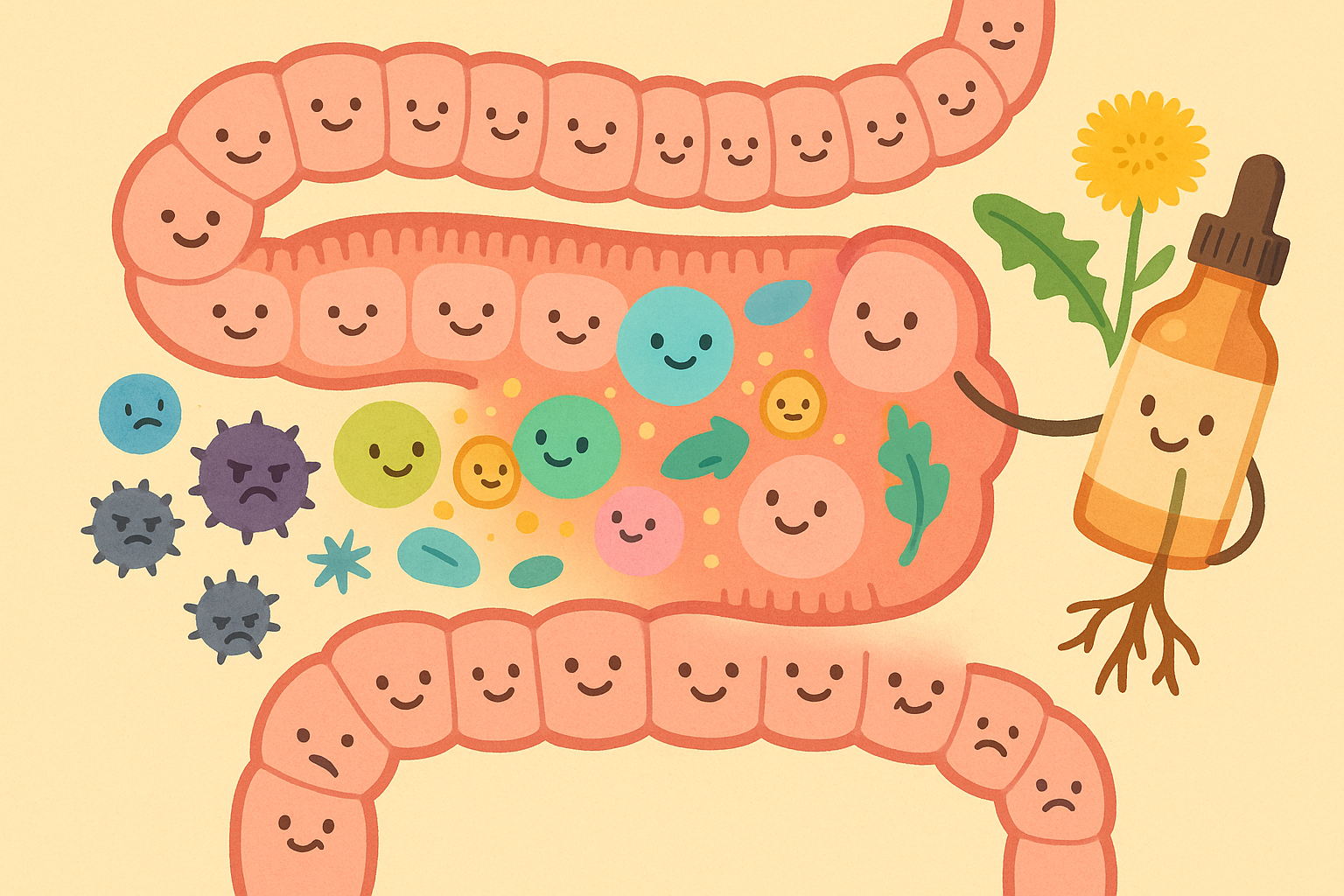
Beyond blocking inflammation, the root also appears to alter the environment of the gut. A 2024 study in Metabolites showed that dandelion root polysaccharides helped balance the gut microbiome in mice. The extract increased the presence of Faecalibaculum, a type of beneficial bacteria. This bacteria produces butyric acid, a substance that acts as fuel for the cells lining the colon, helping them stay healthy and intact.
Related: Does Leaky Gut Syndrome Actually Exist? What the Latest Science Says
Blood Sugar and Metabolic Health
Dandelion root contains complex carbohydrates that may influence how the body processes sugar. One of the most notable is inulin, a type of dietary fiber that passes through the stomach undigested and feeds good gut bacteria.
Research shows that dandelion root extracts can mildly block certain digestive enzymes, specifically alpha-amylase and alpha-glucosidase. These enzymes are responsible for breaking down complex carbohydrates into simple sugars. A 2024 study in Foods demonstrated that modified dandelion root extracts inhibited these enzymes in a laboratory setting. By slowing down carbohydrate digestion, the extract might help prevent rapid spikes in blood sugar after eating.

Interestingly, while dandelion root is helpful, it may not be the most potent plant for this specific purpose. A 2024 study in Plants compared dandelion root to burdock root. While burdock root had a stronger effect on blocking sugar-digesting enzymes, dandelion root still showed clear antioxidant properties and contained a higher total percentage of beneficial polysaccharides.
Related: What Science Actually Says About Blood Sugar After Meals
Cellular Defense and Cancer Research
Some of the most heavily researched aspects of dandelion root involve its effects on abnormal cells. In laboratory dishes and animal models, the extract has shown an ability to target cancer cells without harming healthy ones.
Scientists look closely at a process called apoptosis (ay-pop-TOE-sis), which is the programmed death of a cell. Think of apoptosis like a self-destruct button. Healthy cells naturally use this process to clear out old or damaged cells. Cancer cells, however, often ignore these signals and continue to multiply.

A 2016 study in Oncotarget found that dandelion root extract induced apoptosis in over 95 percent of colon cancer cells within 48 hours in a lab dish. Importantly, the extract did not harm normal colon cells. When tested in mice, the oral administration of the extract slowed the growth of colon tumors by more than 90 percent.
Similar results have been observed in other types of cells. A 2019 study in Evidence-Based Complementary and Alternative Medicine showed that dandelion root triggered apoptosis in prostate cancer cells. The researchers also noted that combining the extract with standard chemotherapy drugs (like taxol and mitoxantrone) enhanced the effectiveness of the treatment in mice while remaining well-tolerated.
Furthermore, a 2017 study in Biomedicine & Pharmacotherapy found that the extract suppressed the spread of gastric cancer cells. It did this by targeting specific RNA molecules that normally tell the cancer to migrate and multiply.
Related: How Science Actually Manages Chemotherapy Side Effects
How This Might Work
How does a common plant influence so many different bodily systems? Researchers point to a few key biological mechanisms:
- Polysaccharides (pah-lee-SACK-uh-rides): These are long chains of carbohydrate molecules. In dandelion roots, they act as antioxidants and prebiotics, supporting gut health and immune function.
- Oxidative stress reduction: The body constantly produces free radicals, which are unstable molecules that can damage cells. Dandelion root contains compounds that neutralize these molecules. A 2018 study in the Journal of Natural Medicines found that the extract protected human colon cells from oxidative damage by reducing the production of reactive oxygen species.
- Cellular signaling: Dandelion root appears to communicate directly with cell structures. A 2018 study in the International Journal of Molecular Sciences found that the extract causes a rapid release of calcium inside human cells. Calcium acts as a messenger that tells the cell how to behave, which may explain how the extract triggers different physical responses like apoptosis.
Preparation also matters. A 2024 study in Food Science & Nutrition looked at how grinding the roots and using a cold plasma pretreatment improved the extraction of beneficial compounds. This shows that how the root is prepared directly impacts the strength of its health benefits.
Where The Science Is Still Uncertain
While early results are positive, there are significant gaps in our knowledge.
First, the vast majority of studies on dandelion root involve mice, rats, or isolated cells in a laboratory. Human clinical trials are currently lacking. Because of this, scientists do not yet know the ideal dose for humans or how well the human digestive tract absorbs the active compounds.
Second, while local effects in the gut look promising, the impact on the entire body is less clear. A 2023 study in BMC Complementary Medicine and Therapies tested dandelion root tea on rats. While it safely maintained normal heart function, it had mixed effects on the overall oxidative stress in the bloodstream. It lowered some harmful molecules but increased others, meaning it did not provide a perfect, total-body antioxidant effect.
Common Questions About Dandelion Root
Is dandelion root safe to consume?
Yes, dandelion root is generally recognized as safe when consumed in normal food amounts or as a tea. However, highly concentrated supplements have not been thoroughly tested for long-term safety in humans.
Can dandelion root cure cancer?
No. While laboratory and animal studies show that dandelion root extract can trigger cancer cell death and slow tumor growth, it is not a recognized treatment or cure for any cancer in humans. It should never replace conventional medical treatments.
The Bottom Line
Dandelion root is much more than a garden weed. It is a rich source of complex carbohydrates, antioxidants, and unique plant compounds. Current research shows it has a clear potential for protecting the gut lining, supporting healthy blood sugar, and triggering healthy cell death in abnormal cells.
However, the evidence is largely restricted to animal models and laboratory cell cultures. Until large-scale human trials are conducted, dandelion root is best viewed as a supportive dietary addition rather than a medical treatment.
Quick Reference: Key Studies
| Study Focus | Key Finding | Source |
|---|---|---|
| Gut Microbiome & Colitis | Dandelion polysaccharides improved gut bacteria and reduced colon inflammation in mice. | PMID 39057673 |
| Colon Cancer | Extract induced apoptosis in over 95% of colon cancer cells and slowed tumor growth in mice. | PMID 27564258 |
| Prostate Cancer | Extract triggered cancer cell death and enhanced the effects of standard chemotherapy. | PMID 31391857 |
| Blood Sugar Enzymes | Modified root extract inhibited carbohydrate-digesting enzymes, showing potential for blood sugar management. | PMID 39123584 |
| Heart & Oxidative Stress | Root infusion was safe for rat heart function but showed mixed results on systemic oxidative stress. | PMID 36899315 |
Last updated: March 2026
This article synthesizes findings from peer-reviewed research. It is for educational purposes only and does not constitute medical advice. Consult a healthcare provider before starting any new regimen.



Leave a Reply