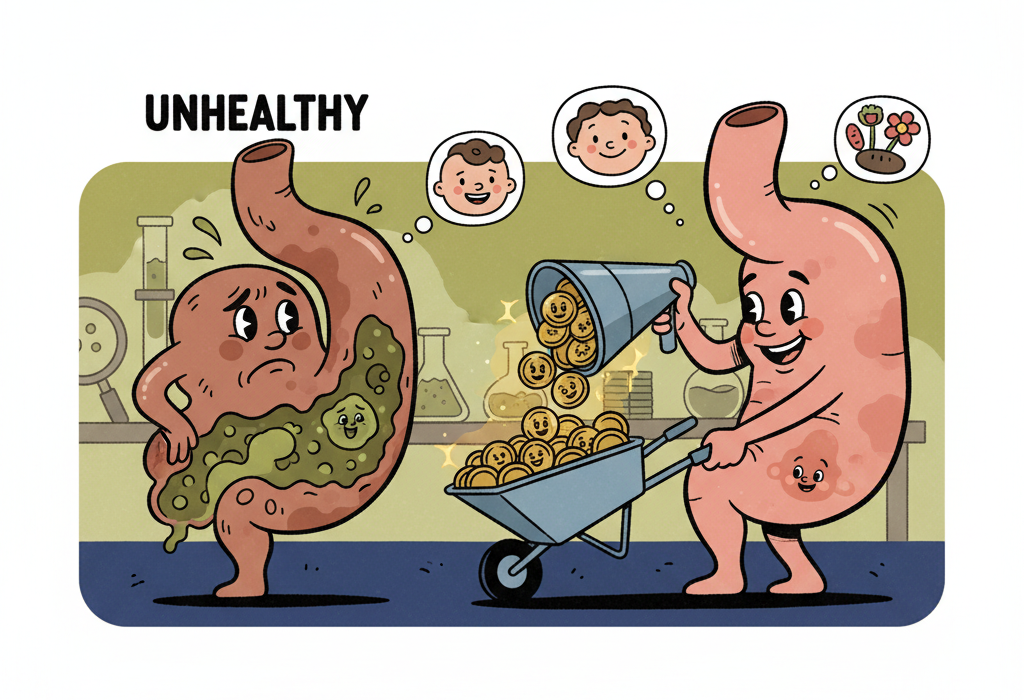
Your digestive tract is home to trillions of bacteria, viruses, and fungi. Together, they form a complex community that helps digest food, produce vitamins, and train your immune system. You can think of this community like a dense, healthy forest.

However, when a person takes heavy antibiotics or develops certain chronic illnesses, the healthy plants in this forest can be wiped out. This allows harmful weeds to take over. When this happens, doctors sometimes use a procedure called a fecal microbiota transplant. This involves taking stool from a healthy donor and placing it into the gut of a sick patient. The goal is to reseed the patient’s gut with healthy bacteria.
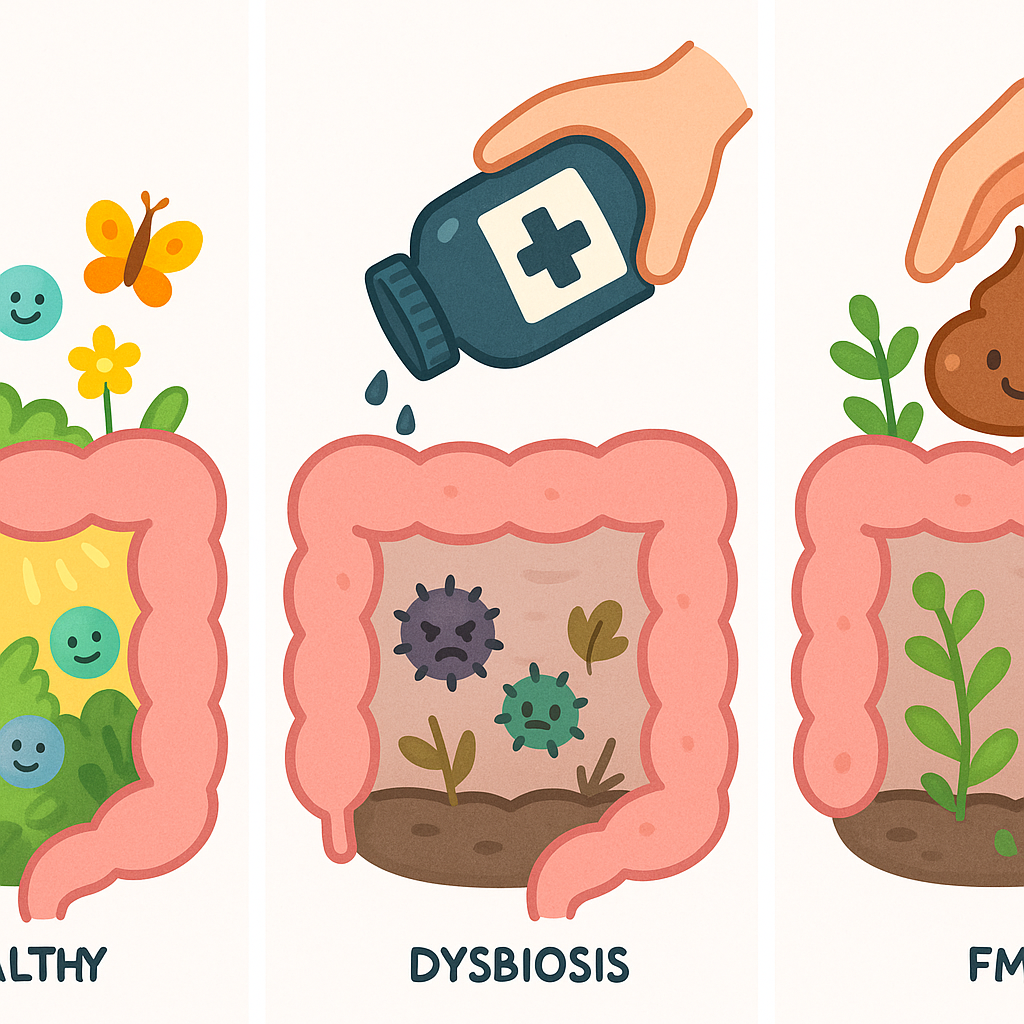
While this procedure sounds unusual, it is highly effective for specific, severe intestinal infections. Now, scientists are exploring whether transferring healthy gut bacteria could help treat obesity, depression, autoimmune diseases, and even cancer.
This article explores what the latest peer-reviewed research actually says about fecal transplants, what conditions they might help, and where the science is still uncertain.
How Fecal Transplants Work
To understand how a fecal transplant works, it helps to know a few key scientific terms.
- Microbiome (my-kroh-BY-ohm) – the entire collection of microorganisms living in a specific environment, like your gut.
- Dysbiosis (dis-bye-OH-sis) – an imbalance in your gut bacteria, often involving too many harmful microbes and not enough helpful ones.
- Short-chain fatty acids (short-chayn FAT-ee A-sids) – beneficial molecules produced by gut bacteria when they digest dietary fiber.
When a person has dysbiosis, their gut stops producing enough short-chain fatty acids. These fatty acids normally keep the gut lining strong and reduce inflammation. Without them, the gut lining can become irritated, allowing toxins to leak into the bloodstream.
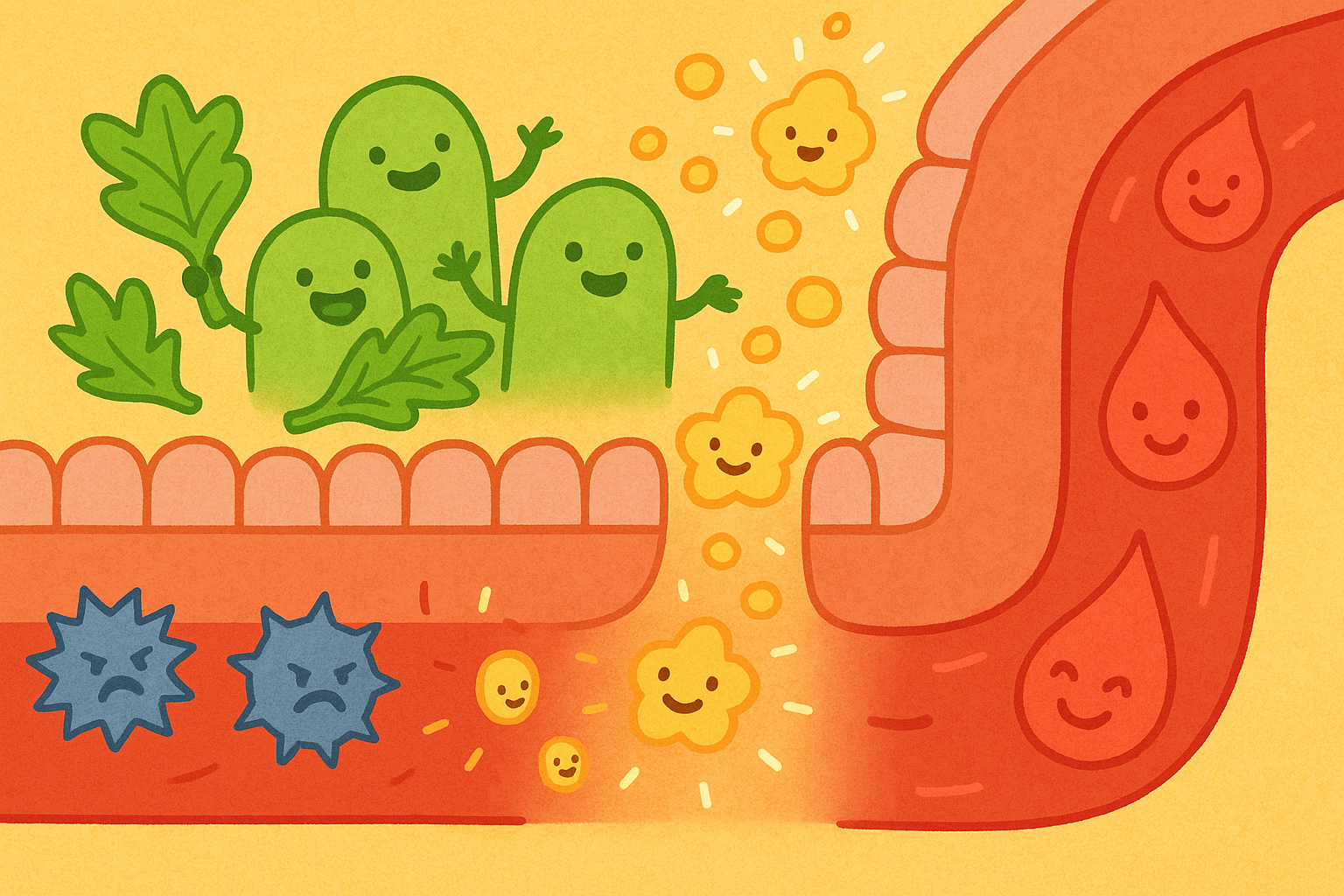
A fecal transplant aims to fix this by introducing a diverse group of healthy microbes. Once these new microbes settle in, they begin multiplying, crowding out harmful bacteria, and restoring the production of beneficial molecules.
The Established Success: Treating Severe Infections
Currently, the most accepted medical use for fecal transplants is treating an infection called Clostridioides difficile (often called C. diff).
C. diff is a severe bacterial infection that causes life-threatening diarrhea. It usually happens after a person takes strong antibiotics that kill off their healthy gut bacteria. Standard antibiotics often fail to cure C. diff because the bacteria form protective spores that are hard to destroy.
According to a 2024 review in Clinical Microbiology Reviews, fecal transplants are highly effective at curing recurrent C. diff infections. By restoring the normal bacteria, the gut environment changes, making it impossible for the C. diff bacteria to survive. A historical overview in the Journal of Clinical Gastroenterology notes that this treatment works better than standard antibiotic therapy for preventing C. diff from returning.
Exploring Metabolic Health and Body Weight
Because gut bacteria help extract energy from food, scientists have investigated whether gut microbes influence body weight and metabolic diseases like Type 2 diabetes.
Animal studies show a strong link between gut bacteria and obesity. A review in Frontiers in Endocrinology explains that when researchers take stool from an obese mouse and transplant it into a germ-free mouse (a mouse raised with no bacteria), the germ-free mouse gains weight and develops fat tissue. The reverse is also true. Transferring bacteria from a lean mouse to an obese mouse can improve its metabolism.
This happens because certain bacteria are better at extracting calories from food and triggering fat storage. Research in Frontiers in Cellular and Infection Microbiology shows that gut dysbiosis is a major feature of Type 2 diabetes. The imbalance contributes to insulin resistance, which is when cells stop responding well to insulin.
Related: Continuous Glucose Monitoring: What the Latest Science Says
However, translating these animal results to humans is complicated. A 2024 study in Microbiome looked at a clinical trial where adolescents with obesity received fecal transplants from healthy donors. While the transplants successfully changed the patients’ gut bacteria and viruses, the treatment did not result in massive weight loss on its own.
Similarly, a 2021 study in Frontiers in Cellular and Infection Microbiology found that while fecal transplants can influence cholesterol and fat levels in the blood, they are not a standalone cure for high cholesterol. Diet and lifestyle still play a massive role.
The Gut-Brain Connection
One of the most heavily researched areas in medicine right now is the microbiota-gut-brain axis. This is the two-way communication system between your digestive tract and your brain.
Mental Health
People with major depressive disorder often have different gut bacteria compared to people without depression. A 2023 review in EBioMedicine notes that patients with depression tend to have fewer bacteria that produce beneficial short-chain fatty acids. When researchers transplant stool from depressed humans into rats, the rats begin to show depressive behaviors.
While this suggests that gut bacteria play a role in mood, researchers caution that human trials for treating depression with fecal transplants are still in the very early stages. It is not yet a standard treatment for mental health conditions.
Brain Aging and Neurological Diseases
Scientists are also looking at how gut bacteria affect aging brains. A 2022 study in Gut investigated Alzheimer’s disease in mice. The researchers found that mice with no gut bacteria had fewer Alzheimer’s-related brain plaques. When these mice received fecal transplants from human Alzheimer’s patients, their memory problems worsened and brain inflammation increased.
Conversely, introducing healthy bacteria might help the brain heal. A 2020 study in Circulation Research looked at older mice recovering from strokes. When older mice received fecal transplants from young, healthy mice, their stroke recovery significantly improved. The researchers linked this recovery to higher levels of short-chain fatty acids provided by the young microbes.
A 2020 review in Frontiers in Cellular and Infection Microbiology notes that while animal models show promise for multiple sclerosis, Parkinson’s disease, and autism, human evidence is currently limited to small case studies and early-phase trials.
Cancer Immunotherapy
Perhaps the most surprising application of fecal transplants is in cancer treatment.
Certain cancer treatments, called immune checkpoint inhibitors, work by taking the brakes off the patient’s immune system so it can attack tumors. However, these drugs only work for some patients. Recent research shows that a patient’s gut bacteria might determine whether the drugs work or fail.
A 2018 study in Science looked at patients with melanoma (a type of skin cancer). Patients who responded well to the immunotherapy drugs had a much more diverse gut microbiome than those who did not respond.
Building on this, a 2025 study in Nature identified a specific bacterial strain (YB328) found in patients who responded well to cancer therapy. When researchers gave fecal transplants from these successful patients to mice with tumors, the mice’s immune systems became much better at fighting the cancer.
Similarly, a 2019 study in Cell found that patients who survived pancreatic cancer for a long time had different tumor and gut microbiomes than those who did not survive as long. Transferring bacteria from long-term survivors into mice helped reduce tumor growth in the animals.
Where The Science Is Still Uncertain
While fecal transplants are highly effective for C. diff, they are not a magic cure for every disease. The science is still uncertain in several key areas.
Conflicting Results in Irritable Bowel Syndrome (IBS)
Irritable bowel syndrome causes chronic stomach pain, bloating, and changes in bowel habits. Because IBS is linked to the gut, fecal transplants seem like a logical treatment. However, a 2022 review in the World Journal of Gastroenterology highlights that clinical trials for IBS have produced conflicting results. Some studies show that patients feel much better after a transplant, while other studies show that patients receiving a placebo (a fake treatment) feel just as good or better.
The Importance of Methodology
How the transplant is prepared and delivered matters immensely. A 2021 guide in Frontiers in Cellular and Infection Microbiology explains that many beneficial gut bacteria are strictly anaerobic, meaning they die instantly when exposed to oxygen in the air. If a stool sample is not processed in a special oxygen-free chamber, the most helpful bacteria will die before the transplant even happens.
Additionally, the delivery method varies. Transplants can be given via colonoscopy, enema, or swallowed in a freeze-dried capsule. Scientists are still figuring out which method works best for different diseases.
Safety Concerns
Fecal transplants carry real risks. The donor stool must be rigorously screened for dangerous pathogens. There have been documented cases where patients received transplants containing drug-resistant bacteria, leading to severe infections. Because of this, the procedure should only be done under strict medical supervision using highly screened donor banks.
Who Benefits Or Needs Caution
Based on current research, here is a breakdown of how fecal transplants are viewed medically.
| Patient Population | Current Medical Consensus |
|---|---|
| People with recurrent C. difficile infections | Strongly benefits. This is the primary, medically approved use for fecal transplants. |
| People with autoimmune or metabolic diseases | Experimental. Research is ongoing, but it is not yet a standard treatment for diabetes or obesity. |
| Cancer patients on immunotherapy | Experimental. Clinical trials are testing if transplants can help cancer drugs work better. |
| People with compromised immune systems | Needs Caution. Introducing live bacteria carries an infection risk for those with weak immune systems. |
The Bottom Line
Fecal microbiota transplantation is a proven, highly effective treatment for recurrent C. diff infections. By restoring a diverse community of healthy microbes, the procedure helps the gut heal and keeps harmful bacteria in check.
Beyond C. diff, the science is promising but still in the experimental stages. Animal studies clearly show that gut bacteria influence obesity, depression, stroke recovery, and cancer immunity. However, human clinical trials have shown mixed results for conditions like IBS and metabolic syndrome.
For now, changing your gut bacteria through diet, fiber intake, and careful use of antibiotics remains the most accessible way to support your microbiome. Fecal transplants for chronic diseases will require more research before they become a routine part of medical care.
Quick Reference: Key Studies
| Study Focus | Key Finding | Source |
|---|---|---|
| Cancer Immunotherapy | Gut bacteria influence how well patients respond to PD-1 cancer drugs. | PMID 40659786 |
| Mental Health | Gut dysbiosis is linked to depression through the microbiota-gut-brain axis. | PMID 36963238 |
| Stroke Recovery | Short-chain fatty acids from young gut bacteria improved stroke recovery in older mice. | PMID 32354259 |
| Alzheimer’s Disease | Mice without gut bacteria had fewer Alzheimer’s pathologies than mice with normal bacteria. | PMID 35017199 |
| Irritable Bowel Syndrome | Fecal transplants for IBS show conflicting results, with some placebo groups doing just as well. | PMID 35125827 |
| Obesity | Transplanting stool from obese mice into germ-free mice causes the germ-free mice to gain weight. | PMID 36339448 |
Last updated: March 2026
This article synthesizes findings from peer-reviewed research. It is for educational purposes only and does not constitute medical advice. Consult a healthcare provider before starting any new regimen.


Leave a Reply