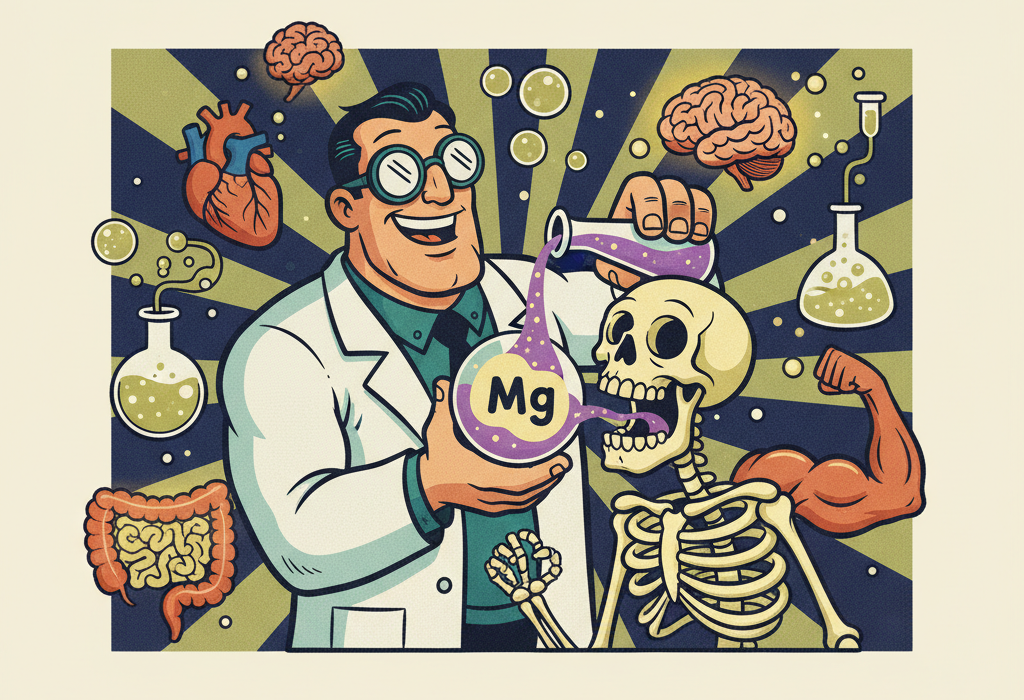
Magnesium has become one of the most popular health topics on the internet. You can find it in sleep powders, sports drinks, and skin lotions. The claims are broad, suggesting it can fix everything from muscle cramps to heart disease.
But what does the research actually show?
Science tells us that magnesium is absolutely essential for human survival. It acts like the oil in a car engine, keeping over 300 different chemical reactions running smoothly. However, taking a supplement does not automatically supercharge your body. The core tension in magnesium research is that supplements generally only provide noticeable benefits if your body is already running low.
This article breaks down what peer-reviewed research actually says about magnesium supplementation, separating the proven benefits from the marketing myths.
How This Might Work: The Role of Magnesium
To understand why magnesium supplements do what they do, it helps to know how the mineral works inside you. Magnesium is an electrolyte and a mineral that your body uses to produce energy, build DNA, and allow your muscles and nerves to communicate.
When you do not get enough magnesium from your diet, a condition called hypomagnesemia (hi-po-mag-nee-ZEE-muh) can occur. Because your body tightly controls magnesium levels in the blood, a standard blood test might look normal even if your tissues and bones are starved for it.
When magnesium levels drop, your body experiences increased physical stress. This can lead to higher levels of inflammation and changes in how your cells respond to hormones like insulin.
Does Magnesium Improve Blood Sugar and Diabetes?
One of the strongest areas of magnesium research involves metabolic health.
A 2021 review in Nutrients analyzed 25 double-blind trials involving people with diabetes or those at high risk for it. The researchers found that magnesium supplementation significantly reduced fasting blood sugar levels in people with diabetes. For people at high risk of developing the disease, magnesium improved their body’s sensitivity to insulin.
Insulin resistance (IN-suh-lin ree-ZIS-tuhns) happens when your cells stop responding well to insulin, making it hard for them to absorb sugar from your blood. Related: How Prediabetes Affects Your Body and Type 2 Diabetes Risk. Magnesium acts as a key that helps unlock the cell doors.
Another 2018 study in Nutrients looked at patients with type 2 diabetes who took 250 milligrams of elemental magnesium daily for three months. The supplemented group saw significant improvements in their HbA1c (a measure of long-term blood sugar) and insulin levels compared to a control group.
Does Magnesium Supplementation Improve Sleep and Anxiety?
Magnesium is widely marketed as a natural sleep aid and stress reliever. The science supports these claims, but with some specific boundaries.
Sleep Quality
For older adults, insomnia is a common problem that can lead to memory issues and a lower quality of life. A 2021 systematic review in BMC Complementary Medicine and Therapies looked at older adults with insomnia. The pooled data showed that magnesium supplements helped participants fall asleep about 17 minutes faster than a placebo.
Similarly, a 2022 clinical trial in Magnesium Research studied patients recovering from open-heart surgery. Those who received 500 milligrams of magnesium daily for five days reported significantly better sleep quality and lower levels of anxiety and depression compared to those receiving routine care.
Stress and Anxiety
Magnesium appears to calm the nervous system by blocking certain stimulating receptors in the brain. A 2021 clinical trial in Stress and Health studied adults with severe stress and low magnesium levels. Researchers found that magnesium supplementation significantly improved depression and anxiety scores. Interestingly, the study found that combining magnesium with Vitamin B6 provided an even greater improvement in the participants’ perceived ability to handle physical activities in their daily lives.
Women’s Health: PCOS and PMS
Magnesium plays a notable role in female reproductive health.
Polycystic ovary syndrome, or PCOS, is a hormonal condition often linked to insulin resistance. Related: What Science Actually Says About PCOS and Pregnancy. A 2022 randomized trial in Reproductive Biology and Endocrinology gave women with PCOS 250 milligrams of magnesium daily for 10 weeks. While the supplement did not cure physical symptoms like hair loss or acne, it significantly improved their overall quality of life, boosting their physical and emotional well-being.
Furthermore, a 2017 review in Magnesium Research highlighted that magnesium deficiency is closely tied to premenstrual syndrome (PMS) and menstrual migraines. The review noted that oral magnesium supplementation is an effective option for preventing menstrual cramps and reducing the frequency of menstrual migraines, likely because magnesium helps relax smooth muscle tissue and reduces inflammation.
Common Misunderstandings or Myths
The Transdermal Magnesium Myth
If you browse health stores, you will likely see magnesium oils, sprays, and bath flakes claiming to deliver magnesium directly through your skin.
A 2017 scientific review in Nutrients investigated these claims and found them to be scientifically unsupported. The human skin is specifically designed to keep substances out. Magnesium ions are simply too large and carry a water layer that makes it nearly impossible for them to pass through the skin’s protective lipid barrier in any meaningful amount. While an Epsom salt bath might feel relaxing, the research shows it does not effectively raise your internal magnesium levels.
Magnesium and Muscle Building
Because magnesium is vital for muscle contraction, many athletes take it hoping to boost performance. However, a 2017 meta-analysis in Magnesium Research found no beneficial effect of magnesium supplements on muscle fitness, strength, or power in healthy athletes. The researchers noted that athletes usually already have adequate magnesium levels. The only group that saw muscle benefits from supplementation were the elderly and those with chronic alcohol use, populations highly prone to magnesium deficiency.
The Crucial Link Between Vitamin D and Magnesium
If you take a Vitamin D supplement, you must pay attention to your magnesium intake.
A 2019 review in the American Journal of Therapeutics explains that magnesium is a required cofactor for the body to metabolize and activate Vitamin D. If you consume large doses of Vitamin D while your magnesium levels are low, the Vitamin D cannot do its job properly. Even worse, processing high amounts of Vitamin D can drain your body’s already low magnesium stores, potentially leading to muscle cramps and vascular issues.
Where The Science Is Still Uncertain
While magnesium lowers inflammation markers like C-reactive protein (see-ree-AK-tiv PRO-teen), as shown in a 2022 meta-analysis, its direct impact on heart disease and weight loss is less clear.
For example, a 2022 trial in the Journal of the American Heart Association tested different forms of magnesium (citrate, oxide, and sulfate) on adults who were overweight. After 24 weeks, none of the magnesium supplements improved arterial stiffness or blood pressure compared to a placebo.
Similarly, a 2021 dose-response meta-analysis looked at obesity measures. While magnesium supplementation resulted in a very slight reduction in Body Mass Index (BMI) for people with insulin resistance, it did not significantly change overall body weight or waist circumference for the general population.
Who Benefits Or Needs Caution
Based on current evidence, the effects of magnesium depend heavily on who is taking it.
Populations that benefit most:
- People with Type 2 Diabetes or Prediabetes: Strong evidence shows it improves blood sugar control.
- Older Adults: Benefits include falling asleep faster and maintaining muscle function.
- Highly Stressed Individuals: Can reduce anxiety, especially when paired with Vitamin B6.
- Women with PMS or PCOS: Improves quality of life and reduces menstrual cramps.
Populations that require caution:
- People with Chronic Kidney Disease (CKD): The kidneys are responsible for filtering extra magnesium out of the blood. A 2018 review in Seminars in Dialysis notes that while careful magnesium management can help dialysis patients, taking over-the-counter supplements with advanced kidney disease can lead to dangerous magnesium buildup in the blood.
Common Questions About Magnesium
What is the best form of magnesium to take?
Research shows that organic forms like magnesium citrate, glycinate, or lactate are generally absorbed better by the digestive tract than inorganic forms like magnesium oxide. Magnesium oxide is poorly absorbed and is more likely to cause a laxative effect.
Can magnesium help during pregnancy?
A 2014 Cochrane review looked at dietary magnesium supplementation during pregnancy. The researchers concluded there is not enough high-quality evidence to show that routine magnesium supplementation prevents complications like pre-eclampsia or fetal growth restriction in healthy pregnancies.
The Bottom Line / Takeaways
Magnesium is a vital mineral that supports hundreds of bodily functions. The scientific evidence strongly supports oral magnesium supplementation for improving blood sugar control in diabetics, reducing anxiety, helping older adults fall asleep, and easing PMS symptoms.
However, magnesium is not a magic bullet for weight loss, it does not build extra muscle in healthy athletes, and it cannot be effectively absorbed through the skin via sprays or lotions. Furthermore, magnesium should be considered an essential partner to Vitamin D supplementation. If you have kidney issues, always speak to a healthcare provider before starting a magnesium regimen.
Quick Reference: Key Studies
| Study Focus | Key Finding | Source |
|---|---|---|
| Diabetes & Blood Sugar | Mg significantly improved fasting glucose and insulin resistance in patients with type 2 diabetes. | PMID 30587761 |
| Insomnia in Older Adults | Mg supplementation reduced the time it takes to fall asleep by about 17 minutes. | PMID 33865376 |
| Stress & Mental Health | Mg combined with Vitamin B6 significantly improved anxiety and depression scores in stressed adults. | PMID 33864354 |
| Transdermal Absorption | Evidence shows magnesium does not effectively absorb through the skin via sprays or baths. | PMID 28788060 |
| Vitamin D Interaction | Mg is required to activate Vitamin D; high Vitamin D intake can cause magnesium depletion. | PMID 28471760 |
| Muscle Fitness | Mg did not improve muscle strength in healthy athletes, but helped deficient elderly populations. | PMID 29637897 |
| PCOS Quality of Life | 10 weeks of Mg supplementation significantly improved physical and emotional quality of life in women with PCOS. | PMID 35918728 |
Last updated: March 2026
This article synthesizes findings from peer-reviewed research. It is for educational purposes only and does not constitute medical advice. Consult a healthcare provider before starting any new regimen.

Leave a Reply