
If you have ever been pregnant, you probably remember the glucose tolerance test. You drink a highly sweetened beverage, wait in the doctor’s office, and have your blood drawn. This test looks for gestational diabetes, a temporary condition where blood sugar levels rise too high during pregnancy.
Being diagnosed with gestational diabetes can feel overwhelming. However, the science is very clear: gestational diabetes is highly manageable. With the right mix of nutrition, daily movement, and blood sugar monitoring, most women go on to have healthy pregnancies and healthy babies.
This article explains what the latest research shows about why gestational diabetes happens, how to manage it safely, and what it means for your long-term health.
How Gestational Diabetes Develops
To understand gestational diabetes, we first need to look at how the body processes food. When you eat, your digestive system breaks down food into a sugar called glucose. Your pancreas then releases a hormone called insulin.
Think of insulin as a key. It unlocks the doors of your cells so glucose can enter and be used for energy.

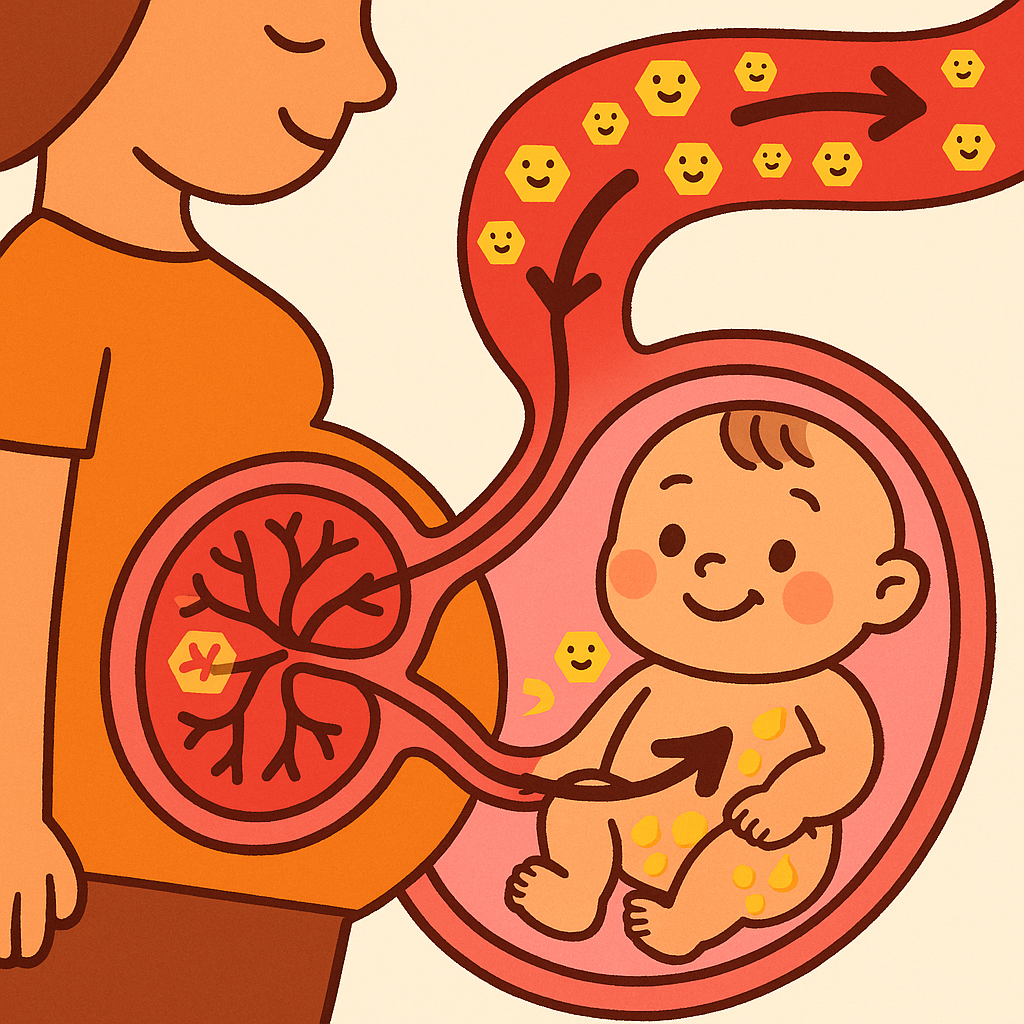
During pregnancy, the placenta produces special hormones to help the baby grow. However, these hormones can block the action of the mother’s insulin. This creates a condition called insulin resistance (IN-suh-lin ree-ZIS-tuhns), which means the body stops responding well to insulin.

To compensate, a pregnant woman’s body must produce up to three times as much insulin as usual. If the pancreas cannot keep up with this high demand, glucose stays trapped in the blood. This leads to gestational diabetes.
When a mother has high blood sugar, that extra sugar crosses the placenta to the baby. The baby then produces its own insulin to handle the extra sugar, storing it as fat. This can lead to macrosomia (mak-roh-SOH-mee-uh), which is when a baby grows much larger than average. Large babies are at a higher risk for birth injuries and drops in blood sugar right after birth.
How Doctors Screen for the Condition
Medical experts generally agree that finding and treating gestational diabetes early prevents complications. However, doctors sometimes debate the best way to screen for it.
Some medical organizations recommend testing only women with specific risk factors, such as a higher body weight or a family history of diabetes. Other organizations recommend universal screening, meaning every pregnant woman gets tested.
Recent studies show that universal screening is the safest approach. A 2013 review of screening strategies found that testing only high-risk women misses up to one-third of gestational diabetes cases. Because of this, many health groups now recommend testing all pregnant women between 24 and 28 weeks of gestation.
A Special Note for Bariatric Surgery Patients
There is one group of women who should not take the standard sugary drink test. A 2017 study in the BMJ highlights that women who have had bariatric weight-loss surgery can experience “dumping syndrome” if they drink the standard glucose beverage. This causes severe nausea, rapid heart rate, and dangerous drops in blood sugar. For these women, doctors recommend monitoring blood sugar at home with a finger-prick device instead of taking the drink test.
What the Research Shows About Management
Once diagnosed, the goal is to keep blood sugar levels as close to normal as possible. Research shows that managing blood sugar significantly lowers the risk of birth complications and maternal high blood pressure.
Medical Nutrition Therapy
The cornerstone of managing gestational diabetes is your diet. A 2021 review in the Journal of Diabetes Research outlines the current science of Medical Nutrition Therapy for pregnancy.
Researchers emphasize that pregnant women should never go on a starvation diet. Severe calorie restriction can cause the body to break down fat too quickly, creating byproducts called ketones that may harm the baby’s developing brain.
Instead of cutting calories drastically, science supports modifying the type of carbohydrates you eat. Studies show that diets focusing on the glycemic index (gly-SEE-mik IN-deks) work best. The glycemic index measures how quickly a food raises your blood sugar.
Foods with a low glycemic index digest slowly and keep blood sugar stable. Examples include beans, oats, non-starchy vegetables, and whole grains. Pairing these carbohydrates with protein and healthy fats also helps slow down sugar absorption.
The Role of Physical Activity
Exercise is highly effective at lowering blood sugar because it allows your muscles to absorb glucose without needing as much insulin.
A 2024 systematic review in Frontiers in Endocrinology analyzed 37 different studies on exercise and gestational diabetes. The researchers found that regular exercise reduced the risk of developing gestational diabetes by 37%. For women who already had the condition, exercise significantly improved their fasting and post-meal blood sugar levels.
Experts recommend about 30 minutes of moderate activity, like brisk walking or swimming, most days of the week. Taking a 10-minute walk right after meals is a simple, science-backed way to blunt blood sugar spikes.
Blood Sugar Monitoring
To know if diet and exercise are working, women must test their blood sugar at home. This usually involves a small finger prick in the morning and after meals.
Newer technology is also entering the picture. Related: Continuous Glucose Monitoring: What the Latest Science Says. Some doctors now use continuous glucose monitors or smartphone apps to track patient data. A 2020 study in Diabetes Research and Clinical Practice found that using an artificial intelligence app to analyze a patient’s blood sugar and diet helped doctors make faster, more accurate treatment adjustments without requiring extra clinic visits.
When Medication is Needed
For some women, diet and exercise are not enough to overcome the powerful hormones produced by the placenta. In these cases, medication is necessary.
According to a 2010 review in Diabetes & Metabolism, insulin injections remain the gold standard for treating gestational diabetes. Insulin is safe because it does not cross the placenta, meaning it never reaches the baby.
Doctors sometimes prescribe oral medications like metformin or glibenclamide. While these pills are easier to take, they do cross the placenta. Current research shows they are generally safe, but insulin is still the preferred choice for strict blood sugar control without fetal exposure.
Long-Term Health: Life After Delivery
Perhaps the most crucial, yet overlooked, aspect of gestational diabetes is what happens after the baby is born.
For most women, blood sugar returns to normal almost immediately after delivery. However, having gestational diabetes is a major warning sign for the future. A large 2009 meta-analysis in The Lancet looked at over 600,000 women. The researchers found that women who had gestational diabetes were 7.4 times more likely to develop type 2 diabetes later in life compared to women who had normal blood sugar during pregnancy.
Because of this high risk, medical guidelines strongly recommend that women get re-tested for diabetes 6 to 12 weeks after giving birth. A 2017 study in Primary Care Diabetes found that checking a patient’s HbA1c (a measure of long-term blood sugar) late in pregnancy can accurately predict their risk of postpartum diabetes, helping doctors know who needs the most follow-up care.
Breastfeeding also plays a protective role. Research shows that breastfeeding improves how the mother’s body uses insulin, which helps delay or prevent the onset of type 2 diabetes in the years following pregnancy.
The Bottom Line
Gestational diabetes is a temporary condition, but it requires serious attention.
- What we know: Managing blood sugar through diet, exercise, and sometimes insulin drastically reduces the risk of birth complications and large baby size.
- What requires caution: Women with a history of gestational diabetes have a significantly higher risk of developing type 2 diabetes later in life.
- What you can do: Attend your postpartum blood sugar tests. Continuing the healthy eating and exercise habits you learned during pregnancy is the best way to protect your long-term health.
Quick Reference: Key Studies
| Study Focus | Key Finding | Source |
|---|---|---|
| Long-Term Risk | Women with gestational diabetes have a 7.4x higher risk of developing type 2 diabetes later in life. | PMID 19465232 |
| Exercise Therapy | Regular exercise significantly improves blood sugar control and reduces the overall risk of gestational diabetes by 37%. | PMID 39421534 |
| Nutrition | Diets focusing on low glycemic index foods are effective at controlling blood sugar. Severe calorie restriction should be avoided. | PMID 34840988 |
| Bariatric Surgery | Pregnant women with prior bariatric surgery should monitor blood sugar at home instead of drinking the standard glucose test beverage to avoid dumping syndrome. | PMID 28159743 |
| Medication | Insulin is the gold standard treatment because it does not cross the placenta to the baby. | PMID 21163428 |
Last updated: March 2026
This article synthesizes findings from peer-reviewed research. It is for educational purposes only and does not constitute medical advice. Consult a healthcare provider before starting any new regimen.


Leave a Reply