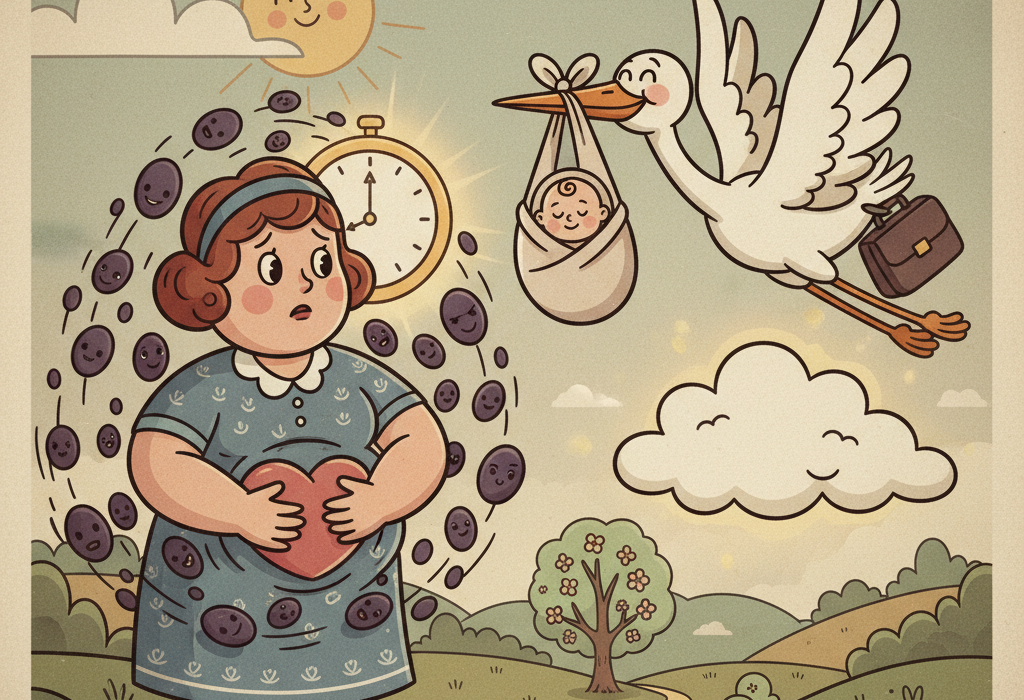
Imagine trying to plant a garden, but the soil’s nutrients and water levels keep changing unpredictably. That is what trying to conceive and maintain a pregnancy can feel like for women with Polycystic Ovary Syndrome (pah-lee-SIS-tik OH-vuh-ree SIN-drohm), or PCOS.
Does PCOS affect pregnancy? Yes. Research shows that PCOS increases the risk of fertility challenges, miscarriage, and pregnancy complications like gestational diabetes. However, science also shows that specific treatments before and during pregnancy can dramatically improve outcomes.
PCOS is not just a condition that affects the ovaries. It is a full-body endocrine (hormone) and metabolic condition. Because it affects how your body processes sugar and regulates inflammation, it directly impacts how a pregnancy develops.
This article breaks down what the latest peer-reviewed research says about how PCOS affects pregnancy, why these changes happen, and what science suggests can be done to help.
What the Research Shows About PCOS Pregnancy Risks
For a long time, doctors knew that women with PCOS had a harder time getting pregnant. Modern research now shows that the condition also requires careful management after a positive pregnancy test.
A massive 2024 meta-analysis in Nature Communications reviewed 104 studies covering over 106,000 pregnancies. The researchers found that women with PCOS face significantly higher odds of several complications compared to women without the condition. These include:
- Miscarriage: A higher rate of early pregnancy loss.
- Gestational diabetes: High blood sugar that develops during pregnancy.
- Gestational hypertension: High blood pressure that begins during pregnancy.
- Pre-eclampsia: A serious blood pressure condition that can affect the mother’s organs.
- Cesarean section: A higher likelihood of needing surgical delivery.
Related: What Science Actually Says About Managing Gestational Diabetes
A common question is whether these risks are simply due to body weight, as obesity is common in women with PCOS. The Nature study answered this clearly. While higher body weight does increase pregnancy risks, the researchers found that PCOS itself is an independent risk factor. Even when comparing women of the exact same age and body mass index (BMI), those with PCOS still had higher rates of miscarriage, gestational diabetes, and high blood pressure.
How This Might Work: The Uterine Environment
To understand why PCOS causes these complications, we have to look at what happens inside the uterus.
Before an embryo can attach to the uterine wall, the lining of the uterus must undergo a massive transformation to become welcoming and supportive. This process is called decidualization (dee-sid-yoo-al-uh-ZAY-shun).
According to a 2024 review in the International Journal of Molecular Sciences, PCOS creates a hostile environment for this process through two main biological pathways:
1. Insulin Resistance: Insulin resistance (IN-suh-lin ree-ZIS-tuhns) occurs when your cells stop responding well to insulin, forcing your body to produce extra insulin to keep blood sugar normal. This extra insulin disrupts glucose metabolism inside the uterus. It damages the mitochondria (the energy centers of the cells) in the uterine lining, making it harder for an embryo to successfully implant.
2. Hormone Imbalance: Women with PCOS often have higher levels of androgens (male hormones like testosterone) and altered estrogen signaling. This imbalance prevents the uterine lining from properly responding to progesterone, the hormone responsible for maintaining a pregnancy.
Furthermore, a 2025 review in Gynecological Endocrinology highlights a concept called “immunometabolic crosstalk.” High insulin and high androgens create a state of chronic, low-grade inflammation. This confuses the maternal immune system, which is supposed to protect the embryo. Instead, the immune system may trigger a response that leads to early pregnancy loss.
Practical Guidance: Preparing for Pregnancy
Because the uterine environment is so heavily influenced by metabolism and hormones, researchers emphasize that the most effective way to improve pregnancy outcomes is to prepare the body before conception.
Lifestyle and Weight Management
A 2025 position statement by the European Association for the Study of Obesity notes that for overweight women with PCOS, losing just 5% to 10% of total body weight over six months can restore regular ovulation and significantly improve fertility. This weight loss reduces the amount of extra insulin circulating in the blood, which directly improves the health of the uterine lining.
Inositol Supplementation
Inositol is a naturally occurring sugar compound that helps cells respond to insulin. Research shows it is highly effective for PCOS.
A 2018 study in Hormone Molecular Biology and Clinical Investigation tracked over 3,600 infertile women with PCOS. They were given a specific combination of myo-inositol (4000 mg per day) and folic acid. After a few months, 70% of the women restored their ovulation. In a smaller subset undergoing IVF, those taking myo-inositol had better egg quality and higher fertilization rates compared to those taking a placebo.
Vitamin D
Vitamin D acts more like a hormone than a vitamin in the body, and it is crucial for reproduction. A 2022 review in Nutrients found that up to 85% of women with PCOS are deficient in Vitamin D.
During pregnancy, Vitamin D helps regulate the immune responses of the placenta and assists in calcium uptake. The review noted that correcting a Vitamin D deficiency before and during pregnancy can reduce the risk of gestational diabetes and spontaneous premature birth.
GLP-1 Medications
Drugs known as GLP-1 receptor agonists (like semaglutide and liraglutide) have become common for weight loss and diabetes management. They are now being studied for PCOS.
A 2018 trial in the European Journal of Endocrinology looked at obese women with PCOS who had not had success with standard fertility treatments. The researchers gave them a combination of metformin and a low dose of liraglutide for 12 weeks before attempting IVF. The pregnancy rate per embryo transfer jumped to an impressive 85.7% in the combination group, compared to just 28.6% in the group taking metformin alone.
Related: How GLP-1 Drugs Actually Treat Type 2 Diabetes: What the Science Shows
Caution: While GLP-1 drugs are helpful for preparing the body for pregnancy, they must be stopped before you actually try to conceive. A 2025 review in the American Journal of Obstetrics and Gynecology warns that there is not enough data to prove these drugs are safe for a developing fetus. Animal studies have shown potential risks, so doctors recommend using reliable contraception while taking GLP-1 medications and stopping them before a planned pregnancy.
Where The Science Is Still Uncertain: Metformin During Pregnancy
Metformin is a standard medication used to lower blood sugar. Doctors frequently prescribe it off-label to help women with PCOS ovulate and conceive. But a major debate in the medical community is whether women should keep taking metformin after they see a positive pregnancy test.
The evidence is currently mixed.
On one hand, a 2016 meta-analysis in Clinical and Investigative Medicine found that continuing metformin during pregnancy significantly decreased the rates of early pregnancy loss and preterm delivery in women with PCOS.
On the other hand, more recent data paints a complicated picture. A 2025 review in Expert Review of Endocrinology & Metabolism confirmed that metformin reduces the risk of preterm birth and pregnancy-induced high blood pressure. However, the researchers noted that it does not consistently prevent gestational diabetes in PCOS patients.
Furthermore, a 2025 study in Diabetes, Obesity & Metabolism pointed out that babies exposed to metformin in the womb might have a slightly higher risk of being overweight in early childhood. Because the long-term effects on the child are still not fully understood, there is no universal rule. Doctors usually evaluate the mother’s individual metabolic risks to decide if the benefits of metformin outweigh the uncertainties.
Common Questions About PCOS and Pregnancy
Can I have a healthy pregnancy with PCOS?
Yes. While the statistical risks for complications are higher, the vast majority of women with PCOS who conceive go on to have healthy babies. Working with a doctor to manage blood sugar and blood pressure greatly improves your odds.
Does having PCOS mean I will definitely need IVF?
No. Many women with PCOS conceive naturally, especially after lifestyle changes or taking supplements like myo-inositol. If those do not work, doctors often use oral medications (like letrozole or clomiphene) to induce ovulation. IVF is usually considered a later step if simpler methods fail.
Related: What Science Actually Says About IVF and Pregnancy Success
Can PCOS be passed down to my child?
There is a genetic component to PCOS. A 2025 review in Trends in Endocrinology and Metabolism suggests that the metabolic environment of the mother during pregnancy can influence the baby’s future health through epigenetic changes (changes in how genes are expressed). This is why managing metabolic health before and during pregnancy is so important.
The Bottom Line / Takeaways
- PCOS increases the risk of pregnancy complications, including miscarriage, gestational diabetes, and high blood pressure. These risks are linked to insulin resistance and hormone imbalances that affect the uterine lining.
- Preparing your body before conception is the most effective way to improve pregnancy outcomes.
- A weight loss of 5% to 10% can significantly improve fertility and reduce pregnancy risks.
- Supplements like myo-inositol and Vitamin D have strong scientific backing for improving ovulation and egg quality.
- GLP-1 medications can help manage weight and insulin before pregnancy, but they must be stopped prior to conception.
- The decision to continue taking metformin during pregnancy should be made with a doctor, as it may prevent preterm birth but has uncertain long-term effects on the child.
Quick Reference: Key Studies
| Study Focus | Key Finding | Source |
|---|---|---|
| Pregnancy Outcomes in PCOS | Meta-analysis of 106,690 pregnancies showed PCOS independently increases odds of miscarriage, gestational diabetes, and pre-eclampsia. | PMID 38965226 |
| Uterine Environment | High insulin and androgens disrupt the uterine lining, impairing embryo implantation and causing early pregnancy loss. | PMID 38256276 |
| Preconception GLP-1 Use | Taking liraglutide with metformin before IVF increased pregnancy rates to 85.7% compared to 28.6% with metformin alone. | PMID 29703793 |
| Myo-Inositol Supplementation | Myo-inositol and folic acid restored ovulation in 70% of PCOS patients and improved egg quality during IVF. | PMID 29498933 |
| Metformin During Pregnancy | Metformin reduces preterm birth and pregnancy hypertension, but evidence for preventing gestational diabetes remains unclear. | PMID 41086037 |
| Vitamin D in PCOS | Vitamin D deficiency is common in PCOS and correcting it improves placental health and lowers gestational diabetes risk. | PMID 35458211 |
Last updated: March 2026
This article synthesizes findings from peer-reviewed research. It is for educational purposes only and does not constitute medical advice. Consult a healthcare provider before starting any new regimen.


Leave a Reply