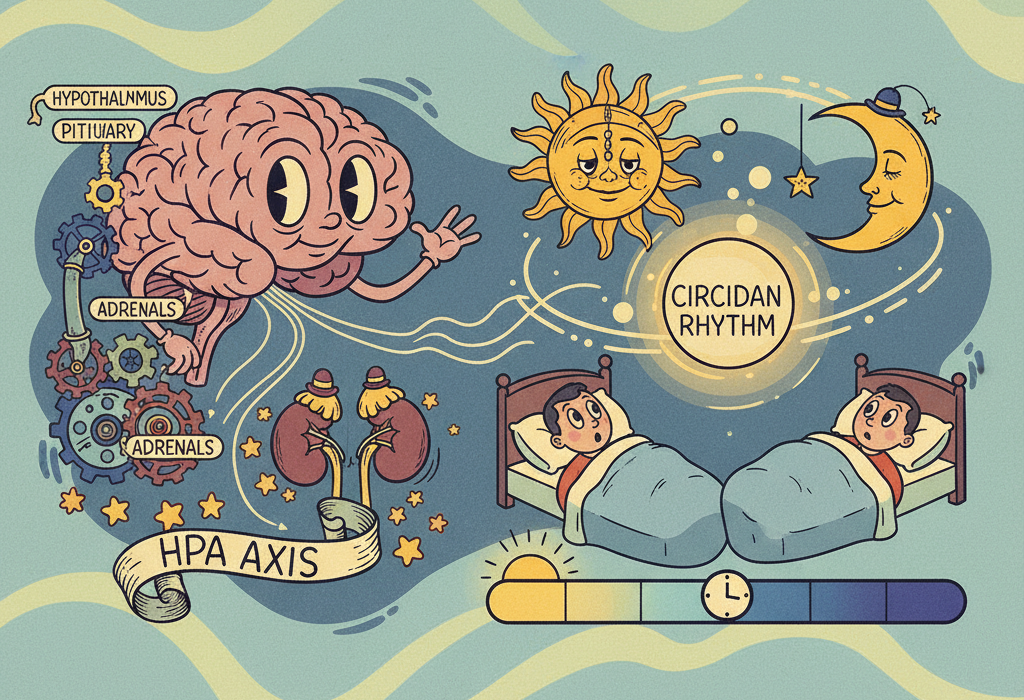
Have you ever wondered why jet lag makes you feel physically ill, or why a poor night of sleep leaves you craving junk food? The answer lies in the connection between two of your body’s most important systems: your internal clock and your stress response network.
For a long time, scientists studied sleep, digestion, and stress as separate topics. Today, research shows that they are deeply intertwined. Your body relies on a precise schedule to know when to digest food, when to repair tissues, and when to prepare for a stressful event.
When this schedule is disrupted by late-night eating, shift work, or chronic stress, the communication between your body clock and your stress hormones breaks down. This article explores what peer-reviewed science actually says about how these systems work together, what happens when they fall out of sync, and how you can support their natural rhythms.
How the Body Clock and Stress System Work Together
To understand how timing affects your health, it helps to understand a few key terms.
- Circadian rhythm (sir-KAY-dee-un RIH-thum): The internal 24-hour cycle that regulates sleep, digestion, hormones, and body temperature based on light and dark.
- HPA axis (hy-poh-thuh-LAM-ik pih-TOO-ih-tair-ee uh-DREE-nul AX-is): The communication network between your brain (hypothalamus and pituitary gland) and your adrenal glands. It controls how your body responds to stress.
- Cortisol (KOR-tih-sol): The primary hormone produced by the HPA axis. It is often called the “stress hormone,” but it also manages energy, metabolism, and inflammation.
- Allostasis (al-oh-STAY-sis): The process by which the body maintains stability by changing its internal environment to meet external demands.
Your body has a master clock located in the brain called the suprachiasmatic nucleus. Think of it as a master conductor of an orchestra. It takes in light signals from your eyes and tells the rest of the body what time it is.

One of the main ways the master clock sends messages to the rest of the body is through the HPA axis. The master clock tells the HPA axis to release cortisol in a very specific pattern.
A 2025 review in the International journal of molecular sciences explains that cortisol follows a predictable daily wave. It rises sharply during the latter part of your sleep, peaking about 30 to 45 minutes after you wake up. This surge gives you the energy and alertness needed to start the day. As the day goes on, cortisol levels slowly decline, reaching their lowest point at night so you can relax and sleep.
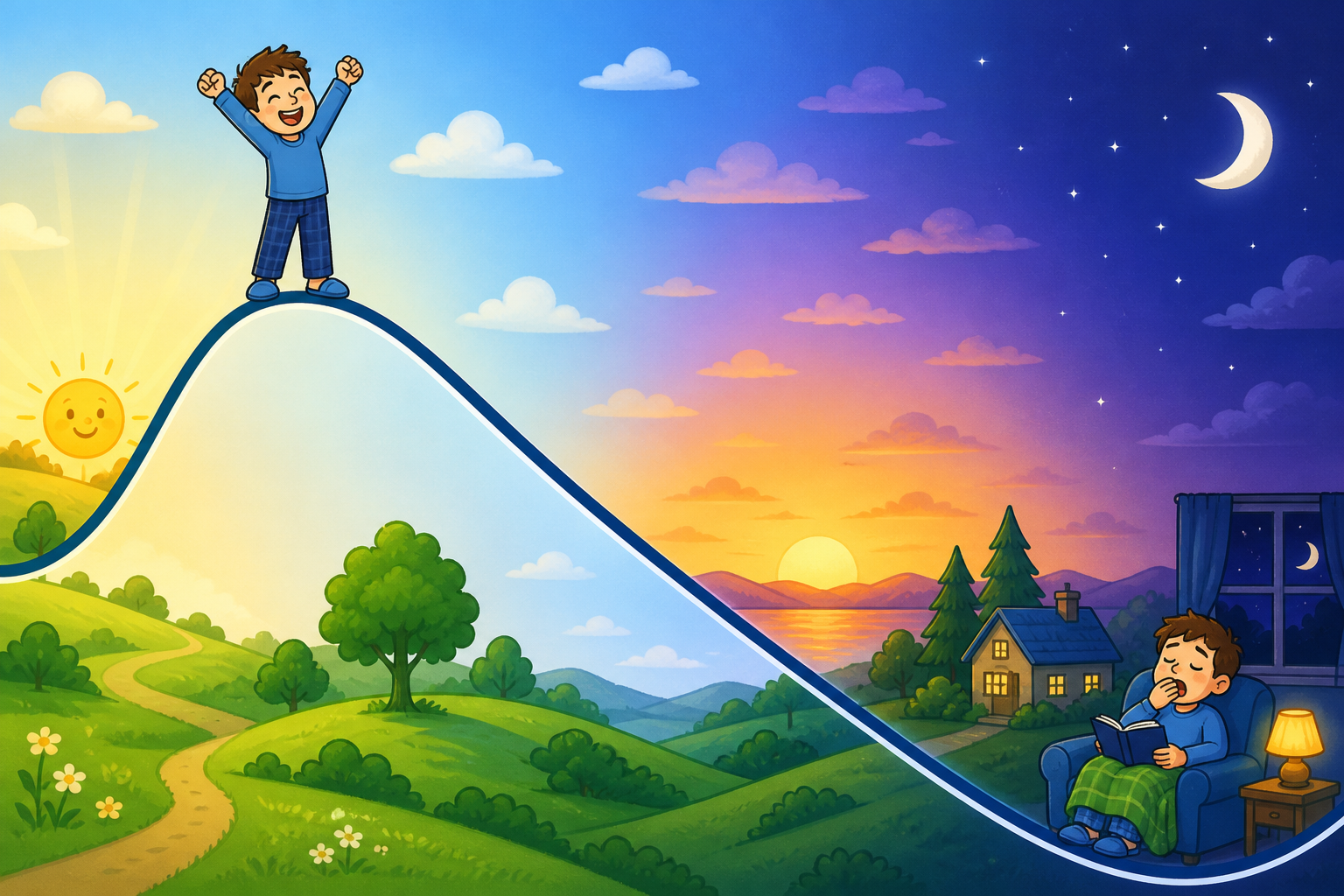
Interestingly, cortisol does not just flow in one smooth wave. A 2020 review in Endocrine reviews details how cortisol is also released in smaller, hourly bursts known as an ultradian rhythm. These hourly pulses allow the body to constantly adjust to small changes in the environment while maintaining the larger 24-hour cycle.
What the Research Shows: The Impact of Rhythm Disruption
When your body clock and HPA axis are perfectly synced, you generally experience stable energy, good digestion, and restful sleep. However, modern life frequently disrupts this balance.
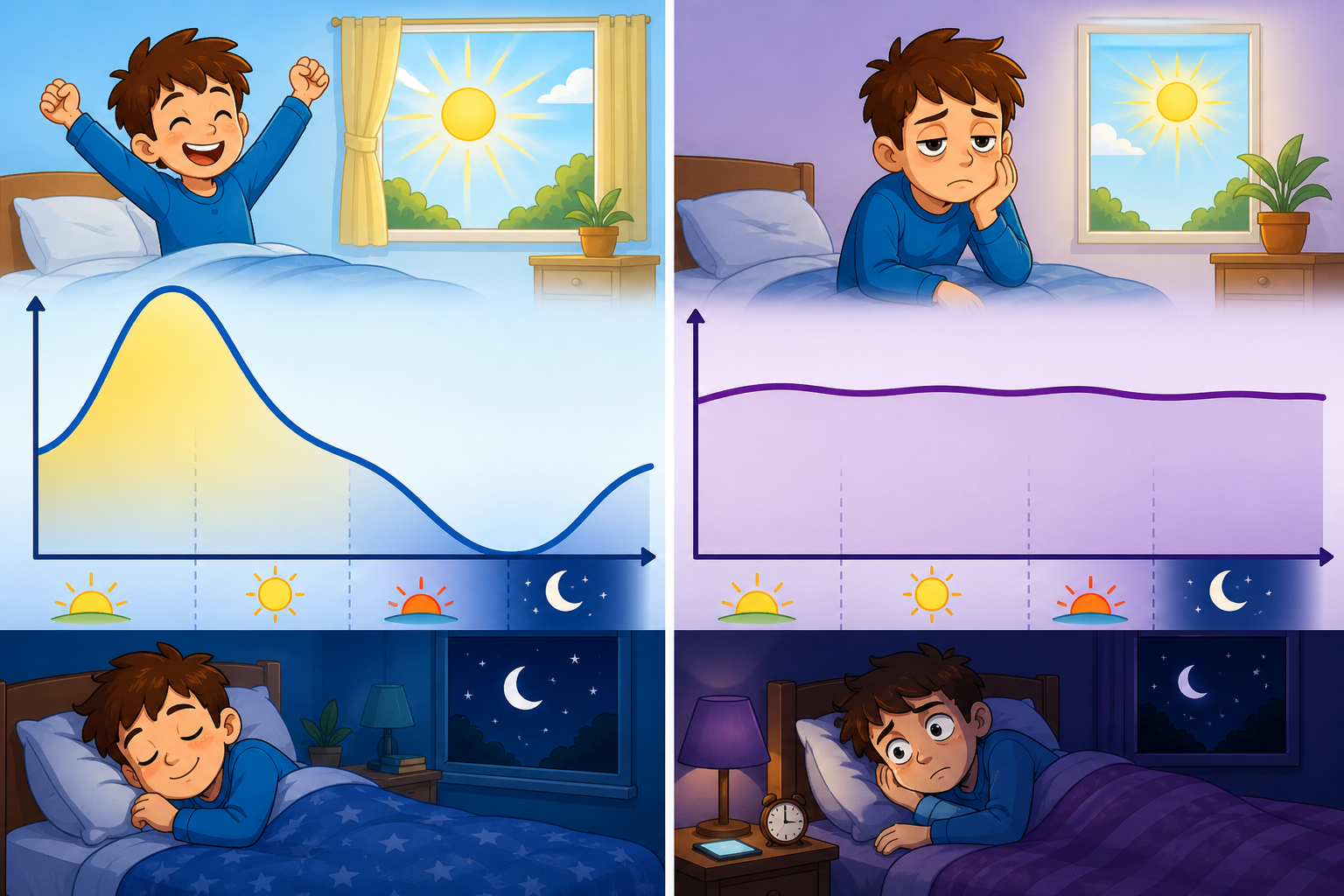
When we face chronic stress, irregular sleep, or late-night light exposure, the natural cortisol curve begins to flatten. Instead of a sharp morning peak and a low evening trough, cortisol levels stay somewhat elevated all day and night. This constant, low-level activation causes “wear and tear” on the body, a state scientists call allostatic load.
Metabolism and Meal Timing
Your HPA axis is highly sensitive to when you eat. While light sets the master clock in the brain, food sets the “peripheral clocks” located in your liver, gut, and muscles.
A 2021 study in Nutrients compared different time-restricted eating schedules. The researchers found that skipping dinner (eating only earlier in the day) resulted in lower evening cortisol levels, which promotes better sleep and a healthier 24-hour rhythm. Conversely, skipping breakfast caused a blunted, flattened morning cortisol pattern, which is often associated with poor metabolic health.
Similarly, a 2016 review in The Proceedings of the Nutrition Society found that eating at unusual times (like late at night) causes a mismatch between the master clock in the brain and the digestive organs. This circadian misalignment disrupts how the body processes glucose and insulin, increasing the risk of weight gain and metabolic disorders.
Related: The Science of Intermittent Fasting vs. Calorie Restriction: What Actually Works
Stress Resilience and Brain Health
The hourly pulses of cortisol are critical for how the brain handles stress. A 2017 review in Best practice & research. Clinical endocrinology & metabolism explains that these rapid, hourly pulses prevent the brain from getting stuck in a “deadlock” after a stressful event. The pulses allow the brain to react to a threat, encode the memory, and then reset.
When the cortisol rhythm flattens out, the brain loses this flexibility. A 2019 review in Hormones and behavior notes that chronic circadian disruption (like years of shift work or frequent jet lag) is associated with a loss of stress resilience. People with flattened cortisol rhythms often have a harder time coping with new stressors and show higher rates of anxiety and memory issues.
The Gut Microbiome Connection
The bacteria living in your digestive tract (the gut microbiome) also follow a circadian rhythm, and they communicate directly with your HPA axis.
A 2020 review in Sleep medicine reviews highlights that sleep deprivation and jet lag can alter the types of bacteria in the gut. In animal studies, persistent jet lag caused gut bacteria to lose their daily rhythm, leading to weight gain and blood sugar issues.
Furthermore, a 2025 study in Cell metabolism discovered that the gut microbiome actually helps regulate the rhythm of the HPA axis. When researchers depleted gut bacteria in mice, the animals’ cortisol rhythms became dysregulated, leading to an overactive stress response.
Related: How Your Gut Microbiome Actually Affects Brain Health
Aging and the HPA Axis
As we age, the communication between the body clock and the HPA axis naturally changes.
A 2016 review in Neuroscience and biobehavioral reviews found that older adults generally show an increase in total daily cortisol output and a flatter daily curve. This flattened curve is often driven by higher cortisol levels in the evening.
Elevated evening cortisol in older adults is linked to changes in sleep architecture. A 2005 review in The American journal of geriatric psychiatry suggests that this flattened cortisol rhythm reduces slow-wave sleep (deep sleep). Because slow-wave sleep is essential for memory consolidation, these age-related changes in the HPA axis may contribute to memory difficulties as we get older.
Related: How Your Circadian Rhythm Controls Sleep (And What Science Says About Fixing It)
Healthy vs. Disrupted HPA Axis Rhythms
| Feature | Healthy Rhythm | Disrupted Rhythm (Allostatic Load) |
|---|---|---|
| Morning Cortisol | Peaks sharply 30-45 mins after waking | Blunted or lower than normal |
| Evening Cortisol | Drops to lowest point before bed | Remains elevated at night |
| Stress Response | Rapid reaction, quick recovery | Sluggish reaction, delayed recovery |
| Metabolism | Efficient glucose processing | Insulin resistance, higher fat storage |
| Sleep Quality | Normal deep sleep cycles | Fragmented sleep, reduced deep sleep |
Practical Guidance: Supporting Your Body Clock
While we cannot control every source of stress, research suggests several actionable ways to support the alignment of your circadian rhythm and HPA axis.
1. Maintain regular meal times: Because food sets your peripheral clocks, eating at consistent times helps keep your digestive system in sync with your brain. Research suggests that finishing meals earlier in the evening supports a natural drop in nighttime cortisol.
2. Engage in regular physical activity: A 2023 meta-analysis in Biological psychology found that higher levels of physical activity are associated with a steeper, healthier diurnal cortisol slope. Exercise helps the body clear stress hormones and reinforces the daytime activity signal to your master clock.
3. Prioritize morning light exposure: Light is the strongest signal for your master clock. Getting natural sunlight in the morning helps trigger the healthy morning cortisol spike and sets a timer for melatonin production later that night.
4. Protect your sleep schedule: Going to bed and waking up at the same time every day, even on weekends, prevents “social jet lag” and keeps the HPA axis from becoming confused about when to release energy hormones.
Common Questions About the HPA Axis and Circadian Rhythms
Can you fix a flattened cortisol curve?
Yes, lifestyle changes can help restore a healthy curve. Consistent sleep schedules, regular physical activity, and morning light exposure have been shown to help steepen the cortisol slope over time.
Does fasting mess up your hormones?
It depends on the timing. Research shows that eating only during daylight hours generally supports the circadian rhythm. However, skipping meals entirely in the morning and eating large meals late at night can blunt the morning cortisol peak and raise evening cortisol.
Why do I feel more stressed when I am tired?
Sleep deprivation directly activates the HPA axis. Even one night of poor sleep can leave cortisol levels elevated the following evening, making you feel physically and mentally on edge.
The Bottom Line
The scientific evidence clearly shows that the HPA axis and the circadian rhythm are not separate systems, they are two sides of the same coin. Your body clock tells your stress system when to gear up for the day and when to power down for the night.
When we respect this rhythm by managing light exposure, meal timing, and sleep consistency, we build resilience against stress. When we ignore this rhythm, we accumulate allostatic load, which increases the risk for metabolic issues, memory problems, and chronic inflammation.
While science is still uncovering exactly how the hourly (ultradian) pulses of cortisol work in the brain, the broader takeaway is certain: timing matters just as much as what you eat or how much you exercise.
Quick Reference: Key Studies
| Study Focus | Key Finding | Source |
|---|---|---|
| Metabolism & HPA Axis | Circadian misalignment disrupts glucose metabolism and flattens the cortisol curve. | PMID 27117840 |
| Meal Timing | Early time-restricted eating lowers evening cortisol; skipping breakfast blunts morning cortisol. | PMID 34444685 |
| Stress Resilience | Chronic circadian disruption leads to “allostatic load,” impairing stress adaptation and memory. | PMID 30862458 |
| Microbiome Connection | Gut bacteria regulate HPA-axis rhythmicity; sleep loss alters gut microbes. | PMID 39504963 |
| Physical Activity | Regular physical activity is linked to a steeper, healthier daily cortisol slope. | PMID 37001634 |
| Aging & Sleep | Aging flattens the cortisol curve, which is associated with reduced deep sleep and memory consolidation. | PMID 15879582 |
Last updated: November 2026
This article synthesizes findings from peer-reviewed research. It is for educational purposes only and does not constitute medical advice. Consult a healthcare provider before starting any new regimen.

Leave a Reply