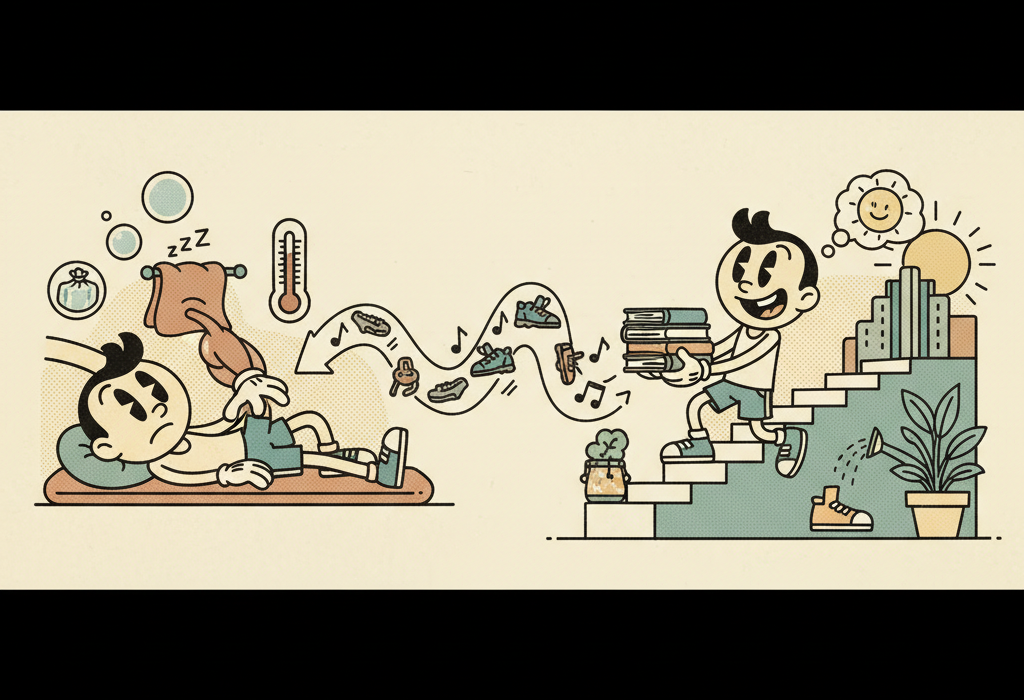
When we think about recovery, we often picture lying on the couch and doing nothing. However, modern science shows that optimal recovery is an active process. Whether you are an athlete trying to rebuild muscle after a marathon, or a patient trying to regain daily function after a stroke or concussion, strict bed rest is rarely the best answer.

Research demonstrates that carefully timed nutrition, specific hydration strategies, and targeted physical activity are the most effective ways to restore the body. Recovery simply means returning your body’s systems to a state of balance while adapting to new stress. By understanding how to fuel your body and when to introduce movement, you can improve your physical function and get back to your daily activities faster.
This article explores what peer-reviewed research actually says about muscle recovery, rehabilitation after medical events, and how to maintain joint health as we age.
The Science of Muscle Recovery and Nutrition
To perform daily activities comfortably or excel in sports, your muscles need to repair themselves after physical stress. Science shows that how you eat and drink plays a massive role in this process.
Does Nutrient Timing Actually Matter?
For a long time, people debated whether you needed to eat immediately after a workout. A 2017 review by the International Society of Sports Nutrition clarified that meeting your total daily protein and carbohydrate needs is the most important factor. However, timing does matter for rapid recovery.
When you exercise, your body uses stored carbohydrates for energy. If you need to recover quickly for another physical task within a few hours, consuming carbohydrates immediately after exercise helps rapidly refill those energy stores.
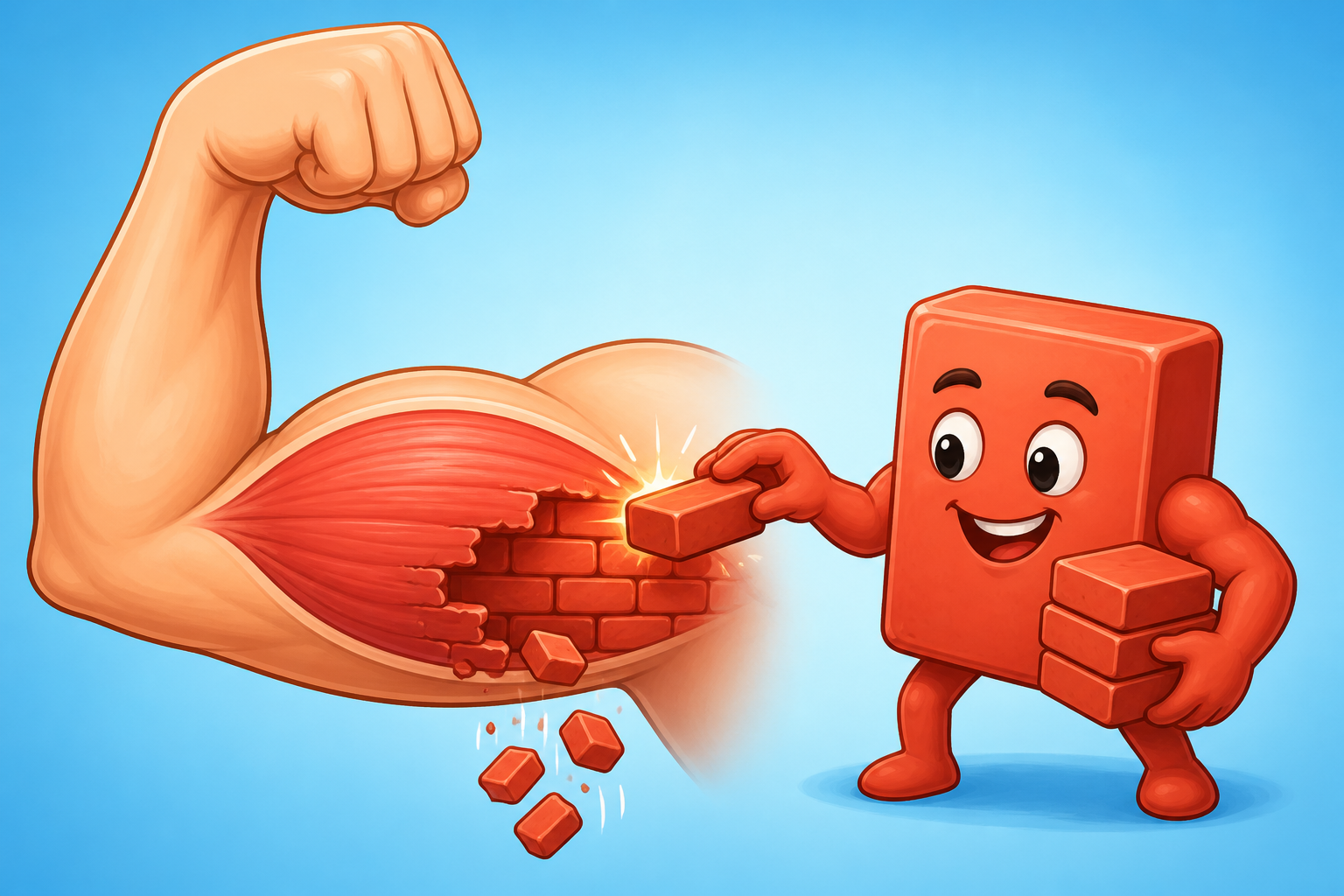
For muscle repair, researchers look at a process called muscle protein synthesis (MUS-uhl PRO-teen SIN-thuh-sis). This is the biological process where cells build new proteins to repair muscle damage. Think of your muscles like a brick wall. Exercise knocks some bricks loose, and dietary protein provides the new bricks to rebuild the wall stronger.
To maximize this rebuilding process, a 2025 review in Sports Medicine suggests that athletes and highly active adults need about 1.8 grams of protein per kilogram of body weight per day. During periods of heavy training or low carbohydrate intake, that need can rise to 2.0 grams. The research also shows that spreading your protein intake out into meals containing 20 to 40 grams every three to four hours is the best way to keep the rebuilding process active throughout the day.
Related: The Science of Meal and Exercise Timing: What Actually Works
Hydration and Electrolytes
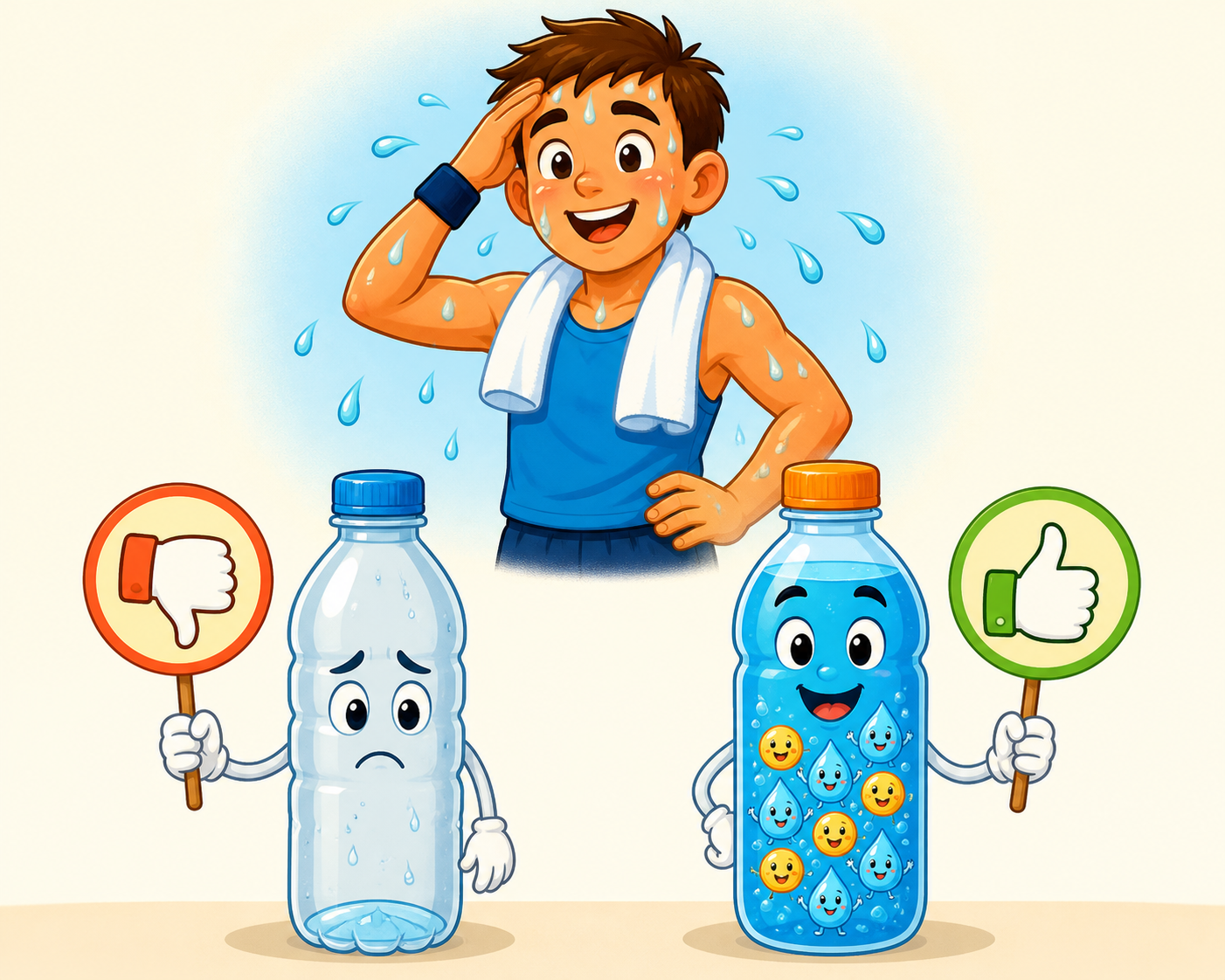
Water makes up about 60 percent of your body weight. When you sweat, you lose both water and sodium. If you lose too much, you enter a state of hypohydration (hy-poh-hy-DRAY-shun), which means your body does not have enough fluid to function normally.
A 2011 review in the Journal of Sports Sciences found that losing just 2 percent of your body weight through sweat can significantly decrease your physical performance and make tasks feel much harder. To recover properly, you must replace both the water and the sodium lost during activity. Drinking plain water without electrolytes after heavy sweating can actually delay recovery by increasing urine output before your body has fully rehydrated.
What Science Says About Supplements
While whole foods are the foundation of recovery, certain supplements have strong scientific backing for improving muscle function and repair.
- Creatine Monohydrate: A 2025 review in Nutrients noted that taking 3 to 5 grams of creatine daily helps muscles produce energy faster. Over time, this allows for higher quality workouts and better muscle growth.
- Ashwagandha: A 2015 randomized controlled trial studied 57 young men who took 300 milligrams of ashwagandha root extract twice daily. Compared to a placebo group, the ashwagandha group saw greater increases in muscle strength and a significant reduction in creatine kinase, a marker of muscle damage in the blood.
Related: The Science of Post-Exercise Recovery: What Actually Works
How Soon Should You Exercise After an Injury or Medical Event?
Historically, doctors prescribed strict bed rest after major illnesses or injuries. Today, clinical research shows that early, targeted movement is often the best medicine.
Concussion Recovery: Rest vs. Exercise
For decades, the standard treatment for a concussion was sitting in a dark room until symptoms disappeared. Recent studies have completely shifted this approach.
A 2019 clinical trial in JAMA Pediatrics tested early aerobic exercise on adolescents with sport-related concussions. The researchers found that adolescents who performed light, symptom-free aerobic exercise recovered in 13 days, compared to 17 days for those who only did light stretching.
Similarly, a 2021 pilot trial tested a one-week aerobic exercise program on young adults 14 to 25 days after a concussion. The researchers found that riding a stationary bike at a moderate intensity was safe, well-tolerated, and helped decrease symptom severity.
Breast Cancer Surgery Recovery
Surgery takes a heavy toll on the body, particularly on the surrounding muscles and joints. A 2024 randomized clinical trial looked at early exercise implementation after breast cancer surgery. The study found that a tailored, home-based exercise program starting soon after surgery helped patients regain 95 percent of their shoulder strength at both one month and six months post-surgery, significantly outperforming standard care.
Rehabilitation After a Stroke
Stroke is a leading cause of long-term disability, often resulting in muscle weakness, poor balance, and a sedentary lifestyle. The American Heart Association strongly recommends physical activity for stroke survivors to improve daily function and reduce the risk of a second stroke.
High-Intensity Exercise and Stroke
Many people assume that stroke survivors should only do light exercise. However, a 2022 systematic review looked at high-intensity exercise in acute and subacute stroke patients (within the first six months). The researchers found that high-intensity walking, stepping, or cycling significantly improved gait speed and walking distance. Importantly, the studies reported no major adverse medical events, showing that high-intensity exercise is generally safe for this population when properly supervised.
Aquatic Therapy vs. Land-Based Therapy
Water provides buoyancy, which supports body weight and reduces the fear of falling. A 2021 meta-analysis in Acta Neurologica Scandinavica reviewed 28 studies with nearly 1,000 stroke patients to compare aquatic (water-based) therapy to land-based therapy.
| Measurement | Aquatic Therapy | Land-Based Therapy |
|---|---|---|
| Balance | Superior improvement | Standard improvement |
| Walking Speed | Superior improvement | Standard improvement |
| Muscle Strength | Superior improvement | Standard improvement |
| Daily Living Skills | Equal improvement | Equal improvement |
The researchers noted that specific aquatic techniques, such as the Ai Chi or Halliwick methods, were more effective than simply walking on an underwater treadmill.
The Importance of Task-Oriented Therapy
A 2022 systematic review on stroke physical function confirmed that task-oriented therapy is the most effective approach. This means practicing the actual movements you want to improve, like standing up from a chair or reaching for a cup, rather than just doing general leg lifts. The review also highlighted that active rehabilitation is required even in the early stages of stroke recovery, rather than unconditional rest.
Another massive 2025 Cochrane review analyzing 267 studies and over 21,000 participants confirmed that physical rehabilitation clearly improves activities of daily living, motor function, and walking speed compared to no rehabilitation.
Joint Health, Aging, and Daily Function
As we age, maintaining muscle strength and joint health becomes critical for independence.
Progressive Resistance Training for Older Adults
A 2009 Cochrane review looked at progressive resistance strength training in older adults. This involves lifting weights or using resistance bands that get progressively heavier over time. The review found that this type of exercise resulted in large improvements in muscle strength and moderate improvements in daily activities, such as walking speed and getting out of a chair. It also helped reduce pain in participants with osteoarthritis.
Managing Osteoarthritis and Tendinopathy
When dealing with joint or tendon pain, the dose of exercise matters.
For knee and hip osteoarthritis, a 2024 meta-analysis investigated how much resistance exercise is needed to reduce pain. The researchers found that programs lasting 3 to 6 months provided moderate benefits for pain and physical function. Interestingly, they found that the exact volume of exercise (how many sets and reps) and perfect adherence did not significantly change the outcome. This suggests that simply doing the resistance exercise consistently over a few months is more important than rigidly following a strict routine.
For tendinopathy (chronic tendon pain), the rules are slightly different. Tendons are like thick rubber bands that connect muscle to bone. A 2023 systematic review found that higher intensity resistance exercise (using heavy external weights rather than just body weight) combined with lower frequency (exercising the tendon less than once a day) provided the best results. Tendons need heavy loads to stimulate repair, but they also need adequate rest days between sessions to recover.
Exercise for Parkinson’s Disease
Parkinson’s disease affects movement, balance, and posture. A 2016 review highlighted that rehabilitation for Parkinson’s relies on neuroplasticity (nur-oh-plas-TIS-ih-tee), which is the brain’s ability to reorganize itself by forming new neural connections.
The research shows that physical exercise increases synaptic strength and improves circuitry in the brain. For patients with Parkinson’s, exercise programs should be goal-based and highly specific. Because learning new motor skills can be slower for these patients, combining physical therapy with external cues (like stepping to a metronome beat) can help bypass damaged areas of the brain and improve walking performance.
Who Benefits Or Needs Caution
Based on the scientific literature, different populations respond differently to recovery protocols:
- Athletes and Highly Active Adults: Benefit most from timed protein intake and aggressive carbohydrate reloading if training multiple times a day.
- Stroke Survivors: Benefit heavily from early, task-oriented physical therapy and aquatic therapy. Caution is needed regarding cardiovascular monitoring during high-intensity exercise.
- Concussion Patients: Benefit from light, sub-threshold aerobic exercise starting a few days after the injury. Caution is needed to ensure the exercise does not worsen symptoms.
- Tendon Injury Patients: Benefit from heavy resistance training with adequate rest days. Caution is needed against exercising the injured tendon every single day, which can delay healing.
Common Questions About Exercise Recovery
Should I completely rest after an injury or surgery?
While a brief period of rest is sometimes necessary, science shows that early, appropriate movement speeds up recovery. Whether it is a concussion, breast cancer surgery, or a stroke, targeted physical activity helps tissues heal and restores function faster than strict bed rest.
Does it matter exactly how many sets and reps I do for joint pain?
For osteoarthritis, research shows that the exact volume of exercise matters less than the duration of the program. Consistently showing up and doing resistance training for 3 to 6 months is what ultimately reduces pain and improves daily function.
The Bottom Line
The science of recovery has evolved significantly. We now know that the body heals best when it is appropriately fueled and actively challenged.
For muscle recovery, consuming adequate total daily protein and replacing lost fluids and sodium are the most critical steps. In clinical rehabilitation, the evidence strongly supports early, targeted exercise. Stroke survivors can safely engage in high-intensity and aquatic therapies to regain function, while concussion patients recover faster with light aerobic exercise rather than sitting in a dark room. Finally, for aging adults and those with joint pain, consistent resistance training remains one of the most effective tools for maintaining independence and reducing pain. While the exact dose of exercise may vary depending on the condition, the underlying message from the research is clear: movement is medicine.
Quick Reference: Key Studies
| Study Focus | Key Finding | Source |
|---|---|---|
| Protein for Endurance | Athletes need ~1.8g/kg/day of protein, up to 2.0g during heavy training, to optimize muscle repair. | PMID 40117058 |
| Stroke Rehabilitation | Physical rehab improves daily activities, motor function, and gait speed compared to no rehab. | PMID 39932103 |
| Concussion Recovery | Early, sub-symptom aerobic exercise helps adolescents recover from concussions 4 days faster than stretching. | PMID 30715132 |
| Aquatic Therapy | Water-based therapy is superior to land-based therapy for improving balance and strength after a stroke. | PMID 33141446 |
| Tendinopathy | High-intensity resistance exercise performed less than once a day provides the best results for tendon pain. | PMID 37169370 |
| Osteoarthritis | 3 to 6 months of resistance exercise improves knee and hip pain, regardless of strict adherence to exact rep schemes. | PMID 38317328 |
Last updated: November 2026
This article synthesizes findings from peer-reviewed research. It is for educational purposes only and does not constitute medical advice. Consult a healthcare provider before starting any new regimen.
Leave a Reply