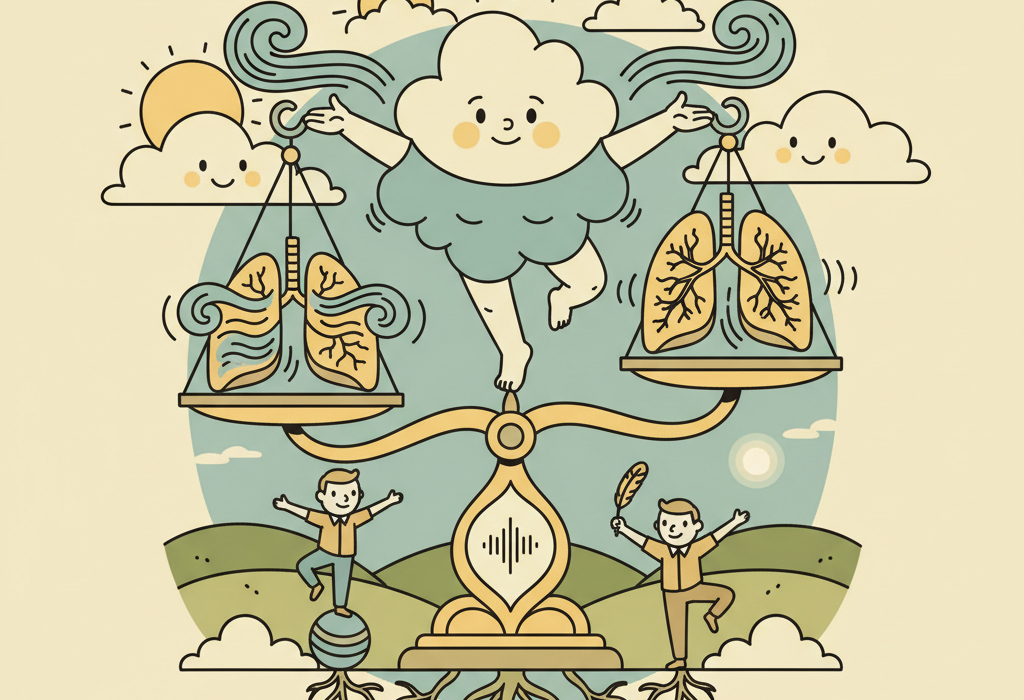
Have you ever noticed that when you walk across a slippery patch of ice, you instinctively hold your breath? Or when you try to balance on one leg, your breathing completely changes?
We generally think of breathing as a tool for getting oxygen to our lungs and balance as a job for our legs and inner ear. However, a growing body of scientific research shows that these two systems are deeply connected. How you breathe directly impacts how well you balance.
In short, breathing exercises improve physical balance by engaging the diaphragm, which creates internal pressure that stabilizes the spine and core. Controlled breathing also calms the nervous system, allowing for better muscle coordination and faster reaction times.
Whether you are an older adult looking to prevent falls, an office worker dealing with poor posture, or someone recovering from a stroke, learning to control your breath might be one of the most effective ways to steady your feet. Here is what the latest science actually shows about the connection between breathing and balance.
How This Might Work: The Diaphragm and Balance Connection
To understand how breath controls balance, we have to look at a muscle hidden deep inside the torso.
The diaphragm (DY-uh-fram) is a large, umbrella-shaped muscle sitting right below your lungs. When you inhale, the diaphragm contracts and moves downward. This pulls air into your lungs, but it also does something equally important for your posture.
As the diaphragm presses downward, it compresses the organs in your belly. This creates intra-abdominal pressure (IN-truh ab-DOM-uh-nul PRESH-ur), which is an outward pressure inside your abdomen. You can think of your torso like an unopened can of soda. The pressure inside the can makes the thin aluminum walls incredibly strong and stable. When you breathe deeply into your belly, your diaphragm acts like the top of that can, creating internal pressure that acts as a natural corset for your spine.
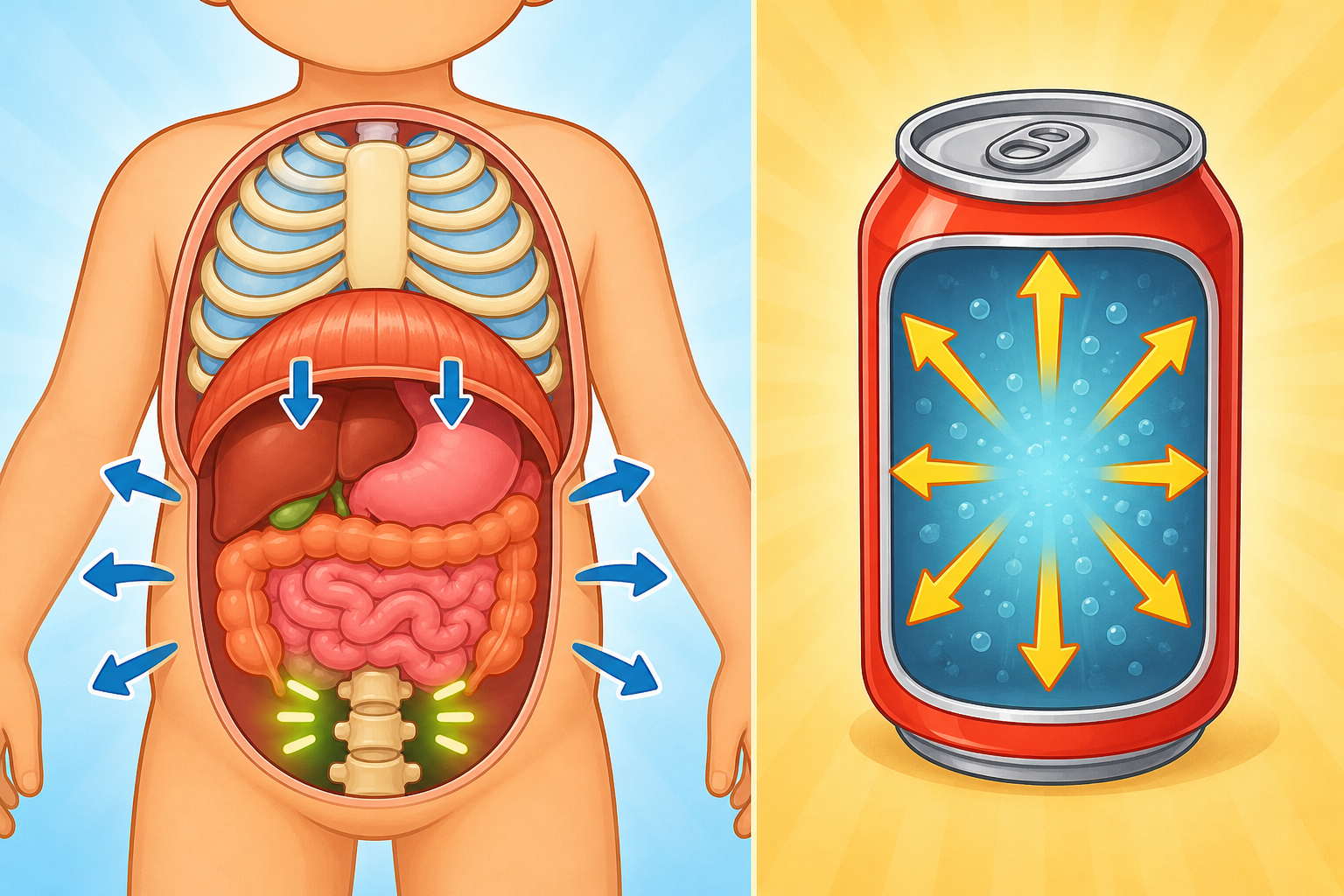
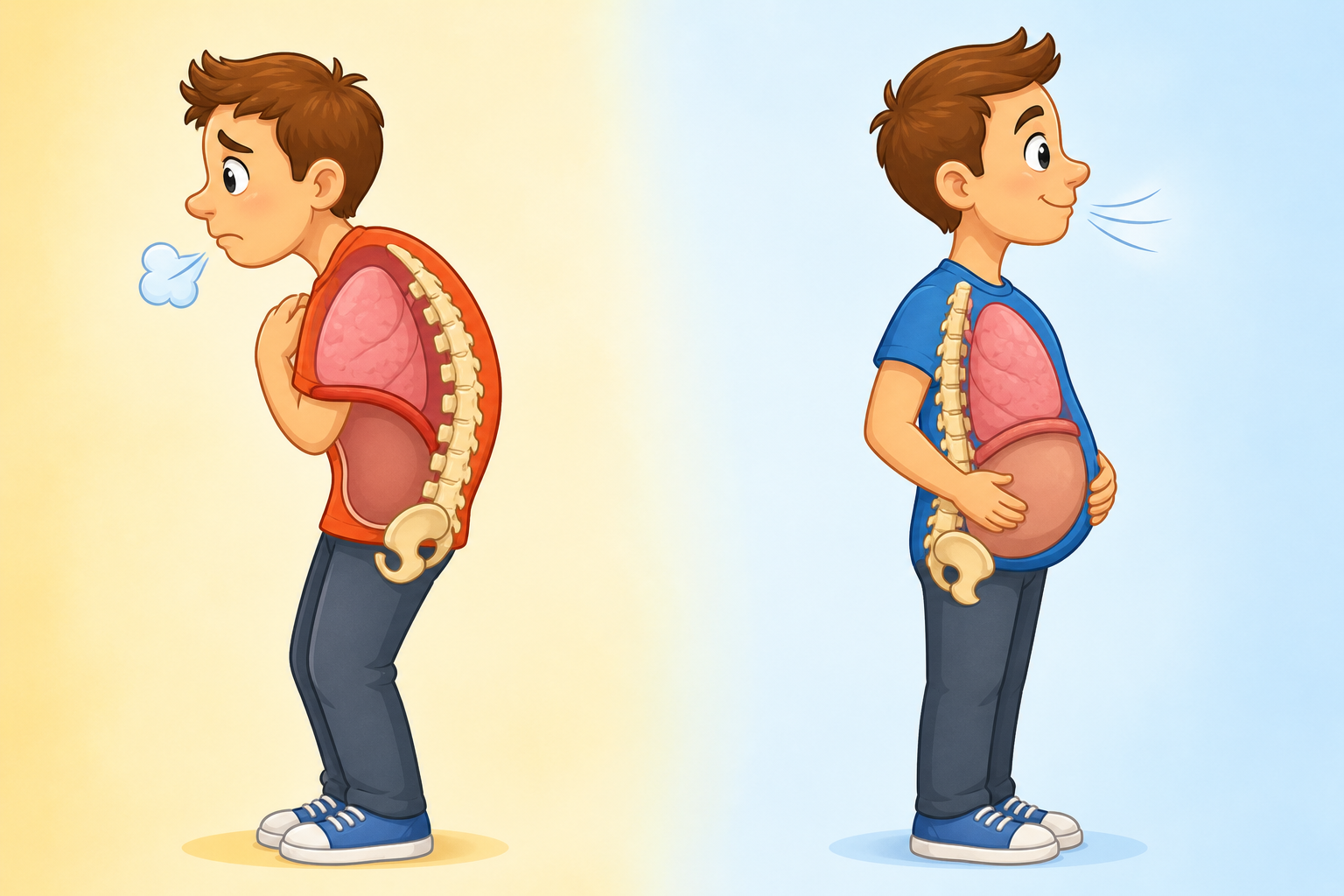
If you take shallow breaths into your chest, your diaphragm does not move down as much. You lose that internal pressure, making your spine and core less stable. When your core is unstable, your body has a much harder time maintaining balance, especially when you are moving or standing on an uneven surface.
Furthermore, controlled breathing stimulates the vagus nerve. This improves heart rate variability (hart rayt vair-ee-uh-BIL-ih-tee), which is the slight variation in time between your heartbeats. A higher heart rate variability means your nervous system is relaxed and adaptable. When your nervous system is calm, your brain can process sensory information from your feet and eyes more efficiently, leading to better physical balance.
Related: The Science of Breathing Exercises: What Research Shows
What the Research Shows: Breathing for Posture and Stability
Scientists have studied the effects of breathing exercises on balance across several different populations. The results consistently show that training the respiratory muscles improves physical stability.
Reversing the Effects of Sitting
Prolonged sitting weakens the core muscles and alters our posture, which can lead to poor balance and a higher risk of injury. Researchers recently wanted to see if breathing exercises could fix this.
A 2025 study in Scientific reports tested 18 sedentary office workers. The researchers tired out the workers’ core muscles using a rigorous exercise routine. Once the participants were fatigued, their balance significantly worsened. The researchers then tested different recovery methods to see which restored balance the fastest.
They found that just a few minutes of diaphragmatic breathing (deep belly breathing) restored postural stability almost as effectively as targeted trunk stability exercises. Both the breathing and core exercises outperformed foam rolling and passive resting. By engaging the diaphragm, the participants were able to quickly stabilize their spine and regain their balance, even when their other core muscles were tired.
Fall Prevention in Older Adults
As we age, we naturally lose muscle mass and neuromuscular control, increasing the risk of falls. Balance training is a standard recommendation, but adding breathing techniques to that training appears to multiply the benefits.
A 2025 trial in the Journal of cachexia, sarcopenia and muscle looked at 90 older adults diagnosed with sarcopenia (age-related muscle loss). Half the group performed standard resistance training, while the other half practiced Baduanjin, a traditional Chinese exercise that combines slow movements with controlled breathing. After 24 weeks, the group practicing the breathing-focused movements showed significantly better scores in balance, lower limb strength, and walking speed compared to the standard exercise group.
Similarly, a 2022 study in the International journal of environmental research and public health tested older adults performing resistance training. One group performed normal weight lifting, while the other group synchronized their lifting with a specific Pilates breathing technique. The group that used the controlled breathing technique saw significant improvements in multiple balance metrics, including a reduction in how much they swayed while standing.
Related: The Science of Pilates and Breathing: How Controlled Breath Changes Your Body
Recovering from Joint Injuries
Breathing exercises are also being used to treat chronic joint instability. People who repeatedly sprain their ankles often suffer from poor balance and delayed muscle reflexes.
A 2025 trial in BMC sports science, medicine & rehabilitation studied amateur athletes with chronic ankle instability. The researchers compared conventional physical therapy to Dynamic Neuromuscular Stabilization (DNS). DNS is a rehabilitation method that heavily relies on diaphragmatic breathing to stabilize the core before moving the limbs.
The athletes who practiced the breathing-centered DNS exercises showed significantly greater improvements in postural control and dynamic balance compared to those doing conventional physical therapy. By learning to brace their core with their breath, the athletes provided a more stable foundation for their legs to balance on.
Who Benefits Or Needs Caution
While almost anyone can benefit from better breathing mechanics, research highlights specific populations where breathing exercises make a profound difference in mobility and balance.
Stroke Survivors
After a stroke, patients often struggle with hemiparesis (weakness on one side of the body) and poor trunk control. This makes sitting and standing upright very difficult.
A 2026 trial in the Journal of physiotherapy tested 88 stroke survivors using Inspiratory Muscle Training (IMT). IMT involves breathing in through a handheld device that provides resistance, much like lifting weights for your diaphragm. The researchers had one group perform this breathing resistance training while sitting on an unstable surface.
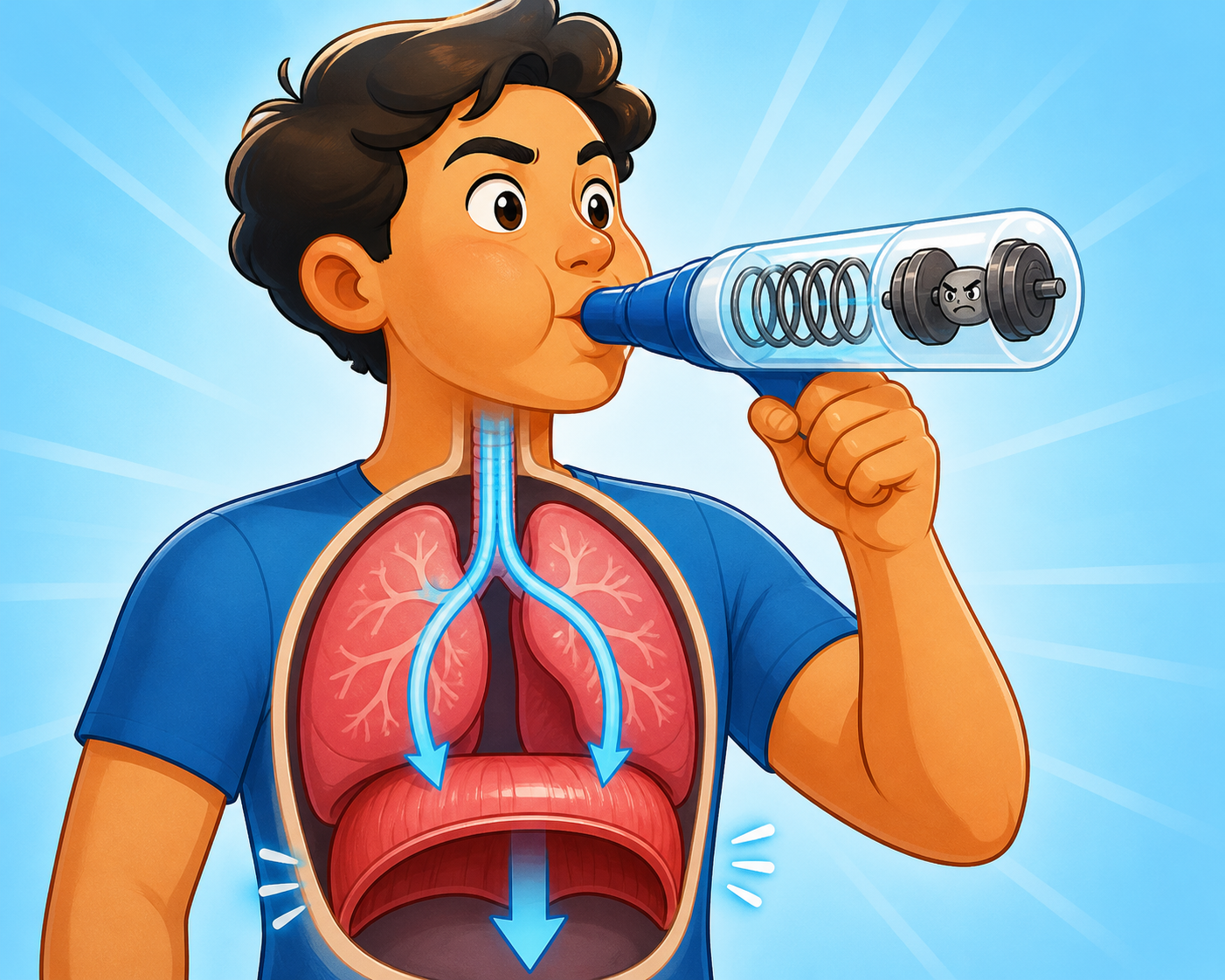
After four weeks, the patients who combined breathing training with the balance challenge showed increased diaphragm muscle thickness. More importantly, they showed massive improvements in their dynamic sitting balance, walking distance, and overall quality of life.
A separate 2023 study in Medicina looked at chronic stroke patients who had also contracted COVID-19. They found that combining chest mobility exercises with breathing exercises significantly improved trunk stability and walking endurance compared to standard physical therapy alone.
People with Respiratory Conditions (COPD)
Individuals with Chronic Obstructive Pulmonary Disease (COPD) frequently suffer from poor balance and a high risk of falls. Because they struggle to breathe, their diaphragm is constantly overworked just trying to pull in oxygen. As a result, the diaphragm cannot perform its secondary job of stabilizing the spine.
A 2021 study in PloS one tested COPD patients by adding inspiratory muscle training to their normal endurance workouts. After eight weeks, the patients who trained their breathing muscles showed significantly better functional balance and higher confidence in avoiding falls compared to those who only did endurance training.
Neurological Conditions
Breathing and posture training are also highly recommended for progressive neurological conditions. Research on Huntington disease, a condition that causes involuntary movements and severe balance issues, supports respiratory training. Clinical guidelines published in Neurology in 2020 suggest that physical therapists should incorporate breathing exercises alongside postural control training to help manage symptoms and maintain stability for as long as possible.
Practical Guidance: How to Train Your Breath for Balance
If you want to use breathing to improve your physical stability, research points to a few actionable methods.
1. Practice Diaphragmatic Breathing
Most people default to shallow chest breathing. To train your diaphragm, lie on your back with your knees bent. Place one hand on your chest and the other on your belly. Breathe in slowly through your nose, focusing on making the hand on your belly rise while the hand on your chest stays as still as possible. Exhale slowly through pursed lips. Practicing this for just 5 to 10 minutes a day trains the nervous system to use the diaphragm properly.
2. Pair Breath with Movement
Studies show that exercises like Pilates, Tai Chi, and yoga are highly effective for balance because they force you to synchronize your breath with physical challenges. When lifting a weight or performing a difficult balance pose, practice inhaling to prepare, and exhaling smoothly during the most challenging part of the movement. This regulates your internal pressure and keeps your spine secure.
3. Consider Inspiratory Muscle Training (IMT)
If you are recovering from an illness, dealing with a respiratory condition, or looking for targeted core stability, IMT devices can be useful. These small, relatively inexpensive handheld devices restrict airflow as you breathe in, forcing your diaphragm to work harder. Research consistently shows that training at about 30 to 50 percent of your maximum breathing capacity for a few minutes a day strengthens the diaphragm, which translates to better trunk control.
The Bottom Line
The science is clear that breathing is a physical act that directly influences your skeletal stability. The diaphragm serves as the roof of your core, and when it functions properly, it creates internal pressure that supports the spine and pelvis.
Research demonstrates that breathing exercises, whether through simple diaphragmatic breathing, mindful practices like qigong, or resistance devices, can restore balance after fatigue, prevent falls in older adults, and drastically improve mobility in stroke survivors.
While breathing exercises are generally very safe, people with severe respiratory conditions, high blood pressure, or recent abdominal surgeries should consult a healthcare provider before starting resistance breathing protocols or holding their breath during exercise. For most people, taking a few minutes a day to focus on deep, controlled belly breathing is a simple, cost-free way to build a steadier, more balanced body.
Quick Reference: Key Studies
| Study Focus | Key Finding | Source |
|---|---|---|
| Core fatigue in sedentary workers | Diaphragmatic breathing restored postural stability and balance just as effectively as targeted trunk stability exercises. | PMID 40263381 |
| Stroke rehabilitation | Inspiratory Muscle Training (IMT) performed on an unstable surface significantly improved diaphragm thickness, sitting balance, and walking capacity. | PMID 41423385 |
| Fall prevention in older adults | Resistance training cadenced by Pilates breathing techniques improved balance parameters and reduced body sway. | PMID 36078566 |
| COPD and balance | Adding IMT to endurance training significantly improved functional balance and fall confidence in COPD patients compared to endurance training alone. | PMID 34555068 |
| Ankle instability | Dynamic Neuromuscular Stabilization (DNS), which focuses on breathing mechanics, improved balance and neuromuscular control better than conventional therapy. | PMID 41035081 |
Last updated: October 2026
This article synthesizes findings from peer-reviewed research. It is for educational purposes only and does not constitute medical advice. Consult a healthcare provider before starting any new regimen.
Leave a Reply