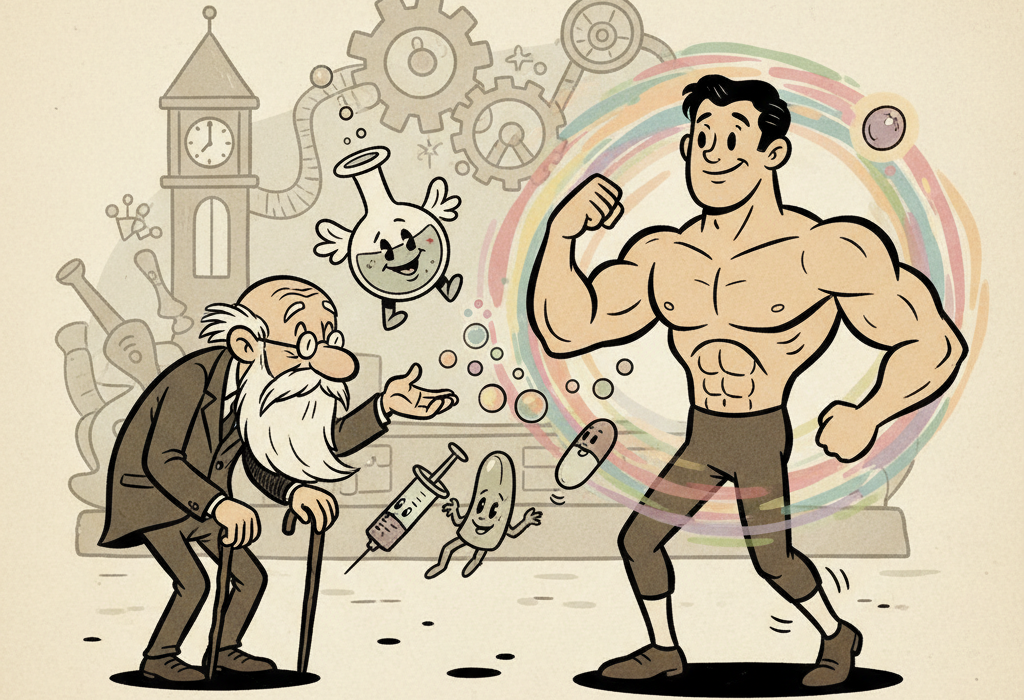
Aging is something we all experience, but scientists are starting to view it less as an unavoidable ticking clock and more as a series of biological changes that we might be able to manage. For decades, researchers have looked for the root causes of why our bodies break down over time. Recently, much of this attention has focused on a specific biological process: the buildup of damaged cells that refuse to die.

These lingering cells are often called “zombie cells.” They stop doing their normal jobs, but instead of quietly fading away, they stick around and release chemicals that bother the healthy cells nearby.
In response, scientists are developing new compounds called senolytics. The goal of these compounds is to find and clear out these zombie cells. While the internet is full of claims about reversing aging, the actual science is much more cautious. Research shows that while clearing these cells has interesting benefits in mice, human biology is highly complex.
Here is a look at what peer-reviewed research actually says about cellular aging, how senolytics work, and what remains uncertain.
How This Might Work: The Biology of Aging
To understand anti-aging research, it helps to understand how cells age. When cells experience stress, DNA damage, or simply divide too many times, they undergo a process called cellular senescence (SELL-yoo-ler suh-NES-uhns). This means the cell permanently stops dividing.
In a young, healthy body, senescence is actually a good thing. It acts as an emergency brake. If a cell’s DNA is damaged, stopping it from dividing prevents it from turning into a cancer cell. Usually, the immune system comes along, recognizes the damaged cell, and clears it away.
However, as we age, our immune system becomes less efficient at taking out the trash. Senescent cells begin to pile up in our tissues.
When they stick around, they cause problems through a process called the SASP, which stands for Senescence-Associated Secretory Phenotype (pronounced “sass-p”). You can think of a senescent cell like a piece of fruit that has gone bad in a bowl. It starts releasing chemical signals that cause the healthy fruit around it to spoil faster. The SASP is a cocktail of inflammatory chemicals that damages nearby tissue and creates a state of chronic, low-grade inflammation. Scientists often call this “inflammaging.”

A 2025 review in Biomolecules notes that this chronic inflammation is a major driver of many age-related conditions, from heart disease to joint pain.
What the Research Shows: Two Approaches to Aging Cells
Researchers are currently exploring two main ways to deal with the buildup of senescent cells: killing them or quieting them down.

1. Senolytics: Clearing the Cells
Senolytics (sen-oh-LIT-iks) are drugs or natural compounds designed to selectively trigger the death of senescent cells while leaving healthy cells alone.
Because senescent cells are damaged, they naturally want to self-destruct. To stay alive, they have to rely on special survival pathways. Senolytics work by blocking these survival pathways, which finally allows the zombie cells to die.
Some of the most studied senolytics include:
- Dasatinib and Quercetin (D+Q): Dasatinib is a leukemia medication, and Quercetin is a natural compound found in apples and onions. A 2025 review in Ageing Research Reviews notes that combining these two has successfully cleared senescent cells in mice, improving their physical function.
- Fisetin: This is a natural compound found in strawberries. It has shown an ability to clear senescent cells and extend lifespan in small animal studies.
- ABT-263 (Navitoclax): This is an experimental cancer drug. A study in Nature Medicine showed that giving ABT-263 to aged mice cleared out senescent cells and actually rejuvenated their blood and muscle stem cells.
2. Senomorphics: Quieting the Cells
Not all scientists believe that killing cells is the best approach. The alternative is using senomorphics (sen-oh-MOR-fiks). Instead of destroying the cell, these compounds simply turn off the SASP. They stop the bad apple from releasing the chemicals that spoil the rest of the bowl.
One of the most famous compounds in this category is Rapamycin. Originally used to prevent organ rejection in transplant patients, Rapamycin blocks a biological pathway called mTOR, which acts like a master growth switch in the body. By turning this switch down, cells stop producing as many inflammatory chemicals.
Related: How to Promote Healthy Aging and Longevity: What the Latest Science Shows
How Aging Affects Different Parts of the Body
Cellular senescence does not happen uniformly everywhere. Different organs age in different ways.
Skin Aging and Wrinkles
The skin is the most visible place where senescence occurs. The dermis (the deep layer of skin) is full of fibroblasts, which are cells that produce collagen. Collagen is the protein that keeps skin firm and bouncy.
A 2025 study in Frontiers in Pharmacology explains that as fibroblasts become senescent, they stop making new collagen. Worse, their SASP chemicals include enzymes called MMPs. These enzymes actively chew up existing collagen. This combination of halted production and active destruction leads to thinning skin, loss of elasticity, and wrinkles.
Related: The Science of Anti-Aging Skincare: What Actually Works
Heart and Blood Vessel Health
Senescent cells also accumulate in the cardiovascular system. A 2025 paper in ESC Heart Failure highlights that aging drives structural changes in the heart, such as left ventricular hypertrophy (thickening of the heart wall) and arterial stiffness. The inflammatory signals from senescent cells recruit immune cells into the heart tissue, which creates a rigid, fibrotic environment that makes it harder for the heart to pump blood effectively.
Reproductive Aging
Cellular aging also plays a major role in fertility. A review in Human Reproduction Update notes that female reproductive organs are highly sensitive to oxidative stress and DNA damage. As women age, the environment inside the ovaries accumulates senescent cells. The resulting inflammation damages oocytes (eggs) and contributes to the decline in fertility that accelerates in a woman’s late 30s. Researchers are currently exploring whether senotherapies could eventually be used to protect ovarian function.
Conflicting Studies: Do Senolytics Actually Kill Cells?
While the idea of a drug that hunts down zombie cells sounds perfect, the science is currently debated.
A 2021 paper in Oncotarget presents a highly unconventional but important view. The author points out that most successful “senolytics” (like Fisetin and Quercetin) are also known to block the mTOR growth pathway, just like Rapamycin does.
The paper argues that these compounds might not actually be extending animal lifespans by killing senescent cells. Instead, they might be working as “gerostatics” (compounds that slow down cell metabolism and quiet inflammation). The author notes that proving a drug selectively kills senescent cells in a living animal is incredibly difficult, and we should be careful about assuming these drugs work purely as cell-killers.
Where The Science Is Still Uncertain
If senescent cells cause aging, why not just take a pill to wipe them all out? The reality is much more complicated.
1. We need some senescent cells.
Senescence is a vital biological process. When you get a cut, senescent cells help coordinate the wound healing process. They also prevent damaged cells from turning into tumors. Wiping them out completely could impair our ability to heal or fight cancer. A 2022 review in Trends in Endocrinology and Metabolism warns that removing these cells indiscriminately could do more harm than good.
2. Severe side effects.
Many senolytic drugs are repurposed cancer medications, and they come with heavy side effects. For example, ABT-263 is very effective at clearing senescent cells in mice, but it also damages blood platelets. This leads to a condition where the blood cannot clot properly, which is too dangerous for healthy humans to take as a daily supplement.
3. The gut microbiome connection.
Interestingly, aging is not just about our human cells. A 2025 study in Nature Aging tracked the gut microbiomes of over 9,000 people. They found that as people age, their gut bacteria produce different chemical byproducts. One byproduct, called phenylacetylglutamine (PAG), is strongly linked to cellular senescence. This suggests that the bacteria in our digestive tract might be secretly influencing how fast our cells age.
Practical Guidance: What You Can Do Now
While we wait for senolytic drugs to be proven safe and effective in human clinical trials, research shows that everyday habits have a massive impact on cellular aging.
- Exercise: Physical activity is one of the most proven ways to manage senescent cells. Exercise helps clear out old cells and improves autophagy (aw-TOFF-uh-gee), which is the process where cells clean out their own internal garbage.
- Sun Protection: For skin aging, UV radiation is the number one trigger for cellular senescence. Daily sunscreen use prevents the DNA damage that forces skin cells to become zombies in the first place.
- Dietary Patterns: A 2022 review in Food Research International highlights that caloric restriction and plant-heavy diets (like the Mediterranean diet) naturally lower the mTOR pathway. This mimics the effects of senomorphic drugs, quieting down cellular inflammation safely.
Related: How Your Body Actually Detoxifies: The Science of Cellular Cleanup
The Bottom Line
Cellular senescence is a major reason why our bodies break down as we get older. When damaged cells refuse to die, they release inflammatory chemicals that harm our skin, heart, and immune system.
Science is making real progress in understanding how to target these cells. Senolytics aim to clear them out, while senomorphics aim to quiet them down. Animal studies show exciting results, including improved heart health and better stem cell function.
However, we do not yet have a safe, approved “anti-aging pill” for humans. The drugs currently being tested have side effects, and scientists are still debating exactly how they work inside a living body. For now, the most scientifically proven way to manage cellular aging is through consistent exercise, a nutrient-dense diet, and protecting your skin from the sun.
Quick Reference: Key Studies
| Study Focus | Key Finding | Source |
|---|---|---|
| Senolytics vs Senomorphics | Reviews the difference between killing senescent cells and suppressing their inflammatory signals. | PMID 40563501 |
| Stem Cell Rejuvenation | Found that the drug ABT263 cleared senescent cells and rejuvenated blood and muscle stem cells in mice. | PMID 26657143 |
| Skin Aging | Explains how senescent skin cells release enzymes that actively destroy collagen, causing wrinkles. | PMID 40606604 |
| Gut Microbiome Aging | Discovered that specific chemicals produced by gut bacteria are linked to accelerated cellular senescence in humans. | PMID 39794469 |
| Alternative Senolytic Views | Argues that supposed “senolytic” drugs might actually extend life by slowing cell metabolism rather than killing cells. | PMID 34504654 |
Last updated: July 2026
This article synthesizes findings from peer-reviewed research. It is for educational purposes only and does not constitute medical advice. Consult a healthcare provider before starting any new regimen.

Leave a Reply