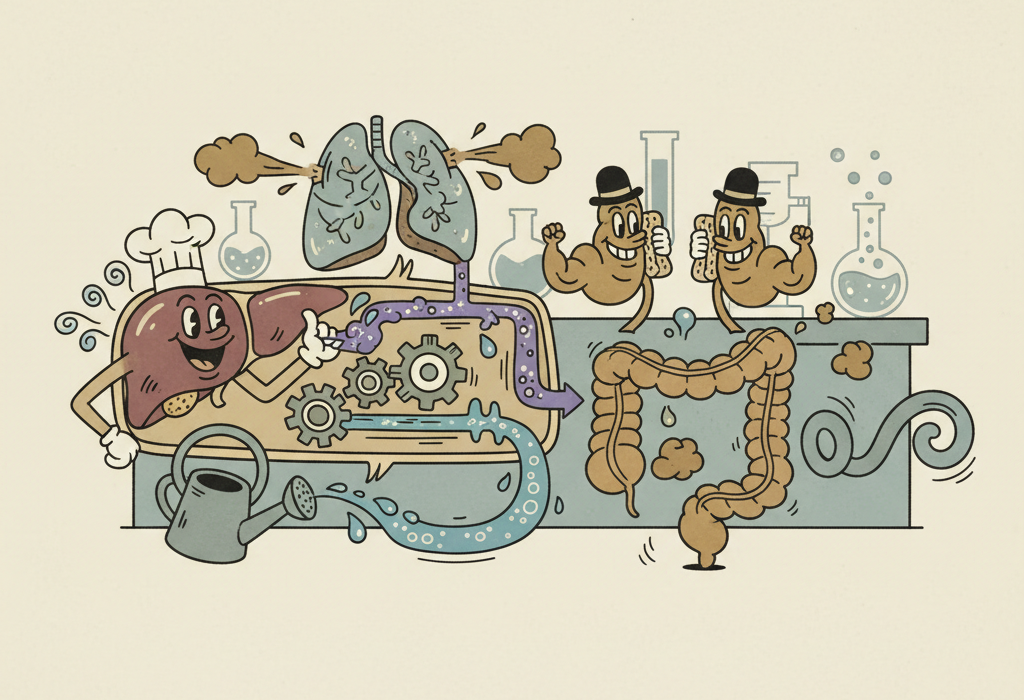
When you hear the word “detox,” you might picture green smoothies, fasting retreats, or expensive supplements. Popular culture often frames detoxification as flushing out artificial chemicals from modern life. However, the most dangerous chemicals your body encounters are often the ones it makes itself.
Your immune system is a chemical warfare machine. When harmful bacteria or viruses invade, your immune cells produce highly toxic compounds to destroy them. These compounds are essentially biological bleach. While they are incredibly effective at killing pathogens, they are also highly destructive to your own healthy cells.
So, how does your body survive its own defense mechanisms?
The answer lies in a brilliant, microscopic detoxification system. Your body uses a specific set of molecules to “funnel” these harsh, damaging chemicals into a milder, targeted weapon. This allows your immune system to kill invaders without destroying the surrounding tissue.
This article explains the actual science of cellular detoxification, how your body neutralizes its own immune chemicals, and what a 2019 review in Biochemical Pharmacology reveals about this hidden protective network.
Why Your Body Produces Toxins
To understand how the body detoxifies, we first have to understand why it creates toxic chemicals in the first place.
When you get a cut or breathe in a harmful microbe, your innate immune system responds immediately. White blood cells called macrophages (MAK-roh-fahj) and neutrophils rush to the site. Their job is to swallow the invading bacteria and destroy them.
To do this, they use reactive oxygen species (ree-AK-tiv OX-ee-jen SPEE-sees), often abbreviated as ROS. These are highly reactive molecules containing oxygen that can tear apart the cell walls and DNA of invading microbes.
The process works like this:
1. Immune cells consume oxygen and convert it into superoxide.
2. Superoxide is converted into hydrogen peroxide.
3. Specialized enzymes combine the hydrogen peroxide with salt compounds to create hypohalous acids (high-po-HAL-us acids).
One of the most common hypohalous acids created by your immune cells is hypochlorous acid (HOCl). In the outside world, hypochlorous acid is the active ingredient in household bleach.
Your white blood cells literally drop bleach bombs on bacteria. This is highly effective for clearing an infection. However, hypochlorous acid does not care what it destroys. If left unchecked, it will damage your own cell membranes, proteins, and DNA. This collateral damage is a major driver of chronic inflammation.
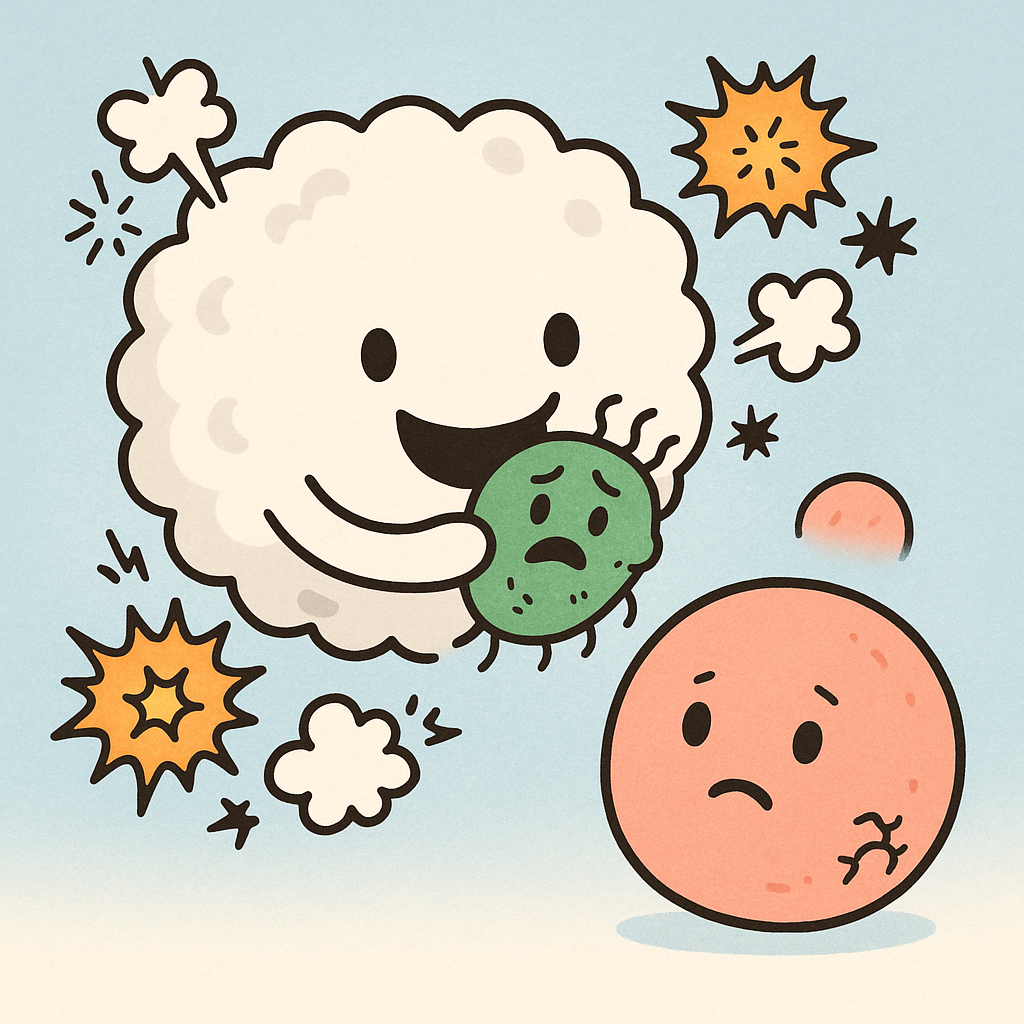
This creates a biological puzzle. If our immune system relies on biological bleach to keep us safe, how do we avoid burning our own tissues from the inside out?
The Detox Funnel: How Thiocyanate Protects You
This is where your body’s true detoxification system steps in. According to researchers in Biochemical Pharmacology, the body uses a unique molecule called thiocyanate (thigh-oh-SIGH-uh-nate) to solve this problem.
Thiocyanate is a naturally occurring compound found in all of the fluids that interface with the outside world. It is highly concentrated in your saliva, tears, nasal fluids, lung fluids, and gastric juices.
Thiocyanate acts as a master regulator for your immune system. It functions as a chemical funnel. When highly destructive immune chemicals like hypochlorous acid are released, thiocyanate reacts with them directly. It transforms these harsh, bleach-like chemicals into a much milder compound called hypothiocyanous acid (high-po-thigh-oh-sigh-AN-us acid), or HOSCN.

Think of thiocyanate like a biological dampener. It takes a wild, uncontrollable fire and turns it into a precise laser beam.
This new compound, HOSCN, is remarkable for two reasons:
1. It is still highly toxic to bacteria, viruses, and fungi.
2. It is much less damaging to human tissue.
Unlike biological bleach, which destroys everything it touches, HOSCN is highly specific. It targets specific proteins inside bacteria that control their metabolism and ability to replicate. It essentially starves and paralyzes the bacteria without causing widespread damage to the surrounding environment.
The Enzyme Shield: Why We Survive But Bacteria Do Not
Even though HOSCN is milder than bleach, it is still an oxidant. It still has the potential to cause oxidative stress if it builds up in your tissues.
To safely clear this chemical out of the body, human cells have evolved a specialized detoxification enzyme called thioredoxin reductase (thigh-oh-ree-DOX-in ree-DUK-tase).
This enzyme acts as the final cleanup crew. Once HOSCN has done its job killing the invading bacteria, thioredoxin reductase neutralizes the HOSCN, turning it back into harmless thiocyanate and water. The thiocyanate is then recycled to be used again.
The secret to this enzyme is a specific amino acid called selenocysteine (seh-lee-no-SIS-teen), which contains the mineral selenium. Selenium reacts incredibly fast with HOSCN, neutralizing it before it can cause harm.
Here is the most fascinating part of this evolutionary arms race: bacteria do not have this defense mechanism.
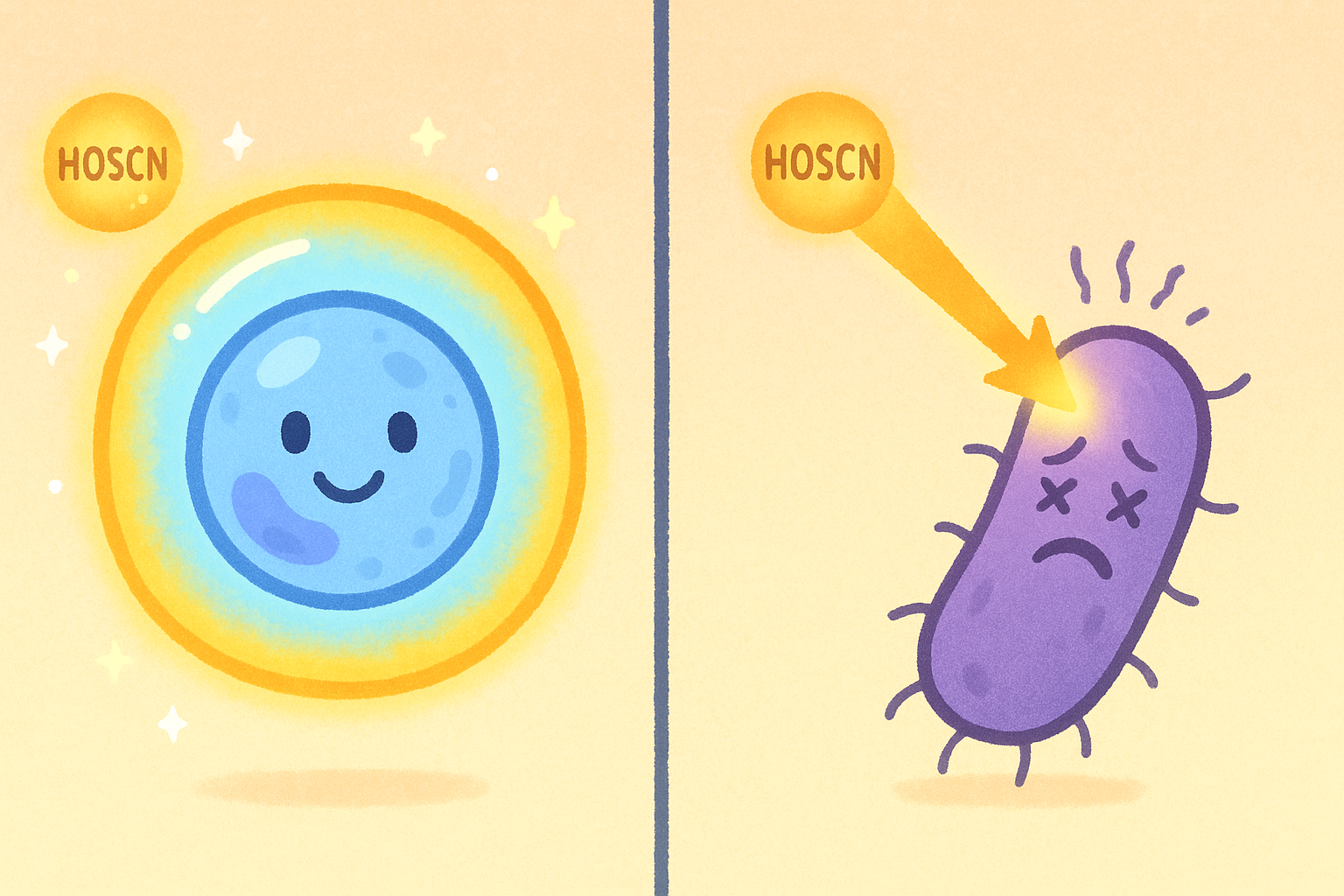
Over millions of years of evolution, human enzymes incorporated selenium to detoxify these specific immune chemicals. Bacterial enzymes diverged on a different evolutionary path and lack this specific selenium structure. In fact, when HOSCN encounters a bacterial enzyme, it permanently disables it.
Because of this microscopic difference, your body can safely detoxify and recycle the chemical, while the invading bacteria are completely destroyed.
What Happens When This Detox System Fails?
When your body lacks enough thiocyanate, or when the immune system becomes overwhelmed, the detoxification funnel breaks down. The body defaults to producing harsh hypochlorous acid (bleach) instead of the milder HOSCN.
This leads to severe tissue damage and chronic inflammation. Scientists are now studying how this broken detox system contributes to various diseases.
Cystic Fibrosis and Lung Infections
People with cystic fibrosis have a genetic mutation that affects their cellular channels. These channels are responsible for moving salt and thiocyanate into the lungs.
Because they cannot transport thiocyanate properly, people with cystic fibrosis have significantly lower levels of it in their saliva and lung fluids. Without this protective funnel, their immune systems produce too much harsh hypochlorous acid when fighting lung infections. This causes severe inflammation and damages the delicate lung tissue over time.
Researchers have found that treating mice with nebulized thiocyanate actually improves their lung infection outcomes. It clears the bacteria, reduces inflammation, and protects the lung tissue from oxidative damage.
Cardiovascular Disease
This detoxification system also plays a role in heart health. The enzyme that produces hypochlorous acid is called myeloperoxidase (my-eh-low-per-OX-ih-dase), or MPO.
High levels of MPO in the blood are strongly associated with vascular disease and an increased risk of mortality after a heart attack. The harsh oxidants produced by MPO can damage blood vessels and drive the formation of plaque in the arteries. If you are interested in how doctors measure these inflammatory markers, you can read more about What Blood Tests for Inflammation Actually Tell Us About Your Health.
However, a recent study noted in the review found that patients with high thiocyanate levels had a lower risk of mortality, even if they had high MPO levels. The thiocyanate likely helped funnel the dangerous oxidants into safer compounds, protecting the cardiovascular system from inflammatory damage.
Where Do We Get Thiocyanate?
Your body does not make thiocyanate entirely from scratch. It relies on your diet.
Thiocyanate comes primarily from plants in the Brassicaceae family, commonly known as cruciferous vegetables. When you digest these plants, your body breaks down their natural compounds and converts them into thiocyanate, which is then pumped into your saliva and mucus.
Foods that support this cellular detoxification system include:
- Broccoli
- Cabbage
- Cauliflower
- Brussels sprouts
- Kale
- Radishes
Research shows that vegans and vegetarians typically have higher levels of thiocyanate in their blood plasma compared to the general population due to their higher intake of these vegetables. This is one of the many reasons why plant-heavy diets are linked to lower inflammation. You can explore more about this connection in our guide on How an Anti-Inflammatory Diet Actually Affects Your Body.
Common Questions About Cellular Detoxification
Does licking a wound actually help it heal?
Yes, there is biological truth to this instinct. Animals and humans have historically licked wounds because saliva contains a rich cocktail of healing agents. Saliva has the highest concentration of thiocyanate in the body, along with enzymes that generate antimicrobial compounds. Applying saliva to a wound delivers a direct dose of HOSCN, which kills surface bacteria without damaging the exposed, vulnerable tissue.
Do smokers have higher thiocyanate levels?
Paradoxically, yes. Cigarette smoke contains high levels of cyanide. The body detoxifies cyanide by converting it into thiocyanate. As a result, smokers have unusually high levels of thiocyanate in their blood. However, the massive amount of toxins, free radicals, and lung damage caused by smoking completely overwhelms any potential protective benefit of the thiocyanate.
Can I take a thiocyanate supplement?
Currently, thiocyanate is not recommended as an over-the-counter supplement. In the mid-20th century, it was used as a prescription medication for high blood pressure, but it was given in very large doses that caused side effects like reversible hypothyroidism. Today, scientists are researching highly controlled, localized treatments (like inhaled thiocyanate for lung diseases), but the safest way to support your levels at home is simply by eating cruciferous vegetables.
The Bottom Line
Detoxification is not a process of flushing out your digestive tract with specialized juices. It is a highly sophisticated, microscopic operation happening inside your tissues every second of the day.
To protect you from infection, your immune system creates harsh, bleach-like chemicals. To protect you from your own immune system, your body uses thiocyanate to funnel those harsh chemicals into a milder, targeted weapon called HOSCN. Finally, your cells use a specialized selenium-based enzyme to safely neutralize the HOSCN once the threat is gone.
What we know:
- The innate immune system uses reactive oxygen species to kill bacteria, fungi, and viruses.
- These oxidants can cause severe damage to human tissue if left unchecked.
- Thiocyanate converts damaging biological bleach into a safer, targeted antimicrobial compound.
- Human enzymes can safely neutralize this compound, while bacterial enzymes cannot.
What remains uncertain:
- Scientists are still determining the exact therapeutic dosages of thiocyanate that could be used to treat inflammatory diseases like cystic fibrosis and COPD without causing side effects.
- The exact balance between thiocyanate’s role as an antioxidant and a cell-signaling molecule is still being actively researched.
By understanding how the body actually cleans up its own toxic byproducts, we can better appreciate the complex biology that keeps us healthy and focus our dietary habits on foods that genuinely support these cellular systems.
Quick Reference: Key Studies
| Study Focus | Key Finding | Source |
|---|---|---|
| Immune Oxidant Network | Thiocyanate acts as a master regulator, converting harsh immune oxidants into HOSCN, which kills pathogens but can be safely detoxified by host cells. | PMID 30876918 |
Last updated: April 2026
This article synthesizes findings from peer-reviewed research. It is for educational purposes only and does not constitute medical advice. Consult a healthcare provider before starting any new regimen.

Leave a Reply