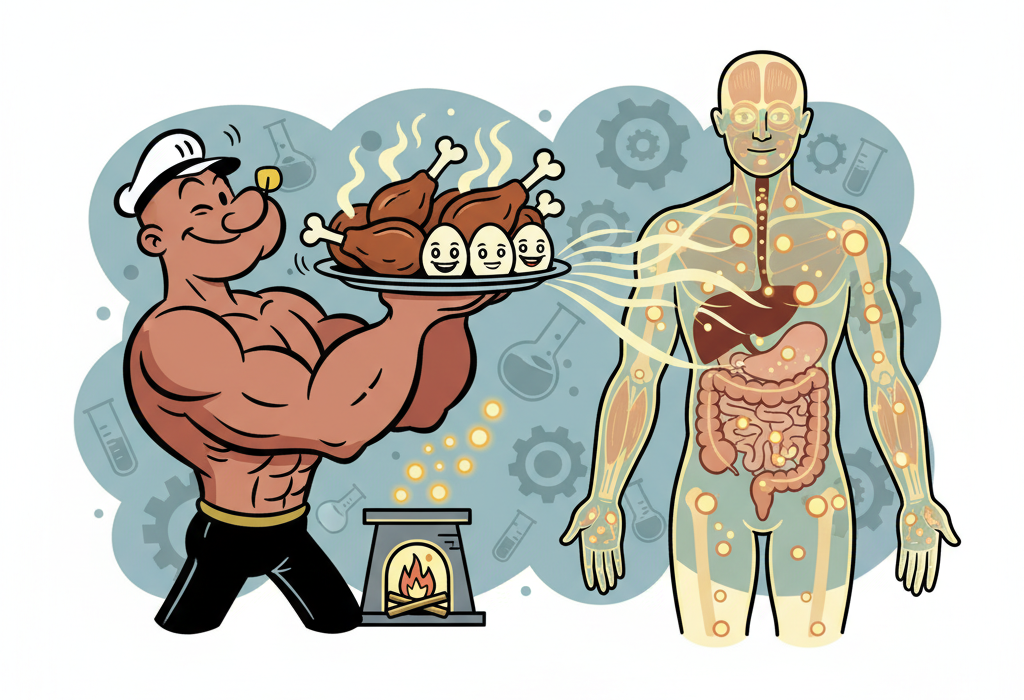
Why the Protein on the Label Isn’t the Whole Story
Imagine you order two packages online. Both weigh the same and look similar from the outside. But when you open them, one is packed with exactly what you need, while the other is mostly packing peanuts with a few useful items buried inside.
That is roughly what happens when your body digests different protein sources. A serving of pork and a serving of black beans might both be labeled as “equivalent” protein foods by dietary guidelines, but the amount of usable protein your body actually absorbs from each one can be surprisingly different.
This concept is called protein bioavailability (BYE-oh-uh-VAIL-uh-BIL-uh-tee), which refers to how much of the protein you eat actually makes it into your bloodstream in a form your body can use. It is one of the most important and least understood aspects of nutrition. Two recent research efforts shed new light on what this means for your daily meals, whether you eat meat, follow a plant-based diet, or fall somewhere in between.
What the Research Shows
Not All “Ounce-Equivalents” Are Actually Equivalent
The Dietary Guidelines for Americans (DGA) group protein-rich foods together and measure them in units called ounce-equivalents (oz-eq). According to the guidelines, one ounce of meat, one whole egg, a quarter cup of beans, and half an ounce of nuts are all considered nutritionally similar. The idea is that you can swap them freely in your diet.
But a 2023 crossover trial published in Nutrients tested whether that assumption holds up in real life. Researchers at Purdue University ran two carefully controlled feeding trials: one in 30 young adults (average age 26) and one in 25 older adults (average age 64). Each person ate four different test meals on separate days, each containing two ounce-equivalents of a different protein source: pork loin, scrambled eggs, black beans, or sliced almonds. The rest of the meal was the same each time.
After eating, the researchers drew blood samples at regular intervals over five hours and measured how much of the essential amino acids (uh-SEN-shul uh-MEE-no AS-ids), or EAAs, appeared in the bloodstream. Essential amino acids are the building blocks of protein that your body cannot make on its own. You have to get them from food.
The results were clear. Here is how the EAA content stacked up across the four foods, per two ounce-equivalents:
| Protein Food | EAA Content (grams) | EAA Bioavailability |
|---|---|---|
| Pork loin | 7.36 g | Highest |
| Whole eggs | 5.38 g | Second highest |
| Black beans | 3.02 g | Lower |
| Almonds | 1.85 g | Lowest |
Pork delivered roughly four times the usable essential amino acids as almonds, despite both being classified as “equivalent” by the dietary guidelines. Eggs outperformed both plant sources by a wide margin as well. The differences were statistically significant (p < 0.0001) and consistent across every time point measured.
Pork also resulted in greater EAA bioavailability than eggs in both young and older adults.
An important finding: age did not matter. Young and older adults absorbed EAAs from these foods at comparable overall rates. This challenges a common assumption that older adults have a harder time absorbing protein.
What About the Bigger Picture for Plant-Based Diets?
If animal protein delivers more usable amino acids per serving, does that mean plant-based diets are a bad idea? Not necessarily.
A 2025 comprehensive review in Current Nutrition Reports looked at the broader health evidence around plant-based dietary patterns. The review compiled data from large cohort studies and clinical trials involving hundreds of thousands of participants. It found that diets emphasizing fruits, vegetables, legumes, whole grains, nuts, and unsaturated oils are consistently associated with:
- Lower body weight (clinical trials showed an average loss of 3.4 kg without calorie restrictions)
- Reduced risk of type 2 diabetes (23% lower risk with higher adherence to plant-based diets)
- Lower cardiovascular disease incidence (10-16% reduction in risk)
- Reduced blood pressure and cholesterol levels
These associations were strongest for what the researchers called a healthy plant-based diet index (hPDI), which focuses on whole, unprocessed plant foods. An unhealthy plant-based diet full of refined grains, added sugars, and processed snacks did not show the same benefits and was actually associated with increased obesity risk.
So the research presents a nuanced picture: animal proteins deliver more usable amino acids per standardized serving, but overall dietary patterns rich in plant foods are associated with better long-term health outcomes across many measures.
Why the Difference in Bioavailability?
Several factors explain why plant and animal proteins behave differently in your body:
Amino acid profile. Animal proteins are “complete” proteins, meaning they contain all nine essential amino acids in the proportions your body needs. Most plant proteins (except soy) are low in one or more essential amino acids. Black beans, for example, are low in methionine. Almonds are low in lysine.
Digestibility. Plant cells have rigid cell walls made of fiber and other compounds called antinutrients (AN-tee-NOO-tree-unts), such as phytates and tannins. These can partially block protein digestion and amino acid absorption. Animal proteins do not have these barriers.
Protein density. Ounce for ounce, animal foods simply contain more total protein. Two ounce-equivalents of pork contain about 14 grams of total protein, while two ounce-equivalents of almonds contain about 6 grams.
This does not mean plant proteins are useless. It means you may need to eat more of them, or combine different plant sources, to get the same amino acid benefit.
Who Benefits Most and Who Should Be Careful
The implications of this research vary depending on your life stage, activity level, and dietary pattern.
| Group | Key Consideration | What the Research Suggests |
|---|---|---|
| Older adults (55+) | Maintaining muscle mass becomes harder with age | The Purdue trial found no age-related difference in EAA absorption, which is encouraging. But older adults still need adequate total EAA intake. Including some animal protein or carefully combining plant proteins may help meet needs. |
| Athletes and active people | Higher protein demands for muscle repair and growth | Protein anabolism (AN-uh-buh-liz-um), the process of building new muscle tissue, depends heavily on EAA availability. Animal sources provide a more concentrated EAA stimulus per serving. |
| Vegans and vegetarians | Relying entirely on plant sources | Plant-based diets offer significant health benefits, but individual meals may fall short on EAAs unless portions are larger or sources are strategically combined. |
| People managing chronic disease | Balancing protein quality with overall diet quality | The broader evidence supports plant-rich diets for heart health, blood sugar, and weight management. The key is focusing on whole, unprocessed plant foods rather than refined alternatives. |
| People with kidney disease | May need to limit total protein | Should work with a healthcare provider regardless of protein source. |
A Word of Caution
It is important not to over-interpret the Purdue study. It measured amino acid levels in the blood after a single meal. It did not measure actual muscle growth or long-term health outcomes. A food that delivers fewer EAAs in one sitting can still contribute meaningfully to your total daily protein intake, especially when eaten in larger portions or combined with complementary foods.
How to Put This Into Practice
Whether you eat meat, follow a plant-based diet, or do a mix of both, here are evidence-informed ways to make the most of the protein you eat.
If You Eat Animal and Plant Proteins
You have the most flexibility. The research suggests that including moderate amounts of animal protein (like eggs, lean pork, poultry, or fish) alongside plenty of plant foods gives you both high EAA bioavailability and the broader health benefits of a plant-rich diet. This aligns with what the EAT-Lancet Commission calls a “planetary health diet,” which emphasizes plant foods while including small amounts of animal products.
If You Eat Mostly or Entirely Plant-Based
You can still meet your essential amino acid needs, but it takes more planning:
- Combine complementary proteins. Beans are low in methionine but high in lysine. Grains are the opposite. Eating them together (like rice and beans, or hummus with pita) covers the gaps. They do not need to be in the same meal, just consumed over the course of the day.
- Eat larger portions of plant proteins. Since plant foods deliver fewer EAAs per serving, you may need to eat more of them. For example, to match the EAA content of two ounce-equivalents of pork (7.36 g EAA), you would need roughly five ounce-equivalents of black beans.
- Include soy. Soy is one of the few plant proteins that is complete, containing all essential amino acids in adequate amounts. Tofu, tempeh, edamame, and soy milk are practical options.
- Consider leucine. Leucine (LOO-seen) is a specific essential amino acid that plays a key role in triggering muscle protein synthesis. It is particularly abundant in animal proteins. Plant-based eaters may benefit from including leucine-rich plant foods like soybeans, lentils, and peanuts.
For Older Adults Specifically
The good news from the Purdue study is that your body’s ability to absorb EAAs from food does not appear to decline significantly with age. However, because older adults often eat less overall and may be more prone to sarcopenia (SAR-koh-PEE-nee-uh), the gradual loss of muscle mass that comes with aging, it is especially important to make each protein serving count.
A practical approach: aim to include a high-quality protein source at each meal rather than concentrating all your protein at dinner, which is a common pattern.
Quick Tips for Maximizing Protein Bioavailability
| Strategy | Why It Helps |
|---|---|
| Soak and cook dried beans | Reduces antinutrients like phytates that block absorption |
| Combine grains + legumes | Covers amino acid gaps in each food |
| Include soy-based foods | Soy is a complete plant protein |
| Spread protein across meals | Gives your body a steady supply of EAAs throughout the day |
| Cook your food | Cooking generally improves protein digestibility for both plant and animal sources |
The Bottom Line
What We Know
- When measured in the same “ounce-equivalent” portions used by the Dietary Guidelines for Americans, animal-based protein foods (pork, eggs) deliver significantly more bioavailable essential amino acids than plant-based protein foods (black beans, almonds). This was demonstrated in a well-designed crossover trial in both young and older adults.
- Age does not appear to significantly affect how well your body absorbs essential amino acids from these foods.
- Despite lower per-serving protein bioavailability, plant-based dietary patterns are consistently associated with lower risks of obesity, type 2 diabetes, and cardiovascular disease in large population studies.
- The quality of a plant-based diet matters enormously. Whole food, plant-based diets show health benefits. Diets heavy in processed plant foods do not.
What We Don’t Know
- The Purdue study measured blood amino acid levels, not actual muscle protein synthesis or long-term muscle mass changes. We cannot say for certain how these single-meal differences translate into real-world outcomes over months or years.
- Most of the long-term health data on plant-based diets comes from observational studies, which show associations but cannot prove cause and effect.
- There is limited research directly comparing long-term muscle and strength outcomes in people eating carefully planned plant-based diets versus mixed diets with the same total protein intake.
- The crossover trial tested only four specific foods. Other plant proteins (like soy, lentils, or quinoa) may perform differently.
The Practical Takeaway
Think of protein quality and overall diet quality as two separate but related goals. If you eat a mixed diet, including some animal protein alongside plenty of plants is a straightforward way to cover both. If you eat plant-based, you can absolutely meet your protein needs, but it requires more attention to food combinations, portion sizes, and choosing whole foods over processed ones.
The current dietary guideline system that treats one ounce of meat as equivalent to a quarter cup of beans is, based on this research, misleading when it comes to protein nutrition. That does not mean beans are bad. It means you should not assume a quarter cup of beans does the same job for your muscles as an ounce of meat. You may just need to eat more beans, or pair them with other protein sources.
Quick Reference: Key Studies
| Study Focus | Design | Participants | Key Finding | Source |
|---|---|---|---|---|
| EAA bioavailability from animal vs. plant protein foods (oz-eq basis) | Randomized crossover trial | 55 adults (young and older) | Pork and eggs provided significantly greater EAA bioavailability than black beans and almonds; no age-related differences | PMID 37447197 |
| Plant-based diets and human/planetary health | Comprehensive narrative review | Multiple cohorts (hundreds of thousands of participants reviewed) | Plant-based diets associated with lower obesity, T2D, CVD risk, and reduced environmental impact; quality of plant foods matters | PMID 39982647 |
Last updated: June 2025
This article synthesizes findings from peer-reviewed research. It is for educational purposes only and does not constitute medical advice. Consult a healthcare provider before starting any new regimen.
Leave a Reply