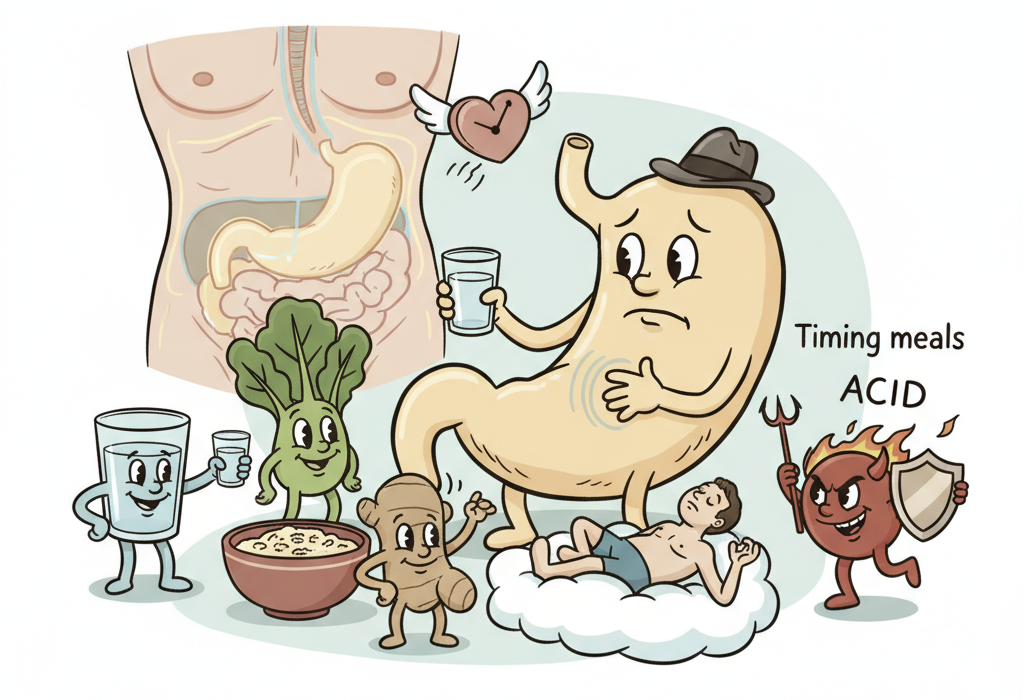
Almost everyone has experienced the uncomfortable burning sensation in their chest after eating a heavy or spicy meal. For many people, this occasional heartburn is a minor annoyance. However, when acid reflux happens frequently and starts interfering with daily life, it becomes a chronic condition known as gastroesophageal reflux disease (gas-tro-ih-soff-uh-JEE-ul REE-flux dih-ZEEZ), or GERD.
GERD is incredibly common, affecting up to 20 percent of adults in Western countries. The standard treatment usually involves a daily medication to reduce stomach acid. While these drugs work perfectly for some, up to 40 percent of people with GERD continue to experience symptoms despite taking their medication daily. This leaves many patients frustrated and searching for better answers.
So, what does the latest medical research say about managing this condition? It turns out that GERD is not a single, simple problem. It is a complex mix of digestive mechanics, nerve sensitivity, and lifestyle factors. By understanding how the body actually works, we can better understand why some treatments fail and what science suggests doing instead.
How This Might Work: The Mechanics of Reflux
To understand GERD, it helps to think of your stomach as a blender. When you eat, the stomach churns food and mixes it with strong acid to break it down. At the top of the stomach, where it meets the esophagus (ih-SOFF-uh-gus), or food pipe, there is a ring of muscle called the lower esophageal sphincter (LOW-er ih-soff-uh-JEE-ul SFINK-ter).
This sphincter acts like a lid on the blender. It opens to let food in, then tightly closes to keep the acidic mixture safely inside the stomach. In people with GERD, this lid does not work correctly.
A 2026 review in Digestion explains that the sphincter sometimes relaxes when it should not. This allows stomach juices to splash up into the delicate food pipe. Because the esophagus does not have the same protective lining as the stomach, the acid causes irritation, inflammation, and the classic burning pain of heartburn.
Researchers have also identified something called the “acid pocket.” After a meal, a layer of highly acidic juice floats on top of the food in your stomach. If you lie down or bend over, this acidic top layer is perfectly positioned to spill up into the esophagus.
What the Research Shows About Medication
When you visit a doctor for daily heartburn, the first step is usually a prescription for a proton pump inhibitor (PRO-tahn pump in-HIB-ih-ters), or PPI. Common examples include omeprazole and pantoprazole.
The Role of Proton Pump Inhibitors
PPIs are very effective at doing one specific job. They turn down the acid-producing pumps in your stomach. A 2022 clinical guideline in The American journal of gastroenterology recommends an 8-week trial of a PPI as the primary starting point for typical GERD symptoms.
By making the stomach juices less acidic, PPIs give the irritated lining of the esophagus a chance to heal. A 2018 review in Gastroenterology notes that PPIs successfully heal visible damage in the esophagus for about 80 percent of patients.
However, PPIs have a major limitation. They do not tighten the loose sphincter muscle. The physical splashing of stomach contents still happens, but the liquid is just less acidic. For many people, this is enough to stop the pain. For others, the physical upward movement of fluid still causes uncomfortable symptoms like regurgitation or a chronic cough.
A Newer Alternative: P-CABs
Recently, scientists have developed a new class of acid-blocking drugs called potassium-competitive acid blockers (puh-TASS-ee-um com-PET-ih-tiv AS-id BLAH-kers), or P-CABs.
A 2022 study in the World journal of gastroenterology compared these new drugs to traditional PPIs. The researchers found that P-CABs, such as vonoprazan, work much faster. While a traditional PPI might take three to five days to reach its full effect, a P-CAB can suppress acid on the very first day. They also seem to last longer throughout the night, which is highly beneficial for people who wake up with severe heartburn.
Why Standard Treatments Sometimes Fail
If you take your medication perfectly and still have symptoms, you are not alone. Scientists now recognize several reasons why standard acid blockers might not solve the problem.
Non-Acid Reflux
If a PPI neutralizes your stomach acid, but the physical splashing continues, you are experiencing non-acid reflux. A 2020 report in Current gastroenterology reports explains that stomach fluid contains more than just acid. It also contains bile and digestive enzymes like pepsin. These substances can still irritate the throat and lungs, causing symptoms like a chronic cough, throat clearing, or a sour taste in the mouth. Standard acid blockers do nothing to stop these specific irritants.
Esophageal Hypersensitivity
Sometimes the problem is not the amount of reflux, but how the body feels it. A 2021 consensus paper in Neurogastroenterology and motility highlights a condition called reflux hypersensitivity. In these patients, normal, everyday amounts of reflux trigger severe pain signals. The nerves in the esophagus become overly sensitive. For these individuals, taking more antacids will not help. Instead, doctors sometimes prescribe low doses of nerve-calming medications to quiet the pain signals.
The Impact of Diet and Lifestyle
For decades, doctors have handed GERD patients a long list of foods to avoid, including coffee, chocolate, citrus, and spicy meals. While avoiding trigger foods is helpful, recent science points to broader lifestyle changes that make a bigger difference.
Weight and Belly Pressure
Carrying extra weight, particularly around the midsection, puts physical pressure on the stomach. This pressure forces the stomach contents upward against the sphincter muscle. A 2017 review in Current opinion in gastroenterology notes that losing weight is one of the most effective ways to reduce reflux symptoms. Even a small reduction in body weight can significantly decrease the frequency of heartburn.
Meal Timing and Sleep
A 2023 study in Nutrients emphasizes that eating late at night is a major risk factor for GERD. When you eat a large meal and immediately lie down, gravity is no longer helping keep your food down. The research strongly supports eating smaller meals and waiting at least three hours before going to bed.
Interestingly, some research suggests a complex relationship between GERD and stomach bacteria. Related: Treating H. pylori: Why Antibiotics Fail and What Science Says Works
Seaweed Extracts (Alginates)
For people looking for non-pill options, science supports the use of alginates. Alginates are natural compounds extracted from brown seaweed. A 2022 meta-analysis in Clinical nutrition ESPEN found that when alginates mix with stomach acid, they form a thick, foamy gel. This gel literally floats on top of the stomach contents, creating a physical raft that blocks the acid pocket from splashing up into the esophagus.
Common Questions About GERD
Is it safe to take acid blockers long-term?
Many people worry about taking PPIs for years due to alarming headlines. A 2020 review in the BMJ (Clinical research ed.) looked closely at these claims. The researchers concluded that many of the feared risks, like dementia or bone fractures, are based on weak observational data. However, there is a small but real increased risk of certain gut infections, because stomach acid normally kills incoming bacteria. The general medical consensus is that PPIs are safe for long-term use when prescribed by a doctor, but patients should always use the lowest effective dose.
Can acid reflux damage my teeth?
Yes. A 2022 study in Special care in dentistry confirms that stomach acid reaching the mouth can wear away tooth enamel. Dentists often spot silent GERD by noticing severe enamel erosion on the back teeth. GERD is also linked to dry mouth and nighttime teeth grinding.
Who Benefits Or Needs Caution
GERD affects different age groups in very different ways, and treatments must be adjusted accordingly.
Infants and Babies
It is very common for babies to spit up after feeding. A 2019 review in Paediatrics and international child health points out that up to 50 percent of all healthy infants regurgitate daily. These babies are often called “happy spitters” because they are growing normally and are not in pain.
A 2024 consensus in Acta paediatrica stresses that true GERD in infants is rare. Doctors strongly advise against giving acid-blocking medications to happy spitters. The spitting up usually resolves on its own by the time the baby is 12 months old.
Older Adults
GERD behaves differently in the elderly. A 2014 study in Clinics in geriatric medicine notes that older adults often do not feel the classic burning sensation of heartburn. Instead, they might present with a chronic cough, voice changes, or difficulty swallowing. Because they feel less pain, older adults are at a higher risk of developing severe, hidden damage to the esophagus before they seek treatment.
Practical Guidance
If you are managing GERD, research supports several practical steps to improve your symptoms:
- Optimize your medication timing: If you take a standard PPI, it must be taken 30 to 45 minutes before a meal (usually breakfast). Taking it after you eat significantly reduces how well it works.
- Elevate the head of your bed: Propping yourself up with extra pillows does not work well because it bends your stomach and increases pressure. Instead, place sturdy blocks under the headboard legs or use a specialized foam wedge that elevates your entire upper body.
- Chew gum after meals: Chewing sugar-free gum stimulates saliva production. Saliva naturally contains bicarbonate, which helps wash away and neutralize acid in the esophagus.
The Bottom Line
Gastroesophageal reflux disease is a physical plumbing issue that cannot always be fixed with a single medication. While acid-blocking drugs like PPIs remain the most proven way to heal damage in the esophagus, they do not stop the physical act of reflux.
For long-term success, evidence strongly supports combining medication with weight management, avoiding late-night meals, and elevating the head during sleep. If symptoms persist despite medication, it is highly recommended to see a gastroenterologist. They can perform tests to determine if you are dealing with non-acid reflux, nerve hypersensitivity, or a physical issue that might require a different approach.
Quick Reference: Key Studies
| Study Focus | Key Finding | Source |
|---|---|---|
| PPI Efficacy & Testing | An 8-week PPI trial is the recommended starting point for typical GERD symptoms. | PMID 34807007 |
| Newer Medications | P-CABs (like vonoprazan) suppress acid faster and longer than traditional PPIs. | PMID 36161043 |
| Diet & Lifestyle | Weight loss, head elevation, and avoiding late meals directly reduce acid exposure. | PMID 28146448 |
| Refractory GERD | Persistent symptoms on medication are often due to nerve hypersensitivity or non-acid reflux. | PMID 33368919 |
| Infant Reflux | Most infant spitting up is normal and does not require acid-blocking medications. | PMID 30080479 |
| Oral Health | GERD is strongly linked to dental enamel erosion and dry mouth. | PMID 35605234 |
Last updated: March 2026
This article synthesizes findings from peer-reviewed research. It is for educational purposes only and does not constitute medical advice. Consult a healthcare provider before starting any new regimen.
Leave a Reply