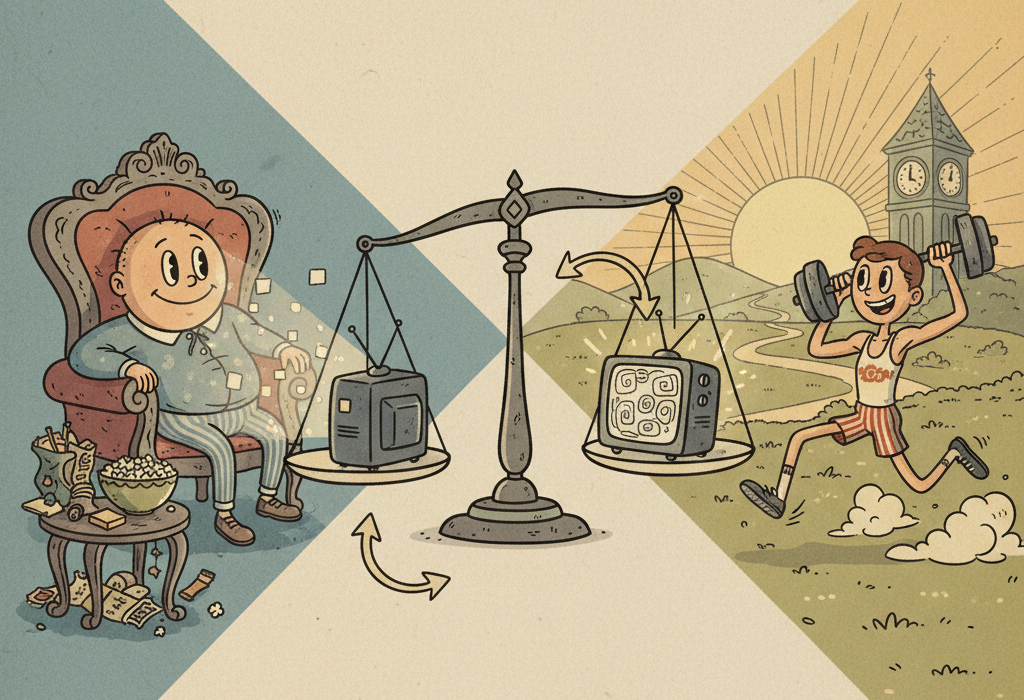
Most of us know that regular exercise is good for our health and that staring at screens all day is not. However, in the modern world, these two behaviors are constantly locked in a tug-of-war for our free time.

When we spend hours scrolling on a phone or watching television, we are not just resting. We are actively engaging in sedentary behavior (SED-en-tair-ee bee-HAYV-yer), which means activities that require very little energy. Scientists have spent the last few years studying how the balance between screen time and physical activity affects our bodies, our brains, and our sleep.
This balance became especially important recently. A 2022 global review in JAMA Pediatrics found that during the COVID-19 pandemic, daily screen time among children and teens increased by an average of 84 minutes per day.
So, what actually happens when screen time replaces physical activity, and can exercise undo the effects of a digital lifestyle? Here is what the latest research shows.
What the Research Shows About Screens and Our Bodies
When researchers look at how digital habits affect our physical health, they often focus on the “displacement hypothesis.” This is the idea that time spent on screens directly replaces time that could have been spent moving.

The Link to Weight and Metabolism
Multiple studies show a clear connection between high screen time, low physical activity, and weight gain. A 2024 study in The International Journal of Behavioral Nutrition and Physical Activity followed over 2,000 children for three years. The researchers found that children who spent four or more hours a day on screens had a significantly higher risk of developing obesity compared to those who used screens for less than two hours.
Interestingly, the researchers calculated what would happen if a child swapped just one hour of screen time for one hour of reading or physical activity. They found that reallocating that single hour to a non-screen activity noticeably reduced the risk of obesity.
Similar patterns appear in adults. A 2017 study on young adults found that people who exercised less than four hours a week and spent more than five hours a day on screens had a significantly higher body mass index (BAH-dee mass IN-dex), or BMI, than those with less screen time.
Related: The Hidden Dangers of Sedentary Behavior (Even If You Exercise)
How Screens Change Our Eating Habits
Screen time does not just replace exercise. It also changes how we eat.
A fascinating 2025 study in Nutrients used wearable cameras to track the daily habits of school-aged children. The cameras revealed that children with higher screen time tended to eat longer meals and consume more carbohydrates. More importantly, eating meals while watching a screen was strongly associated with a higher risk of obesity. When we eat in front of a screen, we are often distracted, which can lead to overeating because we do not notice when we are full.

The Impact on Sleep and Mental Health
Our bodies need physical activity to build sleep pressure, which helps us fall asleep and stay asleep. Screens, on the other hand, often disrupt this process.
Researchers in Brazil published a 2021 study in the Revista Paulista de Pediatria exploring how different lifestyle factors interact. They found a compounding effect. Adolescents who experienced a “triple threat” of physical inactivity, excessive screen time, and excess body weight had a much higher chance of experiencing short sleep duration.
Related: How Your Circadian Rhythm Controls Sleep (And What Science Says About Fixing It)
Beyond sleep, excessive screen time is also linked to emotional and behavioral challenges. A 2024 study in JAMA Network Open looked at nearly 49,000 young children in the United States. The researchers found that children aged 3 to 5 who had two or more hours of daily screen time were less likely to “flourish” meaning they showed less resilience and curiosity than children who had only one hour of screen time. They also showed higher rates of externalizing behaviors, such as hyperactivity and losing their temper.
Who Needs Extra Caution
While finding a balance between screens and movement is important for everyone, research highlights certain groups that may face unique challenges.
- Children with Asthma: A 2017 study in Clinical Pediatrics found that urban children with asthma spent significantly more time engaged with screens (35 hours per week) compared to their healthy peers (26 hours per week). Parents noted that symptoms during exercise were common, which may lead these children to choose sedentary indoor activities over active outdoor play.
- Adults with Blood Pressure Concerns: A 2025 study in Blood Pressure found that adults who experienced an exaggerated spike in blood pressure during exercise testing tended to have much higher daily smartphone screen time and lower physical activity levels than those with normal blood pressure responses.
- Children Born Prematurely: A 2021 study in JAMA Pediatrics noted that for children born extremely prematurely, high screen time at age 6 to 7 was associated with an increased risk of cognitive and executive function challenges.
When Screens and Exercise Team Up
It is easy to label all screen time as harmful, but technology can actually be used to encourage movement.
A 2016 clinical trial published in The Lancet looked at older adults who were at a high risk of falling. The researchers combined traditional treadmill training with non-immersive virtual reality (VR). The VR screen projected real-life challenges, like stepping over obstacles, which forced the participants to use their brains and bodies at the same time. The group that used the VR screen while exercising had significantly fewer falls in the months following the training compared to the group that only used the treadmill.
This shows that when screens require active physical and cognitive engagement, they can be a powerful tool for health.
Practical Guidance: How to Build Better Habits
If you want to shift the balance away from screens and toward physical activity, the research offers a few actionable strategies.
1. Parents must model the behavior: A 2012 study in the American Journal of Preventive Medicine looked at Portuguese families and found a very strong link between parent and child habits. If a mother or father watched more than two hours of TV a day, their children were highly likely to do the same. Changing habits requires a family-wide effort.
2. Keep screens out of the bedroom: The same 2012 study found that having a TV or computer in a child’s bedroom significantly increased the likelihood that they would exceed recommended screen time limits.
3. Separate screens and meals: Based on dietary research, keeping phones and televisions off during meals can prevent distracted overeating and improve overall diet quality.
Common Questions About Screen Time and Exercise
Does working out cancel out a day of binge-watching TV?
No. While exercise provides massive health benefits, prolonged periods of sitting carry their own independent health risks. It is best to exercise regularly and break up long periods of screen time with light movement.
Does the type of screen matter?
Yes. Passively watching television is generally associated with the lowest energy expenditure. Active video gaming or using screens for educational, interactive purposes can have different effects on the brain and body than mindless scrolling.
How much screen time is too much?
While guidelines vary by age, many health organizations recommend limiting recreational screen time to no more than two hours per day for older children and adults, and even less for young children.
The Bottom Line
The scientific consensus is clear. When recreational screen time dominates our day, it often displaces physical activity, disrupts sleep, and encourages poorer dietary choices. While heavy screen use is linked to higher risks of obesity and fatigue, the good news is that small swaps matter. Trading just one hour of scrolling or watching TV for a walk, a workout, or even reading a physical book can yield measurable benefits for your physical and mental health.
Quick Reference: Key Studies
| Study Focus | Key Finding | Source |
|---|---|---|
| Screen Time & Obesity | Reallocating 1 hour of screen time to reading or physical activity reduced obesity risk in children. | PMID 39350138 |
| Screens & Eating Habits | Eating meals in front of a screen was linked to longer meals, higher carb intake, and obesity risk. | PMID 41010518 |
| Mental Health in Kids | 2+ hours of daily screen time during early childhood was linked to lower resilience and more behavioral issues. | PMID 38441898 |
| Sleep & Lifestyle | The combination of low physical activity, high screen time, and excess weight drastically increased the risk of short sleep. | PMID 32876311 |
| Family Habits | A parent’s TV viewing time is a very strong predictor of how much TV their child will watch. | PMID 22813679 |
| Screens as a Tool | Combining treadmill exercise with a virtual reality screen reduced fall risk in older adults better than a treadmill alone. | PMID 27524393 |
Last updated: June 2026
This article synthesizes findings from peer-reviewed research. It is for educational purposes only and does not constitute medical advice. Consult a healthcare provider before starting any new regimen.


Leave a Reply