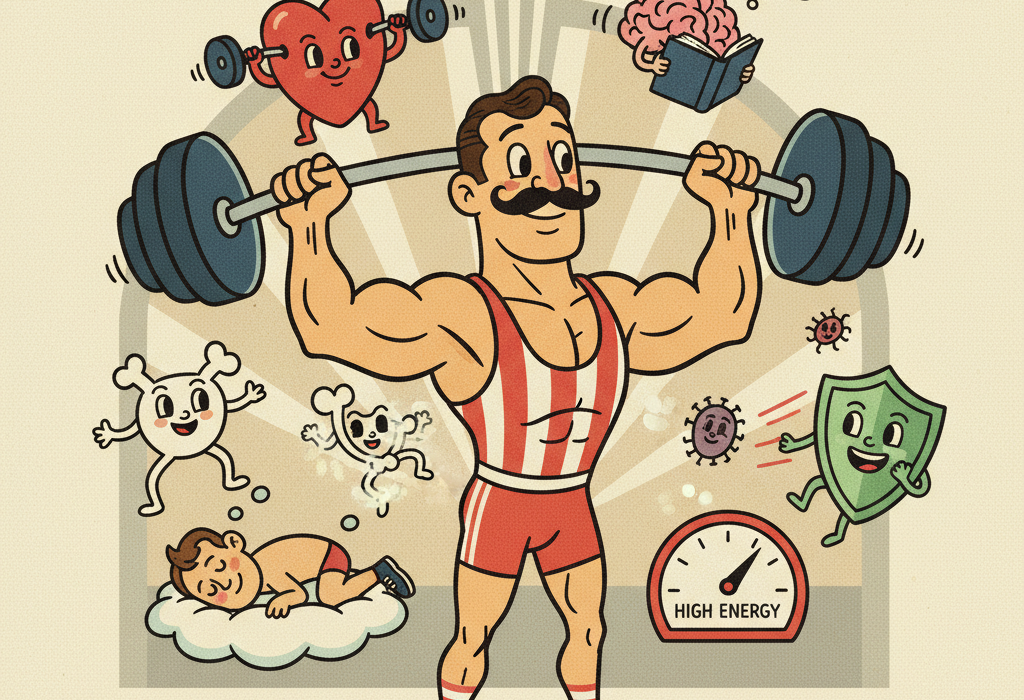
For decades, public health advice focused almost entirely on aerobic exercise like running or cycling. If you wanted to protect your heart and live longer, you did cardio. If you wanted to look a certain way, you lifted weights.
Today, scientific research tells a very different story. Weight training is no longer viewed just as a way to build visible muscle. It is now recognized as a highly effective medical intervention. Studies show that lifting weights can improve hormone levels, protect against age-related decline, and even lower your overall risk of mortality.
But how much weight training do you actually need? And does it benefit everyone equally? This article explores what peer-reviewed science actually shows about the physical and mental benefits of resistance training.
What the Research Shows About Weight Training
Weight training, also known as resistance training, involves making your muscles work against a weight or force. This can include using dumbbells, weight machines, resistance bands, or your own body weight.
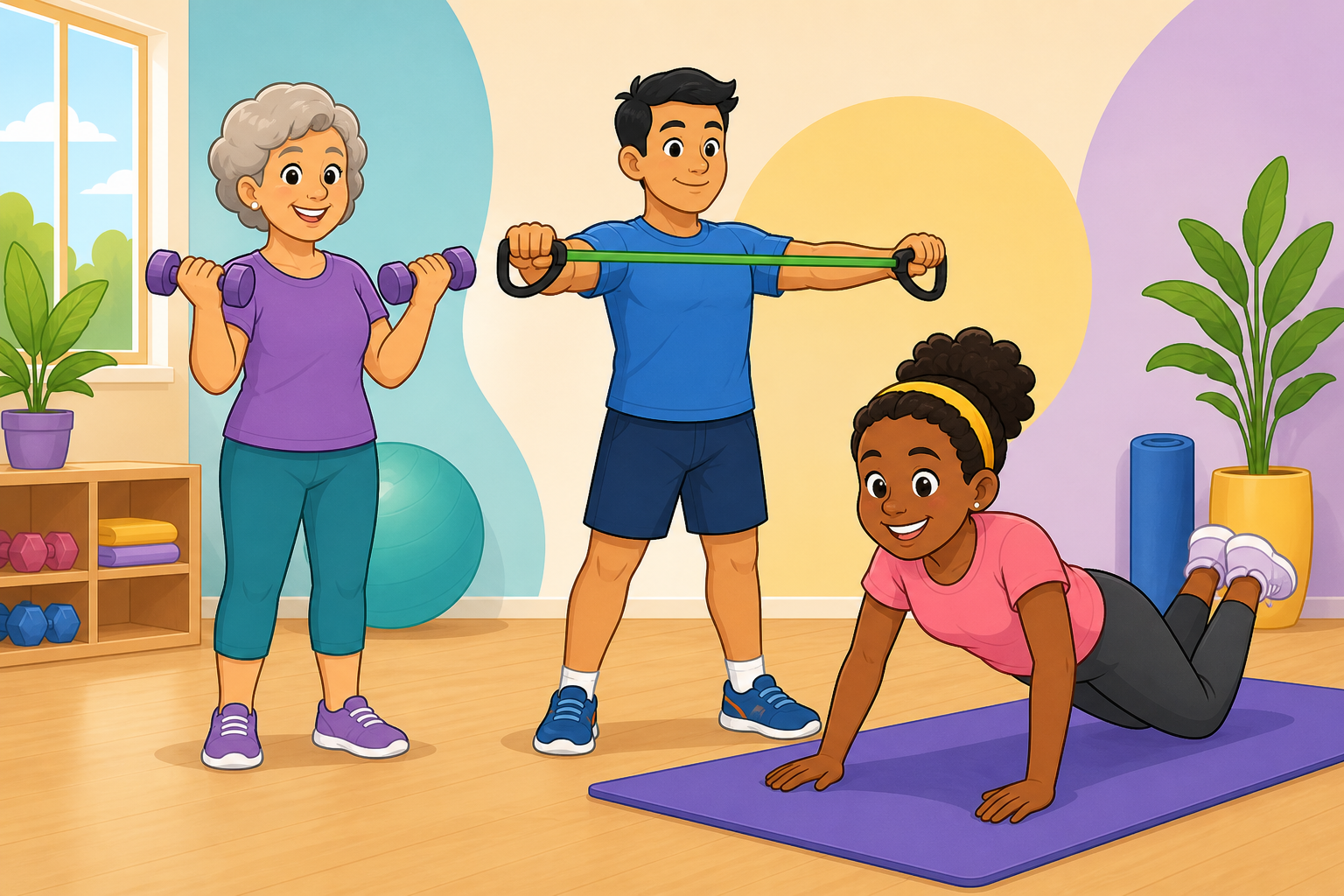
When scientists study the effects of resistance training, they look beyond the size of the muscles. They measure changes in metabolism, bone density, hormone production, and cellular health.
Living Longer and Protecting the Heart
One of the most common questions is whether weight training can actually help you live longer. A large 2023 study in Diabetes Care tracked over 33,000 men for up to 26 years to answer this question.
The researchers found that men who engaged in 1 to 59 minutes of weight training per week had a 14% lower risk of mortality compared to those who did no weight training. Those who lifted for 60 to 149 minutes per week saw an 8% reduction. Interestingly, the study found that doing more than 150 minutes of weight training a week did not offer additional mortality benefits.
The heart also benefits directly from this type of exercise. A scientific statement in Circulation noted that prescribed resistance training enhances cardiovascular function, lowers resting blood pressure, and improves the body’s ability to clear glucose from the blood.
Metabolism and Waist Circumference
Many people start exercising to change their body composition. When it comes to managing weight, aerobic exercise and weight training have different effects.
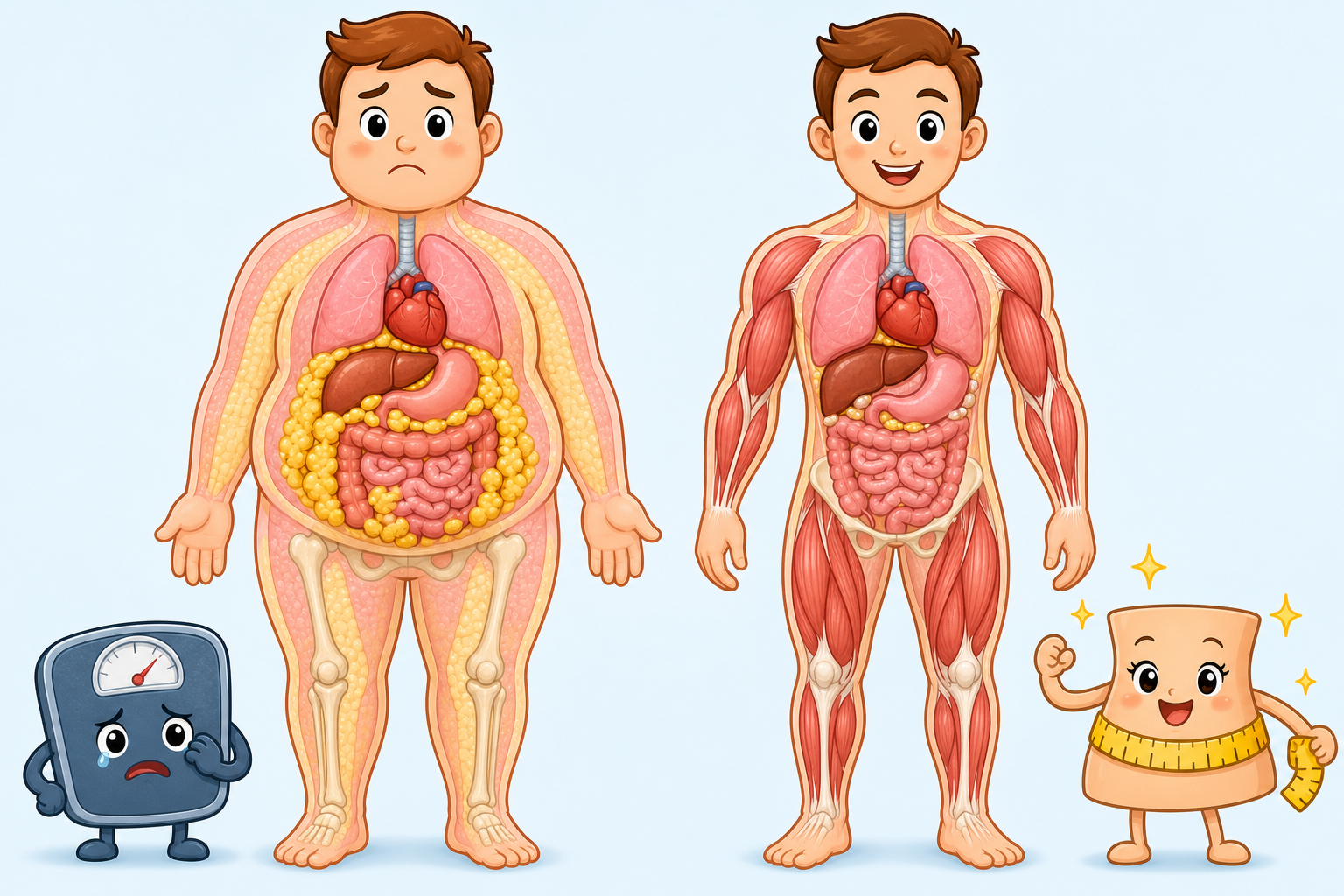
A 12-year study published in Obesity followed 10,500 healthy men to see how different exercises affected their bodies over time. The researchers found that men who spent 20 minutes a day doing aerobic exercise had the most success preventing overall weight gain. However, men who spent 20 minutes a day weight training had the most success preventing increases in their waist circumference.
This is an important distinction. Waist circumference is a primary indicator of visceral fat, which is the harmful fat stored deep inside the belly around the organs. Weight training helps keep this dangerous fat in check. Because muscle is denser than fat, people who lift weights might not see the scale drop, but they often see their waistlines shrink. Related: Understanding Fat Metabolism: How Your Body Actually Stores and Burns Fat
Hormonal Health and Aging
As we age, our bodies naturally produce fewer anabolic hormones. These are the hormones responsible for growth and repair.
A 2022 systematic review in Sports Medicine analyzed 33 studies to see if exercise could reverse this decline in adults over the age of 40. The results were clear. Regardless of the specific type of exercise, regular training increased basal levels of several key hormones in both men and women. These included:
- Testosterone
- IGF-1 (Insulin-like Growth Factor 1) – a hormone that manages the effects of growth hormone in your body
- Human Growth Hormone (hGH)
- DHEA (a precursor to sex hormones)
By naturally boosting these hormones, weight training helps older adults maintain tissue health and physical energy levels that usually decline with age.
Mental Health and Mood
The benefits of lifting weights extend to the brain. A study in the Journal of Consulting and Clinical Psychology looked at law enforcement officers who participated in a four-month circuit weight training program.
The researchers found that the officers who lifted weights experienced significant decreases in anxiety, depression, and hostility. They also reported fewer physical symptoms of stress and higher overall job satisfaction compared to the control group.
How This Might Work in the Body
To understand why lifting heavy objects improves health, we have to look at how muscles interact with the rest of the body.
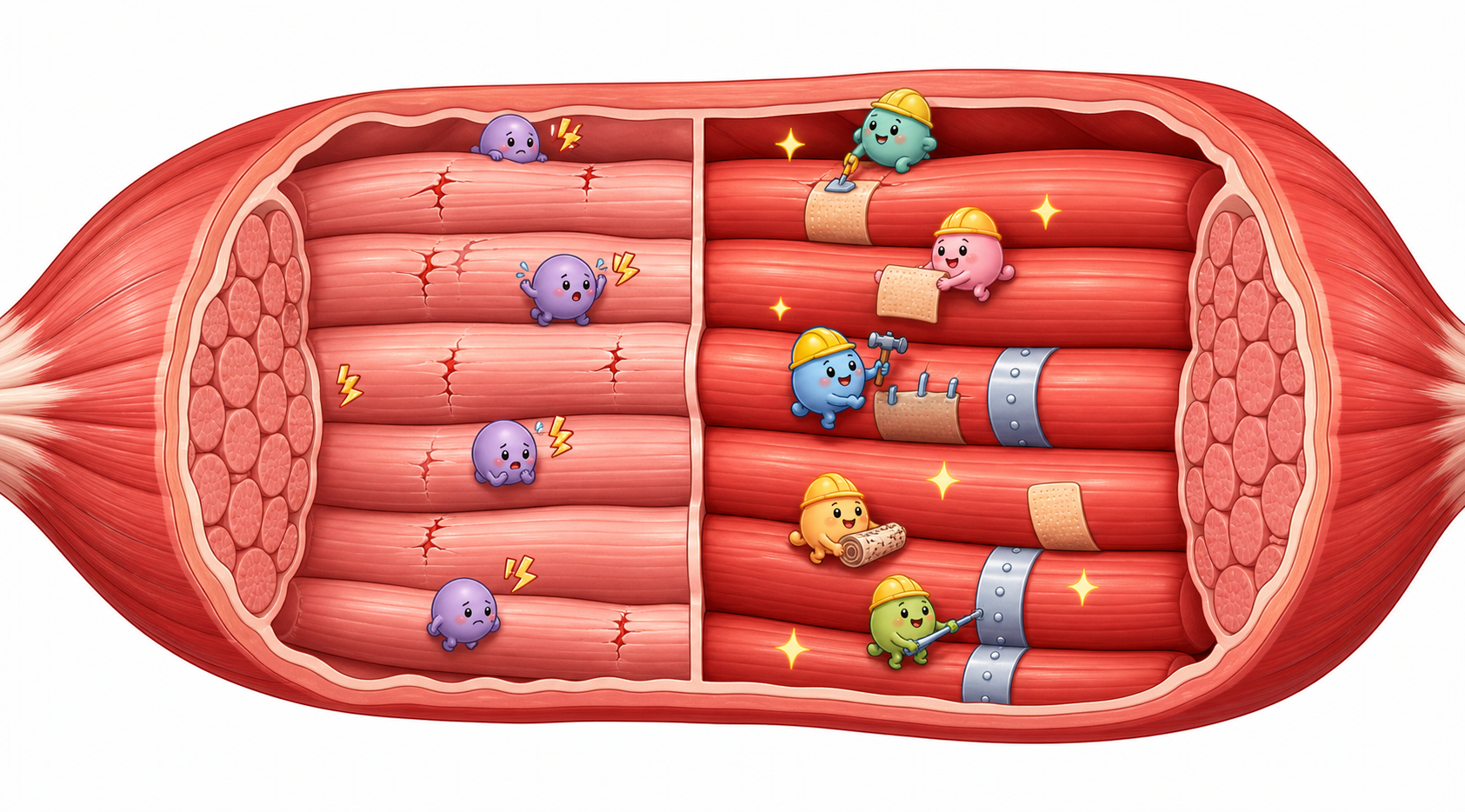
When you lift weights, you create microscopic tears in your muscle fibers. Your body responds by repairing these fibers, making them thicker and stronger. This process is called hypertrophy (hy-PER-troh-fee).
But the benefits go beyond the muscle itself.
The EPOC Effect: After a strenuous weight training session, your body requires extra oxygen to restore its energy reserves, balance hormones, and repair cells. This is known as Excess Post-exercise Oxygen Consumption (EPOC). Because of EPOC, your body continues to burn calories at a higher rate for hours, or even up to two days, after your workout is finished.
The Glucose Sink: Muscles are the primary place where your body stores carbohydrates for energy. When you build more muscle, you create a larger “sink” for glucose. A review in Preventive Medicine explains that this improves insulin sensitivity. When your muscles are highly sensitive to insulin, your body does not need to produce as much of it to keep your blood sugar stable, which lowers your risk of type 2 diabetes.
Who Benefits Most From Weight Training?
While almost everyone can benefit from resistance exercise, research highlights specific groups that see unique advantages.
Older Adults
One of the greatest threats to health in later life is sarcopenia (sar-koh-PEE-nee-uh), which is the natural loss of muscle mass and strength as we age. Sarcopenia leads to frailty, falls, and a loss of independence.
A review in Sports Medicine explains that resistance training is the most effective way to combat sarcopenia. It recruits satellite cells to repair muscle fibers and improves the nervous system’s ability to activate muscles. This helps older adults maintain their balance, power, and ability to perform daily tasks. Related: How to Prevent Age-Related Muscle Loss: What the Latest Science Says
Children and Adolescents
For a long time, people believed that lifting weights was dangerous for children and could stunt their growth. Science has proven this to be false.
An updated position statement by the National Strength and Conditioning Association confirms that youth resistance training is safe and highly beneficial when properly supervised. A review in Translational Pediatrics adds that proper resistance training in youth increases bone strength, reduces the risk of sports-related injuries, and improves self-esteem. The key is using age-appropriate loads and focusing on proper technique rather than lifting maximum weights.
Pregnant Women
Resistance training is also beneficial during pregnancy. A 2025 systematic review in the British Journal of Sports Medicine analyzed 50 studies involving over 47,000 pregnant individuals.
The researchers found that resistance training, whether done alone or as part of a broader exercise program, was associated with a significant reduction in the odds of developing gestational hypertension (high blood pressure during pregnancy).
Men with Erectile Dysfunction
Emerging research shows a strong link between skeletal muscle mass and sexual health. A 2025 review in Sexual Medicine Reviews found that muscle mass and strength contribute to healthy sexual function through better metabolism and blood vessel health.
The study noted that in older men, higher grip strength (a common measure of overall muscle strength) correlates with a decreased risk of erectile dysfunction. This relationship holds true even when adjusting for testosterone levels, suggesting that the muscle tissue itself plays a role in supporting vascular health.
Common Misunderstandings About Weight Training
Myth: Lifting weights makes you bulky.
Many people, particularly women, avoid resistance training because they fear gaining large amounts of muscle mass. In reality, building large muscles requires a very specific, high-volume training protocol and a surplus of calories. For the average person, research confirms that moderate weight training is more likely to reduce waist circumference and decrease body fat percentages rather than create a bulky appearance.
Myth: You need to lift very heavy weights to see health benefits.
While heavy lifting is required for competitive powerlifting, it is not required for general health. A review in Preventive Medicine notes that sensible resistance training involves controlled movements and does not require very heavy resistance. Lifting lighter weights for more repetitions can still build muscle endurance, improve bone density, and enhance metabolic health.
Practical Guidance: How to Apply the Research
If you are looking to start or adjust a weight training routine, the scientific literature offers clear parameters for success.
1. Keep it brief but consistent. You do not need to live in the gym. Research indicates that virtually all the health benefits of resistance training can be obtained in just two 15- to 20-minute sessions per week.
2. Focus on major muscle groups. Exercises that use multiple joints at once (like squats, push-ups, and rows) provide the most metabolic benefit.
3. Mix it with cardio. While weight training is excellent for waist circumference and bone density, aerobic exercise remains superior for overall body weight management and cardiovascular endurance. The best approach combines both.
4. Try circuit training. If you are short on time, circuit weight training (moving quickly from one exercise to the next with little rest) can improve strength while also providing a modest boost to your aerobic capacity.
The Bottom Line
The scientific consensus is clear. Weight training is a fundamental pillar of human health. It is not just a tool for athletes or bodybuilders.
Research consistently shows that lifting weights improves metabolic health, balances hormones, protects against age-related decline, and lowers overall mortality risk. While aerobic exercise is excellent for cardiovascular health and weight management, it cannot replace the unique bone-building and muscle-preserving benefits of resistance training.
Whether you are a teenager building motor skills, a pregnant woman managing blood pressure, or an older adult fighting off frailty, lifting weights two to three times a week is one of the most effective things you can do for your long-term health.
Quick Reference: Key Studies
| Study Focus | Key Finding | Source |
|---|---|---|
| Mortality Risk | 1 to 59 minutes of weight training a week lowered mortality risk by 14% in men. | PMID 36409604 |
| Waist Circumference | Weight training was more effective than aerobic exercise at preventing age-related increases in waist size over 12 years. | PMID 25530447 |
| Hormones & Aging | Exercise training increases basal levels of testosterone, IGF-1, and growth hormone in adults over 40. | PMID 34936049 |
| Pregnancy Health | Resistance training during pregnancy is associated with lower odds of gestational hypertension. | PMID 40610191 |
| Youth Training | Resistance training is safe for youth and improves bone strength, motor skills, and injury prevention. | PMID 19620931 |
| Mental Health | Circuit weight training significantly decreased anxiety, depression, and hostility in law enforcement officers. | PMID 8326055 |
| Sexual Health | Higher muscle strength correlates with a decreased risk of erectile dysfunction, independent of testosterone levels. | PMID 40684267 |
Last updated: June 2026
This article synthesizes findings from peer-reviewed research. It is for educational purposes only and does not constitute medical advice. Consult a healthcare provider before starting any new regimen.

Leave a Reply