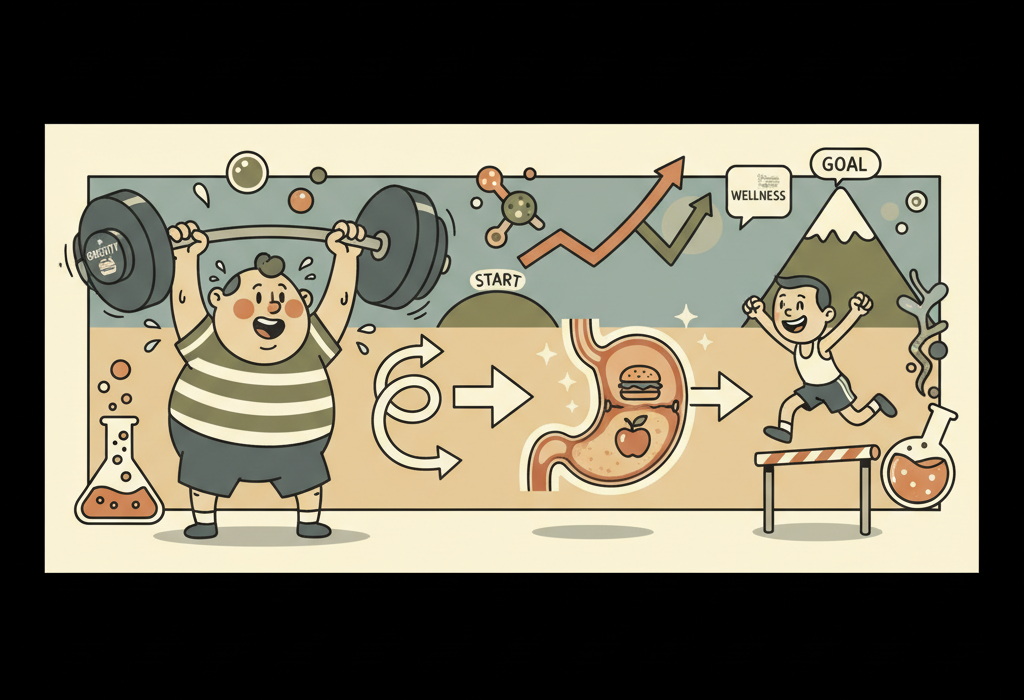
Many people think of body fat as a simple storage unit, much like a closet where the body keeps extra calories for later. However, modern science paints a very different picture. Fat tissue is actually an active chemical factory that constantly sends signals to your brain, heart, and immune system. When a person carries excess weight, this factory works overtime. It changes how the entire body operates.
Because obesity affects so many different systems in the body, scientists have spent decades studying how weight loss can reverse these changes. The good news is that you do not need to lose all of your excess weight to see major health benefits. However, researchers also caution that weight loss is highly personalized. What works for one person might not work for another, and in some specific medical situations, losing weight might require extra caution.
This article breaks down what the latest peer-reviewed research actually shows about how weight loss affects your body, how different treatments compare, and why scientists sometimes disagree on the best approach.
How Much Weight Do You Actually Need to Lose?
A common misunderstanding is that people must reach their “ideal” body weight to be healthy. Science shows that health improvements happen much sooner.
A 2015 review in the Journal of the Academy of Nutrition and Dietetics analyzed thousands of overweight and obese adults with type 2 diabetes. The researchers found a clear dividing line. Losing less than 5 percent of total body weight generally did not produce significant metabolic benefits. However, patients who achieved a weight loss of greater than 5 percent saw measurable improvements in their blood sugar, cholesterol, and blood pressure.
Why does losing just a few pounds help so much? It comes down to a specific type of fat. Visceral fat (VIS-er-uhl fat) is the fat stored deep inside the belly around your vital organs. A 2001 study in Nutrition, Metabolism, and Cardiovascular Diseases explains that when you start losing weight, your body burns this dangerous visceral fat first. Because visceral fat is highly active and releases inflammatory chemicals, reducing it even slightly takes a massive burden off your metabolic system.
Related: How Prediabetes Affects Your Body and Type 2 Diabetes Risk
How Weight Loss Changes Your Organs
When you lose weight, the benefits extend far beyond your waistline. Research shows that shedding excess fat physically and chemically changes how your major organs function.
The Heart and Blood Vessels
Obesity forces the heart to work harder, which can lead to hypertrophy (hy-PER-troh-fee), a condition where the heart muscle enlarges and stiffens. A 2019 study on mice in Diabetes, Obesity & Metabolism showed that weight loss directly reduced cardiac hypertrophy and improved how the heart used energy.
Obesity also affects the electrical system of the heart. A 2016 review in Obesity Reviews found that carrying excess weight prolongs the heart’s electrical reset time. This is known as the QTc interval. A prolonged QTc interval increases the risk of irregular heartbeats. The review confirmed that purposeful weight loss significantly shortens this interval, bringing the heart’s electrical rhythm back toward normal.
The Kidneys and Blood Pressure
High blood pressure is incredibly common in obese individuals. A 2019 review in Nutrients explains one fascinating reason why. Fat tissue can accumulate in and around the kidneys, physically compressing them. This compression forces the kidneys to absorb more sodium, which drives up blood pressure. Weight loss relieves this physical pressure.
Furthermore, a 2006 study in Contributions to Nephrology showed that weight loss reduces protein leakage in the urine. When kidneys are strained by obesity, they filter blood at a dangerously high pressure, allowing proteins to slip through. Losing weight lowers this pressure and protects the kidneys from long-term damage.
The Brain and Nervous System
Obesity is strongly linked to chronic headaches and migraines. A 2011 review in Obesity Reviews notes that fat tissue releases inflammatory markers that can irritate the nervous system and increase pain sensitivity.
Additionally, a condition called idiopathic intracranial hypertension causes dangerously high fluid pressure around the brain, leading to severe headaches and vision loss. A 2017 study in the Journal of Neuro-Ophthalmology found that a weight loss of just 6 to 10 percent is often enough to put this condition into remission.
The Lungs and Joints
Physical weight directly impacts your breathing and mobility. A 2017 study in Revue Medicale de Liege notes that obesity alters the mechanics of the chest, making asthma symptoms worse and reducing the effectiveness of inhaled medications. Weight loss dramatically improves asthma control.
Similarly, a 2014 review in Obesity Reviews highlights that every pound of weight lost reduces the physical load on the knee joints by roughly four pounds. This significantly reduces pain and slows the progression of osteoarthritis.
Hormones, Metabolism, and Genetics
Obesity is deeply intertwined with hormone regulation. For women, excess weight is a major driver of polycystic ovary syndrome. A 2001 review in Obstetrics and Gynecology Clinics of North America explains that weight loss improves insulin resistance (IN-suh-lin ree-ZIS-tuhns), which is when your body stops responding well to insulin. By improving insulin function, weight loss lowers excess male hormones and helps restore normal ovulation.
Related: What Science Actually Says About PCOS and Pregnancy
For men, obesity often leads to low testosterone. A 2014 study in Current Opinion in Endocrinology, Diabetes, and Obesity found that treating obese men who have low testosterone with hormone therapy helps them achieve sustained weight loss, increase lean muscle, and improve overall metabolic health.
Finally, science is learning that some people are genetically predisposed to severe obesity. A 2022 study in the Handbook of Experimental Pharmacology details how mutations in specific genes (like the POMC and PCSK1 genes) disrupt the brain’s ability to feel full. For these individuals, weight loss is not a matter of willpower. It requires precision medicine targeted at their unique biology.
Who Benefits Most and Who Needs Caution
While weight loss is generally recommended for obese individuals, scientists have discovered a phenomenon known as the “obesity paradox.”
A 2015 review in Obesity Reviews explains that in certain populations, carrying extra weight might actually be protective. For example, some elderly adults or patients with severe, established heart failure tend to survive longer if they are slightly overweight compared to those who are very thin. In older adults, attempting to lose weight can sometimes result in the loss of vital muscle mass and bone density, which increases the risk of falls and fractures.
The same review also warns against “weight cycling,” which is the pattern of repeatedly losing and regaining weight. Studies suggest that frequent weight cycling can be harder on the cardiovascular system than simply remaining at a stable, heavier weight.
Modern Treatments for Obesity
Because obesity is a complex disease, medical science now treats it with a combination of therapies. A 2023 review in The Lancet emphasizes that obesity management requires a long-term, multimodal approach.
Lifestyle Interventions
Diet and exercise remain the foundation of weight loss. Interestingly, the exact ratio of carbohydrates to fats does not seem to be the most critical factor. The 2015 review in the Journal of the Academy of Nutrition and Dietetics found that reducing total caloric intake and maintaining consistency are far more important than strictly cutting out one specific macronutrient. Furthermore, a 2023 study in the Western Journal of Nursing Research confirmed that behavioral weight loss programs are highly effective for patients recovering from cardiac events.
Medications
For decades, weight loss medications were largely ineffective or had severe side effects. Today, a new class of drugs that target appetite pathways in the brain has changed the landscape. These medications can help patients safely lose more than 10 percent of their body weight, providing metabolic benefits that were previously only seen with surgery.
Related: How GLP-1 Drugs Actually Treat Type 2 Diabetes: What the Science Shows
Devices and Surgery
For patients who need significant weight loss but want to avoid traditional bariatric surgery, new technologies offer a middle ground. A 2020 review in Techniques in Vascular and Interventional Radiology outlines several endoscopic options. These include swallowing a capsule that inflates into a temporary gastric balloon, or undergoing a procedure where a doctor places a temporary liner inside the intestine to block calorie absorption. These tools help patients feel full faster and can serve as a bridge to long-term lifestyle changes.
Where The Science Is Still Uncertain
While the benefits of weight loss are clear, it does not instantly fix everything. A 2022 study on female rats in the American Journal of Physiology found that while short-term weight loss successfully improved metabolic markers like blood sugar, it failed to immediately correct vascular dysfunction. The blood vessels remained stiff due to long-term obesity damage. This suggests that while weight loss stops further damage, some tissues may require a very long time to fully heal.
Common Questions About Weight Loss and Obesity
Does it matter if I lose weight through a low-carb or low-fat diet?
Research shows that for metabolic health, the specific diet matters less than your ability to stick to it. Achieving a calorie deficit is the primary driver of weight loss and improved blood sugar.
If I am overweight but my blood tests are normal, do I still need to lose weight?
This is known as being “metabolically healthy obese.” While your short-term risk for diabetes might be low, long-term studies suggest that excess weight still puts extra physical strain on your joints, kidneys, and heart over time.
Why is it so hard to keep the weight off?
Your body views weight loss as a threat to survival. As you lose weight, your metabolism slows down and your hunger hormones increase, making weight maintenance a lifelong biological challenge rather than a simple lack of willpower.
The Bottom Line
Obesity is a complex, active biological state that alters how the heart, kidneys, brain, and hormones function. The science clearly shows that you do not need to be perfectly thin to be healthy. Losing just 5 to 10 percent of your body weight is enough to drastically reduce inflammation, lower blood pressure, and improve blood sugar.
While lifestyle changes are the foundation of health, modern medicine now recognizes that genetics and hormones play a massive role in body weight. Because of this, treatments like targeted medications, endoscopic devices, and hormone therapies are becoming standard tools to help people achieve and maintain a healthier metabolism.
Quick Reference: Key Studies
| Study Focus | Key Finding | Source |
|---|---|---|
| Genetics of Obesity | Genetic mutations in the MC4R pathway can cause severe early-onset obesity. | PMID 34783910 |
| Vascular Health | Short-term weight loss in rats improved metabolism but did not immediately fix blood vessel stiffness. | PMID 35749717 |
| Hypertension | Weight loss reduces blood pressure by reducing physical compression on the kidneys and lowering nervous system activity. | PMID 31330870 |
| Precision Medicine | Obesity treatment requires a personalized approach using lifestyle, medication, or surgery based on individual biology. | PMID 30610881 |
| The Obesity Paradox | In certain populations, like the elderly or those with severe heart failure, slight excess weight may offer a survival advantage. | PMID 25410935 |
| Osteoarthritis | Weight loss significantly reduces joint load and systemic inflammation, improving knee arthritis. | PMID 24751192 |
| Testosterone Therapy | Treating low testosterone in obese men helps them achieve sustained weight loss and increased lean muscle. | PMID 25105998 |
| Migraines | Weight loss reduces inflammatory markers and may alleviate the frequency and severity of migraines. | PMID 20673279 |
| Endoscopic Devices | Gastric balloons and intestinal liners offer a less invasive alternative to bariatric surgery for weight loss. | PMID 32192635 |
| Heart Failure | Weight loss in mice with heart failure improved cardiac energy metabolism and reduced heart enlargement. | PMID 31050157 |
| Brain Pressure | Losing 6 to 10 percent of body weight can induce remission in idiopathic intracranial hypertension. | PMID 27636748 |
| Heart Rhythm | Obesity prolongs the heart’s electrical reset time (QTc interval), but weight loss safely shortens it. | PMID 26956255 |
| Type 2 Diabetes | Weight loss greater than 5% is required to see significant improvements in blood sugar and cholesterol for diabetes patients. | PMID 25935570 |
| Kidney Function | Weight loss reduces protein leakage in the urine, protecting the kidneys from long-term damage. | PMID 16929145 |
| PCOS | Weight loss improves insulin resistance and helps restore normal ovulation in women with polycystic ovary syndrome. | PMID 11293006 |
| Modern Therapies | Sustained weight loss of over 10% using modern medications greatly improves obesity complications. | PMID 36774932 |
| Cardiac Rehab | Behavioral weight loss interventions are highly effective for patients in cardiac rehabilitation programs. | PMID 37905515 |
| Asthma | Weight loss dramatically improves asthma control by reducing chest restriction and inflammation. | PMID 28520323 |
| Visceral Fat | Moderate weight loss leads to a rapid and preferential reduction in dangerous visceral fat. | PMID 11590996 |
Last updated: March 2026
This article synthesizes findings from peer-reviewed research. It is for educational purposes only and does not constitute medical advice. Consult a healthcare provider before starting any new regimen.

Leave a Reply