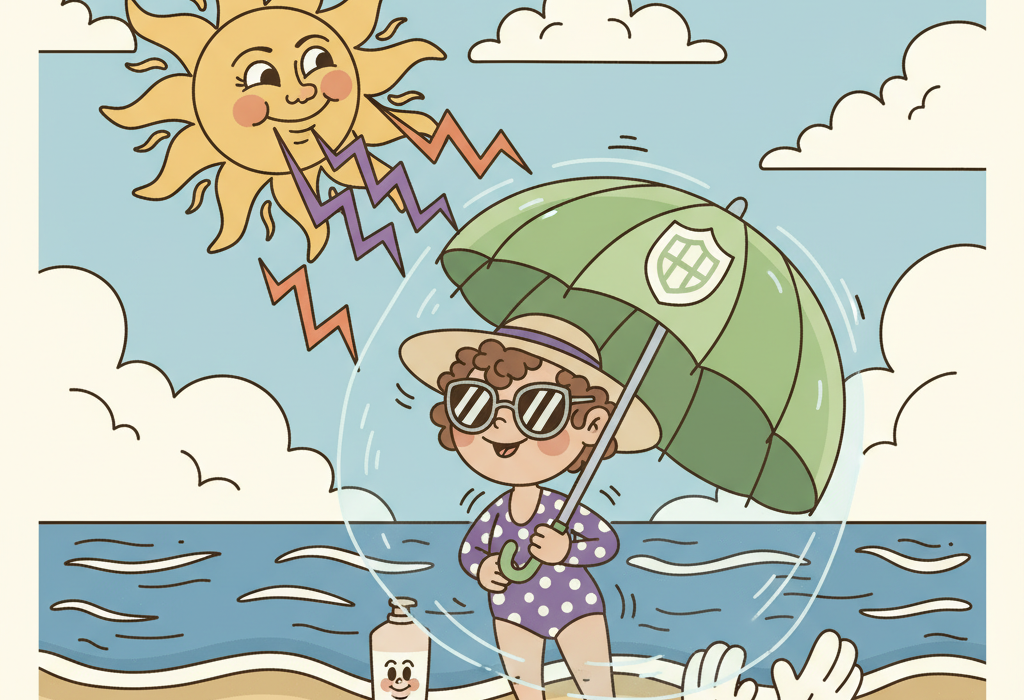
A sunny day feels great, but invisible ultraviolet (UV) rays from the sun are constantly interacting with our skin. Protecting your skin from UV damage involves a two-step approach: blocking the rays from the outside using physical shields like sunscreen, and neutralizing the damage on the inside using antioxidants from your diet and skincare routine.
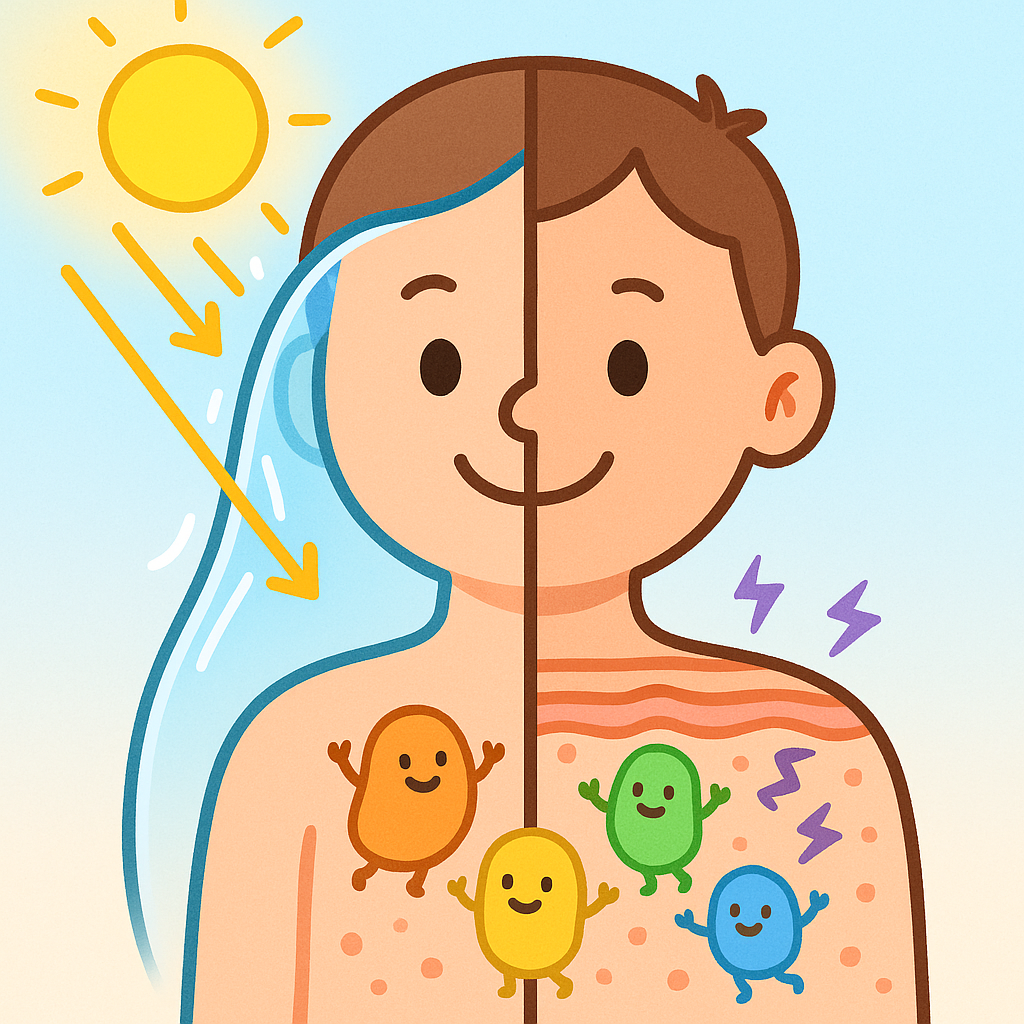
For years, the standard advice has been to simply apply sunscreen. However, recent scientific studies show that true skin protection is much more complex. Researchers are discovering how specific vitamins, plant extracts, and even the foods we eat can create a biological safety net that supports our skin when UV rays slip past our physical defenses.
This article explores what peer-reviewed science actually says about how UV light affects our skin and the most evidence-based ways to protect it.
Related: The Science of Anti-Aging Skincare: What Actually Works
How Sunlight Actually Damages the Skin
To understand how to protect the skin, we first need to understand how the sun damages it. Sunlight contains different types of UV radiation. The two types that reach the earth’s surface are UVA and UVB.

- UVA rays penetrate deeply into the skin. They are primarily responsible for photoaging, which includes wrinkles, loss of elasticity, and dark spots.
- UVB rays are shorter and mainly affect the outer layers of the skin. They are the primary cause of sunburns and play a major role in skin cancer.
When UV rays hit your skin, they trigger a chain reaction. The most significant outcome is the creation of Reactive Oxygen Species (ROS) (ree-AK-tiv OX-ee-jen SPEE-sheez). These are unstable molecules that bounce around inside your cells, damaging everything they touch, including proteins, cell membranes, and DNA.
Think of your skin cells like a house. UV rays are like a storm that breaks the windows. Once the windows are broken, the wind and rain (ROS) get inside and start ruining the furniture.

UV exposure also physically weakens the skin. A 2017 study in the International journal of cosmetic science found that UV radiation alters the skin’s biomechanical barrier. It reduces the skin’s ability to hold onto water, leading to drying stress, and breaks down the “glue” that holds skin cells together.
What the Research Shows: The First Line of Defense
The most effective way to prevent UV damage is to stop the rays from entering the skin in the first place. This is where physical and chemical sunscreens come in.
Sunscreens Preserve the Skin’s Physical Barrier
Sunscreens are rigorously tested for their ability to prevent Erythema (er-uh-THEE-muh), which is the medical term for skin redness or sunburn. But they do more than just stop burns.
Research shows that sunscreens actually preserve the structural integrity of the skin. The same 2017 study in the International journal of cosmetic science tested human skin tissue and found that applying a standard zinc oxide sunscreen completely prevented the drying stress and cellular breakdown caused by UVB exposure.
New Innovations in Sun Protection
While traditional sunscreens use zinc oxide or titanium dioxide to reflect UV rays, scientists are exploring new microscopic alternatives. A 2020 study in the International journal of molecular sciences found that silver nanoparticles (AgNPs) effectively protect against UVB-induced skin damage. They act as a physical shield similar to traditional ingredients but may offer additional antibacterial benefits for damaged skin.
Additionally, researchers are looking at how natural plant compounds can boost the effectiveness of sunscreens. A 2021 review in Biomedicine & pharmacotherapy highlighted that natural compounds like lignin (found in plant cell walls) and silymarin (from milk thistle) can absorb UV light. When added to sunscreen formulas, these natural ingredients can increase the Sun Protection Factor (SPF) while providing antioxidant benefits.
What the Research Shows: Topical Antioxidants
Even with the best sunscreen, some UV rays will penetrate the skin and create free radicals. This is where the second line of defense comes in: antioxidants. Antioxidants are molecules that can safely interact with free radicals and neutralize them before they damage the cell.
Vitamin C and E
Vitamin C is one of the most well-researched antioxidants in dermatology. A 2025 review in South African family practice explains that Vitamin C neutralizes ROS, promotes the production of collagen, and reduces excess melanin production (which causes dark spots).
Because humans cannot produce Vitamin C naturally, it must be acquired through diet or applied directly to the skin. Research consistently shows that combining Vitamin C with Vitamin E provides synergistic protection. Vitamin C is water-soluble, while Vitamin E is fat-soluble. Together, they protect different parts of the skin cell simultaneously.
Plant Extracts and Botanical Compounds
Scientists are increasingly studying plant extracts for their ability to protect skin cells from oxidative stress.
- Curcumin: Found in turmeric, curcumin has been shown to protect human dermal fibroblasts (the cells that make collagen) from UVA damage. A 2022 study in AAPS PharmSciTech demonstrated that curcumin reduces ROS accumulation and prevents the breakdown of collagen.
- Caffeine: A 2018 study in Theranostics revealed that low doses of caffeine protect skin from oxidative stress by activating Autophagy (aw-TOFF-uh-gee). Autophagy is a natural process where cells break down and recycle their own damaged parts. By triggering this cleanup process, caffeine helps skin cells recover from UV exposure.
- Galangin: A flavonoid found in the ginger family, galangin has been shown to reverse UV-induced skin aging. A 2022 study in the International journal of molecular sciences found that it activates a specific cellular pathway (SIRT1/PGC-1α/Nrf2) that boosts the skin’s own internal antioxidant defenses.
The Delivery System Matters
One of the biggest challenges with topical antioxidants is getting them to penetrate the outer layer of the skin. Researchers are solving this using nanotechnology.
For example, a 2018 study in the Journal of cosmetic dermatology tested “nanoberries”, which are microscopic fat bubbles (liposomes) loaded with blueberry extract. The study found that these flexible nanocarriers successfully penetrated the skin barrier and maintained cell survival even after UV exposure. Similarly, a 2026 study in Carbohydrate polymers found that encapsulating retinol (Vitamin A) in liposomes and hydrogel reduced skin irritation while effectively repairing UVB-damaged skin.
What the Research Shows: Nutritional Protection
Can the food you eat act as sunscreen? Not exactly. No food can replace a physical sunscreen. However, a concept known as “systemic photoprotection” suggests that a diet rich in specific nutrients builds up your skin’s baseline resistance to UV damage over time.
Related: How Vitamins Actually Affect Your Immune System: What Science Says
Lycopene and Tomatoes
Lycopene is the red pigment found in tomatoes and watermelons. It is a powerful antioxidant that accumulates in the skin after you eat it.
A 2024 meta-analysis in Critical reviews in food science and nutrition reviewed 21 clinical trials and concluded that supplementing with tomato and lycopene significantly reduced UV-induced skin redness and improved skin density. An earlier 2004 review in the Annual review of nutrition noted that consuming 40 grams of tomato paste daily for 10 weeks resulted in significantly less sunburn after UV exposure compared to a control group.
Omega-3 Fatty Acids
Diets high in Omega-3 fatty acids (found in fish oil) may also alter how the skin responds to the sun. The same 2004 review highlighted human trials where daily supplementation with fish oil for three to six months increased the skin’s sunburn threshold. It appears that Omega-3s help reduce the inflammatory response that occurs after UV exposure.
Other Dietary Antioxidants
Other dietary compounds like green tea polyphenols and anthocyanins (found in dark berries and peanuts) also show protective effects. A 2019 study in Food & function demonstrated that anthocyanins from black peanut skin protected against UVB damage by activating the Nrf2 signaling pathway, which controls the body’s natural antioxidant enzymes.
Who Benefits Or Needs Caution
While everyone experiences UV damage, individual risk levels vary significantly based on genetics and skin type.
- Fair-Skinned Individuals: People with lighter skin produce more pheomelanin (a lighter pigment) and less eumelanin (a dark, UV-blocking pigment). A 2021 review in Photochemical & photobiological sciences explains that fair skin has a much lower natural defense against UV penetration, making external protection (sunscreens and antioxidants) absolutely critical to prevent DNA damage.
- Darker-Skinned Individuals: People with darker skin produce more eumelanin, which acts as a natural, built-in UV absorber. A 2008 study in Photochemistry and photobiology notes that while melanin provides a natural Sun Protection Factor (SPF), it is not a perfect shield. Darker skin is still susceptible to UVA-induced photoaging, hyperpigmentation, and skin cancer, meaning sun protection remains highly beneficial.
Common Questions About UV Protection
Does eating tomatoes mean I don’t need sunscreen?
No. Dietary antioxidants like lycopene provide a very low equivalent SPF. They act as a secondary safety net to help cells recover from oxidative stress, but they cannot replace the physical blocking power of topical sunscreen.
Can I just take a Vitamin C pill instead of using a serum?
While oral Vitamin C supports overall health, the body tightly regulates how much reaches the skin. Applying Vitamin C topically ensures a high concentration is delivered directly to the tissue where UV exposure occurs.
Do tanning beds provide a “base tan” that protects the skin?
No. A 2021 review clearly states that the molecular pathways that cause tanning are the exact same pathways triggered by DNA damage. A tan is a sign that the skin has already been injured. Tanning beds dramatically increase the risk of melanoma.
The Bottom Line
Protecting your skin from the sun requires a multi-layered approach.
- What we know: Physical and chemical sunscreens are highly effective at preserving the skin’s biomechanical barrier and preventing direct UV damage.
- What the research adds: UV rays that slip past these defenses create reactive oxygen species (ROS) that age and damage cells. Topical antioxidants (like Vitamin C, resveratrol, and caffeine) and dietary antioxidants (like lycopene and Omega-3s) provide a proven secondary line of defense by neutralizing these harmful molecules and supporting cellular repair.
- What remains uncertain: While we know that dietary antioxidants offer measurable photoprotection, scientists are still determining the exact daily dosages required to maximize these benefits for different skin types.
The most evidence-based strategy for skin health is to use a broad-spectrum sunscreen daily, apply topical antioxidants to catch free radicals, and eat a diet rich in colorful plants to build your skin’s internal resilience.
Quick Reference: Key Studies
| Study Focus | Key Finding | Source |
|---|---|---|
| Sunscreen & Skin Barrier | Commercial sunscreens preserve the biomechanical barrier function of skin during UV exposure. | PMID 27685249 |
| Vitamin C & Skin Health | Vitamin C reduces melanin synthesis, promotes collagen, and provides antioxidative protection. | PMID 40776734 |
| Tomato & Lycopene | Supplementing with tomato and lycopene reduces UV-induced skin redness and improves skin density. | PMID 36606553 |
| Caffeine & Skin Aging | Low doses of caffeine protect skin from oxidative stress by activating cellular cleanup (autophagy). | PMID 30555576 |
| Nanoberries & UV Damage | Blueberry extract loaded into flexible liposomes successfully penetrates skin to prevent UV photodamage. | PMID 28975707 |
| Curcumin & Photoaging | Curcumin protects human dermal fibroblasts against UVA damage and prevents collagen degradation. | PMID 35729366 |
Last updated: April 2026
This article synthesizes findings from peer-reviewed research. It is for educational purposes only and does not constitute medical advice. Consult a healthcare provider before starting any new regimen.


Leave a Reply