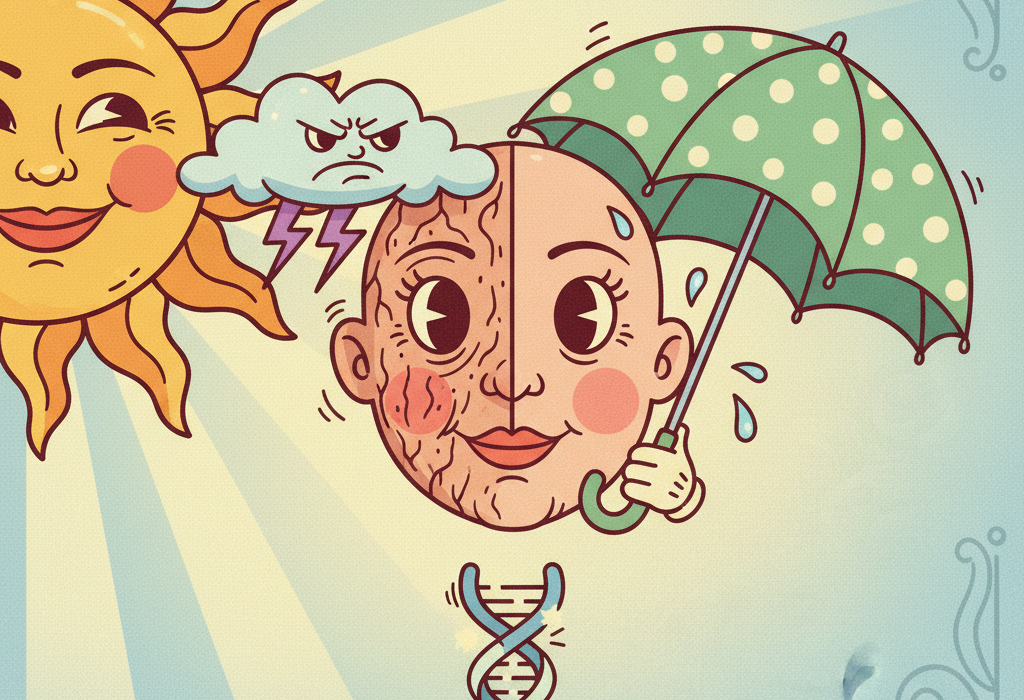
Most of us enjoy the feeling of warm sunlight on our skin. But beneath the surface, sunlight sets off a complex chain reaction of chemical events. Ultraviolet (UV) radiation is a known cause of skin aging and skin cancer. However, scientists are learning that our bodies are not entirely defenseless.
Research shows that while UV rays cause physical damage to our cellular structures, certain biological mechanisms and specific nutrients can help repair this damage. This article explores exactly what happens to your skin when you step outside and what the latest science says about protecting it.
How Sunlight Actually Changes Your Cells
To understand how to protect your skin, it helps to know what you are protecting it from. The sun emits different types of light, but two specific types of ultraviolet radiation reach the earth’s surface: UVA and UVB.
A 2024 review in the Journal of the European Academy of Dermatology and Venereology explains the difference clearly. UVB rays primarily hit the top layer of the skin. They are the main cause of visible sunburns and directly damage your DNA. UVA rays, on the other hand, penetrate much deeper into the skin. They are present all year round, can pass through window glass, and are the major cause of long-term skin aging.
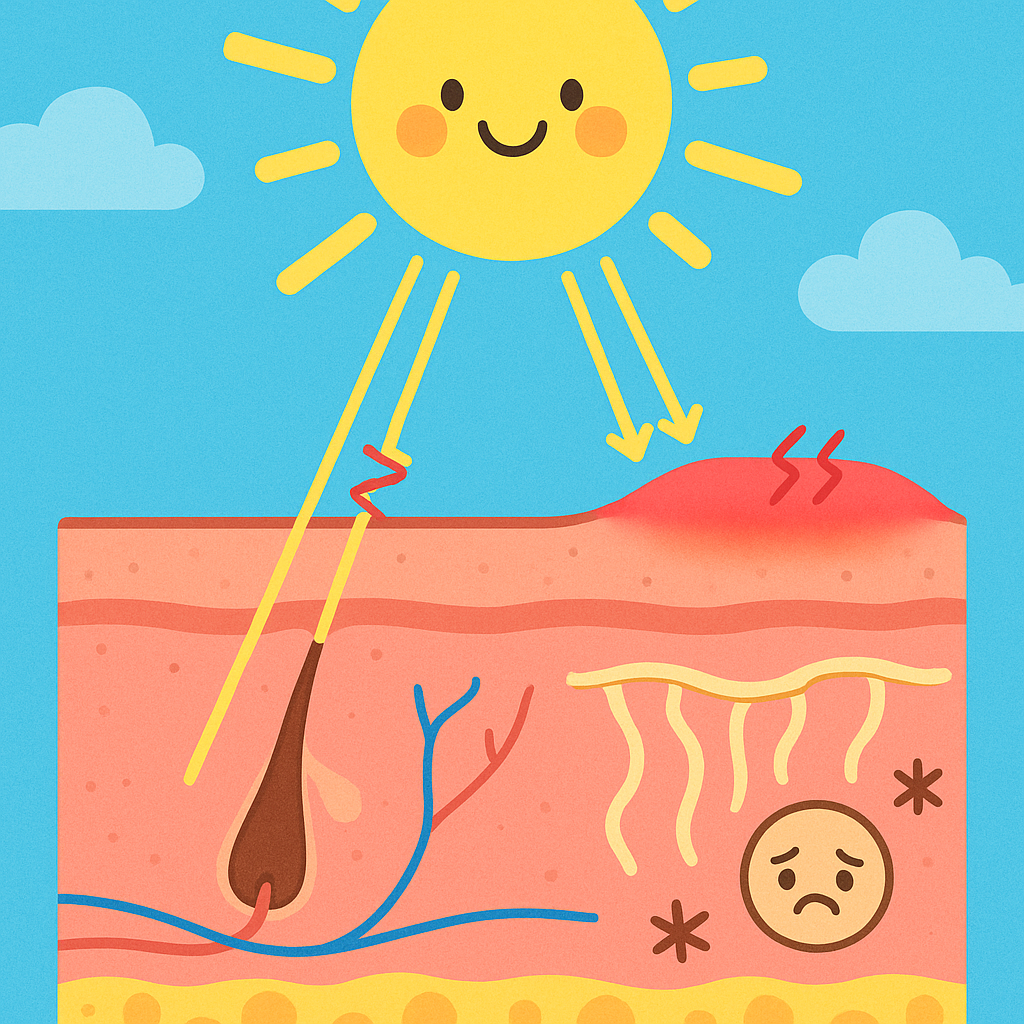
When these rays enter your skin, they cause damage through two main pathways:
Direct DNA Damage
When UVB rays hit your skin cells, they can physically alter your genetic code. They cause adjacent parts of your DNA to fuse together inappropriately. If the cell cannot repair this broken DNA before it divides, the mutation becomes permanent. Over time, accumulated mutations can lead to skin cancer. A 2020 study in Photochemistry and Photobiology notes that just one hour of sunlight can generate hundreds of thousands of DNA lesions in your skin cells.
Oxidative Stress
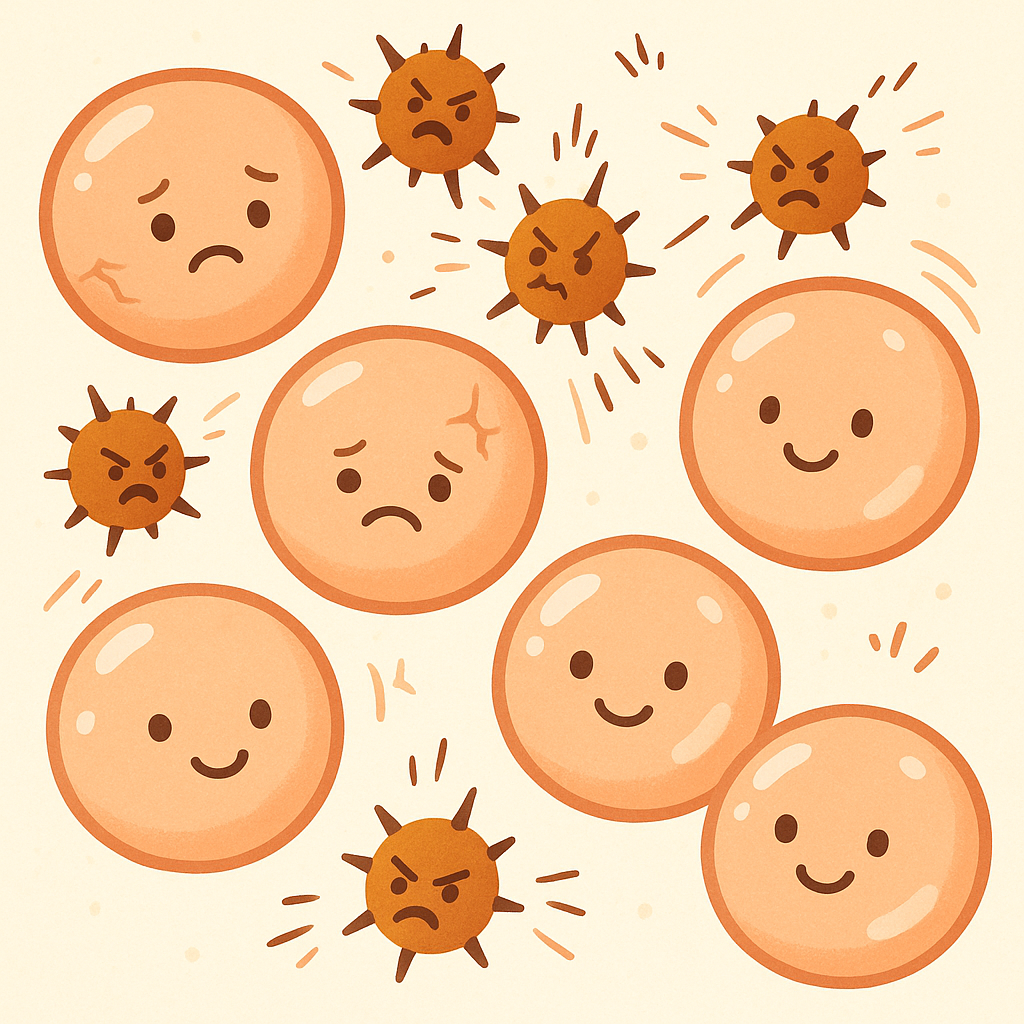
UVA rays tend to cause damage indirectly. When UVA light interacts with your cells, it creates Reactive oxygen species (ree-AK-tiv OX-ee-jen SPEE-sees). These are highly unstable molecules that bounce around and break cellular structures.
When your body has too many of these unstable molecules and not enough protective mechanisms to neutralize them, it results in Oxidative stress (OX-ih-day-tiv stress). A 2017 review in Advances in Experimental Medicine and Biology details how oxidative stress breaks down collagen, damages cell membranes, and accelerates the visible signs of aging.
How Your Body Defends Itself
Your skin does not just passively accept UV damage. It has built-in defense systems.
The most visible defense is melanin. Melanocytes (meh-LAN-oh-sites) are specialized skin cells that produce melanin pigment. When exposed to UV light, these cells produce more pigment to act as a physical shield over your DNA. This is why skin tans after sun exposure. However, a tan is actually a sign that DNA damage has already occurred, as the body is scrambling to protect itself from further harm.
Researchers note in a 2013 review in the International Journal of Molecular Sciences that the type of melanin matters. Darker pigment (eumelanin) is very effective at blocking UV photons. Lighter pigment (pheomelanin), common in fair-skinned individuals with red hair, is much less effective and can sometimes even contribute to free radical production.
Your cells also have built-in repair enzymes. When DNA is damaged, specific proteins rush to the site, cut out the damaged section, and patch it with new DNA. If the damage is too severe, the cell will safely self-destruct rather than turn into a cancer cell.
What the Research Shows: Nutrients That Protect Skin
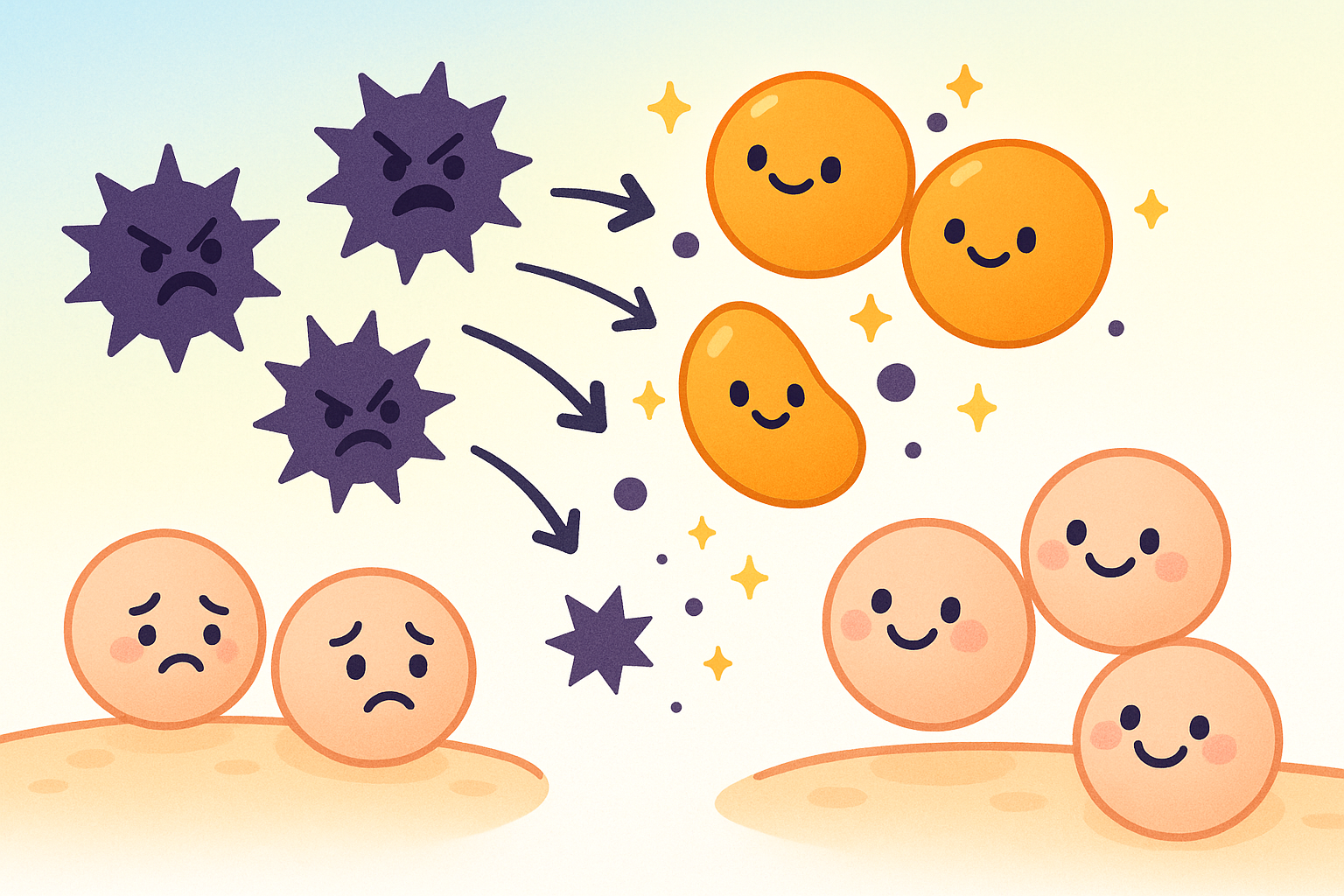
While sunscreen remains the most essential external shield, scientists are increasingly interested in how dietary and topical antioxidants can support the skin’s internal defenses. Antioxidants act as neutralizers, safely disarming reactive oxygen species before they can cause oxidative stress.
Related: The Science of Anti-Aging Skincare: What Actually Works
Vitamin C
Vitamin C is one of the most thoroughly researched skin protectors. A 2025 study in South African Family Practice highlights that Vitamin C is highly concentrated in normal skin, where it neutralizes free radicals and acts as a necessary building block for new collagen.
Because pure Vitamin C (L-ascorbic acid) breaks down quickly when exposed to air and light, cosmetic scientists often use modified versions. A 2022 review in the Journal of Cosmetic Dermatology compared various Vitamin C derivatives. They found that while some modified versions penetrate the skin more easily, their effectiveness depends heavily on the specific formula. Combining Vitamin C with Vitamin E and ferulic acid appears to offer the most stable and effective protection against UV damage.
Green Tea Extract
Green tea contains high levels of specific antioxidants called catechins. The most abundant is EGCG. A 2024 review in Antioxidants looked at both topical and oral applications of green tea catechins. The researchers found that EGCG helps neutralize free radicals, reduces skin inflammation after sunburns, and supports DNA repair mechanisms.
Related: Green Tea Extract: What Science Says About Weight, Brain, and Skin Health
Tomato Extract (Lycopene)
Lycopene is the red pigment found in tomatoes. A 2024 meta-analysis in Critical Reviews in Food Science and Nutrition analyzed 21 clinical trials involving tomato and lycopene supplementation. The results showed that consuming lycopene significantly reduced skin redness after UV exposure and improved overall skin density. Essentially, eating lycopene-rich foods acts as a mild, internal sun defense.
Astaxanthin
Astaxanthin is a reddish pigment found in microalgae and seafood like salmon. A 2021 systematic review in the Journal of Dietary Supplements examined clinical trials where participants took 3 to 6 milligrams of astaxanthin daily. The studies consistently showed improvements in skin texture, reduced wrinkle appearance, and better moisture retention, alongside increased protection against UV-induced deterioration.
Who Needs Extra Caution
While everyone should protect their skin, certain factors increase UV vulnerability.
- Indoor Tanners: Tanning beds are not a safe alternative to the sun. A 2018 review in Photodermatology, Photoimmunology & Photomedicine points out that tanning beds can emit UVA doses up to 12 times higher than the midday sun. Using indoor tanning beds before age 30 increases melanoma risk by 75%.
- High-Sugar Diets: Interestingly, your diet affects how UV rays age your skin. A 2022 study in Nutrients explains that high blood sugar leads to the formation of Advanced Glycation End Products (AGEs). These sugar-protein bonds make collagen stiff and brittle. When combined with UV exposure, the skin loses its elasticity much faster.
Common Misunderstandings About Sun Protection
Myth: A “base tan” protects you from sunburn.
Science shows that a tan offers an incredibly low level of protection, equivalent to an SPF of about 2 or 3. Furthermore, the process of getting a base tan requires inflicting DNA damage on your skin cells.
Myth: You do not need sun protection on cloudy days.
While clouds block a significant amount of UVB rays (the ones that burn), up to 80% of UVA rays (the ones that age the skin) still penetrate through cloud cover. A 2022 study on UVA1 rays confirmed that these longer wavelengths cause oxidative stress regardless of the weather.
The Bottom Line
Ultraviolet radiation damages the skin by directly breaking DNA and creating unstable molecules that cause oxidative stress. Over time, this leads to wrinkles, loss of elasticity, and an increased risk of skin cancer.
While the body has natural repair enzymes and uses melanin as a shield, these defenses can be overwhelmed. The most effective way to protect your skin is through a comprehensive approach: avoiding excessive sun exposure, wearing protective clothing, and using sunscreen.
Emerging research clearly shows that antioxidants, whether applied to the skin like Vitamin C or consumed in the diet like lycopene and green tea, offer a valuable second line of defense by neutralizing the oxidative stress that UV rays leave behind.
Quick Reference: Key Studies
| Study Focus | Key Finding | Source |
|---|---|---|
| UVA1 Damage | Long UVA rays penetrate deep into the dermis, causing oxidative stress, DNA lesions, and long-term photoaging. | PMID 35897826 |
| Vitamin C Derivatives | L-ascorbic acid is highly active but unstable. Combining it with Vitamin E and ferulic acid provides superior photoprotection. | PMID 34559950 |
| Green Tea Catechins | Green tea compounds (GTCs) protect skin by neutralizing free radicals and reducing UV-induced inflammation. | PMID 39765834 |
| Lycopene (Tomatoes) | Dietary supplementation with tomato extract significantly reduces UV-induced skin redness and improves skin density. | PMID 36606553 |
| Astaxanthin | Daily oral supplementation (3-6 mg) improves skin moisture, elasticity, and protects against UV deterioration. | PMID 32202443 |
Last updated: April 2026
This article synthesizes findings from peer-reviewed research. It is for educational purposes only and does not constitute medical advice. Consult a healthcare provider before starting any new regimen or treating any skin conditions.
Leave a Reply