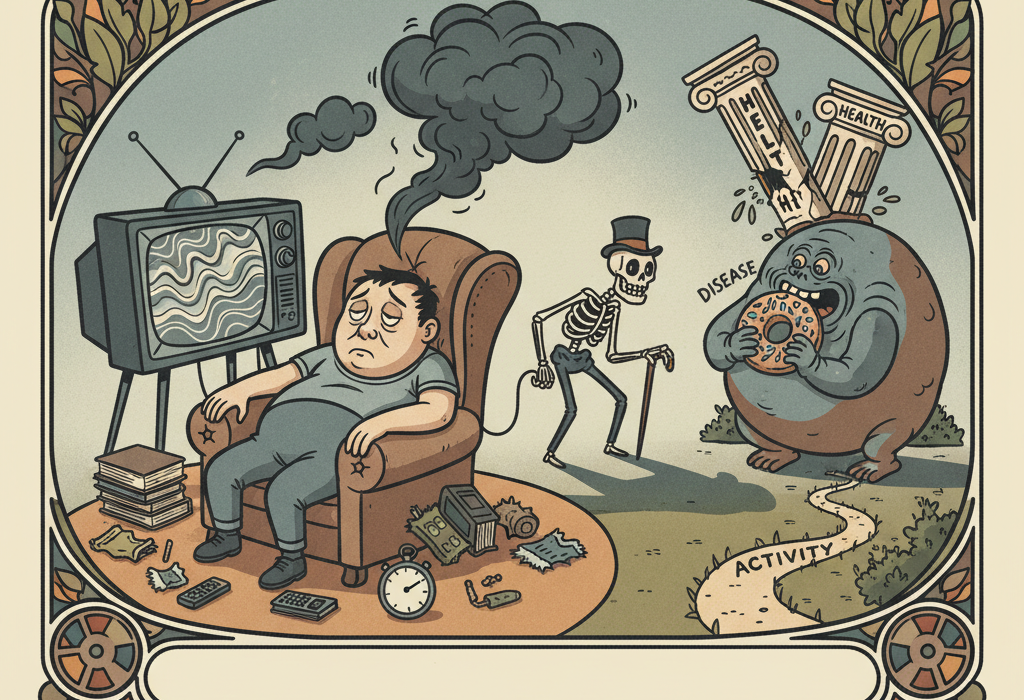
It is a familiar modern routine. You sit in your car to commute, sit at a desk to work, sit at a table to eat, and finally, sit on the couch to relax. Even if you manage to squeeze in a 45-minute workout, the vast majority of your waking hours are spent in a chair.
This raises an important question: Does a daily workout cancel out the effects of sitting all day?
The short answer is no. Sedentary behavior (SED-en-tair-ee bee-HAYV-yer) is defined as any waking activity that involves very little energy expenditure, such as sitting or lying down. Scientific research shows that prolonged sitting slows down your metabolism, impairs blood vessel function, and increases inflammation. This leads to higher risks of heart disease, anxiety, and cognitive decline. Importantly, 30 to 60 minutes of daily exercise does not fully erase the biological damage of sitting for the other 14 hours of the day.
This article explores what happens to your body when you sit for extended periods, why exercise alone is not a complete shield, and what science says you can do to protect your health.
The Evolutionary Mismatch of Modern Life
To understand why sitting is so harmful, it helps to look at human history. A 2017 review in Physiological reviews explains that from an evolutionary perspective, physical inactivity was actually a survival mechanism. Early humans engaged in intense physical labor to hunt and gather food. When they were not actively securing resources, resting was a necessary behavior to conserve precious energy.
Today, our environment has changed drastically. We no longer need to expend massive amounts of physical energy to survive, but our biology still rewards us for resting. The problem is that our modern environment allows us to rest almost constantly. The same review notes that physical inactivity is now a contributing cause to at least 35 unhealthy conditions and is a major driver of chronic disease worldwide. In fact, a 2004 report in the Archives of internal medicine estimated that obesity and sedentary lifestyles are responsible for at least 300,000 premature deaths annually in the United States alone.
Does Exercising Cancel Out Sitting All Day?
One of the most common misunderstandings about physical activity is the belief that a daily workout provides complete immunity against the harms of sitting. Scientists refer to this as the “active couch potato” paradox.
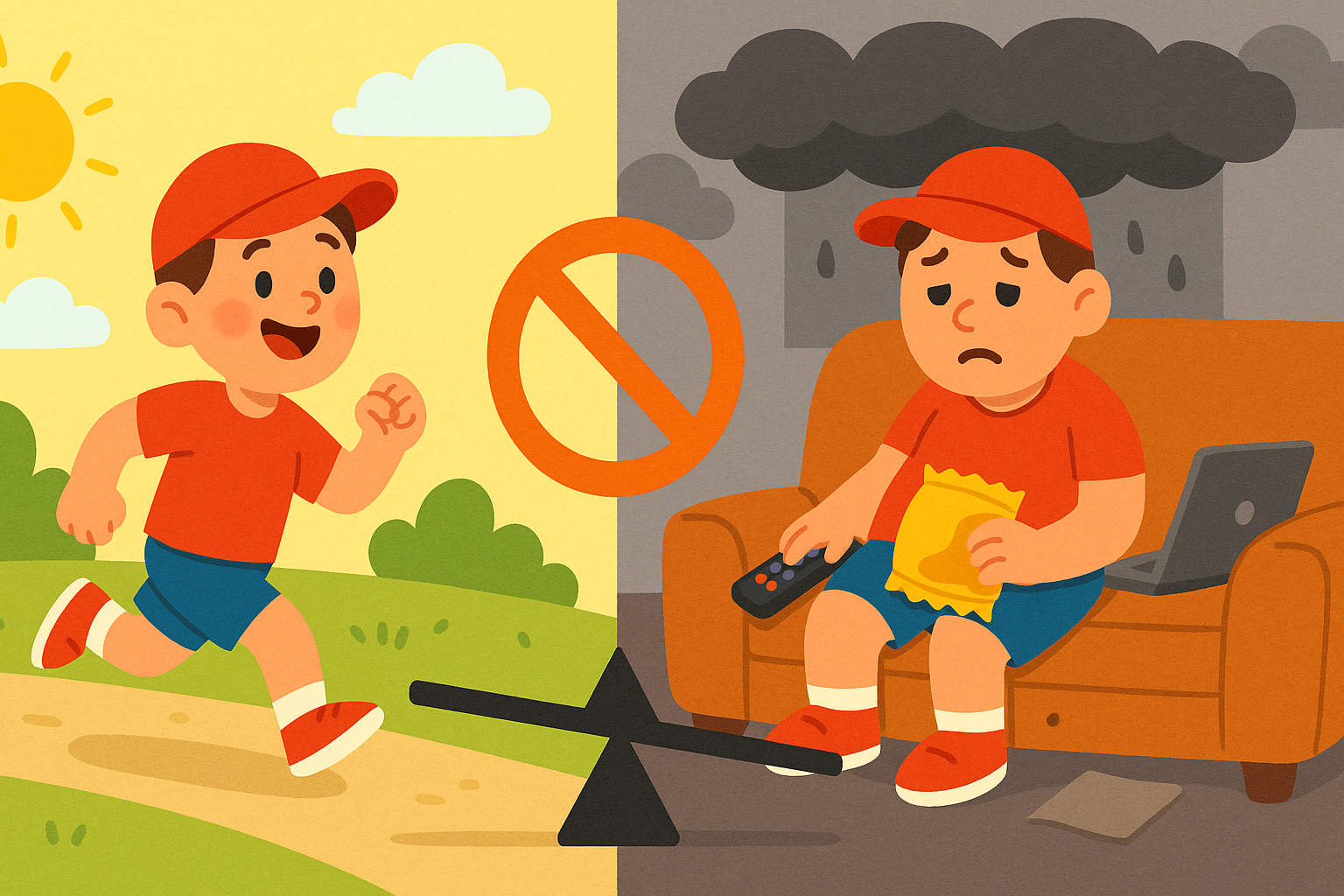
A 2014 review in the Revista medica de Chile highlights a critical distinction between being “physically inactive” and being “sedentary.”
- Physically inactive means you do not meet the recommended guidelines for exercise (like getting 150 minutes of moderate activity a week).
- Sedentary means you spend a large portion of your day sitting or lying down.
You can easily be physically active but still highly sedentary. For example, someone who runs for an hour every morning but works at a computer for nine hours and watches television for three hours is meeting their exercise goals. However, their high volume of sedentary time still puts them at risk for metabolic issues. The research demonstrates that these two behaviors impact the body through independent biological pathways. While exercise strengthens the heart and builds muscle, prolonged sitting actively signals the body to shut down certain metabolic processes.
How Prolonged Sitting Actually Affects Your Body
When you sit for hours at a time, your body undergoes specific physiological changes. Research has linked excessive sitting to issues ranging from poor blood sugar control to changes in brain structure.
Blood Vessels and Circulation
The inner lining of your blood vessels is called the endothelium (en-doh-THEE-lee-um). It plays a vital role in regulating blood pressure, preventing clots, and controlling inflammation.
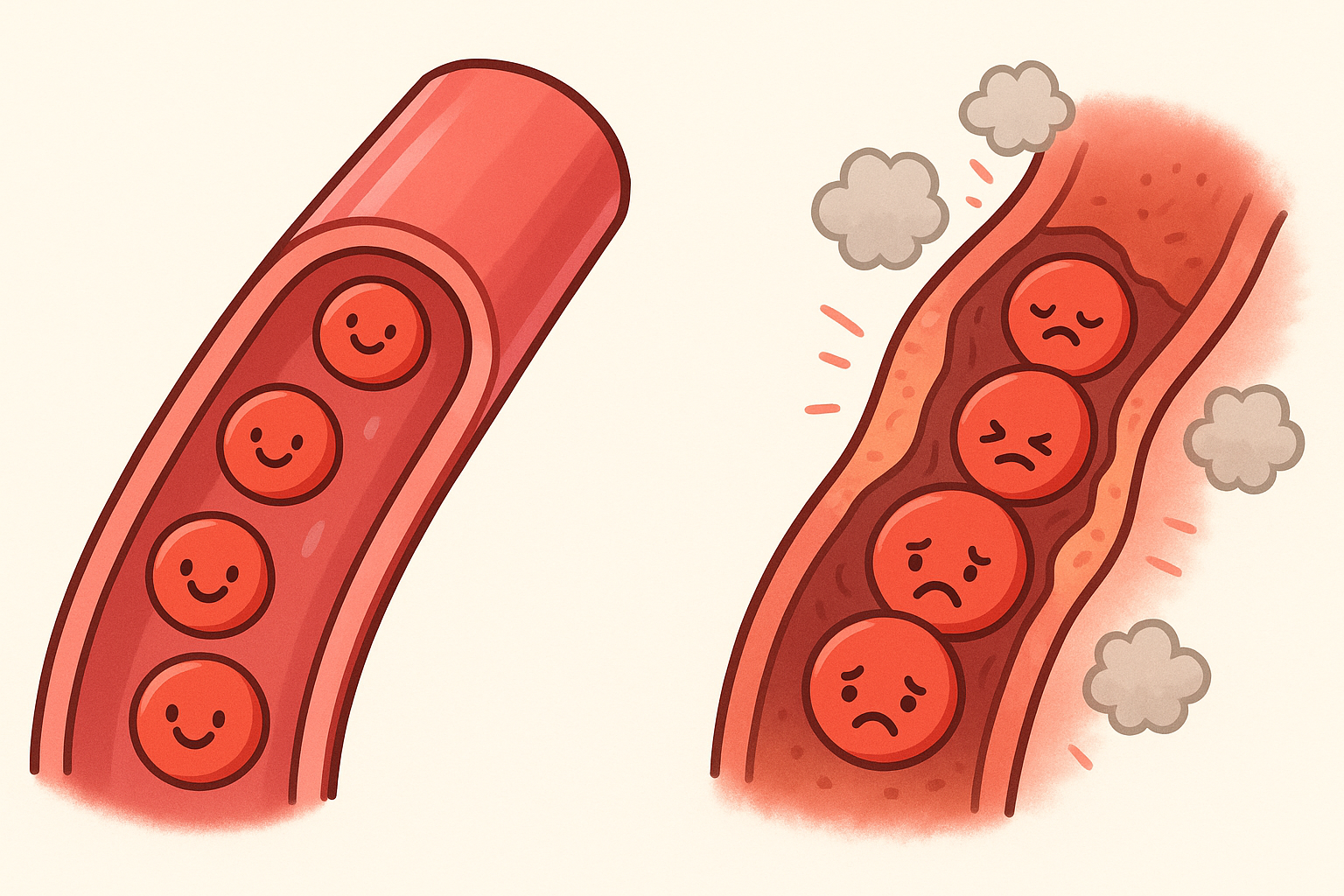
A 2010 study in the American journal of physiology. Heart and circulatory physiology explored how quickly inactivity damages the endothelium. Researchers used strict bed rest and “dry immersion” protocols (where volunteers are suspended in water to remove all weight-bearing muscle activity) to simulate extreme sedentarism in healthy people. They found that within just three to five days of extreme inactivity, microvascular function dropped significantly. The lack of muscle contraction reduced blood flow, which in turn signaled the blood vessels to become stiffer and more prone to inflammation. This occurred independently of weight gain, showing that inactivity directly harms blood vessels.
Metabolism and Organ Health
When muscles are completely relaxed for hours, they stop efficiently absorbing sugar from the blood. This can lead to insulin resistance (IN-suh-lin ree-ZIS-tuhns), a condition where your body stops responding well to insulin, causing blood sugar levels to rise. Over time, this contributes to type 2 diabetes and metabolic syndrome. Related: How Prediabetes Affects Your Body and Type 2 Diabetes Risk
A 2015 study in the Nordic journal of psychiatry looking at outpatients with schizophrenia found that a sedentary lifestyle was a massive determinant of metabolic syndrome, even more so than certain medications known for metabolic side effects.
Furthermore, sedentary behavior affects internal organs beyond the heart and pancreas. A 2024 study in Nutrients identified a “dangerous” lifestyle pattern characterized by high sedentary time and poor diet, which was significantly linked to a higher risk of liver fibrosis and cirrhosis. Similarly, a 2022 study in the Central European journal of public health found that low physical activity and high sitting time are among the strongest risk factors for developing painful kidney stones.
Brain Health and Cognitive Decline
Sitting does not just affect the body below the neck. A 2024 review in the International journal of molecular sciences detailed how excessive sedentary behavior contributes to age-related cognitive decline. Related: Understanding Brain Fog and Age-Related Cognitive Decline
According to the research, prolonged inactivity promotes neuroinflammation (noor-oh-in-fluh-MAY-shun), which is chronic inflammation in the brain. It also accelerates cellular aging by shortening telomeres (the protective caps on the ends of your DNA). The researchers noted that excessive sedentary behavior is associated with structural changes in the brain, particularly in the hippocampus, the area responsible for memory and learning.
Mental Health and Anxiety
The impact of sitting extends to emotional well-being, particularly in young people. A 2020 study in PloS one analyzed data from nearly 60,000 adolescents across 24 low- and middle-income countries. The researchers found that spending more than two hours a day in sedentary behaviors outside of school (like watching television or playing computer games) was associated with a 22% increased risk of experiencing anxiety symptoms. This aligns with other research suggesting that breaking up sedentary time is crucial for maintaining mental health.
Common Questions About Sedentary Behavior
Is standing all day the solution?
No. While standing burns slightly more calories than sitting, standing in one place for 8 hours introduces different problems, such as pooling of blood in the legs, joint pain, and lower back fatigue. A 2023 review in Health psychology review suggests that the goal is to rebalance our posture. Alternating between sitting, standing, and walking is much healthier than remaining locked in any single posture.
Do I need to sweat during a movement break for it to count?
No. The goal of a movement break is simply to re-engage your muscles and restore blood flow. Light activities like walking to the kitchen, doing a few stretches, or pacing while on a phone call are highly effective at breaking the sedentary cycle.
Practical Guidance: How to Actually Move More
Translating this science into daily life does not require training for a marathon. The most effective strategy supported by research is to consistently break up periods of sitting.
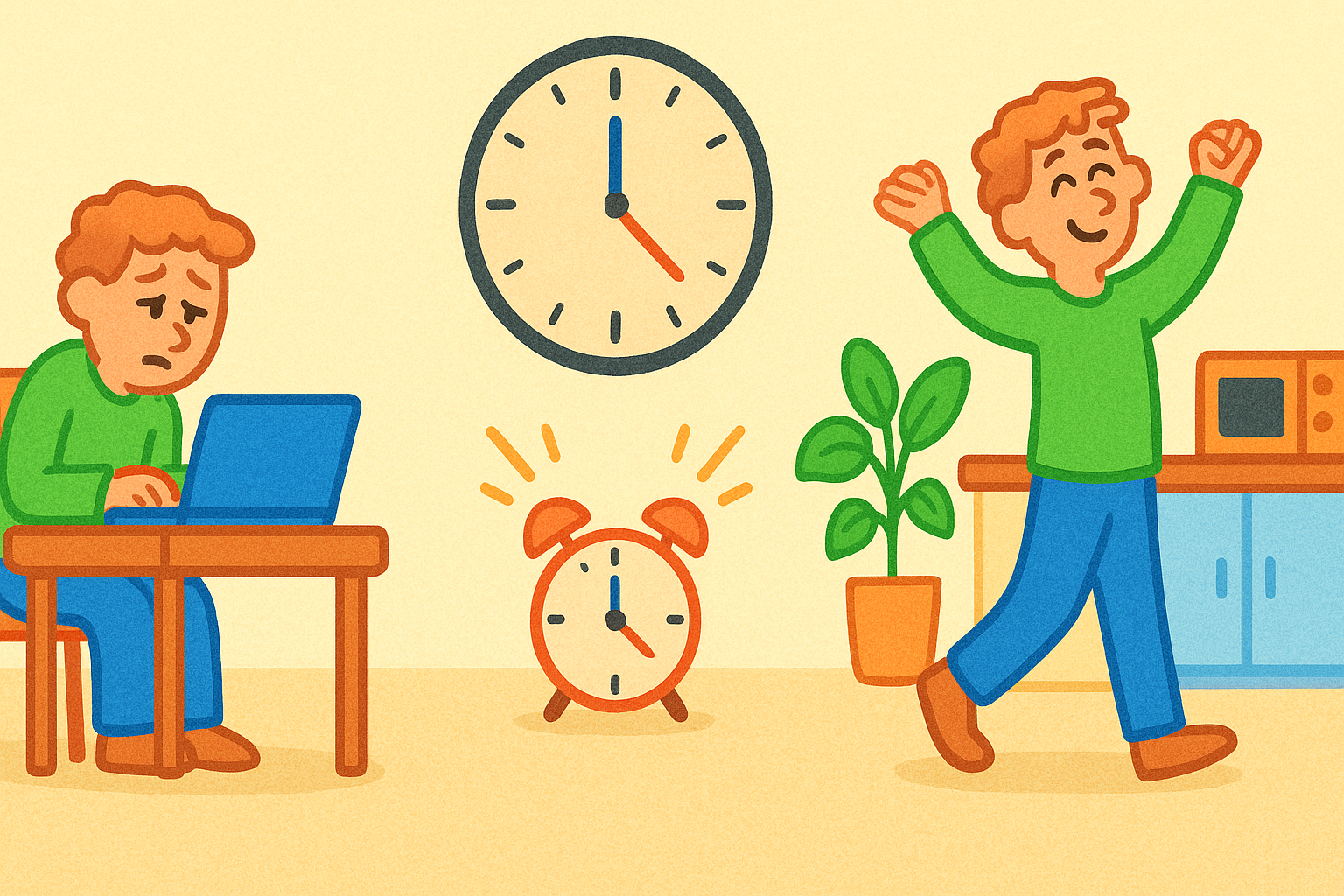
According to a 2020 guide in The Nurse practitioner, the simplest and most effective recommendation is to “move more and sit less.” Here is what the science supports for practical daily habits:
- The 20-Minute Rule: Set a timer to interrupt your sitting every 20 to 30 minutes. Standing up and walking for just two minutes at a light to moderate pace can significantly lower post-meal blood sugar and insulin levels.
- Exercise “Snacks”: Brief, 1-to-2 minute bursts of activity (like walking up a flight of stairs or doing a few squats) throughout the day provide acute benefits to your lipid and glucose levels.
- Use Wearable Reminders: Many modern fitness trackers have idle alerts that vibrate when you have been sitting for an hour. A 2022 trial in the Zeitschrift fur Gesundheitswissenschaften showed that sending university students simple digital prompts to take breaks from sitting successfully reduced their total daily sedentary time by 60 minutes. Related: Beyond Step Counting: What Science Says About the Future of Wearable Health Monitors
- Sit-Stand Desks: If you work at a computer, transitioning between sitting and standing throughout the day can reduce your overall sedentary time without reducing your productivity.
The Bottom Line
While getting regular exercise is one of the best things you can do for your health, it is only half of the equation. The science is clear that prolonged sitting acts as an independent risk factor for a host of health issues, including blood vessel damage, metabolic syndrome, cognitive decline, and anxiety.
We know with high confidence that human bodies require frequent muscle activation to regulate blood sugar and maintain healthy circulation. What remains slightly uncertain is the exact minimum dose of movement required to completely offset a day of sitting, as individual metabolisms vary. However, the overarching evidence points to a simple truth: breaking up your sitting time with short, frequent bouts of light movement is a powerful, science-backed way to protect your long-term health.
Quick Reference: Key Studies
| Study Focus | Key Finding | Source |
|---|---|---|
| Endothelial Health | Extreme physical inactivity impairs blood vessel function and increases insulin resistance within 3 to 5 days. | PMID 20511408 |
| The Active Couch Potato | The health risks of prolonged sitting are independent of your exercise habits. You can meet exercise guidelines and still suffer from sedentary risks. | PMID 24861117 |
| Brain Health | Excessive sitting is linked to neuroinflammation, structural brain changes, and age-related cognitive decline. | PMID 39409085 |
| Anxiety in Youth | Adolescents spending more than 2 hours a day in sedentary behaviors have a significantly higher risk of anxiety symptoms. | PMID 33104737 |
| Movement Interventions | Breaking up sitting every 20-30 minutes with light walking improves blood sugar control and reduces overall mortality risk. | PMID 32826536 |
Last updated: April 2026
This article synthesizes findings from peer-reviewed research. It is for educational purposes only and does not constitute medical advice. Consult a healthcare provider before starting any new regimen.


Leave a Reply