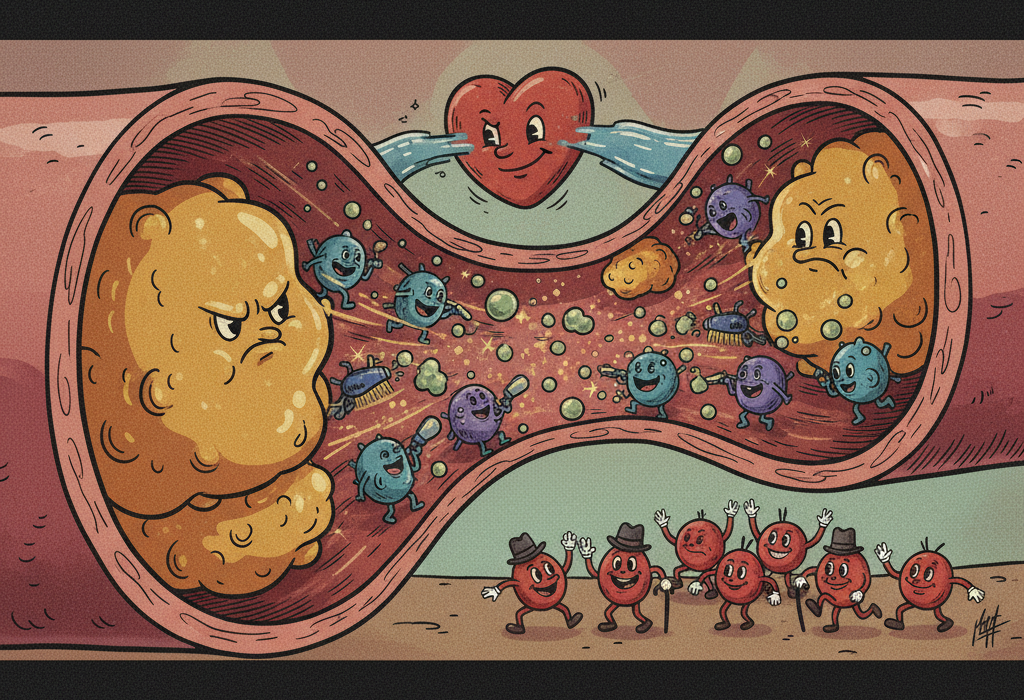
Imagine a pipe in an old house slowly clogging with rust. For a long time, doctors thought of human blood vessels in the exact same way. If a vessel clogged, it stayed clogged. However, blood vessels are living tissue. They constantly react to their environment, and they can heal.
Can you actually reverse arterial plaque? Yes. Recent science shows that aggressive medical treatments and lifestyle changes can shrink plaque and make it less dangerous. However, it is not as simple as scrubbing a pipe clean. It requires removing cholesterol, calming the immune system, and stabilizing the artery wall.
This article will explain how plaque forms, what the latest research says about reversing it, and how your body actually heals its blood vessels.
How Plaque Forms (And Why It Is Misunderstood)
To understand how to reverse plaque, we first need to define what it is.
- Atherosclerosis (ath-uh-roh-skluh-ROH-sis) – the buildup of fats, cholesterol, and other substances in and on the artery walls.
People often picture plaque as a greasy sludge sitting on the inside of a tube. A 2025 review in Biomolecules explains that chronic coronary artery disease is actually a “wall disease.” The plaque does not sit on top of the artery lining. It gets trapped inside the wall itself.
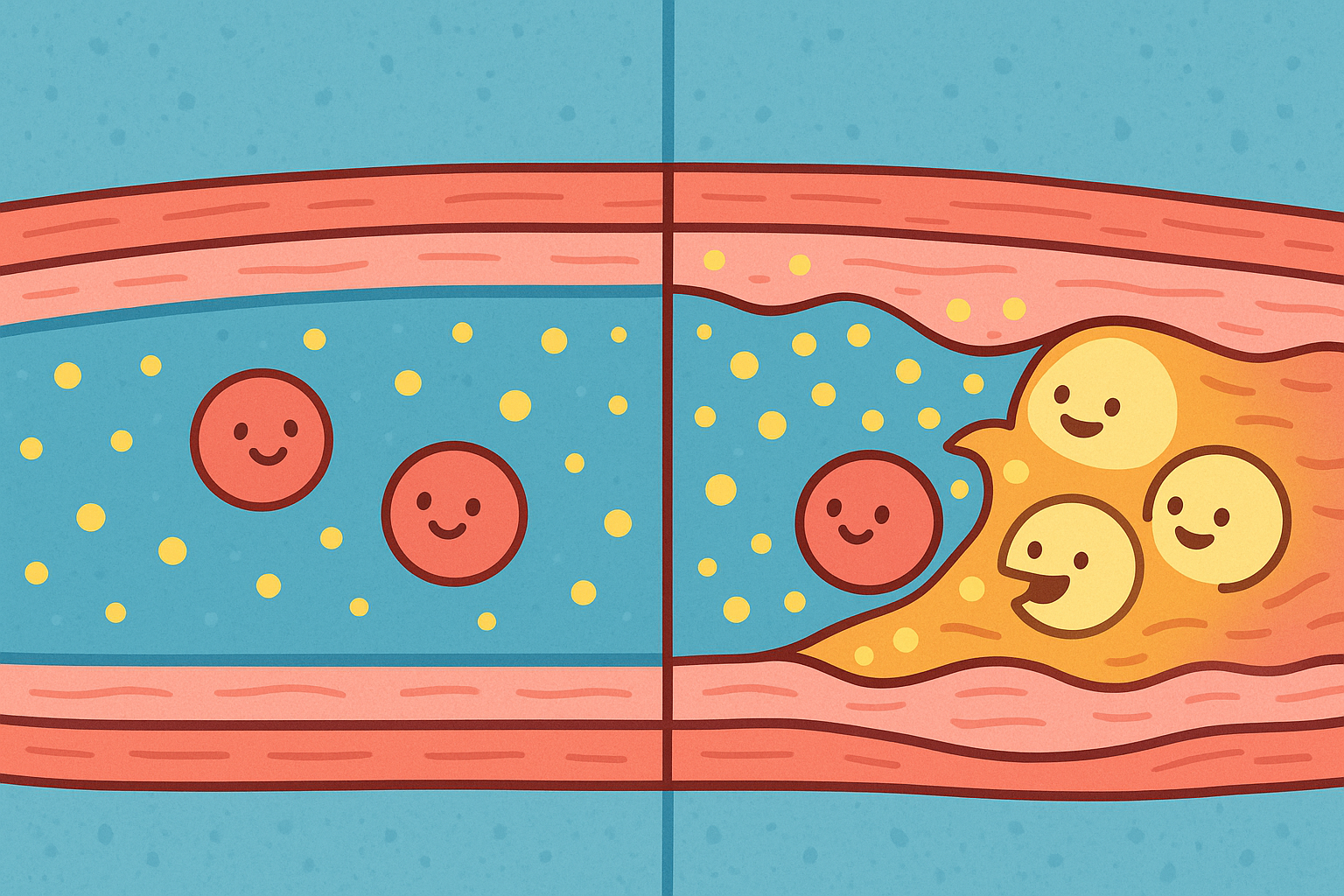
The inner lining of the blood vessel is called the Endothelium (en-doh-THEE-lee-um). When this lining is damaged by high blood pressure, smoking, or high blood sugar, cholesterol slips inside the wall. A 1996 study in the Archives of Internal Medicine confirmed early on that high blood pressure makes this process worse by increasing physical stress on the artery walls and triggering inflammation.
Once the cholesterol is trapped, the body recognizes it as a foreign invader. The immune system sends in specialized cleanup cells.
- Macrophages (MAK-roh-fey-juhz) – immune cells that swallow and digest cellular debris and foreign substances.
These macrophages eat the trapped cholesterol. However, they often eat too much, get stuck, and die. This creates a fatty, inflamed core inside the artery wall. Over time, the body tries to cover this core with a fibrous cap to keep it from spilling into the bloodstream.
What the Research Shows About Shrinking Plaque
For decades, scientists debated whether plaque could be reversed. As early as 1979, researchers noted that specific diets could shrink arterial lesions in animals. Today, advanced imaging technology allows doctors to look inside living human arteries to measure plaque volume directly.
A 2022 review in the Expert Review of Cardiovascular Therapy summarized multiple modern clinical trials. Using tiny ultrasound cameras placed inside the arteries, researchers found that aggressive use of cholesterol-lowering medications (like statins) can significantly reduce plaque volume.
Newer medications provide even more plaque-shrinking power. A 2025 study in the Journal of Cardiovascular Pharmacology and Therapeutics looked at patients with borderline coronary blockages. They found that combining a statin with a newer injectable drug called a PCSK9 inhibitor significantly shrank the plaque over 48 weeks.
How the Body Clears Plaque
If medications stop new cholesterol from entering the artery, how does the old cholesterol leave?
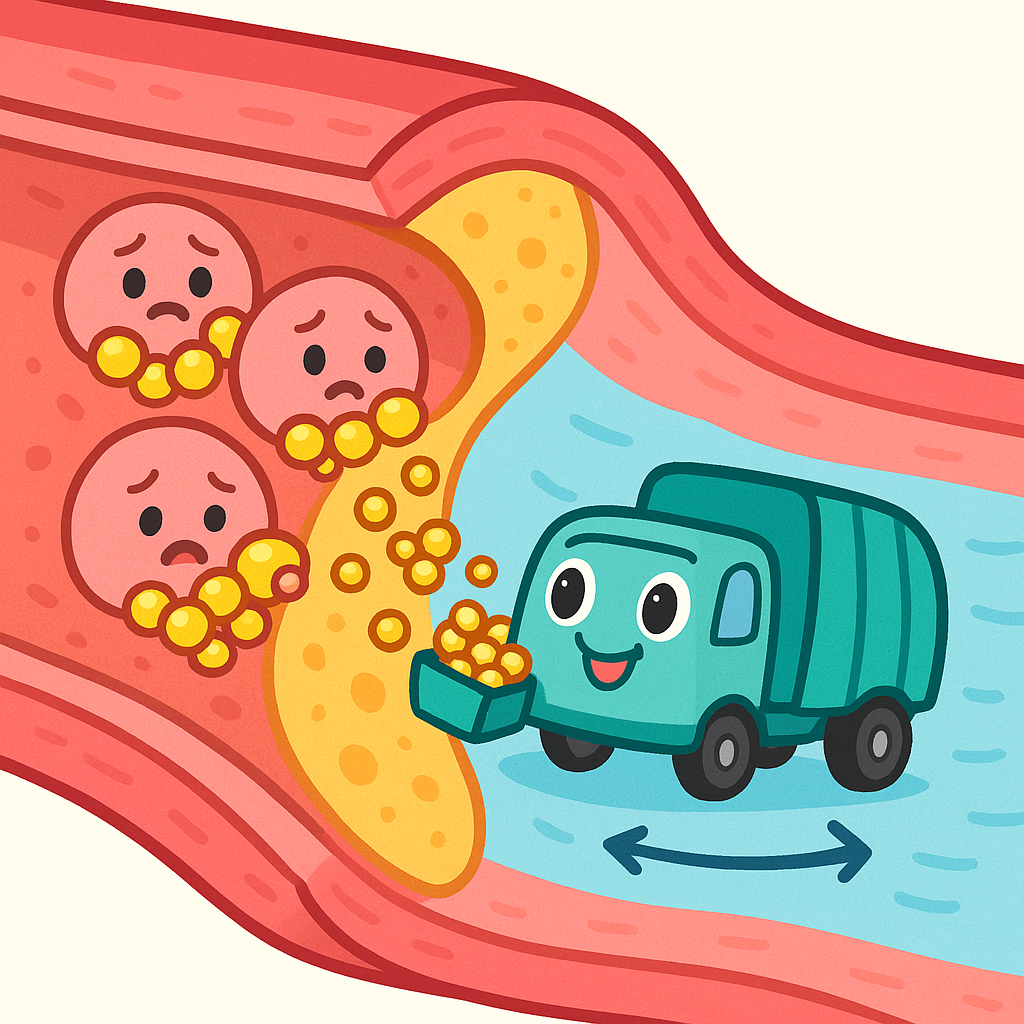
- Reverse cholesterol transport (ree-VERS koh-LES-tuh-rawl trans-port) – a process where the body carries cholesterol out of the artery wall and back to the liver to be removed.
A 2015 review in the Handbook of Experimental Pharmacology details how High-Density Lipoprotein (HDL) acts as a microscopic garbage truck. HDL particles visit the trapped macrophages, absorb the excess cholesterol, and carry it away.
The Role of Plaque Stabilization
Sometimes plaque does not shrink very much, but it becomes much safer. Soft, fatty plaques are dangerous because they can easily burst. If a plaque bursts, it causes a blood clot that can lead to a heart attack.
When plaque heals, the body often reinforces it with calcium. This turns the soft, dangerous fatty core into a hard, stable scar. A 2026 study in Atherosclerosis measured blood flow pressure in human arteries. They found that areas with highly restricted blood flow tended to have soft, lipid-rich plaques. Areas with more diffuse, widespread disease tended to have harder, calcified plaques.
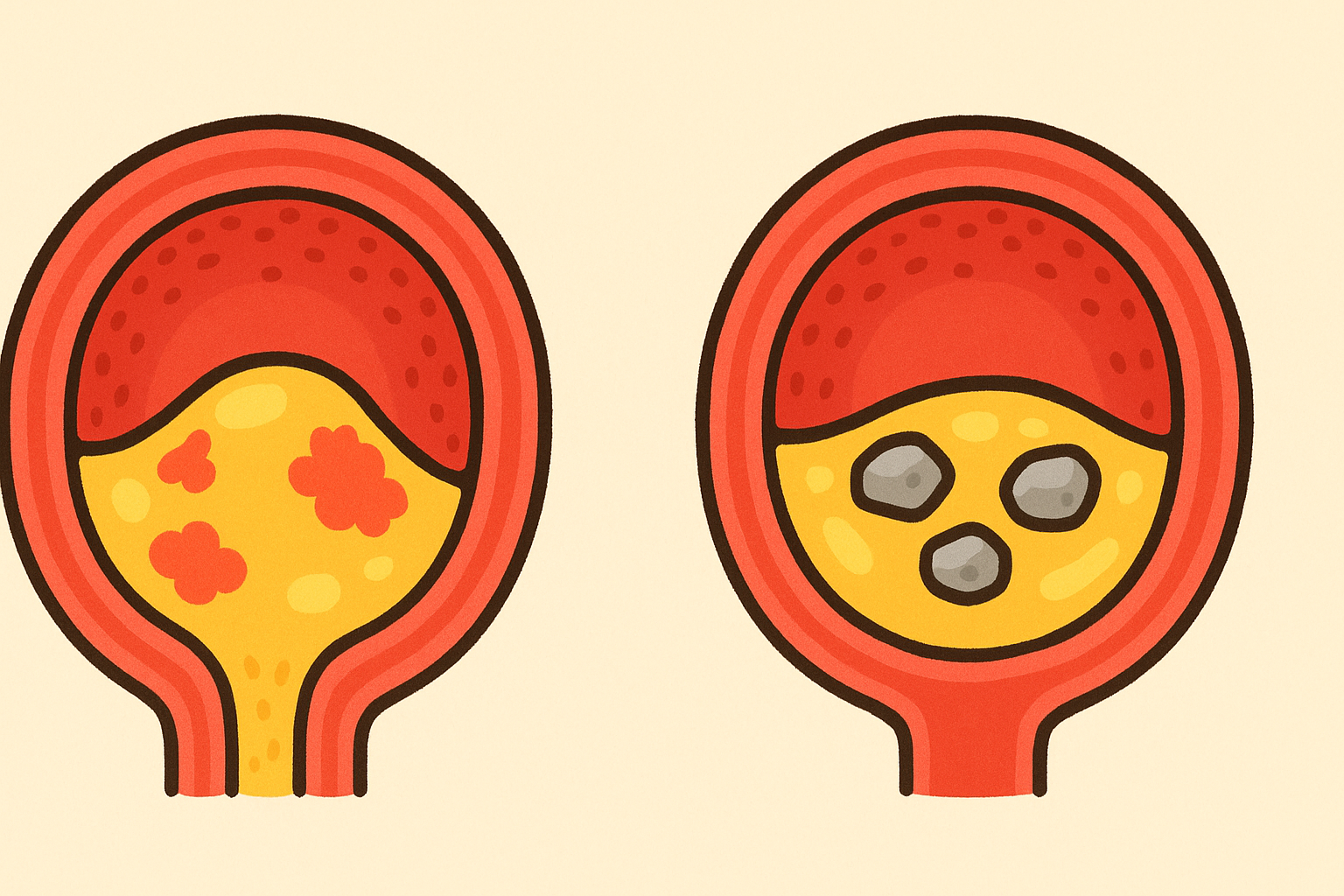
While having calcium in your arteries sounds alarming, a calcified plaque is generally less likely to burst than a soft plaque.
Related: Coronary Calcium Score: What This Heart Test Can Tell You
| Process | What Happens in the Artery | Result for the Patient |
|---|---|---|
| Progression | Macrophages get stuck, fat accumulates, inflammation rises. | Plaque grows, risk of rupture increases. |
| Regression | Cholesterol is removed by HDL, inflammation drops. | Plaque shrinks, blood flow improves. |
| Stabilization | Fatty core is replaced by thick tissue and calcium. | Plaque hardens, risk of rupture drops. |
How This Might Work: The Immune System’s Role
Reversing plaque is not just about cholesterol. It is heavily dependent on the immune system.
For plaque to shrink, the inflammation inside the artery wall must be turned off. A 2020 study in Circulation Research showed that a specific type of immune cell is required for this healing process. These cells are called Regulatory T cells (Tregs). When researchers removed Tregs from mice, the atherosclerotic plaques stopped shrinking, even when cholesterol levels were kept low. The Tregs act as peacekeepers, telling the macrophages to stop fighting and start repairing the tissue.
Blood flow patterns also change how the artery wall behaves. A 2024 study in the Journal of Cellular and Molecular Medicine showed that disturbed, turbulent blood flow activates specific stress sensors on the artery wall. This stress turns on genes that worsen plaque buildup. Interestingly, fixing blood flow can sometimes help the artery heal. A 2016 case report in the Indian Heart Journal noted that when surgeons bypassed a blocked artery, the original plaque in the native artery actually shrank over the next 12 years due to the changed blood flow dynamics.
Who Benefits Or Needs Caution
Research clearly shows that atherosclerosis behaves differently depending on a person’s age and sex.
Sex Differences in Plaque
A 2025 study in Nature Cardiovascular Research examined the individual cells inside human carotid artery plaques. They found distinct differences between men and women. Females tended to have plaques with more bone-like (osteogenic) cells and immune-modulating properties. Males tended to have plaques with more blood vessel growth (angiogenesis) and active immune cell cytotoxicity.
Similarly, a 2024 study on mice found that females on a high-fat diet developed significantly more calcified plaques than males. These differences suggest that men and women may eventually need slightly different treatment strategies for optimal plaque reversal.
The Impact of Aging
As we age, our arteries naturally stiffen. A 2017 review in the Journal of Internal Medicine notes that aging changes how our vascular cells repair themselves, leading to a gradual loss of elasticity.
A 2024 review in Science China Life Sciences highlighted that older cells eventually stop dividing properly, a state known as cellular senescence. These senescent cells secrete inflammatory chemicals that make plaque harder to clear. Furthermore, a 2020 study on mice found that a specific cell surface enzyme (CD73) actually promotes plaque buildup as the animals got older, despite being protective in younger animals.
Experimental and Alternative Approaches
Scientists are actively looking for new ways to shrink plaque beyond standard cholesterol medications.
- Iron Reduction: A 2009 review in Biochimica et Biophysica Acta explored the “iron hypothesis.” High levels of iron can accumulate in arterial plaque, causing oxidative stress. Animal studies suggest that reducing body iron levels can shrink lesions and increase plaque stability.
- Oral Acetate: A 2025 study in Atherosclerosis found that feeding mice acetate (a short-chain fatty acid) reduced plaque progression. The acetate changed how macrophages behaved, reducing their inflammatory signals.
- Nanoparticles: A 2020 study in Circulation Research tested tiny, lab-made particles designed to mimic white blood cells. These particles were loaded with an anti-inflammatory drug (rapamycin). When injected into mice, the particles successfully targeted the inflamed arteries and reduced macrophage proliferation, offering a potential future treatment for humans.
Common Questions About Reversing Plaque
Does having very high HDL always mean my plaque will shrink?
No. While HDL helps remove cholesterol, having extremely high levels is not always protective. A 2021 study in Cells found a “U-shaped” curve regarding HDL. People with very low and very high HDL levels both had higher risks of cardiovascular events. What matters most is how well the HDL functions, not just the total number on a blood test.
Can diet and exercise alone reverse plaque?
Diet and exercise are critical for stopping plaque from getting worse. However, human studies showing actual shrinkage of existing plaque usually involve aggressive medical therapy (like high-dose statins) alongside lifestyle changes.
The Bottom Line / Takeaways
- Plaque can shrink: Advanced imaging proves that aggressive cholesterol-lowering therapies can reduce the volume of plaque inside artery walls.
- Stabilization matters: Even if plaque does not shrink completely, medical treatment can drain the dangerous fatty core and replace it with stable, hard tissue (calcification), which reduces the risk of heart attacks.
- Inflammation is key: Reversing plaque requires calming the immune system so that specialized cells can repair the artery wall.
- Age and sex play a role: Plaque composition differs between men and women, and the aging process makes arteries stiffer and harder to heal.
While we cannot scrub our arteries clean like a rusty pipe, we can change the biological environment. By lowering cholesterol and reducing inflammation, the body’s natural healing mechanisms can stabilize and shrink existing plaque.
Quick Reference: Key Studies
| Study Focus | Key Finding | Source |
|---|---|---|
| Plaque Regression | Statin and PCSK9 inhibitor combinations significantly shrank plaque volume in patients with borderline lesions. | PMID 40702808 |
| Sex Differences | Female plaques tend to be more calcified and osteogenic, while male plaques show more blood vessel growth. | PMID 40211055 |
| Immune Healing | Regulatory T cells (Tregs) are absolutely required to help macrophages heal the artery during plaque regression. | PMID 32336197 |
| HDL Function | HDL cholesterol has a “U-shaped” risk curve; both extremely low and extremely high levels can increase heart risk. | PMID 34440638 |
| Blood Flow | Areas of the artery with highly restricted blood flow tend to have soft, dangerous plaques, while diffuse disease is more calcified. | PMID 41500086 |
Last updated: March 2026
This article synthesizes findings from peer-reviewed research. It is for educational purposes only and does not constitute medical advice. Consult a healthcare provider before starting any new regimen.
Leave a Reply