Introduction
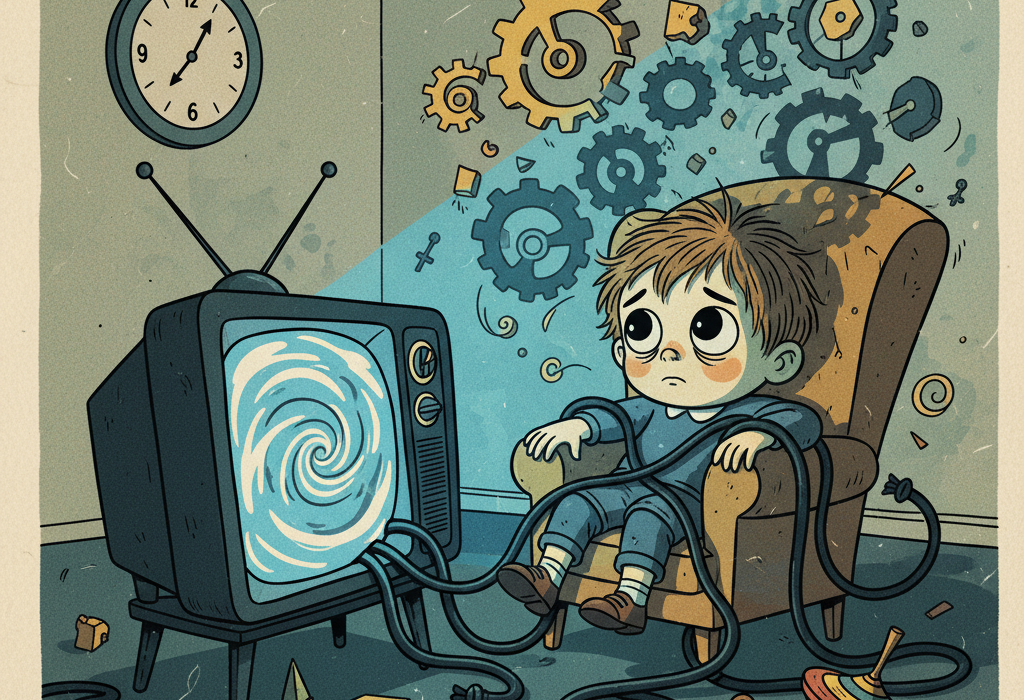
If you are raising a child today, you are raising a “digital native.” Unlike previous generations who adopted technology as adults, today’s children are born into a world of tablets, smartphones, and constant connectivity. For parents, this brings a heavy dose of guilt and worry. We see our toddlers swiping screens before they can speak in sentences, and we wonder: What is this actually doing to them?
The tension is real. On one hand, screens can be educational tools that prepare kids for a tech-driven future. On the other hand, we worry about what is being lost: the tree climbing, the face-to-face conversations, and the quiet moments of boredom that spark creativity. Are we permanently altering their brain development, or are we simply panicking about the “new” thing, just as people once panicked about the radio or the television?
Scientists are finally catching up with these questions. This article synthesizes data from 15 recent studies involving thousands of children to explain exactly what happens in a developing brain when it meets a glowing screen.
What the Research Shows
Research into screen time is complex because “screen time” is not just one thing. Watching a slow-paced documentary is different from playing a fast-paced video game or doom-scrolling social media. However, clear patterns regarding brain structure, vision, and behavior are emerging.
Changes in Brain Structure and Control
The most striking findings come from imaging studies that look inside the heads of children who use screens heavily. A 2024 study in Scientific Reports tracked children aged 9 to 11 over four years. They found that the type of screen time mattered significantly. High social media usage was associated with a slight decrease in the volume of the cerebellum (seh-ruh-BEH-luhm), a part of the brain involved in motor control and attention. Interestingly, playing video games was associated with a small increase in cerebellum volume. While these changes were small, they accelerated over time, suggesting the effects accumulate the longer a child maintains these habits.
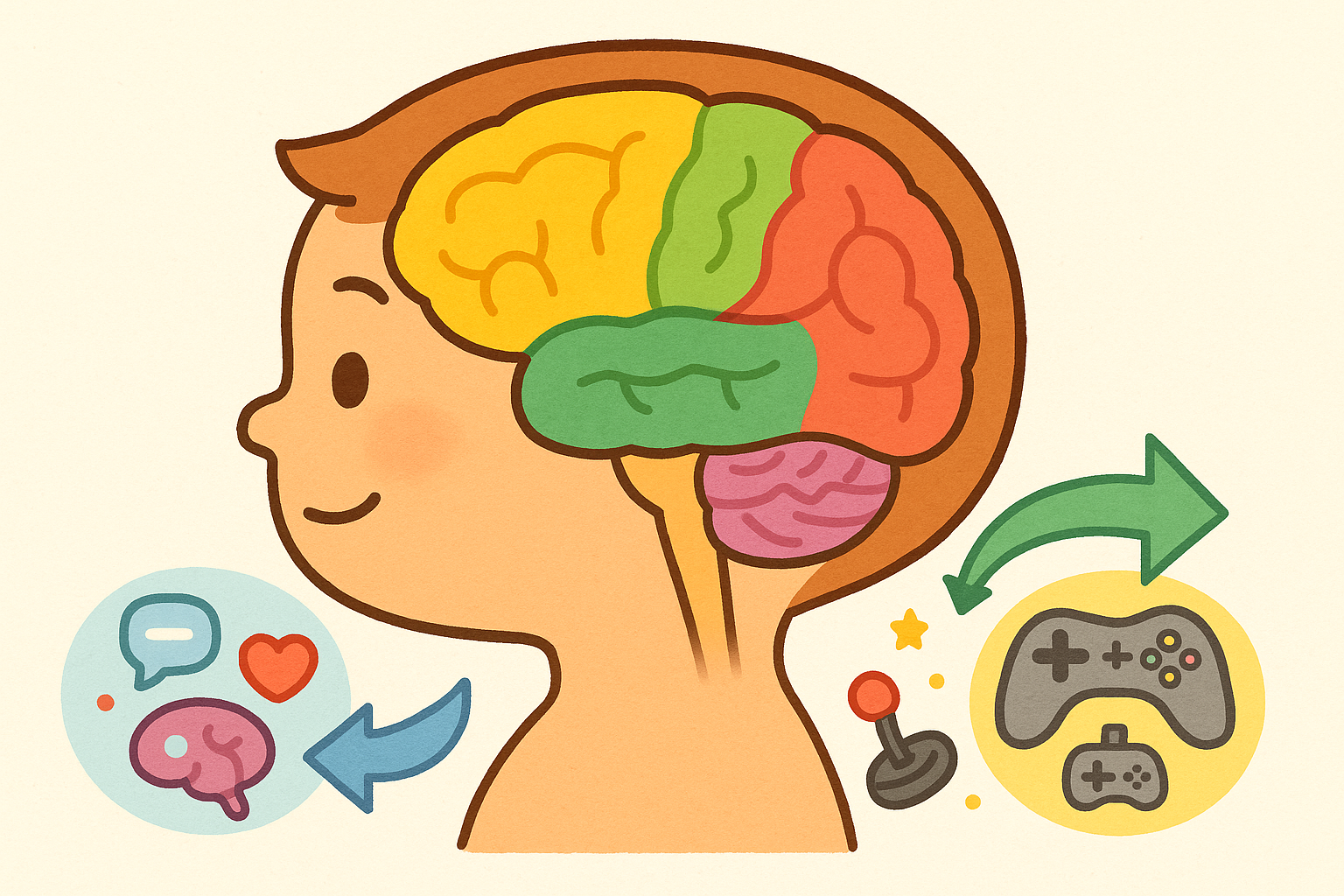
Beyond structure, screens affect how brain networks talk to each other. A two-year follow-up study found that higher daily screen time was linked to weaker connectivity in the fronto-striatal (FRUN-toh stry-AY-tul) circuit. This is the brain network responsible for inhibitory control: essentially, the ability to stop yourself from doing something impulsive. The researchers found that excessive screen time might delay the development of this control system, making children more prone to immediate reward-seeking behavior rather than long-term planning.
The “Displacement” of Language and Social Skills
One of the most consistent findings in the literature is not necessarily that screens are toxic, but that they replace things that are vital. This is known as the “displacement hypothesis.”
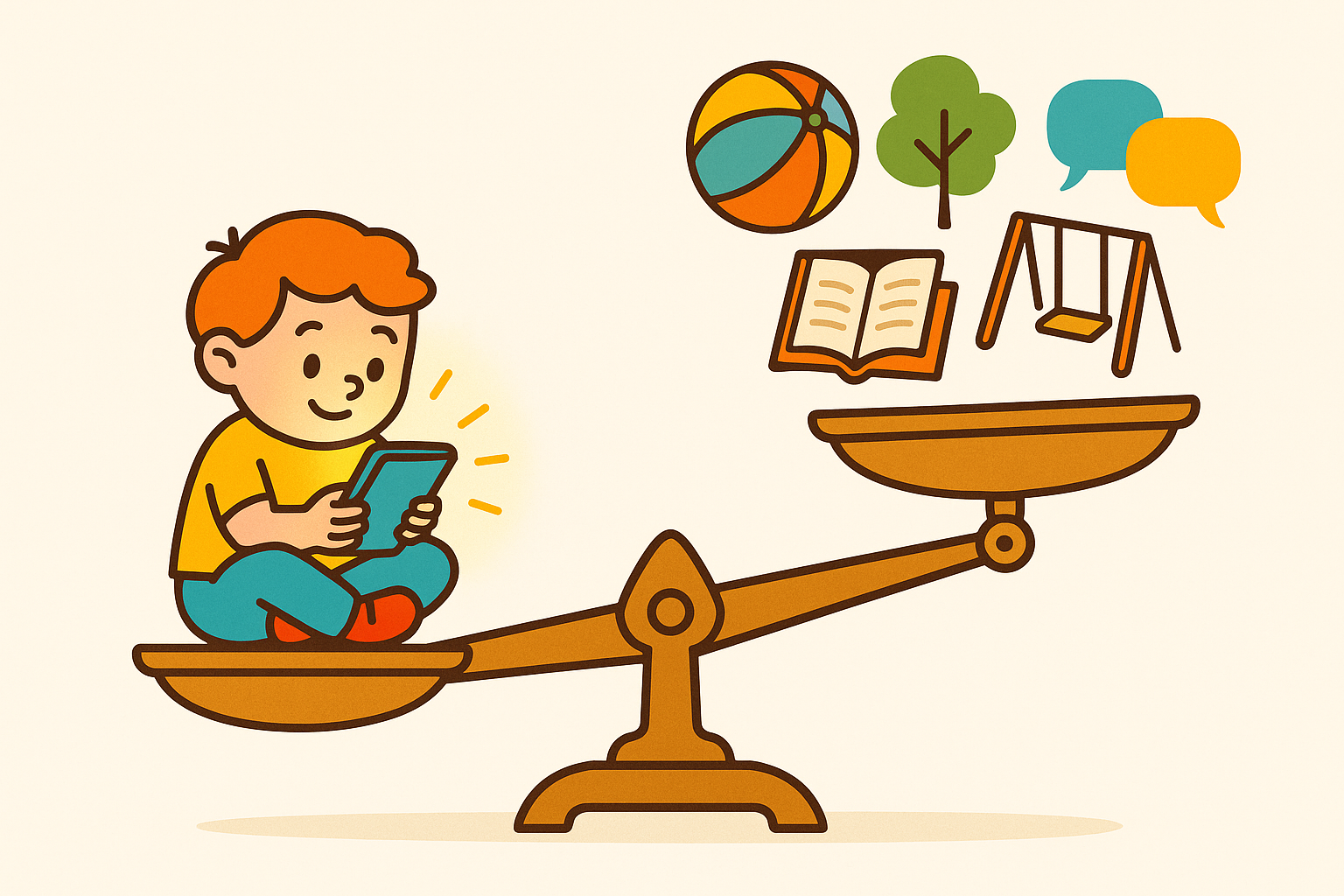
For young children, language is learned through back-and-forth interaction with adults. A systematic review in Brain Sciences highlighted that passive screen time (like watching TV alone) is strongly linked to language delays and smaller vocabularies. This is particularly true for children under two years old. When a screen is on, even in the background, parents and children talk to each other less. A 2022 scoping review confirmed that early onset of viewing and high duration are negative factors, while co-viewing (watching and talking about the content with a parent) can be protective.
This extends to social skills. A study of 575 preschoolers found that higher television viewing was associated with lower “compliance” scores (the ability to cooperate and follow instructions). Conversely, time spent in outdoor play was linked to better expressive and compliant social skills.
Vision and Physical Health
The physical impact of screens is becoming undeniable, particularly regarding myopia (my-OH-pee-uh), or nearsightedness. A 2024 meta-analysis covering over 100,000 participants found a significant correlation between high screen time and myopia. Interestingly, the link was stronger for computer and television use than for smartphones, perhaps due to the duration of sessions on these devices.
Related: Hearing Loss at Every Age: What Science Actually Knows
The Autism Connection: A Nuanced View
Some recent research has explored links between screen time and Autism Spectrum Disorder (ASD). A systematic review in Cureus found that early, excessive screen exposure was associated with a higher risk of developing ASD-like symptoms.
Important distinction: This does not necessarily mean screens cause the genetic condition of autism. Rather, excessive isolation with screens during critical developmental windows may lead to “pseudo-autistic” behaviors, such as poor eye contact, delayed speech, and lack of social interest, because the child is deprived of the social stimulation required to develop these skills. Some researchers suggest these symptoms can sometimes be reversed or improved when screen time is drastically reduced and face-to-face interaction increases.
The “Small Effect” Controversy
While the above sounds alarming, not all data points to catastrophe. It is vital to keep the magnitude of these effects in perspective.
A large-scale study in Nature Human Behaviour analyzed data from over 350,000 adolescents. They found that while the association between technology use and lower well-being was negative, it was extremely small, explaining at most 0.4% of the variation in well-being. The researchers noted that factors like getting enough sleep, eating breakfast, or being bullied had a far massive impact on a teenager’s mental health than whether they used a screen. This suggests that while screens are a factor, they are likely not the sole cause of the current mental health crisis in teens.
The Bottom Line
The evidence suggests that screen time is not inherently “poison,” but it acts as a powerful displacement tool. When screens crowd out sleep, outdoor play, and face-to-face conversation, child development suffers. The risks are highest for the youngest children (under 2) and for those with excessive use (over 3-4 hours daily). However, for adolescents, moderate use is a relatively small factor in overall well-being compared to sleep and social environment.
Who Benefits Or Needs Caution
Research identifies specific groups where the impact of screen time differs significantly.
| Group | Risk Level | Research Findings |
|---|---|---|
| Infants (<2 years) | High | Research consistently shows negative impacts on sleep, language, and social skills. PMID 33960616 notes measurement is hard, but guidelines suggest avoidance. |
| Preschoolers (3-5) | Moderate | PMID 34012028 found that children viewing >2 hours/day had significantly delayed developmental milestones compared to those viewing <1 hour. |
| Adolescents | Low/Mixed | While high use correlates with anxiety, the overall impact on well-being is small (0.4%) compared to other lifestyle factors. PMID 30944443. |
| Low Socioeconomic Status | High | Children in these groups often have higher screen exposure and less access to “green time,” compounding the negative effects. PMID 32886665. |
Practical Guidance: The “Green Time” Buffer
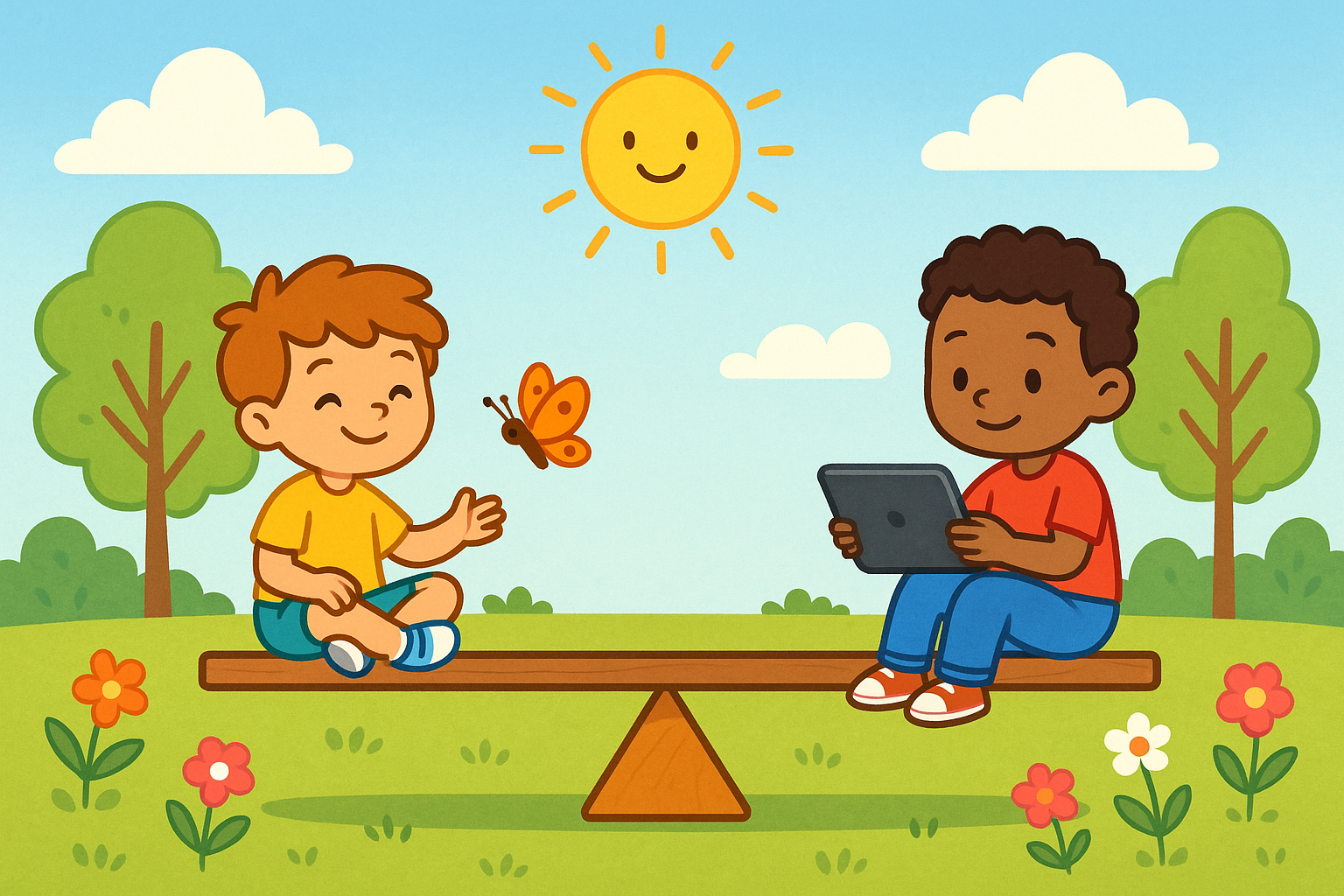
If you are looking for a way to mitigate the effects of screen time without banning devices entirely, science points to nature.
A 2020 scoping review introduced the concept of balancing “Screen Time” with “Green Time” (exposure to nature). The study found that green time is associated with favorable psychological outcomes and may buffer the negative effects of high screen use.
Actionable steps based on the research:
- Prioritize Sleep: A review of sleep in children under 5 found strong evidence that evening screen time ruins sleep quality. Keep screens out of the bedroom and turn them off 60 minutes before bed.
Co-viewing: Don’t let young children watch alone. Watching with* them and discussing the content turns a passive activity into a language-building session.
- Goal Setting: An analysis of interventions found that simply restricting time rarely works long-term. Effective reduction happens when families set specific goals, plan alternative activities, and monitor progress together.
- The 1-Hour Threshold: For preschoolers, data suggests that keeping use under 1 hour per day significantly lowers the risk of behavioral and developmental delays compared to 2 or 3 hours.
Related: Beyond Step Counting: What Science Says About the Future of Wearable Health Monitors
Common Questions About Screen Time
Does watching TV cause autism?
No. While some research links excessive early screen time to ASD-like symptoms (such as poor eye contact or delayed speech), this is likely due to a lack of social interaction rather than the screens causing the genetic condition of autism.
Is educational content better than cartoons?
Yes, but with caveats. Research reviews suggest that while educational apps can improve literacy, they cannot replace the learning that happens through physical play and human interaction. Passive video watching is generally worse than interactive educational games.
Do screens ruin teenage mental health?
It is complicated. While there is a correlation between high social media use and anxiety/depression PMID 40784833, large data sets suggest the effect size is small. Sleep deprivation and cyberbullying (which happen on screens) are likely the bigger drivers of poor mental health than the screens themselves.
Quick Reference: Key Studies
| Study Focus | Key Finding | Source |
|---|---|---|
| Brain Structure | High social media use linked to smaller cerebellum; gaming linked to larger cerebellum. | PMID 38844772 |
| Brain Connectivity | Higher screen time linked to weaker inhibitory control networks (impulse control). | PMID 36821878 |
| Adolescent Well-being | Negative link between tech and well-being exists but is very small (0.4%). | PMID 30944443 |
| Language Delay | Passive screen time (TV) strongly linked to language delay; co-viewing is protective. | PMID 38248242 |
| Preschool Development | >1 hour/day linked to delays in milestones and behavior problems. | PMID 34012028 |
| Vision | Strong association between screen time and myopia (nearsightedness). | PMID 38890613 |
| Green Time | Nature exposure can buffer the negative psychological impacts of screen time. | PMID 32886665 |
Last updated: March 2026
This article synthesizes findings from peer-reviewed research. It is for educational purposes only and does not constitute medical advice. Consult a healthcare provider before starting any new regimen.

Leave a Reply