Why Your Skin Changes With Age
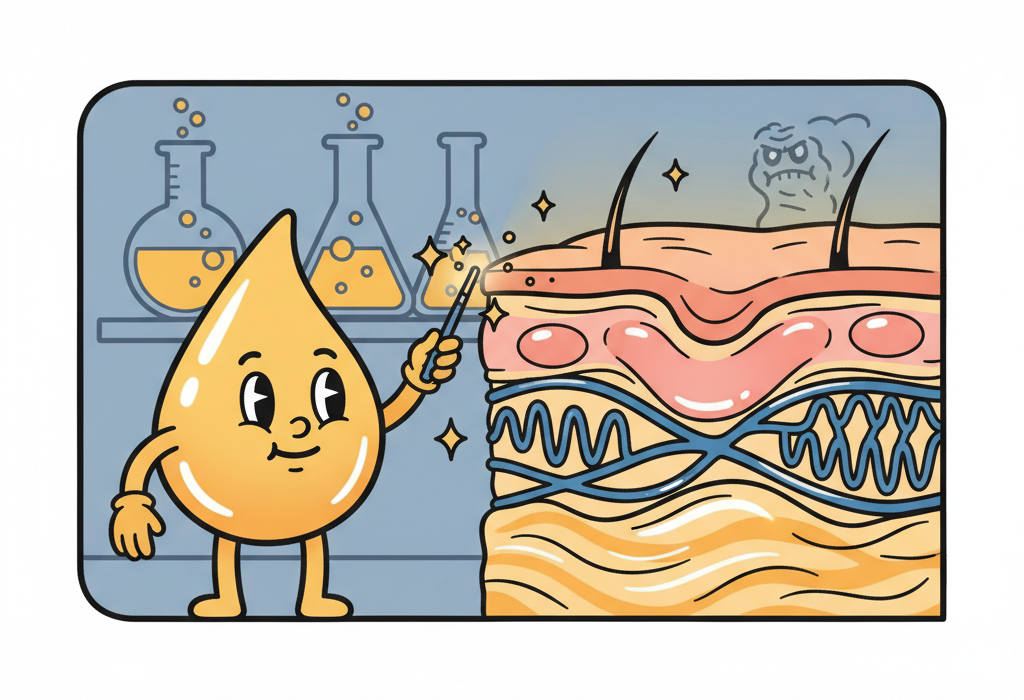
Think of your skin like a mattress. When it’s new, it’s firm, bouncy, and smooth on the surface. Over time, the springs inside (that’s your collagen and elastin) start to break down. The padding thins out. The cover gets wrinkled and saggy. Sun exposure is like jumping on that mattress every day. It speeds up the wear and tear far beyond what time alone would cause.
Scientists call this sun-related aging photoaging (FOH-toh-AY-jing), and it’s responsible for most of the wrinkles, dark spots, and loose skin you see on your face, neck, and hands. Underneath those visible changes, real structural damage is happening: the outer layer of skin (the epidermis, eh-pih-DER-mis) gets thinner, supportive proteins like collagen (KOLL-uh-jen) break down, and the skin loses its ability to hold onto moisture.
For decades, one ingredient has stood out as a go-to treatment for these changes: retinol. But what does the latest science actually say about how well it works? And are there newer alternatives that might work even better? Two recent studies help us answer those questions.
What the Research Shows
Retinol and Retinoids: The Big Picture
A 2025 review in the International Journal of Cosmetic Science examined decades of evidence on retinoid compounds and how they treat photoaged skin. Retinoids are a family of compounds related to vitamin A. The most well-known members include:
- All-trans retinoic acid (ATRA) (also called tretinoin): the prescription-strength “gold standard”
- Retinol (ROH): the most common over-the-counter form
- Retinaldehyde (RAL): a less common but well-tolerated over-the-counter option
- Retinyl esters (like retinyl palmitate and retinyl propionate): the gentlest but generally weakest forms
Here’s an important detail: your skin cells can only use ATRA. All other retinoids have to be converted into ATRA inside your skin cells before they do anything. Think of it like a relay race. Retinyl esters get passed to retinol, retinol gets passed to retinaldehyde, and retinaldehyde finally becomes ATRA. Each conversion step means some loss of potency.
| Retinoid Type | Availability | Potency | Irritation Risk | Stability |
|---|---|---|---|---|
| ATRA (Tretinoin) | Prescription only | Highest | Highest | Low |
| Retinol | Over-the-counter | Moderate | Moderate | Moderate |
| Retinaldehyde | Over-the-counter | Moderate | Lower than retinol | Moderate |
| Retinyl esters | Over-the-counter | Lowest alone | Lowest | Highest |
How Retinol Actually Works in Your Skin
According to the review, once retinol is converted to ATRA inside your cells, it triggers a chain of events through two main pathways:
1. In the epidermis (outer skin layer): It stimulates skin cell growth and speeds up cell turnover. This thickens the epidermis, which tends to thin as we age. It also helps the skin shed old, damaged cells faster.
2. In the dermis (deeper layer): It encourages the production of new collagen and fibrillin (FY-bruh-lin), a protein that acts like the scaffolding holding skin’s structure together. At the same time, it slows down enzymes called matrix metalloproteinases (MAY-tricks met-AL-oh-PRO-tee-nay-ses), or MMPs, that break collagen apart.
The review also noted that retinol can boost your skin’s production of hyaluronic acid (hy-ah-lur-ON-ik), a molecule that holds water in the skin. One year-long study cited in the review found that a stabilized retinol formula significantly increased the enzyme responsible for making hyaluronic acid in the epidermis.
What Concentrations Work Best?
The review found that over-the-counter retinol products typically range from 0.05% to 0.3%. One study highlighted in the review showed that a 0.3% retinol formula was equally effective at rebuilding dermal structure (collagen and fibrillin) as a 1% formula, but caused less irritation. This is good news: you may not need the strongest product to get results.
For retinaldehyde, concentrations of 0.05% to 0.1% have been shown to increase epidermal thickness and improve skin elasticity over periods of 8 weeks to 1 year.
How Long Until You See Results?
Based on the studies reviewed, meaningful improvements in wrinkles, skin texture, and pigmentation generally require sustained use, typically 8 to 12 weeks at minimum, with continued improvement over months of use.
Could Something Work Better Than Retinol?
A 2025 clinical trial published in the Journal of Cosmetic Dermatology tested a new type of ingredient called cyclized hexapeptide-9 (CHP-9) (SY-klized HEX-uh-PEP-tide) head-to-head against retinol. This is a synthetic peptide, meaning it’s a short chain of amino acids designed to mimic a fragment of collagen. What makes it different from regular peptides is that its ends are linked together in a ring shape (“cyclized”), which makes it more stable and better at penetrating skin.
The trial enrolled 96 Asian participants aged 30 to 55, all with visible wrinkles and mildly compromised skin barriers. They were randomly assigned to apply one of three serums twice daily for 56 days:
- 0.002% CHP-9 serum
- 0.002% retinol serum
- A vehicle (inactive) serum
Both the participants and the researchers were blinded, meaning nobody knew who was using which product.
Head-to-Head Results: CHP-9 vs. Retinol
| Outcome (at Day 56) | Retinol vs. Control | CHP-9 vs. Control |
|---|---|---|
| Crow’s feet count | Not significant | Significant decrease |
| Crow’s feet area | Decreased by 2.23 mm² | Decreased by 3.95 mm² |
| Crow’s feet roughness | Not significant | Significant decrease |
| Forehead wrinkle count | Decreased by 1.05 | Decreased by 2.88 |
| Forehead wrinkle area | Decreased by 0.86 mm² | Decreased by 4.90 mm² |
| Forehead wrinkle roughness | Not significant | Significant decrease |
| Skin hydration | Increased by 4.22 units | Increased by 9.44 units |
| Water loss (TEWL) | Decreased by 1.59 g/h/m² | Decreased by 3.93 g/h/m² |
| Melanin index | Decreased by 3.04 | Decreased by 20.27 |
| Epidermal thickness | Borderline (not significant) | Increased by 8.87 μm |
In this trial, CHP-9 consistently outperformed retinol across nearly every measurement. Its effects also grew stronger over the 56-day period, suggesting that longer use may yield greater benefits. Perhaps most notably, CHP-9 caused zero adverse events, while retinol is well known for causing irritation (though at this very low concentration, no adverse events were reported for retinol either).
Important Context for These Results
Before reading too much into the comparison, there are a few things to keep in mind:
- The retinol concentration was very low. At 0.002%, this is far below the 0.05% to 0.3% range typically used in consumer retinol products. The retinol may have been at a disadvantage.
- This is a single trial. CHP-9 is a brand-new ingredient. Retinol has decades of research behind it across many skin types, populations, and formulations. One study, no matter how well designed, is not enough to declare a winner.
- The study was conducted only in Asian participants. Results may differ across different skin types and ethnicities.
- The study lasted 56 days. Retinol’s benefits are well documented over 6 to 12 months and beyond. We don’t yet know how CHP-9 performs over longer periods.
Who May Benefit Most
Retinol is a strong option for:
- People with sun-damaged skin showing wrinkles, uneven tone, or rough texture
- Those who want a well-studied, widely available ingredient
- Anyone willing to tolerate a brief adjustment period of dryness and flaking
Retinol may not be the best fit for:
- People with very sensitive or reactive skin, especially without guidance from a dermatologist
- Those with darker skin tones who are concerned about post-inflammatory hyperpigmentation (PIH) (post-in-FLAM-uh-tor-ee HY-per-pig-men-TAY-shun), where irritation triggers dark spots. The review specifically noted that intolerance to retinoids carries a greater risk of PIH in skin of color.
- Pregnant or breastfeeding individuals, as retinoids are contraindicated during pregnancy
CHP-9 peptides may be worth watching for:
- People who cannot tolerate retinol at any concentration
- Those looking for alternatives with a gentler profile
- However, CHP-9 is not yet widely available, and only one clinical trial exists. It is too early to recommend it as a replacement for retinol.
| Group | Retinol | CHP-9 Peptide |
|---|---|---|
| Sun-damaged, wrinkled skin | Well-supported by evidence | Promising but early |
| Sensitive skin | Start low, may still irritate | No irritation reported in trial |
| Darker skin tones | Use with caution (PIH risk) | Unknown (not tested in diverse populations) |
| Pregnant individuals | Avoid | Insufficient safety data |
| Budget-conscious consumers | Widely available at many price points | Not yet widely available |
How to Use Retinol Effectively
If you decide to try retinol based on the current evidence, here are some practical tips drawn from the research:
Start Low, Go Slow
The review emphasized that a 0.3% retinol concentration can be as effective as 1% for skin remodeling but is better tolerated. Starting with a lower concentration reduces the risk of retinoid dermatitis (RET-in-oyd dur-muh-TY-tis), the temporary dryness, redness, and peeling that commonly occurs when you first start using retinol.
Build Up Gradually
- Week 1-2: Apply every third night
- Week 3-4: Apply every other night
- Week 5+: Apply nightly if tolerated
Apply at Night
Retinol breaks down when exposed to sunlight. Apply it in the evening.
Use Sunscreen Daily
Retinol makes your skin more sensitive to UV damage. Wearing sunscreen during the day is not optional when using retinol.
Moisturize
Using a simple, fragrance-free moisturizer before or after retinol can help buffer irritation, especially during the adjustment period. The review noted that emollients help counter irritancy issues.
Be Patient
Studies consistently show that retinol requires weeks to months of regular use before visible improvements appear. The clinical trial showed that even at 56 days, improvements in wrinkle area were still growing stronger over time for both retinol and CHP-9.
Consider the Form
If retinol is too irritating, retinaldehyde (0.05% to 0.1%) is a well-studied alternative with a better tolerance profile. Retinyl esters (like retinyl palmitate) are the gentlest option but have the least evidence of benefit when used alone. Some products combine retinyl esters with other active ingredients like niacinamide or peptides, which may improve results, though it becomes hard to know which ingredient is doing the work.
What We Know and What We Don’t
What the evidence supports:
- Retinol works. Multiple studies over decades show it can reduce wrinkles, even out skin tone, thicken the epidermis, and stimulate collagen and fibrillin production in sun-damaged skin.
- Lower concentrations can be effective. You don’t necessarily need the strongest retinol product. A 0.3% formula showed similar structural improvements to a 1% formula.
- Irritation is common but usually temporary. The dryness, redness, and peeling that many people experience typically subside within a few weeks.
- CHP-9 showed strong results in its first clinical trial. This cyclized peptide outperformed retinol (at a very low dose) on wrinkle reduction, hydration, skin tone, and skin barrier function in a well-designed 56-day trial.
What we still don’t know:
- How CHP-9 compares to retinol at standard doses. The retinol concentration in the trial (0.002%) was far below what’s typical in consumer products.
- Long-term effects of CHP-9. One 56-day trial in one population is a starting point, not a conclusion.
- Optimal retinoid use across skin types. The review specifically called out the need for more research on retinoid benefits and risks in darker skin tones.
- How topical retinoids actually enter skin cells. Surprisingly, the exact mechanism by which retinol crosses the skin barrier is still not fully understood.
Quick Reference: Key Studies
| Study Focus | Key Finding | Source |
|---|---|---|
| Comprehensive review of retinoid compounds for photoaging | Retinol, retinaldehyde, and retinyl esters are effective, safe, and well-tolerated for improving sun-damaged skin; 0.3% retinol is as effective as 1% with less irritation | PMID 39128883 |
| Randomized trial comparing cyclized hexapeptide-9 (CHP-9) vs. retinol (0.002% each) over 56 days in 96 Asian adults | CHP-9 outperformed retinol on wrinkle reduction, hydration, skin tone, and barrier function; no adverse events in any group | PMID 40586182 |
Last updated: July 2025
This article synthesizes findings from peer-reviewed research. It is for educational purposes only and does not constitute medical advice. Consult a healthcare provider before starting any new regimen.


Leave a Reply