
Most of us know to apply sunscreen before a long day outdoors. The logic is simple: block the sun, prevent the burn. However, as daily sunscreen use has become a standard health recommendation, new questions have emerged.
Do the chemicals in sunscreen enter our bloodstream? Does blocking the sun mean we will not get enough Vitamin D? Are natural alternatives just as effective?
This article breaks down the latest scientific research to explain how sunscreen works, which ingredients are safest, and what you actually need to know to protect your skin.
How UV Rays Damage the Skin
The sun emits different types of energy, including ultraviolet (UV) radiation (uhl-truh-VY-uh-lit ray-dee-AY-shun). This is invisible energy that penetrates the skin and causes biological changes.
There are two main types of UV rays that reach the earth:
- UVB Rays: These are short, high-energy waves. They hit the top layer of the skin and are the primary cause of sunburns.
- UVA Rays: These are longer waves that penetrate deeper into the skin. They break down collagen and are the primary cause of wrinkles and premature aging.
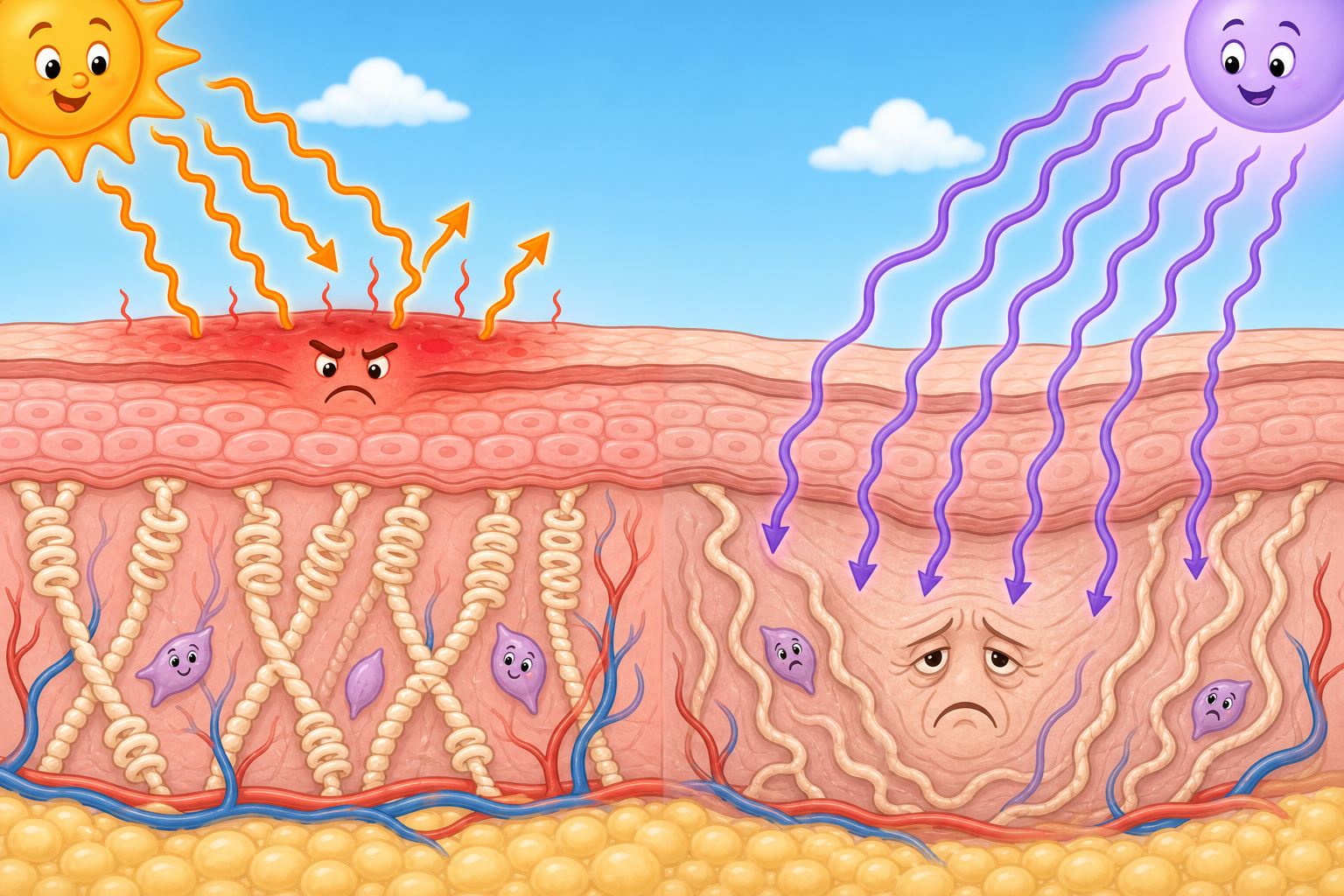
Both types of rays damage cellular DNA, which can lead to skin cancer over time. A 2025 review in Dermatologic clinics confirms that regular sunscreen use actively reduces the incidence of melanoma, the most dangerous form of skin cancer.
Beyond burning and aging, UV exposure also creates reactive oxygen species (ree-AK-tiv OX-ih-jen SPEE-sheez). These are highly unstable molecules that cause oxidative stress, damaging healthy cells and speeding up the aging process. Related: How UV Rays Actually Damage Skin (And What Science Says Protects It)
Chemical vs. Mineral Filters: What the Research Shows
Sunscreens protect the skin using two main categories of active ingredients: mineral filters and chemical filters. Research shows they interact with the body in very different ways.
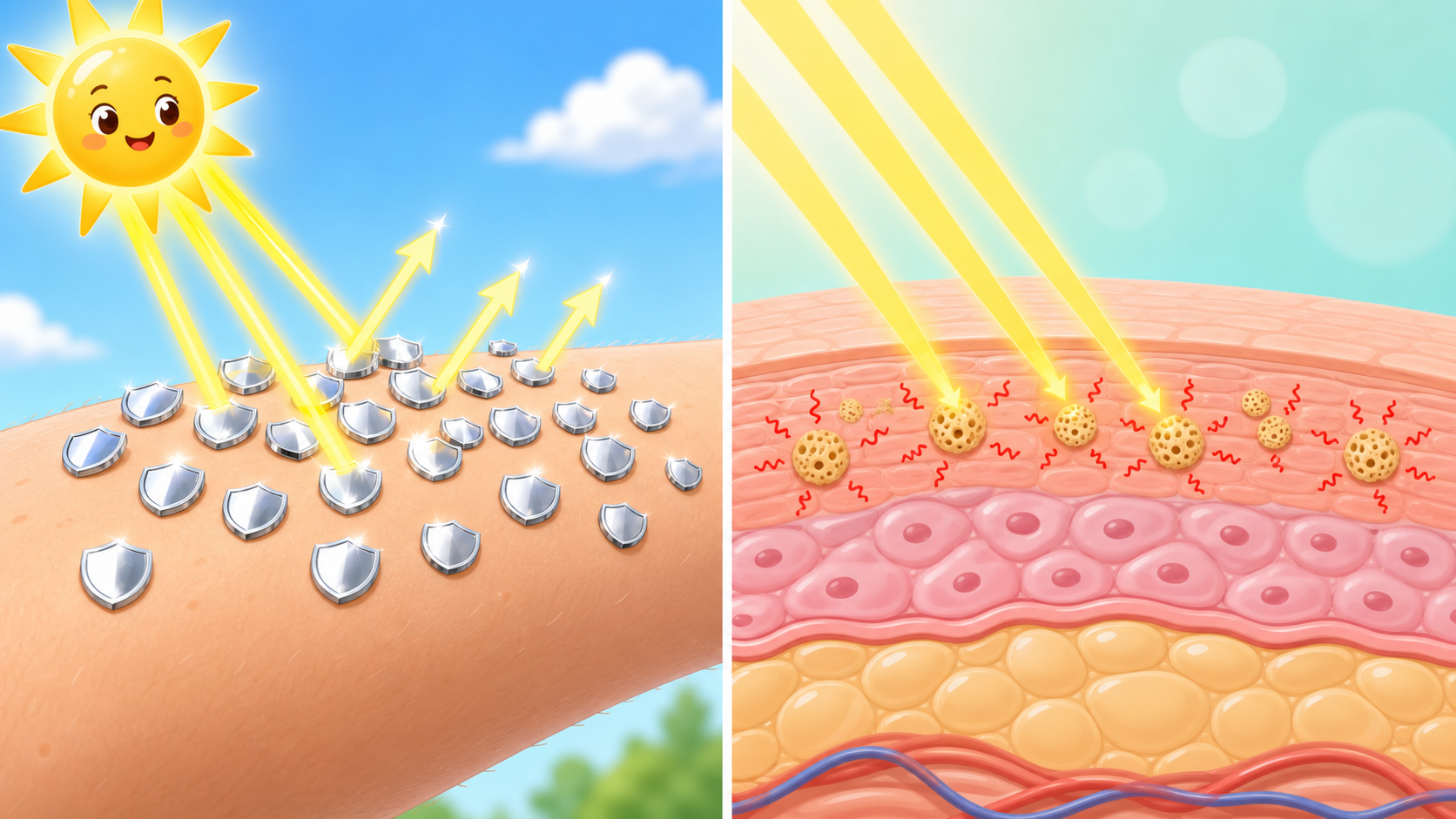
Mineral (Inorganic) Sunscreens
Mineral sunscreens use zinc oxide or titanium dioxide. These ingredients sit on the surface of the skin and work primarily by absorbing UV rays, though they also scatter and reflect a small amount of light.
Historically, mineral sunscreens left a thick white paste on the skin. To fix this, manufacturers began using nanoparticles, which are microscopic versions of these minerals that rub in clear.
A 2019 review in Photodermatology, photoimmunology & photomedicine evaluated the safety of these nanoparticles. The research confirmed that zinc oxide and titanium dioxide nanoparticles do not penetrate intact human skin. They remain on the surface, making them highly safe for human use. However, the researchers noted one specific caution: people should avoid spray versions of mineral sunscreens. Inhaling these tiny particles into the lungs can cause cellular damage, so lotions are a much safer choice.
Chemical (Organic) Sunscreens
Chemical sunscreens use ingredients like oxybenzone, avobenzone, and octinoxate. Instead of sitting on top of the skin, these chemicals act like sponges. They absorb UV light and convert it into harmless heat.
Because these molecules are small and dissolve in oil, they can be absorbed through the skin and into the bloodstream. A 2025 review in Current environmental health reports examined decades of data on chemical filters, specifically benzophenones like oxybenzone. The research found that these chemicals frequently appear in blood and urine samples.
More importantly, some of these chemical filters act as endocrine disruptors (EN-doh-krin dis-RUP-ters). These are chemicals that can interfere with the body’s natural hormone system. The review noted associations between high exposure to certain chemical filters and altered thyroid hormones, as well as changes in reproductive health.

While the United States still relies heavily on these older chemical filters, a 2014 review in Advances in experimental medicine and biology points out that newer chemical filters available in Europe use much larger molecules. Because of their size, these newer filters cannot penetrate the skin, offering strong UV protection without the risk of hormone disruption.
Common Questions About Sunscreen
Because sunscreen is used so widely, several misunderstandings have become popular. Here is what the clinical data actually shows.
Does sunscreen cause Vitamin D deficiency?
No. The body needs UVB rays to naturally synthesize Vitamin D. Because sunscreen blocks UVB rays, many people worry that daily use will lead to a vitamin deficiency.
A 2019 review in The British journal of dermatology analyzed multiple field studies and laboratory tests. The researchers concluded that normal, everyday use of sunscreen does not compromise Vitamin D levels in healthy people. In real-world conditions, people rarely apply sunscreen perfectly, and enough UVB light reaches the skin to maintain adequate Vitamin D production.
Is SPF 100 actually better than SPF 50?
Technically, SPF 50 blocks 98% of UVB rays, and SPF 100 blocks 99%. On paper, the difference is tiny. In real life, the difference is significant.
A 2022 review in The Journal of dermatological treatment explains that consumers typically apply only one-quarter to one-half of the sunscreen amount used in laboratory testing. When you apply SPF 50 too thinly, the actual protection drops drastically. Using a higher SPF helps compensate for human error, providing better real-world protection against sunburns.
Do people with dark skin need sunscreen?
Yes. Melanin is the pigment that gives skin its color, and it does provide some natural protection against UV rays. However, it does not block all damage. The same 2022 review notes that UV radiation induces measurable DNA damage in all skin types, including the darkest skin tones. While people with dark skin are less likely to get sunburned, they are still at risk for photoaging and skin cancer.
The New Frontier: Antioxidants and Natural Boosters
Modern sunscreen research is moving beyond simply blocking UV rays. Scientists are now looking at how to repair the skin and prevent oxidative stress at the same time. Related: The Science of Anti-Aging Skincare: What Actually Works
A 2025 study in the Journal of cosmetic dermatology tested a sunscreen formulation packed with nanoencapsulated antioxidants, including vitamin C, caffeine, and resveratrol. The researchers found that adding these antioxidants neutralized the reactive oxygen species caused by UV exposure. Furthermore, this combination actively stimulated new collagen production and protected the skin against visible blue light.
Researchers are also finding ways to use natural plant compounds to boost sun protection:
- Lignin: A 2025 study in the International journal of biological macromolecules highlights lignin, a natural polymer found in plant cell walls. When modified and added to sunscreen, lignin significantly boosts UV absorption and adds powerful antioxidant benefits.
- Myrrh Oil: A 2018 study in the Journal of drugs in dermatology demonstrated that combining natural myrrh oil with standard sunscreen provided significantly better protection against cellular death than sunscreen alone.
- Yeast and Gelatin: A 2021 study in Colloids and surfaces. B, Biointerfaces successfully created a hydrogel sunscreen using yeast and gelatin. This biocompatible formulation provided excellent UV shielding, pointing to a future of eco-friendly, probiotic-based sunscreens.
Practical Guidance
Based on the current scientific consensus, here is how to get the most effective and safe sun protection:
| Sunscreen Feature | Why Science Supports It |
|---|---|
| Broad-Spectrum | Ensures the product blocks both burning UVB rays and aging UVA rays. |
| Mineral Lotions | Zinc oxide and titanium dioxide do not absorb into the bloodstream, avoiding potential hormone disruption. |
| Tinted Formulas | A 2023 review in Photochemical & photobiological sciences notes that the iron oxides used to tint sunscreens physically block visible light and infrared light, which also contribute to skin aging. |
| Added Antioxidants | Ingredients like Vitamin C or green tea extract help neutralize the cellular damage caused by any UV rays that slip past the sunscreen. |
The Bottom Line
The scientific consensus is clear: the benefits of wearing sunscreen far outweigh the risks. Sunscreen effectively prevents sunburns, slows down premature skin aging, and reduces the risk of melanoma.
While concerns about the bodily absorption of certain chemical filters are valid and supported by research, mineral filters like zinc oxide offer a highly safe alternative that does not penetrate the skin. Furthermore, everyday sunscreen use does not cause Vitamin D deficiency. As research continues, we will likely see more sunscreens incorporating natural plant extracts, antioxidants, and larger molecules that provide superior protection without entering the bloodstream.
Quick Reference: Key Studies
| Study Focus | Key Finding | Source |
|---|---|---|
| Hormone Disruption | Certain chemical UV filters absorb into the body and may act as endocrine disruptors. | PMID 40751801 |
| Mineral Safety | Zinc oxide and titanium dioxide nanoparticles do not penetrate intact human skin. | PMID 30444533 |
| Vitamin D | Normal sunscreen use does not compromise Vitamin D status in healthy individuals. | PMID 31069788 |
| Sunscreen Myths | SPF 100 is practically better than SPF 50 because consumers under-apply sunscreen. | PMID 32633165 |
| Antioxidant Boosters | Adding antioxidants like Vitamin C and resveratrol reduces oxidative stress and boosts collagen. | PMID 40536111 |
| Visible Light | Tinted sunscreens help protect against visible light, which also contributes to photoaging. | PMID 37344707 |
Last updated: May 2026
This article synthesizes findings from peer-reviewed research. It is for educational purposes only and does not constitute medical advice. Consult a healthcare provider before starting any new regimen.


Leave a Reply