Most of us learned to stretch in elementary school gym class. We were taught to reach for our toes, hold the position, and wait for the discomfort to pass. The common belief is that stretching prevents injuries, speeds up recovery, and makes us better athletes. But as sports science has evolved, researchers have started asking difficult questions. Does stretching actually prevent injuries? Are some techniques better than others? And how long do you really need to hold a stretch?
If you are wondering whether you should stretch against a wall, use an incline board, or simply hold a position for a few seconds, the science provides some clear answers. Research shows that while stretching is highly effective for improving flexibility and blood flow, its role in injury prevention is surprisingly complex. Furthermore, scientists have found that holding a stretch for just 30 seconds is often all your body needs to see results.
This article breaks down what peer-reviewed research actually shows about different stretching techniques, how they affect your body, and which methods work best for specific muscles.
What the Research Shows About Stretching
When you stretch a muscle, you are doing more than just pulling on tissue. You are sending signals to your nervous system and changing the local environment inside the muscle itself.
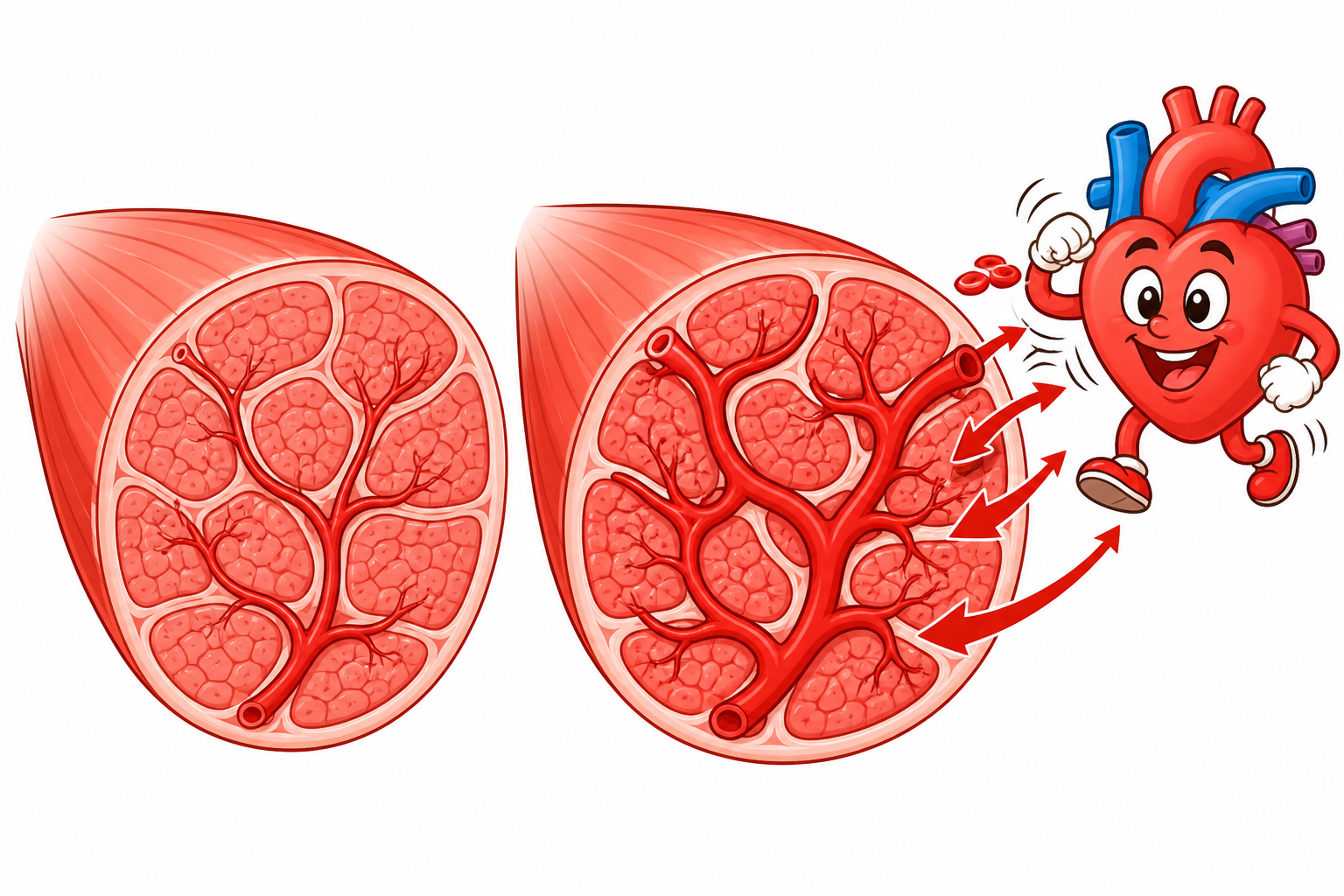
One of the most immediate effects of stretching is an increase in blood flow. A 2016 study in Clinical Physiology and Functional Imaging looked at what happens to oxygen levels in the calf muscles during and after a self-administered stretch. The researchers found that stretching caused a significant microcirculatory event. Blood flow increased heavily after the stretch was released, a process known as hyperemia (hy-per-EE-mee-uh), which is an increase in blood flow to a specific area of the body. This elevated blood flow lasted for up to 10 minutes after a single 60-second stretch.
However, while stretching clearly improves blood flow and flexibility, its reputation as an injury-prevention tool is less certain. A 2003 systematic review in Manual Therapy analyzed multiple clinical trials to see if stretching before exercise stopped injuries. The researchers found that the available studies were often of poor quality, and the highest-quality studies showed no definitive proof that stretching reduced the risk of exercise-related injuries.
Related: The Science of Post-Exercise Recovery: What Actually Works
How Long Should You Actually Hold a Stretch?
A common question among athletes and physical therapy patients is how long a stretch needs to be held to actually change the muscle.
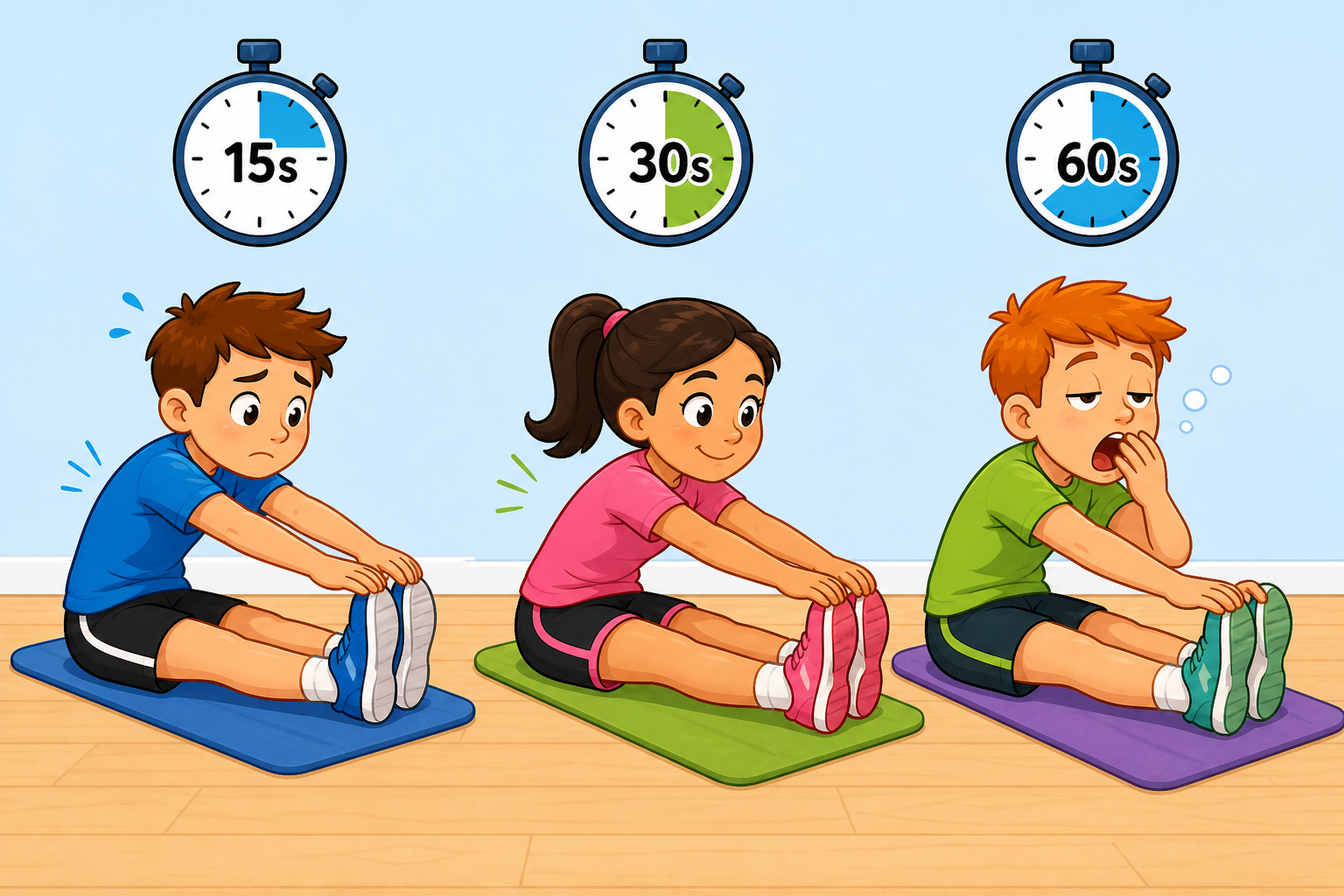
A classic 1997 study in Physical Therapy tested this exact question. Researchers divided 93 people with tight hamstrings into different groups. Some stretched for 15 seconds, some for 30 seconds, and some for 60 seconds. They also varied the frequency, having some people stretch once a day and others three times a day.
The results were clear: holding a stretch for 30 seconds, once a day, was the optimal amount of time to increase range of motion (RAYNJ uv MOH-shun), which is how far a joint can move in different directions. Increasing the duration to 60 seconds did not provide any additional flexibility. Stretching three times a day also offered no extra benefit over stretching just once a day. For the average person looking to improve flexibility, 30 seconds is the sweet spot.
Comparing Specific Stretching Techniques
Not all stretches are created equal. Depending on the joint or muscle group you are targeting, the position of your body can drastically change how effective the stretch is.
Calf Muscles: Wall vs. Incline Board
If you have ever had tight calves, you have probably tried standing facing a wall and pushing your back heel into the ground. But is this the best method?
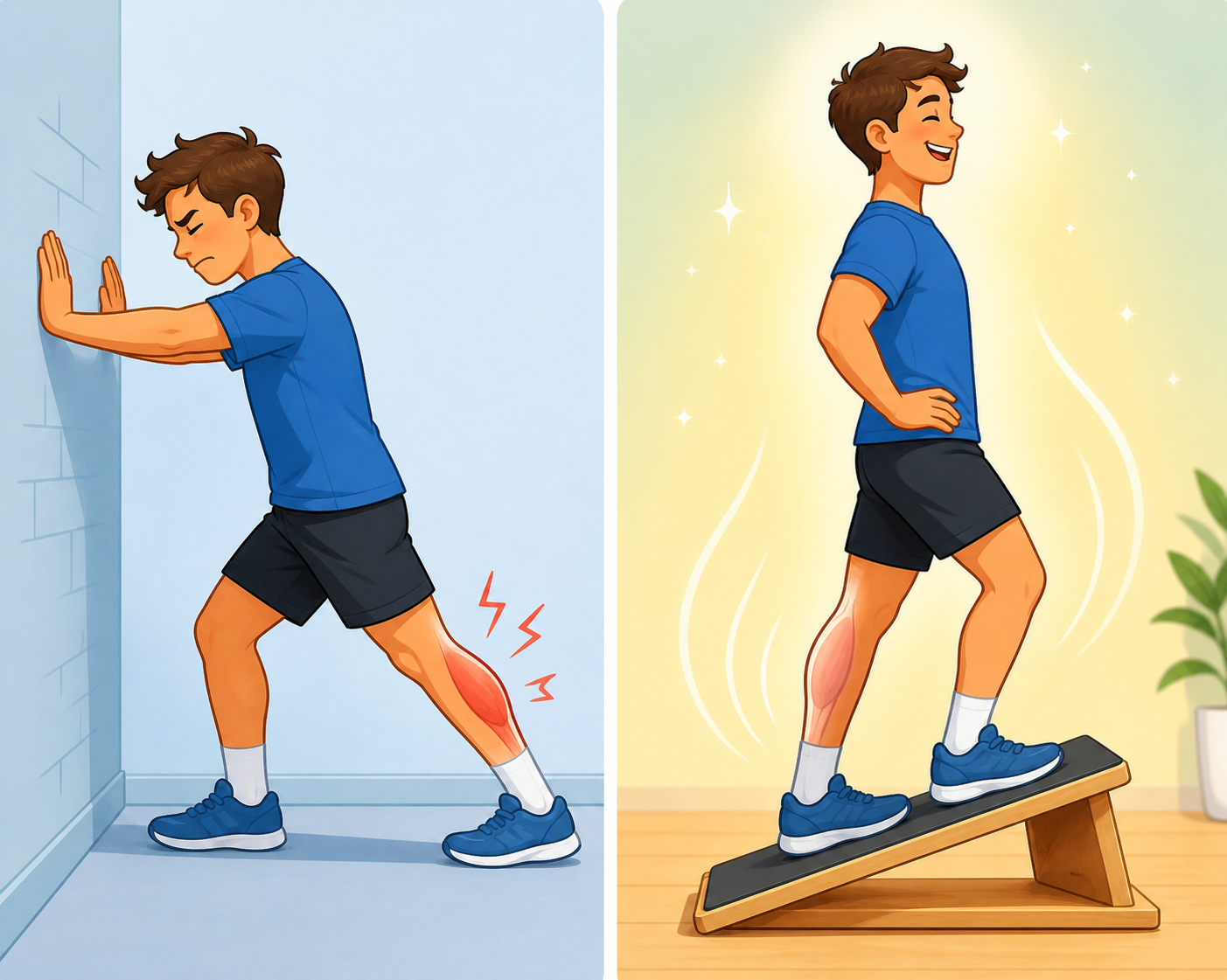
A 2020 study in Annals of Rehabilitation Medicine compared traditional wall stretching to standing on an inclined board. The researchers measured the actual length of the calf muscles using X-rays and used sensors to track how much the muscles were working during the stretch.
They found that the inclined board was significantly more effective. It resulted in a greater increase in muscle length and a better range of motion in the ankle. Interestingly, the sensors showed that the calf muscle was much more relaxed on the incline board. During the wall stretch, people subconsciously contracted their calf muscles to keep their balance, which fought against the stretch. The incline board allowed the muscle to relax and lengthen properly.
Hamstrings: Passive vs. Active Stretching
There are several ways to stretch the hamstrings (the muscles on the back of your thigh). A 2009 study in the Journal of Strength and Conditioning Research compared four different techniques over eight weeks.
The researchers found that after four weeks, active stretching methods worked best. However, by the end of the eight-week program, a simple passive straight-leg raise (where the leg is lifted and held in place by an external force or strap) resulted in the greatest overall improvement in hamstring length.
Shoulders: Sleeper Stretch vs. Bridging
Overhead athletes, like baseball pitchers and tennis players, often develop tightness in the back of their shoulder. This limits their ability to rotate their arm inward. The “sleeper stretch” (lying on your side and pushing your forearm down toward the bed) is commonly prescribed, but it can sometimes cause pinching or pain in the shoulder joint.
A 2021 study in BMC Musculoskeletal Disorders compared the modified sleeper stretch to a novel technique done while the person is in a “glute bridge” position on their back. The bridging position pins the shoulder blade against the floor, stabilizing it. The study found that both techniques effectively improved shoulder rotation. However, the novel bridging stretch was significantly better at reducing shoulder pain, making it a safer option for athletes with sensitive shoulders.
Wrists: Carpal Tunnel Relief
Stretching is not just for large muscle groups. It can also be applied to ligaments to relieve nerve compression. A 2020 study in the Journal of Hand Therapy tested a self-administered myofascial stretch of the carpal ligament in the wrist for people with Carpal Tunnel Syndrome. After six weeks of performing the stretch four times a day, the treatment group saw significant improvements in numbness, tingling, and pinch strength compared to a placebo group.
When Stretching Is Not Enough
While stretching is excellent for flexibility and local blood flow, research shows it is often insufficient on its own for treating complex neurological or metabolic conditions. In many clinical trials, stretching is actually used as the “control group” to compare against more rigorous exercise.
For example, a 2022 study in Annals of Neurology compared aerobic exercise (using a stationary bike) to a stretching routine in patients with Parkinson’s disease. While stretching kept the patients active, only the aerobic exercise group showed increased connectivity in the brain and improved cognitive control.
Similarly, a 2025 study in BMC Neuroscience looked at patients with neuropathy (noo-ROP-uh-thee), a condition causing nerve damage and balance issues, often due to diabetes. The researchers compared a conventional program that included stretching to a “multisystem” program that included reaction time, balance, and strength training. The multisystem program resulted in significantly better improvements in walking speed, posture, and pain reduction.
Finally, in stroke rehabilitation, a 2018 study in Neurology India found that a specialized therapy combining synchronized movements (CASP therapy) was far superior to conventional passive stretching for reducing muscle stiffness and improving daily function.
Related: The Science of Weight Training: How Resistance Exercise Changes Your Body
A Different Kind of Stretching: Wound Repair
When we think of stretching, we usually think of muscles and tendons. However, the medical field uses the exact same physical principles for skin.
A 2024 review in Plastic and Reconstructive Surgery Global Open detailed how “skin stretching techniques” are used to close large wounds without the need for skin grafts. Devices are attached to the healthy skin around a wound and slowly tightened over time. Because skin has viscoelastic properties (meaning it can stretch and relax like a slow-moving rubber band), continuous mechanical tension causes the skin cells to actually multiply and expand. This allows doctors to close large defects safely, proving that the body’s response to stretching goes all the way down to the cellular level.
Common Questions About Stretching Techniques
Does stretching prevent injuries?
While stretching feels good and improves flexibility, systematic reviews of clinical trials have not found strong, definitive evidence that stretching before exercise significantly reduces the risk of sports injuries. Proper warm-ups and strength training are generally considered more effective for injury prevention.
How long should I hold a stretch?
For most people, holding a static stretch for 30 seconds once a day is optimal. Research shows that holding a stretch for 60 seconds or doing it multiple times a day does not provide additional flexibility benefits for the average person.
What is the difference between active and passive stretching?
Passive stretching involves using an outside force (like a strap, gravity, or another person) to push a joint into a stretch. Active stretching requires you to use your own muscles to hold the stretched position. Both are effective, but passive stretching often yields better long-term length improvements for muscles like the hamstrings.
The Bottom Line / Takeaways
- 30 seconds is optimal. Holding a stretch for 30 seconds once a day is highly effective for improving flexibility. Longer durations do not necessarily yield better results.
- Position matters. Stabilizing the body properly makes a massive difference. For example, stretching calves on an incline board is more effective than pushing against a wall because it allows the muscle to fully relax.
- Blood flow increases. A single 60-second stretch can increase local blood flow to the muscle for up to 10 minutes afterward.
- It has limits. Stretching alone is rarely enough to rehabilitate neurological conditions or prevent exercise injuries. It should be combined with strength, balance, and aerobic training for overall health.
Quick Reference: Key Studies
| Study Focus | Key Finding | Source |
|---|---|---|
| Time and Frequency | Holding a hamstring stretch for 30 seconds once a day is just as effective as 60 seconds or multiple times a day. | PMID 9327823 |
| Calf Stretching | Using an inclined board improves calf length and ankle mobility better than traditional wall stretching. | PMID 32392651 |
| Shoulder Stretching | A novel bridging stretch improves shoulder rotation just as well as the sleeper stretch, but causes significantly less pain. | PMID 33941143 |
| Blood Flow | Self-administered stretching creates a substantial increase in blood flow to the muscle that lasts for up to 10 minutes. | PMID 25324203 |
| Carpal Tunnel | Self-stretching the carpal ligament four times a day significantly reduces numbness and improves grip strength. | PMID 32362377 |
| Injury Prevention | A systematic review found insufficient evidence to prove that stretching reduces the incidence of exercise-related injuries. | PMID 12909434 |
Last updated: September 2026
This article synthesizes findings from peer-reviewed research. It is for educational purposes only and does not constitute medical advice. Consult a healthcare provider before starting any new regimen.



Leave a Reply